

13 Harley-Davidson Motorcycles With Great Resale Value
From an investment perspective, motorcycles are a losing proposition. Usually, a buyer walks into a motorbike dealer, buys one, and then watches it lose 20% to 30% of its value when fired up for the first time. That's bikeonomics 101; vehicles typically lose a chunk of value (roughly 20%) in the first year of ownership, and then about 10% each year thereafter, before stabilizing around year five. This holds true for anything with wheels and an engine, and bikes that buck the trend are exceptions rather than the norm. However, it seems that Harleys tend to defy those expectations a fair bit more than other brands.
This is probably because of genuine demand meeting (comparatively) low supply, bolstered by the cult-like following that HD has in the land of the free. Harleys are bought not for the best specs (though that helps) but for that distinctive, rumbling V-twin sound and the chrome-laden styling that has basically remained unchanged for decades. Here are 13 Harleys that keep their value well.
Street Glide
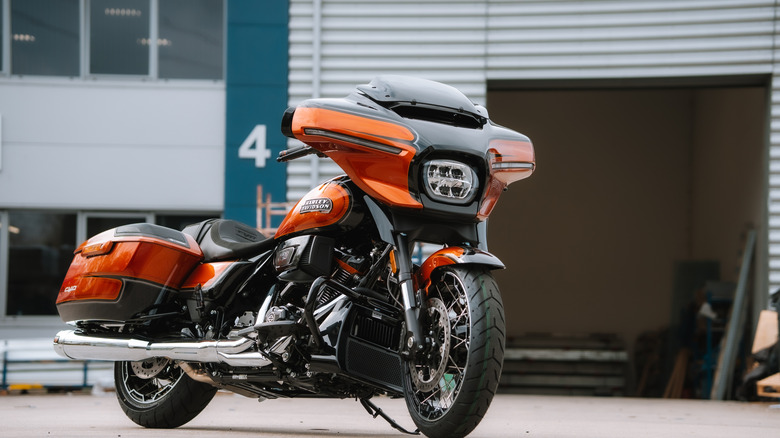
We begin with the Harley-Davidson Street Glide, which is a large, touring motorbike that was first released for the 2006 model year. Power for the current generation comes from the Harley-Davidson 117 Milwaukee-Eight engine from Team Orange, though older versions used the 107 engine. That was a four-valve-per-cylinder, much-beloved V-twin unit. It has a bore of 100 mm and a stroke of 111 mm, which, for those doing the math, works out to a displacement of 1,746cc. This gives the Street Glide 111 lb-ft of torque at 3,250 RPM. The engine routes power to the rear wheel via a six-speed transmission featuring belt final drive.
Certain model years also offer a CVO version of the bike, which stands for "Custom Vehicle Operations", Harley's atelier division. As far as pricing goes, a 2020 Street Glide would have set buyers back $27,699 as base MSRP, and that would have been in addition to a $435 destination fee. Tax, any dealer markups, and any options would, of course, have added to that price.
However, the Street Glide hasn't let depreciation have its pound of flesh just yet. Even units from 2020 were selling for about $13,000 on the used market in 2026. And that used price is absolutely bottom of the barrel, with many examples listed for more than that.
Road Glide
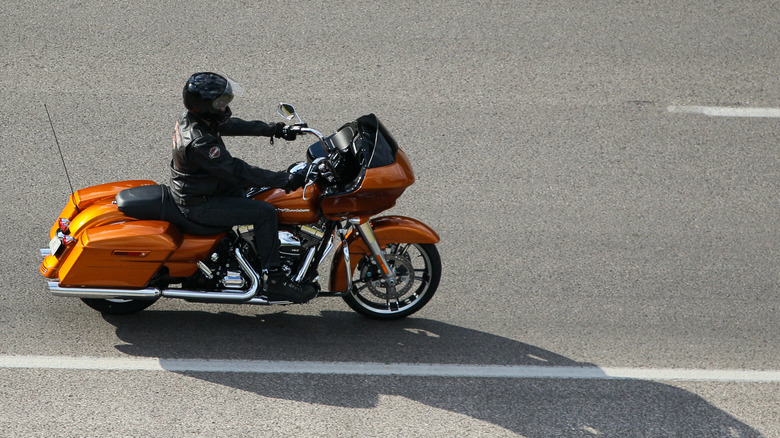
Hot on the heels of the Street Glide is the Harley-Davidson Road Glide, a bike that (arguably) sits close to the top of the lineup when it comes to its touring segment. Yet in our piece on Harley bikes with terrible resale value, we featured the Road Glide. So what gives? Well, if you sell your Road Glide within the first five or six years, the resale value actually holds up quite well. But if buyers keep their Road Glide for seven to eight years (or even longer), then the resale value tends to tank hard. In our opinion, the Road Glide is positioned just below the Road King, which is the flagship touring model offered by HD.
It is powered by the 1,746 cc Milwaukee 107 V-twin engine from Harley that makes 111 lb-ft of torque at 3,250 RPM. Like the Street Glide that we covered earlier, there have been a number of years when a CVO Road Glide model was also offered, with much-upgraded features and an equally-upgraded price tag to match. To show how well it keeps value, consider the $21,699 MSRP of a 2020 Road Glide. In 2026, these five-year-old Road Glides were being listed for sale around the $15,000 mark, with certain special examples selling for even more. However, a Road Glide from 2017, when the MSRP was $21,299, would fetch the comparatively lowly sum of $11,000 in the 2026 market.
Three-Wheelers
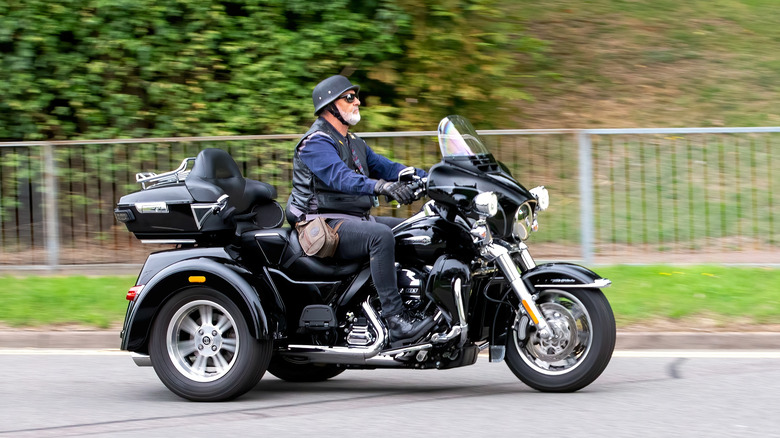
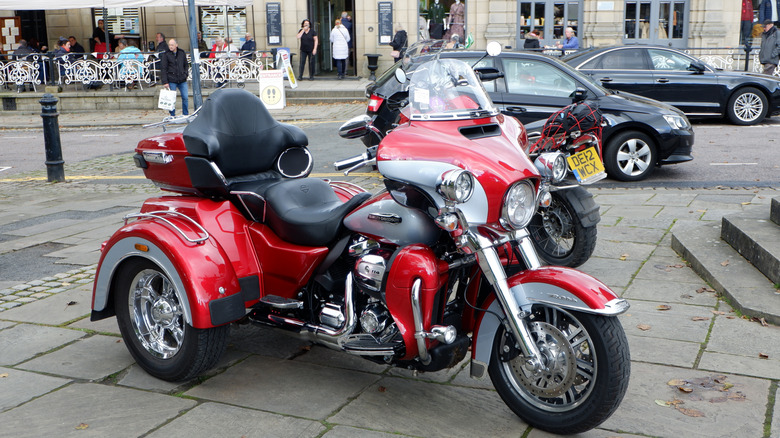
Harley is no stranger to making three-wheeled bikes, with the first one having rolled out in 2009. Since then there were two main models, the Trike Freewheeler and the Tri Glide Ultra, both of which have since been replaced with newer models. Out of the two, the Tri-Glide Ultra was the more premium offering, though both bikes came with the Milwaukee-Eight 114 engine, displacing 1,868 cc and making 93 hp alongside 120 lb-ft of torque. When new, a 2018 Tri-Glide would run buyers $34,499 as MSRP; in 2026, units sell for around $24,000, which isn't too shabby.
These two beloved bikes have since been replaced with three-wheel versions of the Road Glide and Street Glide that we covered above. These are known as the Road Glide 3 and the Street Glide 3 to account for their third wheel; there's even a CVO version of the latter. These trikes share the Milwaukee-Eight 117 engine making 129 lb-ft of torque and 105 hp at 4,600 RPM. Pricing for these three new models begins at $36,799, $39,199, and $59,499 respectively, with a destination charge of $1,395 each. We don't know how the depreciation on these new models will play out at this time of writing, but if the erstwhile three-wheeled Harleys are anything to go by, resale prices will likely hold up well.
Sportster and Sportster S
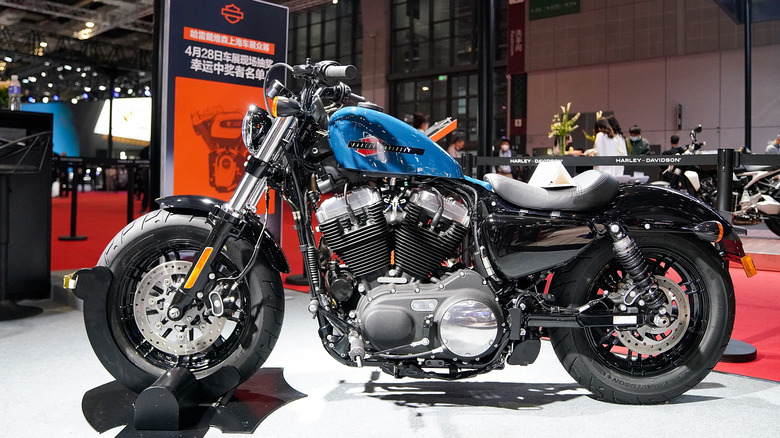
Next up, we have the Harley-Davidson Sportster, and its more performant and stylistic cousin, the Sportster S. One would assume that since both of these models are on the cheaper end for Harleys that the market would be flooded with examples, driving the price down. Yet that's not the case, at least in the first half-decade of ownership.
Power for the previous-generation Sportster S came from the Revolution Max 1250T engine from Harley that displaced 1,250 cc across the now-legendary twin-cylinders, making 121 hp and 94 lb-ft of torque with a 12:1 compression ratio, and delivered power via a six-speed transmission. An (admittedly less powerful) 2020 Sportster would have cost the buyer $9,999 as MSRP, though units in 2026 are still selling for in and around the $6,500 mark, which is stellar performance for an entry-level, mass-produced bike.
For those who are still looking to buy one new, the Sportster is indeed one of the many Harley-Davidson motorbikes announced for 2026. Pricing is a bit higher, coming in with a base MSRP of $15,999 for the Sportster S, with a destination charge of $895 for the model year.
Heritage Softail Classic
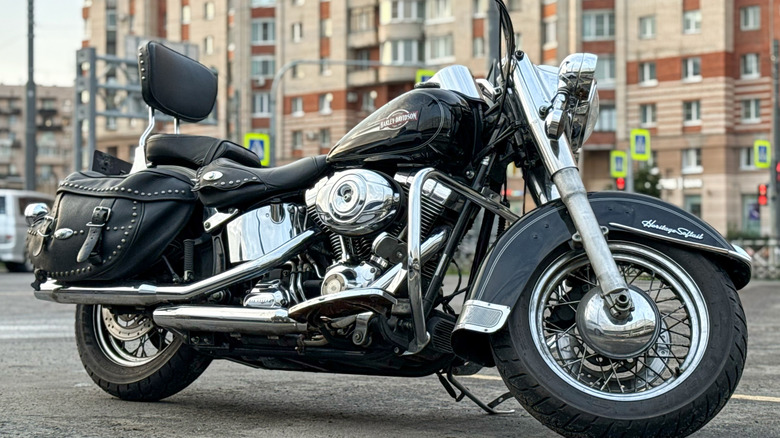
Just like with the Sportster models that we looked at above, the Heritage Softail Classic, designated with the model code FLSTC, is another case of a mass-produced Harley still holding value well. Recent generations found themselves powered by the Milwaukee-Eight 103 engine that displaces 1,690 cc via two cylinders with a bore of 98 mm and a stroke of 111 mm. The engine is then paired to a six-speed transmission that turns the rear wheel via belt primary drive.
All together, the powertrain manages to churn out 95 lb-ft of torque in total. While we don't have the hard data to confirm exact numbers, the Softail is one of Harley's more popular offerings, and has been around for over four decades. But even then, a good-condition 2015 Heritage Softail Classic that had a base MSRP of $18,349 still sells for between $10,000 and $12,000 in 2026. This is surprising, and just because of the sheer volume of examples that hit the market each year; the model also continues to be available new. There's also the fact that certain special editions that come out from time to time would undoubtedly be even better in depreciation terms.
Road King
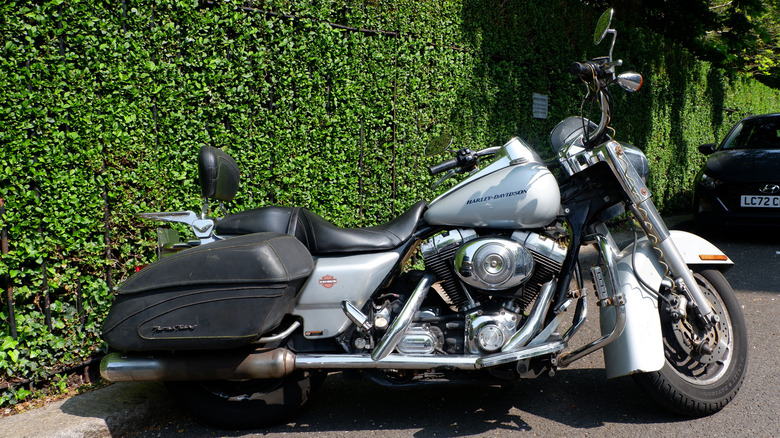
Next up, we have the Harley-Davidson Road King, a behemoth of a grand American touring motorcycle that prioritizes comfort and looks over pure performance. The engine in this thing in 2020 was a 1,746 cc twin-cylinder rumbler that made 111 lb-ft of torque paired to a six-speed transmission. Just like with the Road Glide, this model also featured on our list of Harley models with terrible resale value. However, it's a similar case: Only models over a decade old depreciate heavily. The five-to seven-year ownership period actually holds values quite well.
This is great for owners who want to buy, own, ride, and then move onto the next model without losing too much equity in their bike. Plus, the Road King is (arguably) Harley's flagship touring model, so, we put it on this list. But just how good are the depreciation figures on this thing? Well, let's look at a Road King from the 2020 model year. This year had a base MSRP of $19,499, and, looking at listings from early 2026, we see that many of them are listed for between $12,000 and $15,000. This is indicative of a quite impressive 25% depreciation rate — equivalent to a drop of less than 5% per year of ownership.
Street Bob
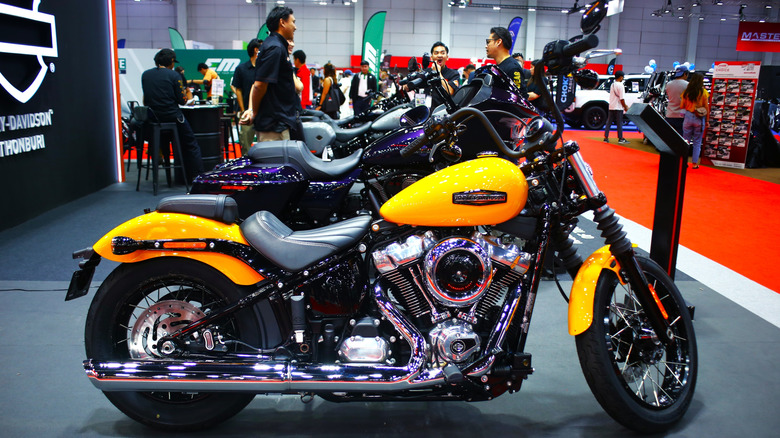
The Street Bob is actually part of the Softail family of motorcycles from Harley, and the 2026 model is actually the lightest Softail that one can buy with the 114 engine. Older Street Bob models came equipped with the 107 engine from Milwaukee House, making 86 hp at 5,020 RPM, along with 107 lb-ft of torque while displacing 1,746 cc. It too has great resale value; a 2020 model would have sold for about $14,599 when new before taxes, delivery, and dealer markups, but examples are still going for about $10,000 in 2026.
In percentage terms, it's only lost about 33% of its value, which is less than $1,000 per year. These are both really respectable resale figures. For 2026, the Street Bob is available as a new model, though MSRP has now risen to $16,649, and comes with a $895 destination fee. Wheels on the 2026 model can be either laced or cast, as per the buyer's preferences, and there are a grand total of five color options available, including the ever-eye-catching Brilliant Red.
Low Rider S
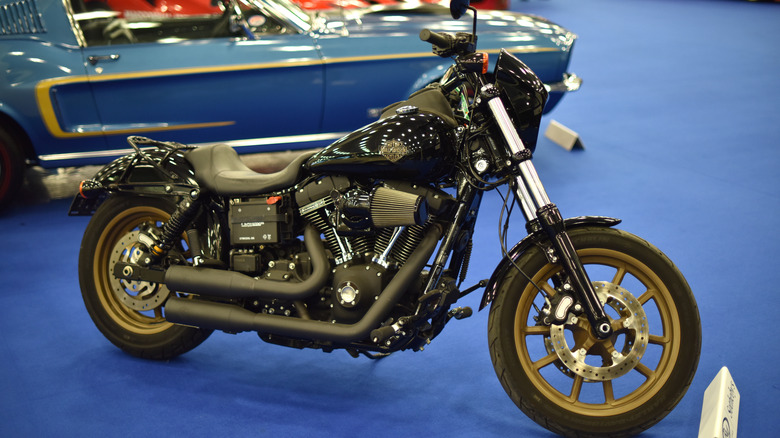
The Low Rider S is the next model on our list, and it too, like the Street Bob, is actually a model of the Harley Softail lineup. Enthusiast readers will recall the legendary Low Rider from the Dyna line that was around until the end of last century; it's clear that the Softail Low Rider S is an homage to that model and an attempt to fill the gap that its discontinuation left. When the 2020 version debuted, it happened to be the most accessible entry-point to the Harley 114 range, which is quite surprising considering what it cost.
In 2020, a Harley-Davidson Low Rider S would have required forking over no less than $17,999, though the investment seems to have been worth it. Used Low Rider S examples from around that time period are being listed for north of $10,000 as of 2026, and that even includes high-mileage units. The model continues to be available new in 2026 with a base MSRP of $23,999 (for the ST trim) and a destination freight charge of $895.
V-Rod
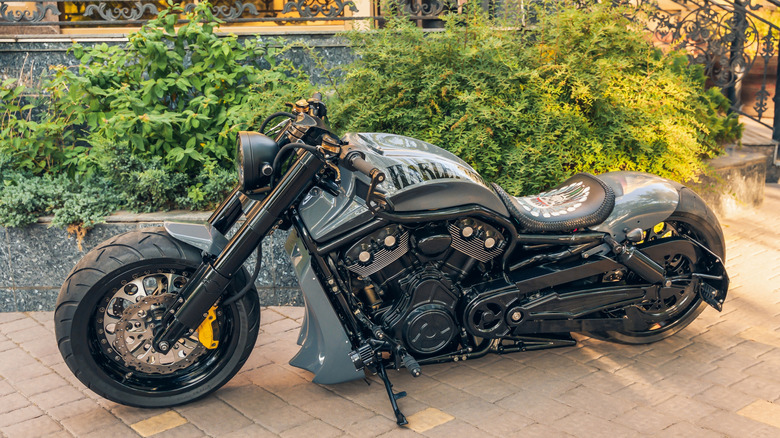
One of the most legendary Harley-Davidson motorcycles of all time has to be the V-Rod. It's hard to describe the styling of this bike, but it seems to answer the "what would Batman ride" question rather neatly. It features a mostly all-black finish, a very chromed exhaust, and aesthetics that make the bike look longer than it really is.
In other words, the V-Rod was the hot rod of motorbikes. The fact that such a bike came from the conservative Harley brand was quite surprising, actually. It first hit the market just after the turn of the century in 2002; in the 2010s, we got the Muscle and Night Rod versions before the model was phased out in its entirety in 2017, likely due to evolving emissions standards.
The last generation of the bike came with the Revolution engine that displaced 1,247 cc and made 122 hp along with 87 lb-ft of torque. The transmission was a five-speed unit, and the entire bike had the model code of VRSCF. For those wondering, the first four letters in that code are an acronym for "V-Rod Racing Street Custom", and this particular generation carried the "F" designation. It has good resale value too, with 2015-2016 models of the V-Rod in good condition selling for between $11,000 and $13,000 in 2026. That model year had a base MSRP of no less than $16,149 (with the destination charge being $390), which further underscores its retail value.
Breakout
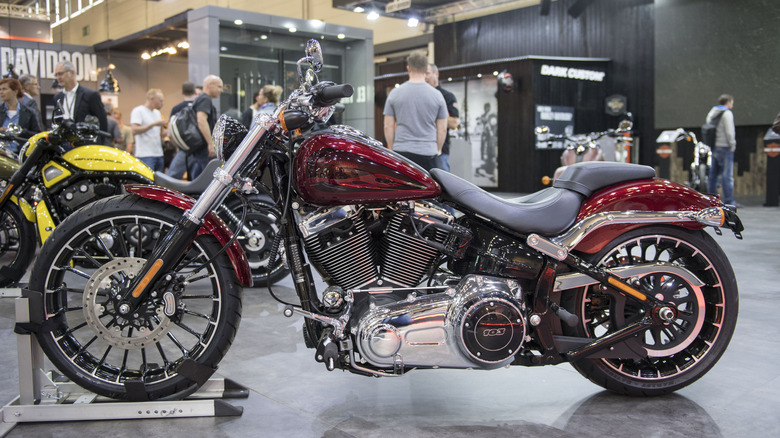
The Harley-Davidson Breakout is a rather interesting motorcycle. Initially introduced in 2013, the Breakout continues to be available today with a custom engine. When it first roared onto the scene, it quickly became apparent that the Breakout was a replacement for the V-Rod that we just covered above. For one, there was the chopper-style looks, the sleek finish, bright paint options, and of course, the engine. The 2018 Breakout shipped with a 114 engine from Harley that displaced 1,868 cc across its big V-Twin cylinders. It achieved this displacement via a bore of 102 mm and a stroke of 114 mm, and came with a six-speed transmission that featured belt primary drive.
As far as resale values go, the Breakout performs quite well, with a 2020 Breakout coming in with a base MSRP of $20,299, and units selling for between $10,000 and $12,000 in 2026. That works out to a vale loss of just under 5% per year, which is pretty decent for what is supposed to be a depreciating asset. The modern 2026 Breakout starts with a base MSRP of $22,999 and has a destination charge of $895.
Fat Boy
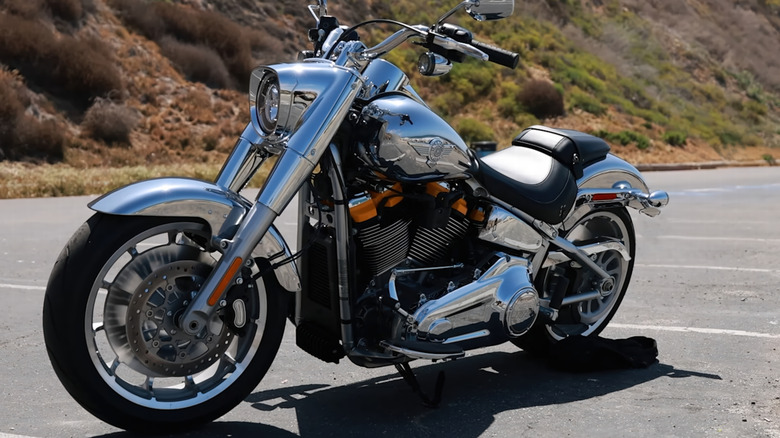
The famous Harley-Davidson Fat Boy is a motorcycle that has attained legendary status, and it's easy to see why. It's debut was quite the big-screen showdown (literally), as this was the bike that Arnold Schwarzenegger rode in 1991's "Terminator 2." However, coming to the present day, recent versions of the Fat Boy have utilized the Twin Cam 103 engine from Harley, which displaces 1,690 cc across two cylinders, which is achieved via a bore of 98.3 mm and a stroke of 111 mm.
This hulking engine is then paired to a six-speed transmission that turns the rear wheel via belt primary drive. After everything is put together, the Fat Boy ended up making roughly 79 hp, along with a respectable 99 lb-ft of torque at 3,500 RPM. All of that happened while the bike weighed a relatively beefy 725 pounds, which could explain the mediocre 42 combined mpg fuel economy rating.
On the plus side, the fuel tank on 2015 models could hold five gallons, giving the rider approximately 200 miles of range between each fill-up. When new, a 2015 Fat Boy had a base MSRP of $17,699; in 2026, units from that model year are still fetching the frankly exorbitant sum of about $11,000 on the used market. If that's not great resale value (considering that the bike is over half a decade old), then we don't know what is.
Fat Bob
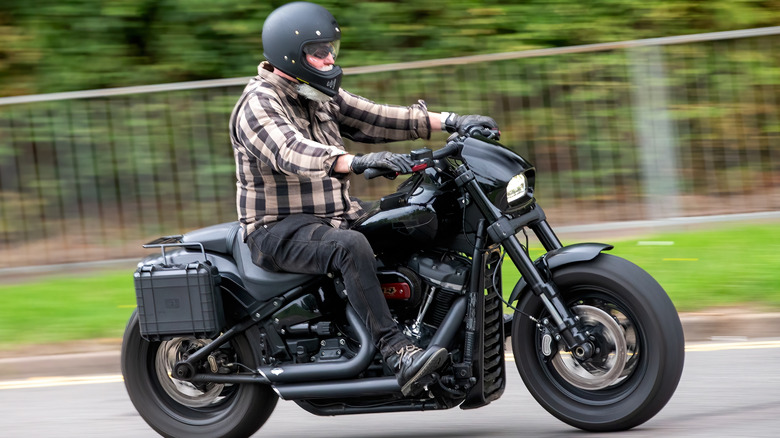
Very similar to the Fat Boy from above, the 2015 Fat Bob had an MSRP of $15,699. In 2026, these 2015-2016 models go for $8,000 on the lower end, with examples in good condition going for about $10,000. Seeing a decade-old motorbike lose less than a third of its value over that time might seem like fantasy, but that's the American bike market for you. That generation of Fat Bob came with the Twin Cam 103 engine from Team Orange over in Milwaukee, and had two cylinders with a bore of 98.3 mm and a stroke of 111 mm.
For those trying their hand at napkin math, that works out to a total displacement of 1,690 cc, which ended up producing 95 hp and 114 lb-ft of torque by its final generation. The Fat Bob saw its last production year in 2017, though its close cousin the Fat Boy is still available new. There is also the similar Harley Street Bob that is available as a 2026 model.
Nightster
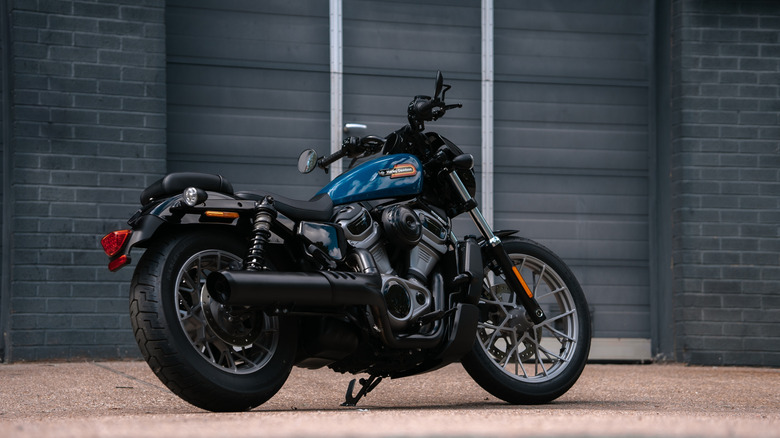
The Harley-Davidson Nightster was first introduced in 2007 before being discontinued five years later. Harley then re-introduced it in 2022 with an MSRP of $13,499. In early 2026, the cheapest re-issue Nightster that we would be happy buying was around $8,000. However, average prices do tend to be closer to $9,000, which is pretty decent for a bike that is both a few years old and relatively modestly priced to begin with.
Yes, we're counting $13,499 as "modest" pricing, because that's the insane world we live in now, especially as far as Harley-Davidson motorcycles are concerned. This new generation of Nightster offers rides 90 hp and 70 lb-ft of torque from 5,000 RPM via the Revolution Max 975T V-Twin engine from Harley. The cylinders have a bore of 97 mm and a stroke of 66 mm, and the unit is mated to a six-speed transmission. The new 2026 model has an MSRP of $9,999, which does not include the destination charge, optional extras, and dealer markups.