

The 2026 Ford Explorer Tremor Is Better Than It Needs To Be, And That's The Problem
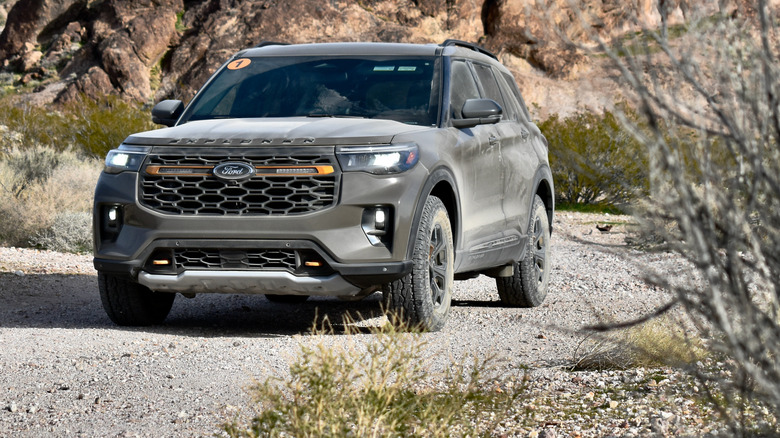
It seems like nobody drives on pavement these days. All manner of SUVs and pickup trucks are getting off-road trim levels to satisfy what automaker product-planning departments believe is a resurgent need among customers to get out into the wild. And with a name like Explorer in its SUV lineup, how could Ford not cash in on this trend?
This makes so much sense that Ford has now done it twice. The 2026 Ford Explorer Tremor is the replacement for the Explorer Timberline, bringing similar upgrades under the Tremor banner shared with off-road variants of the Expedition, F-150, and Maverick.
Regardless of what it's called, the Tremor maintains parity with off-road versions of competitor midsize SUVs—models like the Chevrolet Traverse Z71, GMC Acadia AT4, Honda Pilot TrailSport, and Nissan Pathfinder Rock Creek—as well as the Jeep Grand Cherokee, which has emphasized off-road capability from the start.
From Timberline to Tremor
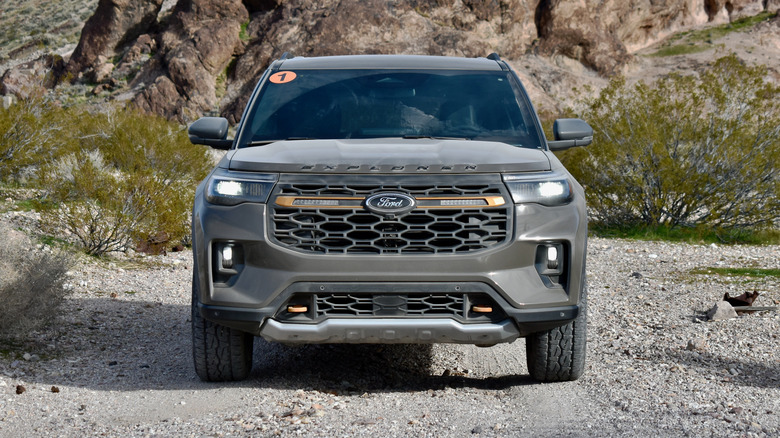
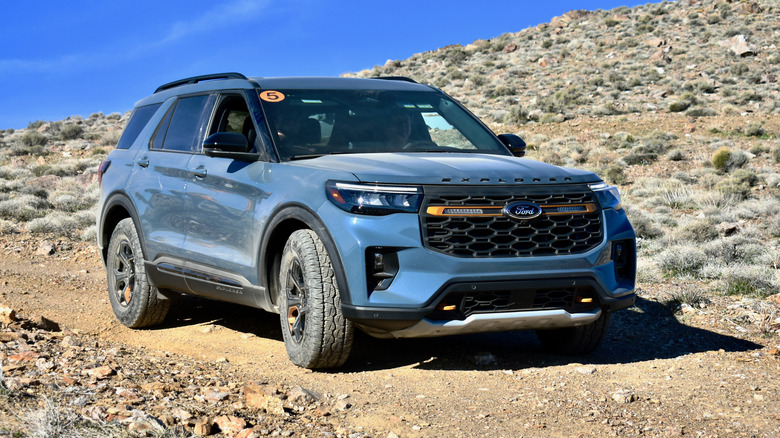
Highlights of the Tremor include all-terrain tires, a raised ride height, skid plates, and off-road lights in the grille. If that sounds familiar, it's because the same features were offered on the Explorer Timberline, which was introduced for the 2021 model year but didn't return for the Explorer's 2025-model-year refresh. Now we know why.
The shift from Timberline to Tremor did bring some styling changes. The upper and lower grille elements are now more balanced, while keeping the prominent recovery points. The light bar in the grille is thinner, looking less like something you'd see on an Explorer-based Police Interceptor and more like a mustache. The 18-inch wheels have a new design, with bigger pockets between the spokes.
The Tremor also receives a liberal dusting of what Ford calls Electric Spice, which reminded me of the anodized-metal trim color Subaru uses on its Wilderness models. The spice flows across the grille, recovery points, and the wheels. In the latter case, an asymmetrical application highlights the tire valve stem. That's helpful as long as you don't get the wheels too dirty, as I did during a day of off-roading in dusty Death Valley.
All the off-road kit you need
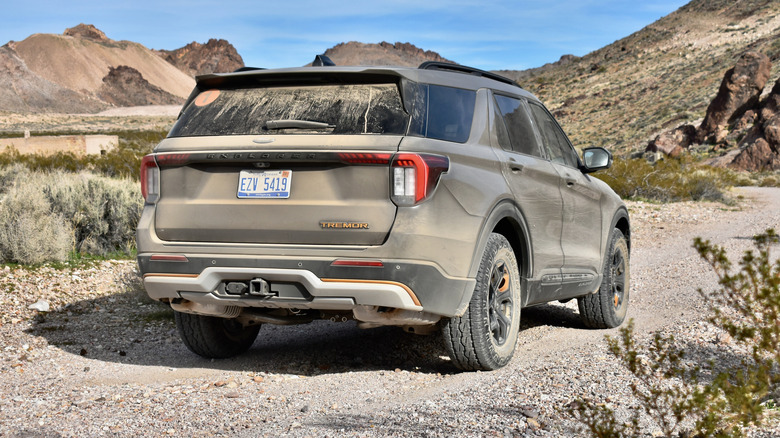
The Tremor treatment is subtle, although the same can be said of many other light off-road models that get their identities mainly from bolt-on parts. Mechanical changes are also limited, but they make an appreciable difference in capability. The Tremor essentially takes the first steps an owner might to increase the capability of their own vehicle—but with a warranty.
A 1-inch ride-height increase translates to 8.7 inches of the ground clearance. That's the same as the outgoing Timberline, and at least somewhat more than other Explorer models. It's a substantial 1.1 inches over the base Explorer Active, but just 0.4 inch more than an Explorer Platinum. The approach, breakover, and departure angles are also improved over other Explorer models, at 23.5 degrees, 18.7 degrees, and 23.7 degrees, respectively.
Along with ample ground clearance and all-wheel drive–the Tremor doesn't have an old school four-wheel drive system with low range, but it does have a limited-slip rear differential–tires are a key factor for off-road capability. The Tremor's Bridgestone Duelers (size 265/65R18) take care of that, although given this SUV's mission, I wish the spare was standard equipment rather than an option.
An Off-Road drive mode helps make the most of the available traction from those tires (Normal, Tow/Haul, Eco, Sport, and Slippery modes are included as well) while front and rear skid plates provide a backup plan in case the Tremor's additional ground clearance isn't enough.
More than enough off-road capability
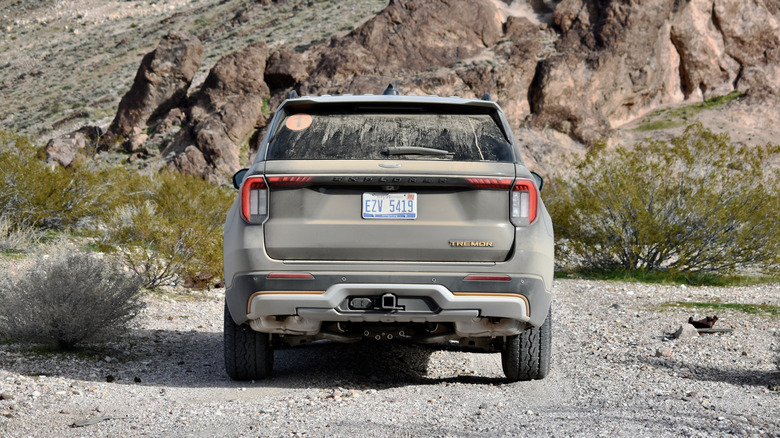
The Tremor's upgrades get it much further into nowhere than most owners will likely go. Ford sees it as a way to get to campsites and beachside picnic spots with less stress, but if you're looking to explore abandoned mineshafts in the California/Nevada desert, and the only way to reach them is a rocky trail ascending thousands of feet, the Tremor can handle that too.
Off-roading the Tremor was a drama-free experience. The only real issue was its size on certain narrower sections of the trail, although even there an available 360-degree camera system made things easy. The possibility of getting stuck never crossed my mind, and Ford's Terrain Management System did a good job of making adjustments in the background rather than relying on harsh traction-control interventions or brake pulses.
A crossover SUV like this still has some limitations. The lack of low-range gearing meant relying more on throttle modulation to maintain traction rather than letting the Explorer crawl forward. And even with 8.7 inches of ground clearance, I had to carefully pick lines through the rockier sections, and still scraped the skid plates on the best-possible line in a couple of cases. Something more hardcore, like a Ford Bronco, would have made things easier, but this is still more than enough capability for a family SUV.
Enough power to overshadow poor fuel economy
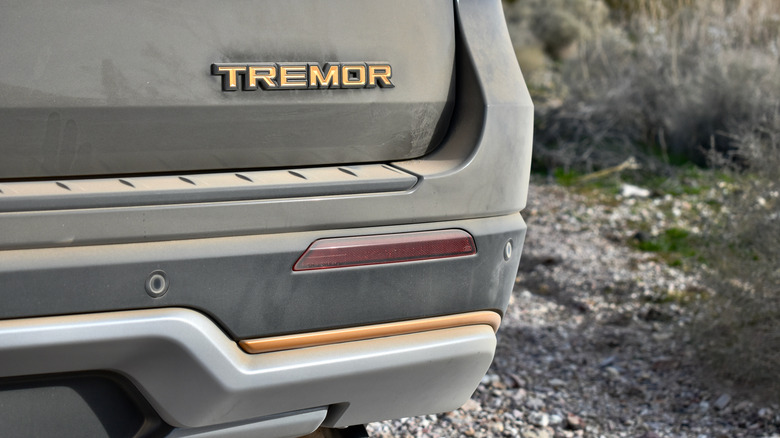
The Tremor comes standard with the same turbocharged 2.3-liter four-cylinder engine and 10-speed automatic transmission as most other Explorer models. The turbo-four produces 300 horsepower and 310 pound-feet of torque, which is more than adequate for a vehicle of this size. But you can also get the twin-turbo 3.0-liter V6 from the Explorer ST, with 400 hp and 415 lb-ft of torque.
I was happy to see that option box checked on the Explorer Tremor I picked up at a Las Vegas strip mall for the drive down to Death Valley. The twin-turbo engine gives the Explorer more power than most rivals, which tend to stick to turbo-fours, hybrid powertrains, or naturally-aspirated V6s. The 10-speed automatic makes good use of the available power with seamless shifts and a more decisive shift logic in automatic mode than one would expect of a transmission with this many gears to juggle. Rather than an inconvenience, each encounter with a slow vehicle was an opportunity for fun.
The downside is poor fuel economy, although perhaps no poorer than target customers might be used to. With the V6, the Tremor is EPA-rated at 19 mpg combined (17 mpg city, 22 mpg highway), compared to 21 mpg combined (19 mpg city, 23 mpg highway) for the four-cylinder engine. That's admittedly not far below a V6-powered Jeep Grand Cherokee or Honda Pilot TrailSport, rated at 22 mpg and 20 mpg combined, respectively.
Not entertaining, but it doesn't need to be
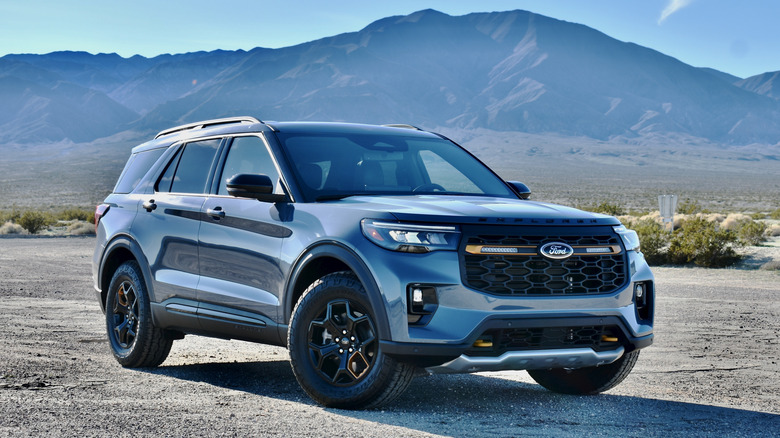
A powerful engine is an important feather in the Explorer's cap because, like most midsize three-row SUVs, it's not very interesting to drive. It eats up the miles with ease, but doesn't make them memorable.
Ford baked an impressive amount of refinement into the Explorer's architecture (shared with the Mustang and the Lincoln Aviator), making the midsize SUV feel up to current standards despite last being redesigned for the 2020 model year. Well-tuned suspension provided a comfortable ride without too much float or head toss, while active noise cancellation kept the cabin quiet. Once you leave the highway, that comfort-tuned suspension, along with lifeless steering, snuff out any sparks of fun. Still, the Tremor was pleasant for an off-roader. Its all-terrain tires made relatively little extra noise, and its crossover construction made it much more comfortable than a Bronco or Wrangler.
The available BlueCruise 1.5 driver-assist system also makes the Explorer Tremor a road-trip champ. This version of Ford's hands-free system adds automated lane changes, although I didn't witness any during a drive from Las Vegas to Death Valley. BlueCruise nonetheless performs predictably, although feature-wise it's a step behind the Super Cruise system you can get in a Chevy Traverse Z71 or GMC Acadia AT4.
Plain-but-functional interior and infotainment tech
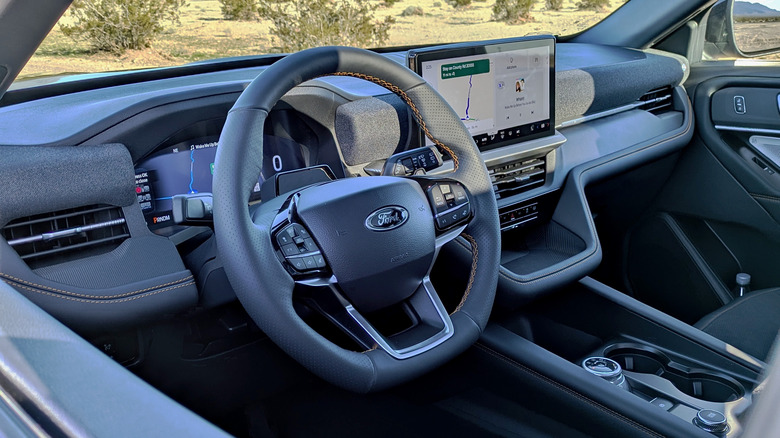
Like the driving experience, the interior is lacking in character—something a handful of "Tremor" callouts on the seats and floor mats doesn't address. There isn't much to differentiate the cabin from those of other Explorer models, although the standard "sport cloth" upholstery (leather is optional) sounds like a good choice for the kind of use Ford has in mind.
A 2025-model-year refresh brought the latest Ford Digital Experience infotainment system, as well as a 13.2-inch touchscreen and 12.3-inch digital instrument cluster that are better integrated with the dashboard than the screens in pre-refresh Explorers. Ford uses Google Built-in apps, but maintains wireless Apple CarPlay and Android Auto connectivity.
The touchscreen's menus have a sterile Microsoft Surface appearance, but are easy to navigate. The narrow strip at the bottom of the screen that handles temperature and seat heating/cooling isn't though, especially when the vehicle is pitching back and forth off-road. The instrument cluster's map view is appreciated, and the bold typeface for the speedometer and tachometer is one of the interface's few stylistic flourishes.
Tremor models also get the CoPilot 360 2.0 driver-assist package, the main feature of which is a 360-degree camera system that really comes in handy off-road. The Off-Road drive mode also keeps it switched on even at relatively high speeds.
Doesn't compromise on utility
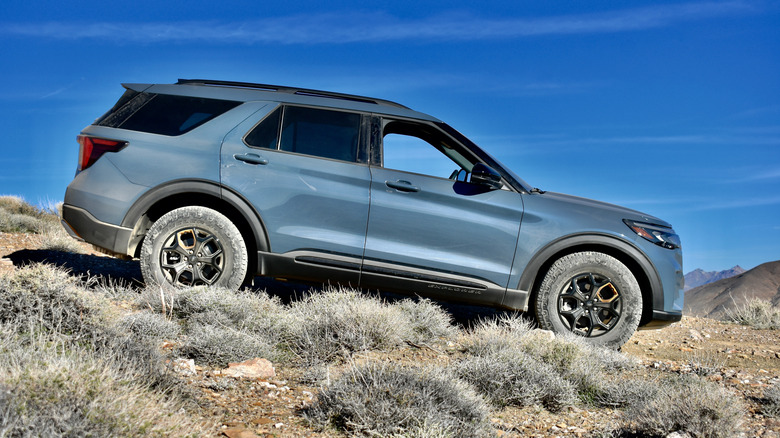
An advantage of buying the off-road variant of an everyday midsize SUV as opposed to a dedicated off-roader is flexible interior space. An Explorer might not look as tough as, say, a 4Runner, but its three-row cabin can be easily configured for hauling passengers or cargo.
The available passenger space is also comparable to other three-row midsize crossovers, with mid-pack third-row headroom and legroom. You get 16.3 cubic feet of cargo space with the third row in place—about the same as a Nissan Pathfinder or Toyota Highlander—46 cubic feet with the third row folded, and 85.3 cubic feet with the second row folded. A Chevy Traverse will swallow even more cargo, but an Explorer should prove adequate for most people's active-lifestyle needs.
Tremor models have a towing capacity of 5,000 pounds—the same as other Explorer models. That's the same as most rival crossovers, with the notable exceptions of the Pathfinder, which is rated at 6,000 pounds, and the Jeep Grand Cherokee, which can tow up to 6,200 pounds in certain specs.
2026 Ford Explorer Tremor verdict
The Tremor has a base price of $50,160. That's about $10,000 more than a base Explorer Active, but still less than the luxe Platinum and sporty ST grades. That base price is also in line with similar off-road models like the Chevy Traverse Z71 and Honda Pilot TrailSport, although the Hyundai Santa Fe XRT and Nissan Pathfinder Rock Creek start a few grand less. Equipped with options like the V6 engine and the Ultimate Package (which adds convenience features like massaging seats), my test vehicle had a sticker price of $64,405.
A fully loaded Explorer Tremor is not a great value, then, but it is a great option for people who want the most car. It plays the roles of off-roader and Family Truckster equally well, and includes all of the features one could expect in a new SUV from a mainstream brand. It would be a remarkable vehicle if there weren't already so many similar models from other brands.
Everyone is bolting all-terrain tires to their midsize SUVs these days, and most customers aren't going to head far enough down the trail to find out which ones are the real deal. It may be called the Tremor but, as competently executed as it is, it's hard to imagine this Explorer making such a strong impression on new car shoppers.