

12 Things You Should Avoid Buying From Amazon (And Why)
Regardless of any moral or ethical concerns about Amazon, there's no denying that not many websites can match its convenience. Few other places have such a wide selection of items, and fewer still can deliver an order within two hours and return it, no questions asked, sometimes up to a year after you bought it. But that convenience belies a platform plagued by fake reviews and filled with strange mystery sellers you've never heard of.
In no way are we saying you shouldn't buy these items from Amazon; we're only saying you might want to reconsider them. Most of the time, these items are problematic only in certain situations and with certain sellers. Long story short, do your research. Generally speaking, though, steering away from the following on Amazon and considering buying elsewhere may be wise.
Frequently returned items
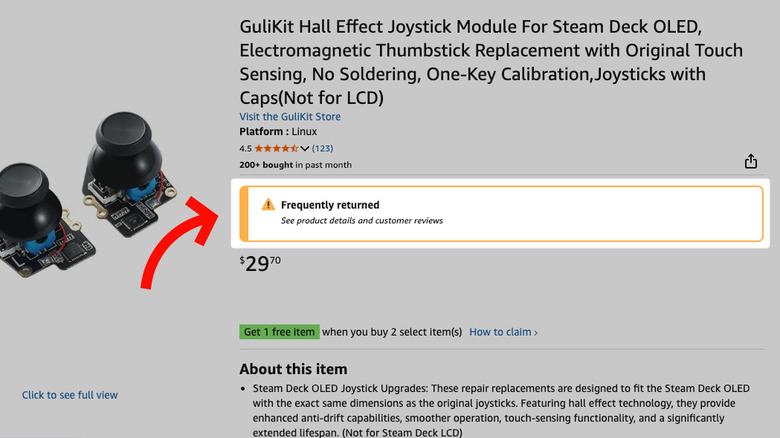
If you shop on Amazon a lot, you've probably noticed the "Frequently returned" tag on an item. It's great that Amazon has decided to include such a marking, but anecdotally speaking, it hasn't always been as visible as it could be. It seems a recent update moved it just below the item name, reviews, and pictures, but in the past, we've seen it further down the page, which can make it blend in a bit with the item description. So please, when shopping for an item, double-check for this particular warning. It doesn't appear that Amazon is going to reject your return if you decide to buy it anyway and end up returning it, but at the very least, it risks wasting your time.
The problem is, Amazon's recommendation to check the reviews and product description to figure out why people are returning the item isn't as straightforward as it seems. For example, this GuliKit Hall Effect Joystick Module replacement for the Steam Deck OLED has a high return rate yet a 4.5-star rating. Reading through the reviews, it's not immediately apparent why so many people are returning it. Some reviews suggest people are mistakenly buying this for an LCD Steam Deck, which it doesn't support, and others point to irresolvable stick drift, while others say calibration solves it. It's really impossible to explain the high return rate — and we've seen the same with many other products.
The point is, it's a red flag. We wish Amazon would put the top reasons for returning front and center, and/or remove or recommend fewer products that continue to suffer from this issue. Check reviews from sources other than Amazon for a frequently returned item, or buy something else.
Sponsored products
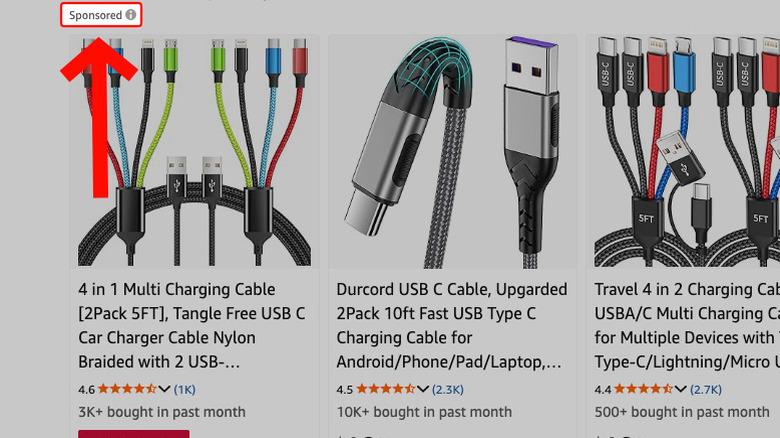
Typically, when you search for something on Amazon, you'll see a "sponsored products" section near the top, followed by the rest of the results. These are quite literally ads paid for by the seller that elbow their way into your search if you use the right keywords. These are not necessarily the best products, nor are they the ones that the algorithm would have recommended to you organically. And that's the problem.
Sponsored ads have been used maliciously on other platforms in the past. The perfect example is how hackers leveraged Google's Sponsored Ads to skim credentials. Think about it. If their product really is the best choice, they wouldn't need an ad for it. The algorithm would naturally boost it up as more people buy it and rate it well. Sellers may use sponsored ads to trick you.
Now, sometimes you'll see sponsored products that are also the highest-rated items, as shown in the next section; I've certainly bought many items like this in the past and had no issues as a result. However, as a matter of principle, scrolling past the sponsored products directly to the normal search results may yield better results.
Amazon's Choice items
You've probably seen Amazon's Choice (AKA Overall Pick) items a fair amount. The names would imply (by the word choice or pick) that a flesh-and-blood human employee curated it while testing competing products for price and value. A "Best Seller" label is one thing, but a stamp of approval by Amazon itself is something else entirely. Sadly, Amazon's Choice/Overall Pick is only chosen in the loosest sense. Call it a misnomer, but according to Wired, it's likely that the only one making the choice is the algorithm. Algorithms can be gamed, and so a product that ticks the right boxes can eventually become Amazon's Choice, even if a human expert might have wrinkled their nose and set it aside.
BuzzFeed News has an excellent article on just how untrustworthy Amazon's Choice really is. Products with problematic descriptions and bad, manipulated reviews — sprinkled with genuine reviews citing low-quality or counterfeit items — somehow earn the badge of honor. When Amazon is taken to task, the company may do nothing and give some PR spiel that almost seems to blame consumers in a roundabout way. Read the article; it will make you forever skeptical of the label.
This isn't to say Amazon's Choice is worthless. I've purchased products with that label that were worth it, but it's like Sponsored; it implies something better than what it is. The point is that it is important to understand how much of Amazon involves thoughtful human decisions and how much relies on automated systems susceptible to abuse.
Items with suspiciously positive verified reviews
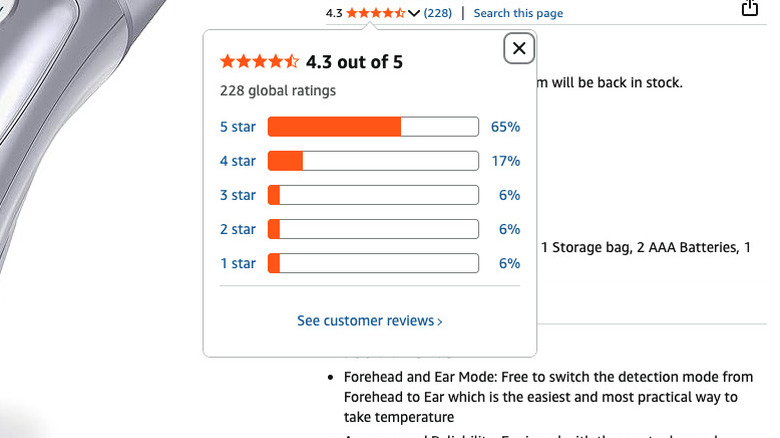
You may be thinking that at least Amazon has a verified review system. Anyone can write a review on a product, but only people who have actually bought it get the verified purchase label underneath their title. The problem is, verified reviews aren't much more reliable than Amazon's Choice, and Amazon has a long history with fake reviews.
Christoph Hoffmann from PCWorld writes how he was offered compensation by a seller via a back channel to write a fake 5-star review, and when he reported this to Amazon — which expressly forbids such review manipulation — Amazon seemingly did nothing. So while you can filter out non-verified reviews, you can't necessarily trust the verified ones 100%. Amazon has tried using AI to protect against fake reviews, but as we can see, the problem persists.
Our advice? Use your gut. Learn how to spot fake customer reviews when buying things online. Look for weird language that seems like it could have been AI-generated. Notice if a review is a bit too glowing and lacking comprehensiveness. Most importantly, always run through the one-star reviews. These reviews may be a minority of people who got burned by a rare defective product, but what you find there could give you pause. A consistent issue reported by multiple reviews may be all the reason you need to try something else.
Cheap chargers
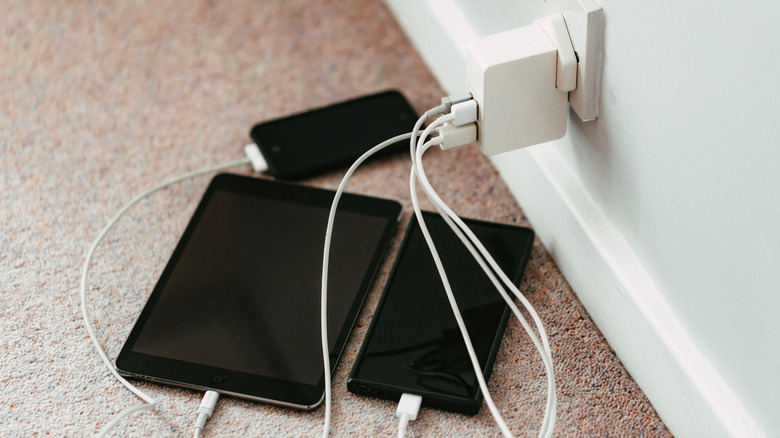
Nobody wants to spend a ton of money on a charger, especially nowadays, when many smartphones don't include one. However, buying a cheap charger could be a dangerous mistake that leaves you standing before the charred ruins of your house, and for what? Saving a couple of dozen dollars? Making things cheaply, unfortunately, can incentivize the use of poor-quality materials and possibly the bypassing of regulations to get the price down.
Back in 2016, Forbes reported how almost all self-labeled "genuine" iPhone chargers were fake. To be fair to Amazon, we aren't seeing headlines nearly as concerning in recent years. Regardless, stuff can slip through, even if it wasn't necessarily malicious. Take the recent INUI Power Banks recall in December 2025 of over 200,000 units, or the ESR HaloLock recall in August for 24,000 units. Both were cheap-leaning power banks. You probably haven't heard of those brands, but you have heard of bigger ones like Baseus, which also had a 2025 recall for over 55,000 units of a higher-end 65W, 30,000 mAh portable charger.
Only buy a trustworthy cord and charger brand for your electronic devices. In addition to the charger being safer, you'll get nicer features, such as fast charging and higher-quality materials, like those found in GaN chargers. You can go cheap on other things, but you shouldn't go cheap here, much less on Amazon, where sellers have gotten away with this stuff.
Smoke alarms and carbon monoxide detectors
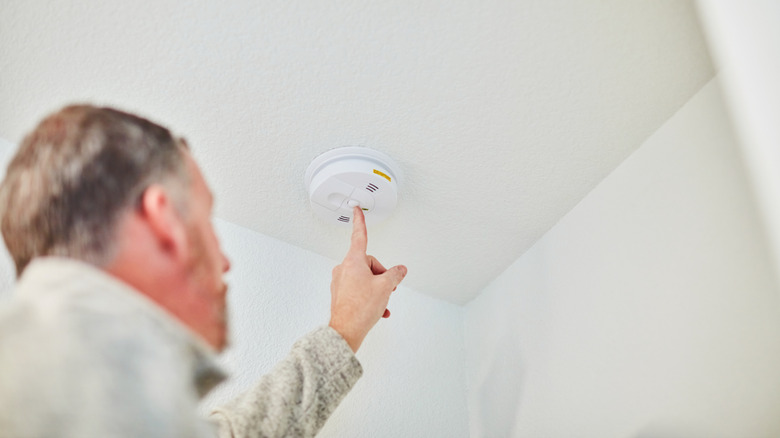
Smoke detectors are one of those devices that we rarely give the time of day — even for a 5-minute test and battery change — but which could be the difference between life and death. You want to be 110% sure that a smoke detector works. But people in the past have purchased smoke alarms on Amazon that didn't live up to their claims. Recent best-selling devices, too.
The New York Times looked into this and found that multiple popular smoke alarms didn't meet U.S. industry standards and certifications. That's not to say these smoke alarms didn't work, but the lack of testing makes it a toss-up. Would you want to install a smoke alarm in your home that might not work? Probably not.
The same has happened with carbon monoxide detectors, an arguably even more concerning threat since carbon monoxide can kill without any smoke or smell. Unsurprisingly, these have mostly been companies with names that look like alphabet soup that can vanish into the ether whenever someone needs to be held accountable. In 2021, the Consumer Product Safety Commission (CPSC) drafted a formal complaint against Amazon for allowing hundreds of thousands of dangerous products to flourish on its platform, and in 2024, it was held liable. There are some things you can go cheap on, but smoke and carbon monoxide detectors aren't one of them.
Supplements (and health products generally)

You've probably noticed a trend by now. Products that require regulations to ensure they're safe for consumers — particularly cheap products that leverage Amazon's seeming apathy — are rampant on the platform, and the same goes for things you ingest. At least one Amazon market should give you cause for concern. In 2022, a study examined immune-boosting supplements sold on the platform and found that fewer than half had accurate labels. There was extra stuff in these supplements that the manufacturer hadn't disclosed, which — regardless of what the substances were — would alarm anyone.
Again, we want to be crystal clear that we're not saying you shouldn't buy medicine on Amazon. The platform serves as a digital pharmacy for some people, and in this day and age, that choice is often based on cost. But do your research, and don't go cheap when it comes to what you rely on to stay healthy.
Apple products
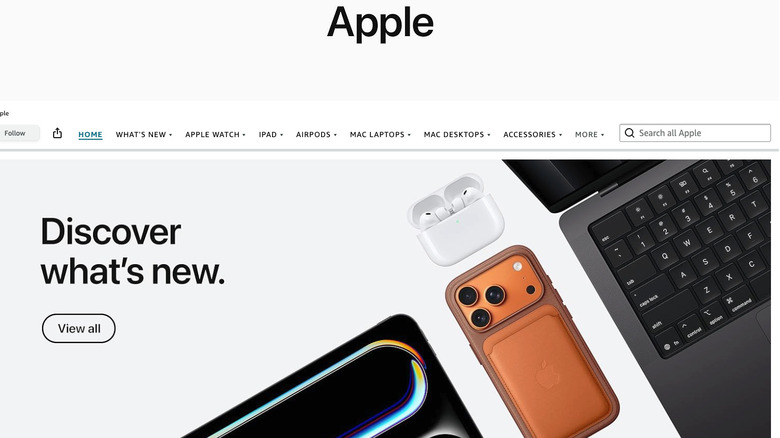
If you've ever raised your eyebrow at the lower prices of Apple products on Amazon, then don't. You are getting a great deal with only a few tradeoffs. The official Apple store on Amazon is an Apple-authorized retailer that offers many of the guarantees and protections you'd get buying from Apple.com directly. You'd miss out on Apple's awesome education discounts and its custom engraving options, but you'd still get a warranty, the option to buy AppleCare+, and a fairly generous return window.
All in all, it's really not a bad deal. There are plenty of Apple products worth buying refurbished, too, so you can go even cheaper if you lower your standards a bit. Apple has tried to kill off the competition to ensure only Amazon was selling its gear on its platform, so (perhaps luckily) you can't really buy Apple products without Cupertino's blessing.
Remember, though, it's Amazon fulfilling these orders, not Apple. You risk getting a used item fobbed off as new. Amazon admits to this, though not very openly. It checks returns and resells them as new if they still seem new. I once purchased a pair of AirPods on Amazon that gave me the "Not Your AirPods" pop-up when I first tried to pair them, clear evidence they were used. Considering how expensive Apple products are, you probably don't want a new MacBook to really actually be pre-owned.
Baby products
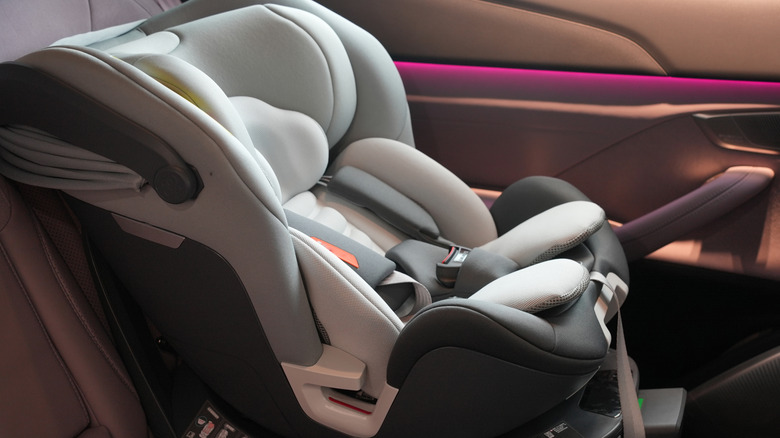
Amazon has a ton of kid-friendly items that make excellent gifts, and it's a go-to option for many new parents who need that two-hour delivery to get diapers or formula when they run out. For fatigued parents, it's a godsend. But we'd recommend, at the very least, being skeptical of anything you buy for your little one. A cursory Google search reveals an alarming number of recalls on baby products sold by none other than Amazon.
We're not just talking about cheap products that raised concerns. We're talking about the CPSC pulling things like unregulated baby high chairs and costumes with toxic chemicals as recently as 2025. The most disturbing news is probably counterfeit car seats that drew the attention of the New York State Division of Consumer Protection. We get it. Parents are financially overburdened with a new kid, but buying from disreputable or unverified alphabet-soup brands can put your child at risk, and New York issued a warning against buying such equipment from third-party sellers like Amazon. It's another product that is not worth saving money on.
Big-ticket items
We've already belabored the point that Amazon has a huge issue with malicious sellers, fake reviews, and used products sold as new. That's a risk that's tolerable with something cheap. Knowing all that, though, we'd avoid buying big-ticket items — as in, anything that costs over $200 — from Amazon.
Even assuming you don't get tricked by a bad seller and the reviews tell the real story, it's a lot of money to spend when returns are sold as new. Based on the condition of many "new" products I've personally purchased over the years, it always feels like there's an underpaid, overworked Amazon employee in the returns department who gives it a perfunctory look-over and then clears it for a new resale, rather than testing it thoroughly, and then the item sells for full price. If words mean anything, then "new" means "unused," and "refurbished" means "used but in working condition, and cheaper." I can stomach a "new" wallet that's actually a return; I can't stomach a "new but actually refurbished" computer that I have saved a long time to afford.
We'd recommend buying big-ticket items directly from the manufacturer, where possible. Selling used items as new is not unique to Amazon, but the platform is so big and makes returns so easy that I'd argue getting a returned item is more likely than on other platforms. At the very least, learn how to identify resales. Buying outside Amazon's glorious platform might not get you super-fast shipping and no-questions-asked returns, but anecdotally speaking, I've had far fewer problems this way.
Kirkland products
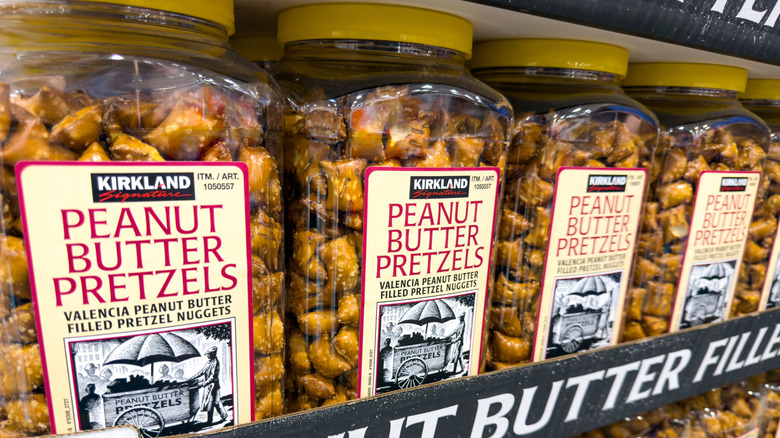
Everyone loves Costco's Kirkland products. My coffee grounds are Kirkland-branded, and I've never had any complaints about the taste or the quality. While you can buy Kirkland on Amazon — getting that big coffee tin at your doorstep rather than lugging it home is nice — you might not want to. Reader's Digest spoke with an expert and found that Amazon-bought Kirkland products cost more and may technically violate Costco's policies, which makes you wonder whether or not the sellers are trustworthy. A Costco membership could ultimately be cheaper in the long run.
Sadly, this is not a problem unique to Kirkland products. It's well known at this point that Amazon has intentionally built its business model to lock in users, starve competition, and then jack up the prices. You can, in some cases, get things cheaper if you just take a quick drive down to a brick-and-mortar store to buy the item you were planning on shipping — or buy it from another site.
Our advice? Do a bit of price shopping. I've personally found better prices on other sites for all sorts of things, and it's only taken me a couple of extra seconds. You're really only sacrificing the convenience of fast shipping and quick returns, which, as we've established, come at an indirect cost.
Cosmetics
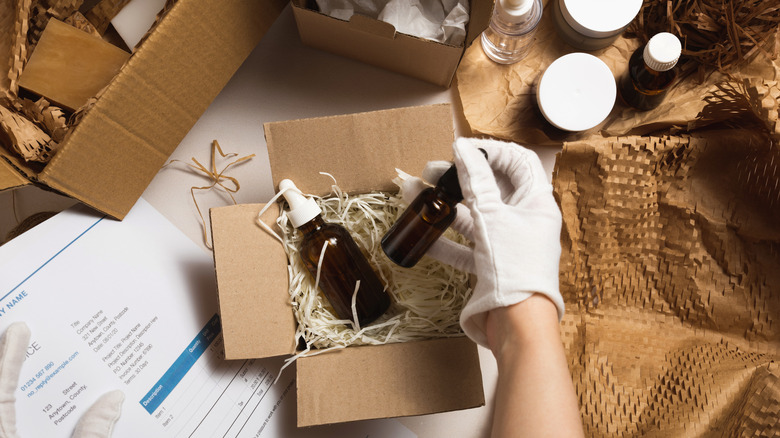
Good beauty products are not cheap, but Amazon makes them seem like they are. This ties into our recommendation to be wary of medicines or anything you ingest in a similar vein. The stuff you put on your skin and near your eyes can negatively impact your health and (like lipstick) can be inadvertently ingested. Counterfeit cosmetics may contain actual arsenic and mercury. Yikes. You can probably call yourself lucky if you get a bad rash from cheap cosmetics, because the outcome could be bad enough that you end up in the hospital. Anecdotally, some people have reported how even the same brand they've bought for years causes breakouts when purchased from Amazon.
The same tips that will prevent you from getting ripped off apply here, like checking the reviews. But it might be a good idea to just avoid buying cosmetics from Amazon altogether. Not to beat a dead horse, but Amazon is a cesspool of counterfeits, with makeup being a particularly big target for counterfeiters. You really do run the risk of getting something adulterated, or tampered with — or a fake that bypassed checks — and when it comes to sensitive skin and eyes, that's not something you should mess with.