

5 Infotainment Systems Better Than Apple CarPlay (According To Consumer Reports)
There was a time not all that long ago when the term "Infotainment" didn't exist within the automotive arena. These days, the term has become an integral part of how automakers market their vehicles to consumers, with digital displays and integrated mobile device functionality changing the way drivers interact with not just their music, navigation, and calling tech, but the world and people that exist outside of their car.
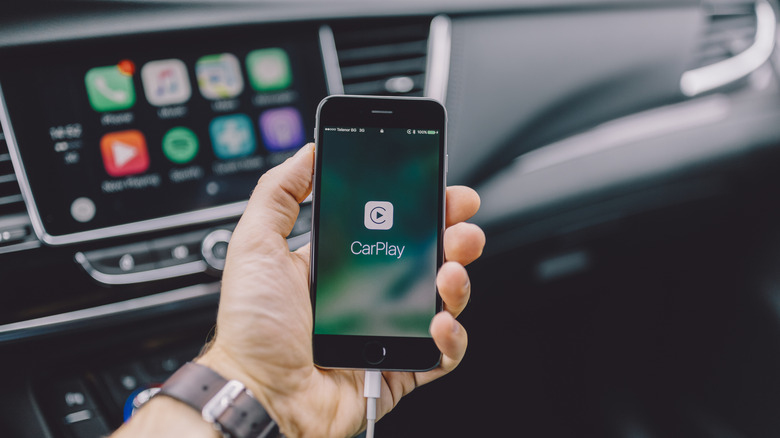
Given its position in the tech world, it should hardly come as a surprise to learn that Apple was one of the first major entities to fully engage a vehicle's so-called "infotainment center" directly. It did so initially in 2013 with the release of iOS in the Car, which allowed iPhone users to connect their device to their vehicle, and utilize many of its more vital functions through the car's infotainment system. A year later, the feature was rebranded as Apple CarPlay.
In the years since, however, competitors have risen to challenge CarPlay for information glory, including systems developed by many of the major automakers themselves. Because why wouldn't those factions want to control the infotainment conversation on their own terms. According to a recent survey conducted by Consumer Reports, some of them have indeed developed systems drivers find far more satisfying than Apple CarPlay. Here's a few of the more notable brands on that list.
Genesis
For the sake of clarity, auto brands with infotainment systems that do not support Apple CarPlay will not be part of this conversation. Likewise, Consumer Reports did include satisfaction ratings for the competing Android Auto system as well, though it almost universally placed below both Apple and most manufacturer-backed systems on the list. The one auto brand where Android managed to best Apple is Genesis. Per CR, however, the luxury brand's in-house infotainment system ultimately out-paces them both in terms of customer satisfaction.
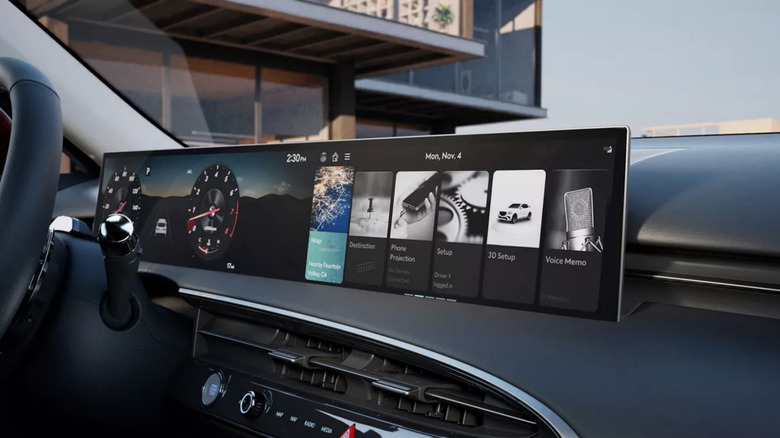
In fact, Genesis' own infotainment system bested all comers in that coveted metric, with the automaker placing at the very top of the Consumer Reports ranking. If you've ever been at the helm of a Genesis, you know that the vehicle's infotainment screen likely plays a big role in how drivers are reacting to the system on the hole, as the brand's display — dubbed the vehicle's "star" in our own review of the GV70 – is impressive, to say the least. Said screen is said to deliver clean, crisp images and boast a user-friendly, highly customizable display; features that are all big drivers when it comes to satisfaction.
While some users find the Genesis screen a little busy, and its location potentially a little distracting, the Consumer Reports survey shows that the perceived positives far outweigh those potential negatives, even when compared to Apple CarPlay.
Hyundai
Genesis served as the luxury division of Hyundai prior to branching out as a separate brand in 2015, and Hyundai does technically still own the Genesis brand. Wiht that in mind, it is perhaps not entirely shocking that parent company would also find its way onto a list rating in-vehicle tech.
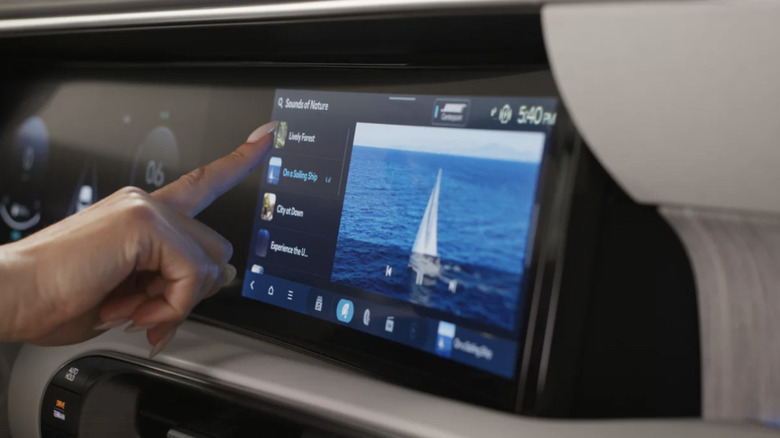
Like its sibling brand, part of the draw of Hyundai's infotainment systems is the screen itself, with models like the Palisade boasting visual arrays as large as 12.3-inches. The brand's infotainment system is also very customizable, giving operators more control over widgets, quick access controls, and even screen views. Newer models may also utilize the CCNC (Connected Car Navigation Cockpit) system for better graphics and enhanced overall performance.
In some builds — like the SlashGear approved 2026 Palisade Hybrid — Hyundai's Digital Features System (DFS) is also a big infotainment plus, as it not only allows users the option to purchase downloadable content through the touchscreen display, but also personalize the vehicle's display screen with options including nature scenes, ponies, and even the legendary "Peanuts" comic strip. It should be noted, however, that those display theme upgrades are not free, and require a trip to Hyundai's Bluelink store. Just FYI — if you add your payment info to your Bluelink account, Hyundai infotainment even boasts a widget that will let you pay for parking there too, which is sure to please a city driver or two.
BMW
Interestingly enough, even as some of the better-known European auto brands continue to lean into performance and luxury-minded upgrades, BMW is the only one with an infotainment system that drivers consulted for the Consumer Reports survey seem to prefer over Apple CarPlay. Yes, the German auto manufacturer's infotainment package has been designed to combine the sort of power and luxury mix you'd expect in a BMW.
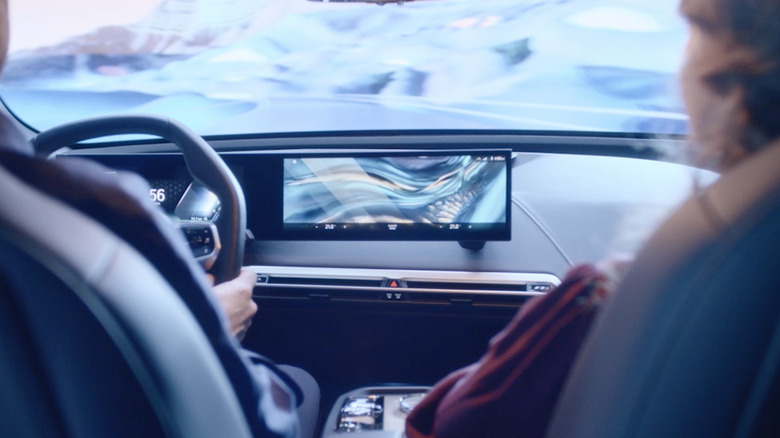
Like most of the vehicles that scored well on the CR CarPlay infotainment breakdown, the system fronts a sleek display screen, with BMW claiming it is also ergonomically designed to reduce strain on the driver. Per BMW, the design team also put the package together focusing on the "Act, Locate, Inform" principle, designing it to ensure information is displayed and distributed as clearly and concisely as possible. BMW's design team also sought to imbue the infotainment system with enhanced graphics to make the display more intuitive and easier on the eye.
Personalization is also a big part of system's appeal, with BMW offering drivers the chance to adjust settings on the screen and vehicle's interior to three specific drive modes. On top of those desirable features, the system can, of course, still handle the calling, navigational and streaming features that are at the core of the general Apple CarPlay experience. BMW's iDrive also boasts an intuitive personal assistant feature that some drivers might find preferable to Apple's Siri AI assistant, which is typically available through the CarPlay setup.
Lincoln
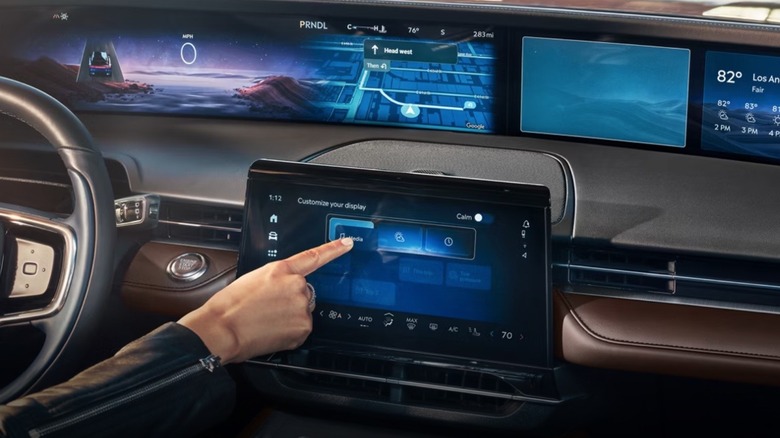
With origins dating back to 1917, Lincoln is one of the oldest auto brands to outdo Apple CarPlay in the Consumer Reports infotainment survey. That fact alone signals that the low-key, Ford-owned luxury shingle has not only kept pace with the competition in the technological age of the automobile, but actually found ways to excel in the market.
These days, Lincoln Motor Company focuses solely on the manufacture of luxury-minded SUVs. The brand's design team has also kept the elderly auto brand feeling fresher than expected via interior upgrades that include a stunning dashboard display rife with all manner of digital delights. Those features impressed our own SlashGear reviewer in their write-up of the 2025 Lincoln Navigator, even as they were underwhelmed with the vehicle on the whole. As the reviewer noted, part of that display stretches the width of the interior at 48-inches, displaying everything from on-road and diagnostic stats to navigational features and weather reports.
There's also an additional in-dash touchscreen that boasts a fully customizable interface complete with personalized profile settings, a voice assistant, and additional navigational options. Lincoln's infotainment package also boasts 5G and Wi-Fi connectivity, as well as direct access to the Google Play store — a feature that no doubt particularly irks Apple's CarPlay crew. Despite that fact, CR contributors still found CarPlay a far superior option to Android's AutoPlay in their Lincoln's, even as the brand's own infotainment bested both.
GMC and Buick
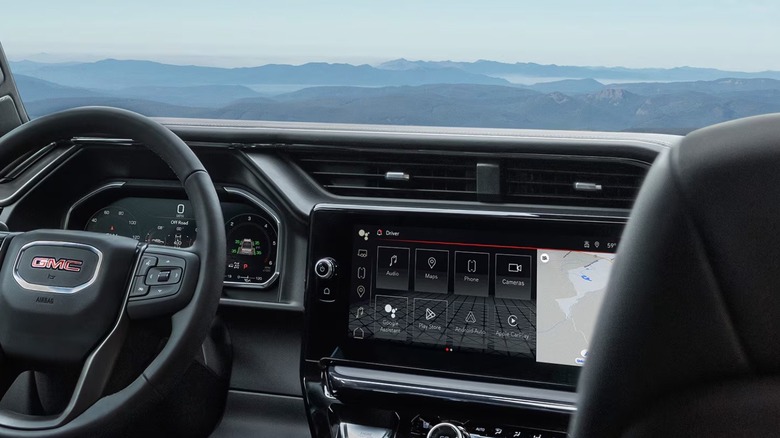
On the subject of America's most legit auto industry old-timers, both the GM-owned GMC and Buick brands both actually predate Lincoln. And while the major calling cards of GMC have long been heavy-duty pickup trucks and rugged sport utility vehicles rather than luxury and in-cabin tech, it would seem the brand has had no problem modernizing. Now it equips many of its vehicles with a 40-inch infotainment touchscreen.
GMC systems offer similar functionality to most of the other infotainment arrays listed above, including direct access to Google Assistant and the Google Play Store, as well as Android Auto and Apple CarPlay connectivity. But according to Consumer Reports, drivers are largely opting to use GMC's own infotainment system instead of those alternatives. That's not particularly shocking, however, as GMC's package also boasts some hauling-specific features you may not have easy access to when using CarPlay.
As for Buick, GMC's sister brand has long held more luxury appeal, though like Lincoln it's been focusing entirely on producing higher-end SUVs of late. Unsurprisingly, Buick is a little more flash-forward with its digital design, integrating a 30-inch touchscreen into the dashboard display for a sleek, OnStar-centric infotainment setup that is highly personalizable for music and media play, supports calling features, and even lets you adjust interior ambient lighting. While GMC and Buick didn't best CarPlay by much, the CR report still reflects a decidedly forward-thinking mentality for a pair of America's elder automotive statesmen.