

12 Of The Worst Cars Built In The 2010s
The 2010s were a decade that had everyone excited for the future of automobiles, and rightfully so. The manufacturers had decades of experience, supply chains were mature, and computer-aided design could simulate every scenario imaginable. In the decade prior, we'd seen some real revolution because designers and engineers weren't afraid to experiment. The Volkswagen group was busy shoving 10- and 12-cylinder engines into family SUVs, BMW stuffed a V12 into its executive sedan, and Ford had just made one of the most powerful pickup trucks in the world, the original F-150 SVT Lightning.
As such, everyone's expectations were sky-high going into the next decade, but we did get a number of flops these years. Some are vaunted nameplates that were revived only to be destroyed by incompetence; Others were shipped with bad tech that wasn't ready for market at all; Still others fell victim to cost-cutting that saved the OEMs pennies while costing reputations.
It's important to point out that the designation of "worst" could apply for a number of reasons. Some cars generated sky-high hype and then didn't deliver; some had safety flaws; a great number combined unreliability with eye-watering prices; and still others were just ugly. So, with all that said, here are 12 of the worst cars that were built in the 2010s.
2011 Jeep Compass
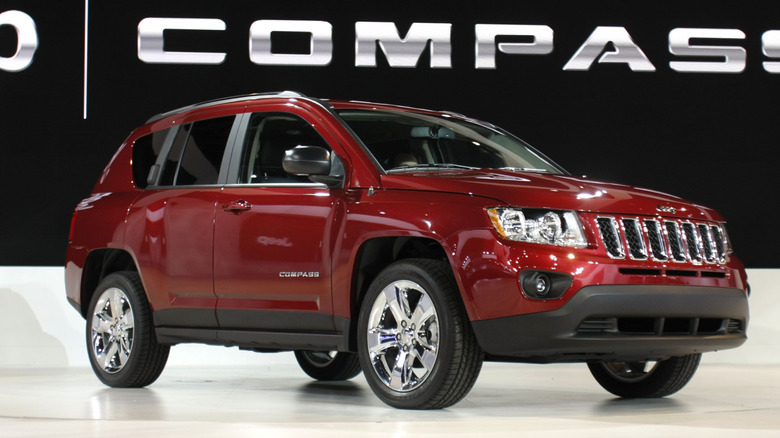
The Compass is a viable alternative to the Jeep Wrangler, at a far more palatable price point, so there's good reason why it was popular. The first-gen Compass was facelifted majorly in 2011, and it was supposed to be Jeep's way of kicking off the 2010s. These early models (barring the 2007 one) were among the best years for the Jeep Compass, while the later first-generation models ranked among the worst, and with good reason. The 2011 shared a platform with the Dodge Caliber, and thus, shared all of its issues. First of all, only the base trims could come with a five-speed manual box, with all others getting a horrible CVT, or continuously variable transmission.
The base 2.0-liter inline-four engine was underpowered at 158 hp and 141 lb-ft of torque, the suspension didn't do its job very well, and reviewers said the steering was sloppy and had considerable give. Even the larger, 2.4-liter, 172 hp, 165 lb-ft inline-four unit would have been underwhelming. And, at 22.7 cubic feet of cargo space, it was at the bottom of the class, behind the Volkswagen Tiguan (23.8), Honda Element (25.1), and Kia Sportage (26.1). There were also recalls for the airbags and steering columns on this model year. The two saving graces of the model were the price, which started at $19,295 for the four-door FWD variant, and the design, which was clearly inspired by the much more premium Jeep Grand Cherokee.
2013 Dodge Dart
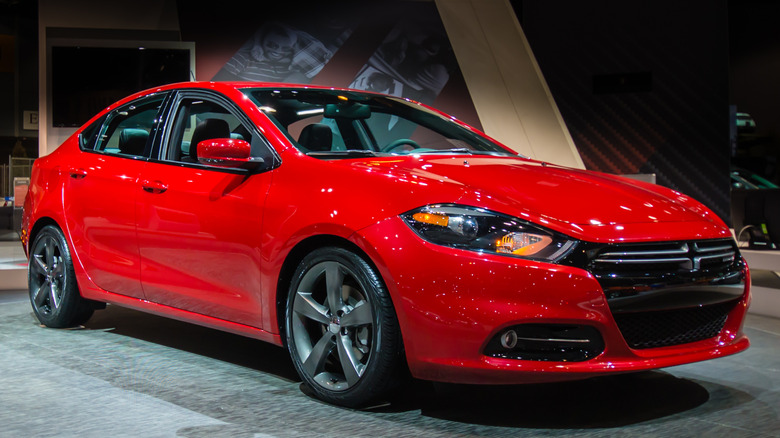
Next up, we have the 2013 Dart from Jeep's sister brand, Dodge, both of which are now part of the group of brands owned by Stellantis. The Dart nameplate is not a new one, and is actually from the legendary 1960s coupe/sedan of the same name. So, naming the new 2010s sedan the Dart was quite the bold move, and it had big shoes to fill — but failed. To start with, the design was fairly decent, and it ended up looking a lot like the Ford Focus we'll cover further down, at least from the side.
The interior was simply average, much like the rest of the car, and the driving dynamics were nothing special. The price was a bit on the higher side, at a base MSRP of $15,995 in 2013, which works out to $22,224 today, and the engine was a mediocre 2.0-liter four-cylinder unit that produced 160 hp and 148 lb-ft of torque at 4,600 RPM. However, the thing was hideously unreliable with scores of NHTSA complaints.
There were premature battery failures, the six-speed automatics (and automated manual boxes) were massively problematic for a number of reasons, and the engine oil consumption was through the roof, particularly on models with the larger 2.4-liter engine.
2011 Chevrolet Cruze
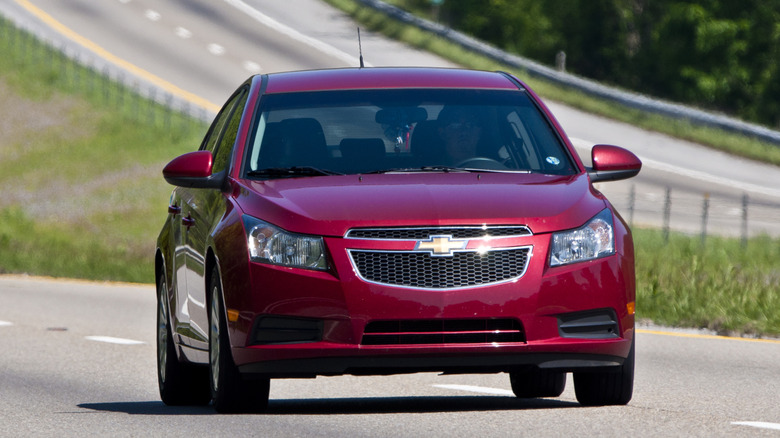
Sticking with the theme of notorious unreliability and being at the bottom of its class in everything but price, we have the Chevrolet Cruze. It was a mid-market sedan that was supposed to be a competitor to the Toyota Corolla, Hyundai Elantra, and Honda Civic, which was a major money-making segment in America at the time. However, when compared to those competitors, the Cruze didn't deliver on basically any front. The base engine was a 1.8-liter inline-four unit that made 136 hp at 6,300 RPM and 123 lb-ft of torque at 3,800 RPM.
There were a number of reliability concerns with the model, including (but not limited to) transmission slipping, refusing to go into the reverse gear, cooling fans failing, hoses leaking, engine misfires, and turbo gremlins on the 1.4-liter models. The interior on the base models was spartan, with lots of hard plastics everywhere, and a general lack of features on these lower trims. Higher trims like the LTZ did get some nice features, such as heated mirrors, cruise control, and aluminum wheels, but the value proposition for these trims was poor. While the base model LS started at an already expensive-for-what-you're-getting $16,525, the top-shelf LTZ trim began at an eye-watering $22,225. Remember, this price was for a fairly unremarkable, unluxurious, decidedly unsporty sedan ... from Chevrolet.
2011-2017 BMW F10 5-Series
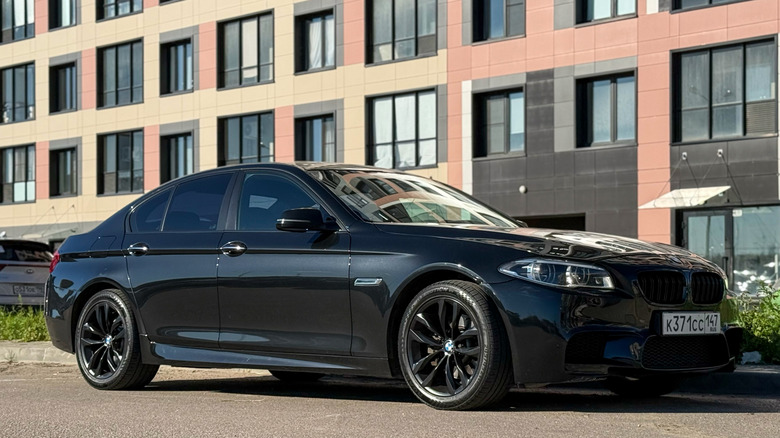
The new F10 generation for BMW was supposed to be an upper mid-range sedan offering, sitting below the 7-series executive limousines, and the F10 ran from 2011 all the way through 2016. Now, BMW has never had the best reputation for reliability, but the F10 series was in a class of its own. There were many different models within the lineup, like the 520i, 523i, 528i, 535i, some region-specific ones like the 550i, and of course, the legendary BMW M5. Throughout the generations, many different engines were available, such as the N20, N52, N53, and N55 engines, among others.
It's worth mentioning that each particular model and engine would have had its own issues, so we're sticking to the ones common across the generation. For starters, timing chain problems were common on a number of models and were known to break prematurely and to have tensioner issues. The high-pressure fuel pump was also known to fail; There were gasket and sealing issues, the turbochargers would give out, and a number of electrical issues. A problem on the F10s was also water seepage into the trunk because of poorly installed rubber grommets. All that is in addition to numerous minor gremlins like the infotainment system glitching out, quick battery drain, and frequent transmission quirks.
2011 Ford Fiesta
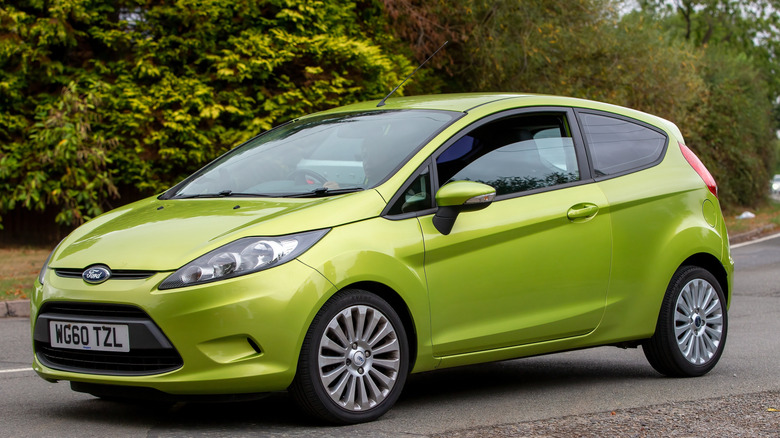
It's usually a 50-50 thing when a car is known and remembered for exactly one feature that it possesses. For instance, the Dodge Viper ACR has a rear wing that is exactly 1,776 mm across, as that's the year the Declaration of Independence was signed — this is fantastic. However, what's not fantastic is that the 2011 Ford Fiesta shipped with a disastrous dual-clutch transmission that has become the car's defining feature. The transmission in question was the (optional) DPS6 PowerShift six-speed unit, and it quickly became evident that it liked to eat itself.
Owners complained of extraordinarily harsh shifting, loss of power, slipping between gears, shuddering, and more. Very quickly, class action lawsuits began to pile up, and it was later revealed that Ford continued selling the Fiesta despite knowing about the flaws. The most prominent of these was Vargas v. Ford, which was settled in 2020 for $77.4 million, and included a vehicle buyback program, cash compensation, reimbursement, and, in some cases, discount vouchers for future vehicles in lieu of cash.
The Fiesta was otherwise a pretty neat package overall. The base engine displaced 1.6 liters across four cylinders, and made 120 hp at 6,350 RPM and 112 lb-ft of torque at 5,000 RPM. Manual variants are rather sought-after today because they're fun to drive. The interior was passable (good for the time), and the base MSRP of $13,995 in 2011 was downright stellar.
2012-2018 Ford Focus
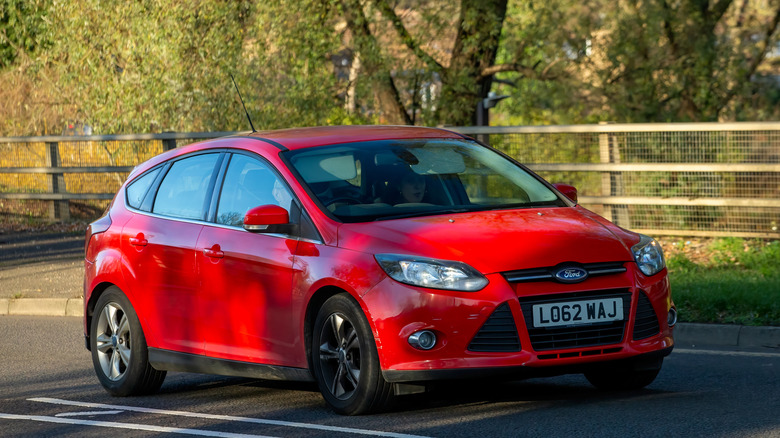
Sticking with the blue oval company from Detroit, we have the 2012-2018 generation of the Ford Focus. It shared the DPS6 PowerShift transmission with the Ford Fiesta, which we've just covered above, so we won't repeat the number of problems that particular transmission brought. However, while the Fiesta had other saving graces, like the price and interior, the Focus had none and instead offered owners a slew of other issues. To begin with, it was apparently quite common for these years to have a very rough idle in the engine, and certain models would stall frequently, leading to a recall.
While we're on the topic of the engine, it was similar in size to the Fiesta, being an I-4 unit displacing 2.0 liters; while producing 160 hp at 6,500 RPM, alongside 146 lb-ft of torque at 4,450 RPM, which is considerably better than the Fiesta's 120 hp and 112 lb-ft. Among the many issues with the interior was the door latches failing (leading to a recall of 2.2 million units), and some users also complained of insufficient storage space inside. There was also a serious problem regarding coolant leaks (that could ultimately destroy the engine entirely), and a scarily common set of issues with the steering column.
(Any) Nissan Juke
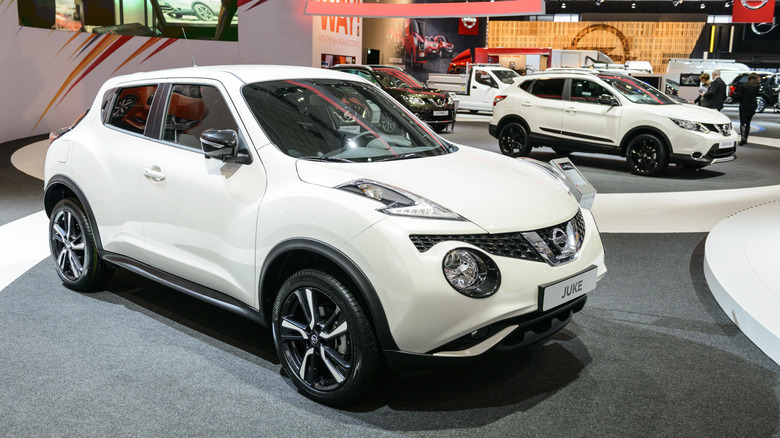
The Juke is a small crossover that is better described as a lifted hatchback, released at the start of the decade, in 2010. It wasn't a great model, but it continues to be sold today, with the second generation being introduced in 2019. We suppose the main problem with the Nissan Juke is that it's simply ugly as sin. However, that's not where its troubles end, as it too faces a number of reliability problems, most of which are wallet-busters to fix. For starters, the Juke of the 2010s was one of the models that came with Nissan's problematic CVT transmission, which was known to fail quite often and prematurely.
Turbo models were also known for gobbling up timing chains early and needing frequent replacements, which was a labor-intensive process. Owners also reported issues with the paint chipping and flaking off easily (probably because of a thin finish), problems with water ingress, and clutches in the manual variants wearing out too soon. There was a set of known issues with the ABS system and a great many with the assortment of sensors in the Juke. Readers are requested to remember that somewhere in the annals of Nissan, a designer created this, a supervisor approved it, and a board of directors pushed it into production, where it remains to this day.
(Any) Tesla Model S
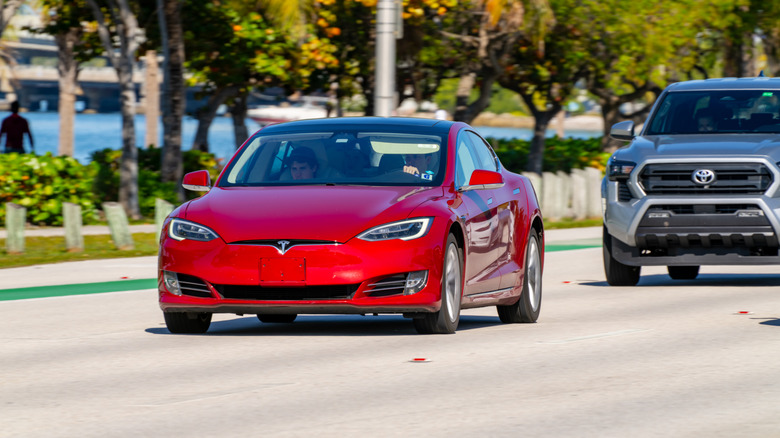
We'd like to preface this by saying that the modern Model S is actually a pretty decent offering, refinement-wise, but price and value are another question entirely. Many of the problems we describe for the Model S have been addressed through more software iterations, bug fixes, and service improvements. However, in the 2010s, these were major issues that would have been dealbreakers for many buyers. To start with, the retractable door handles that sit flush with the body when not in use are known to be a common point of failure. Other minor problems included those with the wipers, washers, and parking brake.
A few fairly major complaints come in with respect to the suspension, which starts to give out around 50,000 miles. Tesla recalled tens of thousands of Model S and Model X vehicles for issues with the steering column. Additionally, for those drivers looking to get the self-driving features on older models, note that hardware changes after 2014 mean that cars older than that are ineligible for the feature.
(Any) Fiat 500
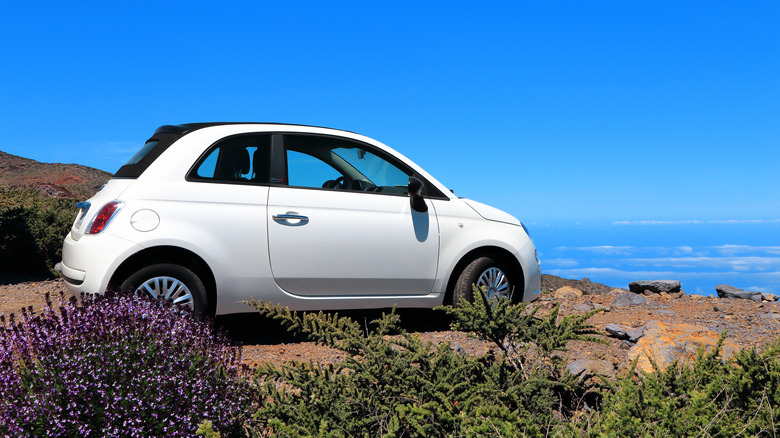
The tiny Fiat 500 was supposed to be a novel take on what a small commuter car could be — exciting to drive, with good looks, and good fuel economy. While all that turned out to be true of the production-model Fiat 500s of the 2010s, they also hit the trifecta of things that'll kill a car. It looked good, but the interior build quality was poor. It was compact, but also had an equally small engine, especially when compared to the competition from Mini. Yet it still managed to have some charm in terms of driver engagement, but it still faced a number of reliability concerns.
And it's that last one that causes all the problems, with the most common issues being power steering failure, instrument clusters not reading right, suspension issues, and premature clutch wear. The base engine on the early 2010s models was a 1.4-liter I-4 making 101 hp and 98 lb-ft of torque, and the base MSRP was $16,195 in 2013. So, to sum up why the Fiat 500 makes our list, it was an exotic with all of the exotic problems and none of the exotic appeal, with a designer price tag to boot.
(Any) Volkswagen Tiguan
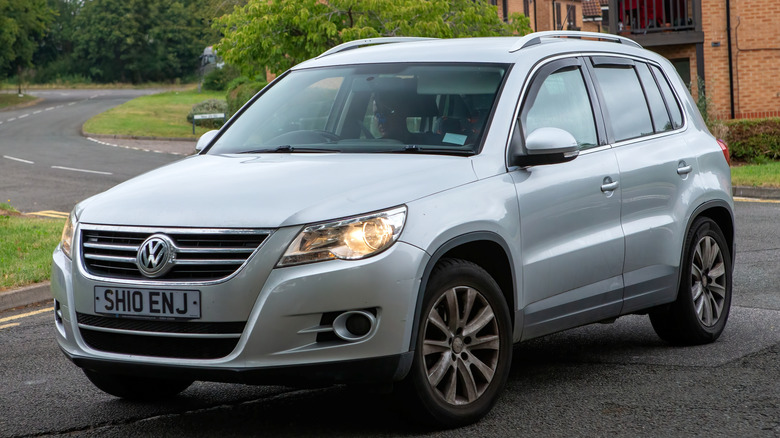
The VW Tiguan was introduced back in 2009 as a mid-sized crossover targeted at small families. Its main competitors were the Toyota RAV4, Honda CR-V, Kia Sportage, and Hyundai Tucson; All of which outperformed it in some metric or another, be it price, reliability, comfort, or driving feel. To begin with, the Tiguan's base engine was a paltry 2.0-liter turbocharged four-banger unit that made 200 hp at 5,100 RPM and 207 lb-ft of torque at 1,700 RPM. Like many of the other cars on this list, it had two main issues: reliability and overpricing, especially when stacked up against the rest of the segment.
Common problems included the oil pump failing, an issue-prone turbo system, transmission woes, and many, many glitches with the electrical system. The final nail in the coffin would have been the base MSRP, which for 2010 models was $23,200, which works out to almost $34,500 in 2025 after inflation is accounted for.
(Any) Mini Cooper
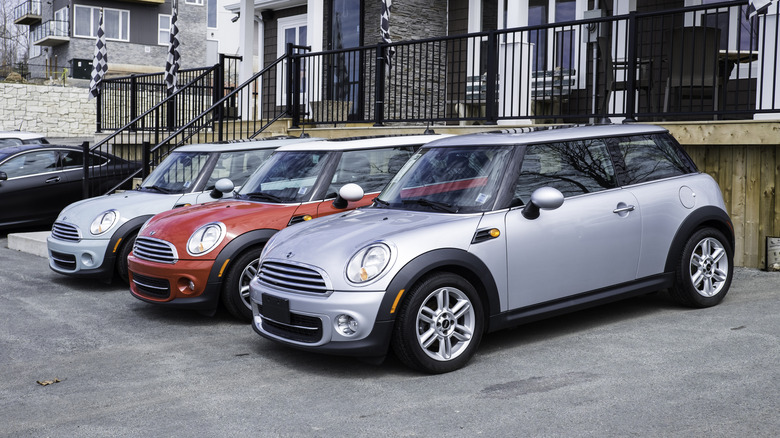
To begin with, many people assume that "Mini Cooper" is the name of the brand, but in reality, the brand's name is just "Mini", without the Cooper. The two main models it has offered in recent years are the Cooper and the very similar Countryman, but we want to focus on the Cooper. It came with a 1.6-liter I-4 engine and produced 121 hp and 114 lb-ft of torque, making it a square competitor to the Fiat 500 that we covered above. The price was similar too, coming in with a base MSRP of $19,700 in 2013. Another area where the Cooper and the Fiat were similar was reliability, or rather, the lack thereof.
For starters, the Mini Coopers of the day struggled with oil leaks, faulty thermostats and sensors, exhaust system problems, and most notably, an issue with premature wear on the timing chain tensioners along with the chains themselves. Individually, all of those are important, but when slammed together, engine failure becomes too much of a likelihood for comfort.
(Any) Land Rover Discovery and Discovery Sport
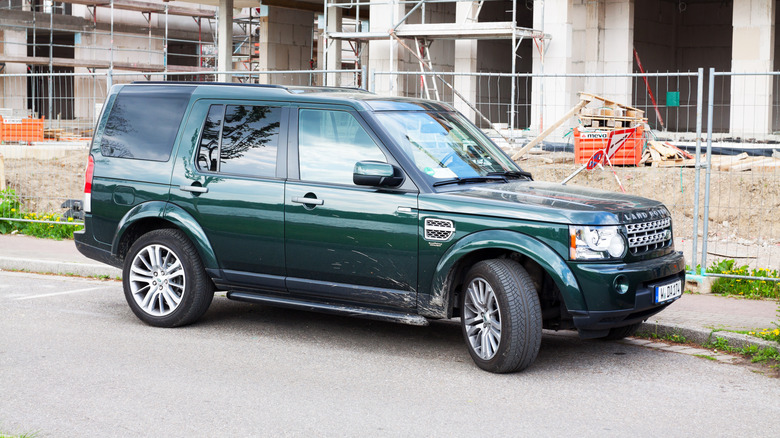
Now, it's no secret that Land Rover models don't have the best reputation when it comes to reliability, often ranking near the bottom of lists. However, the Discovery was supposed to be the brand's saving grace in the 2010s, amidst renewed competition from the Germans and the Japanese. But in reality, even among high-maintenance peers like the Jeep Grand Cherokee, Audi Q7, Mercedes GLE, and Lexus GX line, the Discovery was in a class of its own in terms of unreliability and expense.
The biggest issues were usually to do with the entire air suspension system failing (the reason for the failure could be one of several), causing the entire ride to sag, especially overnight. The infotainment system was prone to glitching, the door locks would give out frequently, and if there was a liquid, it leaked, be it coolant, water, fuel, or anything else. Then there were issues with the transmission, too numerous to name, often linked to an exceedingly poor valve design.
All of this is before we come to the actual engine itself, which was a victim of intake manifolds with faulty gaskets, EGR valves that would break, premature battery wear, and early timing chain failure, among a host of other things. And all of this goodness could be yours for an as-new base MSRP of $37,070 in 2015, which works out to about $50,000 today.
Methodology
The biggest factor used in determining whether the car was the "worst" was if it set sky-high expectations and didn't come near meeting them. There were many of these in the 2010s, like the Compass from Jeep, for example. But we did try to investigate the reason why the cars were flops. For example, the Compass was described as "cheap" and "tacky" by media reviewers and failed to justify its price tag in terms of comfort, performance, or any other reliable metric.
Some sources used to aggregate facts were iSeeCars for values and depreciation, Edmunds for at-launch MSRPs and trims, and destination charges. Also, EPA for the economy and Car and Driver for model reviews, along with KBB for current values for that model on the used market. We also tried to have three of the "worst" cars from each of these categories: design and looks, reliability, value for money, and performance.