

5 Of The Best Sports Bikes For Beginners
Choosing your first sports bike is one of the biggest milestones in any rider's life. It's the moment the dream finally becomes real, and the bike becomes alive under you for the first time. As exciting as that is, getting into one can also feel overwhelming, especially when you're new to it. Suddenly, you're faced with tons of options competing for your attention, each one promising sharp handling, modern tech, and enough performance to keep things exciting. While plenty of bikes are marketed as beginner-friendly, only a handful are actually designed with newbies in mind.
The thing is, a true entry-level sports bike has to do more than look fast. It should feel manageable the second you ease out the clutch. That means the power should roll in smoothly rather than hitting all at once; the brakes should inspire confidence without being grabby; and the suspension should remain stable rather than stiff or twitchy. As you get closer to choosing the machine for you, the next thing that matters just as much is cost. The price and day-to-day expenses need to make sense for someone who's still fine-tuning their skills on two wheels.
What makes the bikes in this list stand out is how well they combine all of those traits without watering down the thrill that makes sports bikes so appealing in the first place. If you're finally ready to make that big leap, these bikes are among the best models to start with.
Yamaha YZF-R3
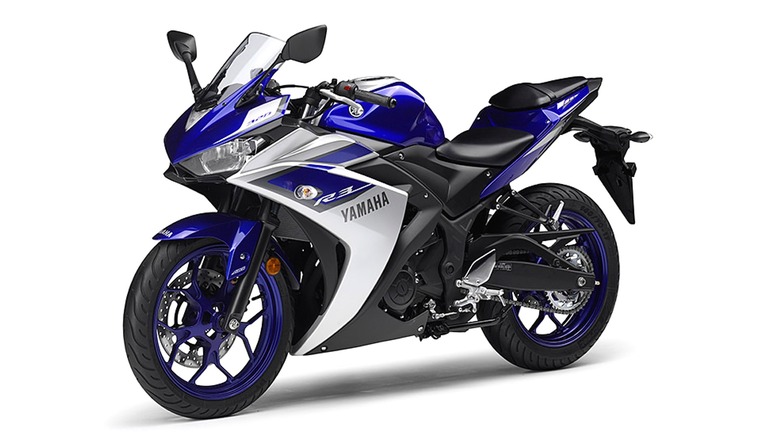
First is the Yamaha YZF-R3. This is one of the R-series bikes that has been tough to ignore since its 2015 debut. It's the kind of machine that lets new riders learn and improve without punishing them for every little mistake. That forgiving nature carries over to its power delivery. On the 2025 model, the 321 cc parallel-twin engine cranks out about 42 hp and 21.8 lb-ft of torque, which is enough for any rider to grow with.
But what actually keeps the R3 planted, especially when stretching near 120 mph, is its overall chassis setup. The diamond-type steel frame, the inverted fork with updated valving, the preload-adjustable monocross shock, and a dual-channel ABS system all work together to keep the bike calm through every corner. It is also level-headed when it comes to maintenance, due in part to its six-speed constant-mesh gearbox and an O-ring chain. One rider with a 2017 model reported spending about $300 on a 3,700-mile routine check, which is in line with what new riders typically expect.
The R3 leaves room for simple customization, such as color swaps, lever upgrades, or exhaust tweaks, and for about $6,099, including the $600 delivery fee, Yamaha gives you a 12-month factory warranty. You also get a redesigned LCD display paired with the MyRide app, which helps track things like lean angle, braking points, and fuel use without needing any extra add-ons.
Honda CBR500R
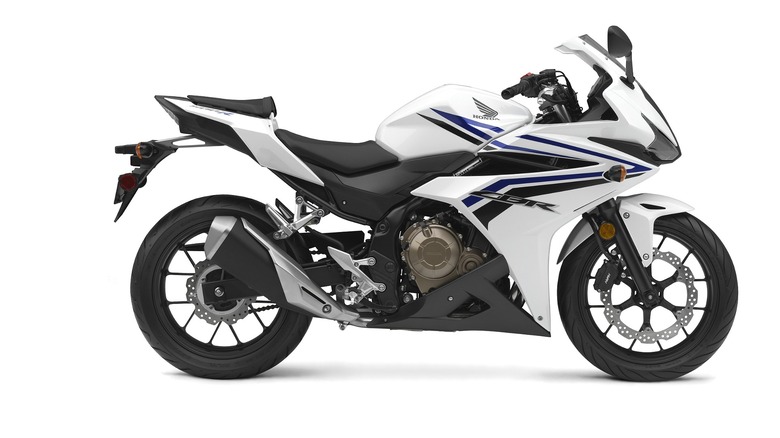
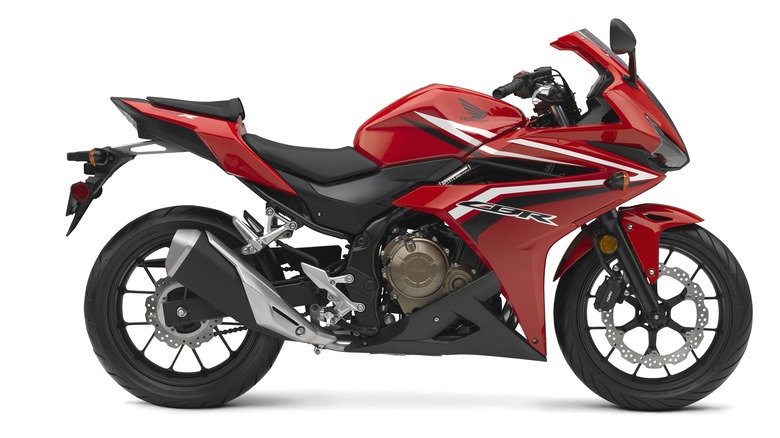
Ever since it hit the market in 2013, the Honda CBR500R has been one of the most reliable sports bikes you can get if you want something quick but genuinely beginner-friendly. One of the best parts is that its price stays well under $10,000, selling for $7,399 (plus $600 destination fee) for the 2025 model. It's also very fuel-efficient thanks to its responsive Advanced Fuel Injection system, so you can spend more time riding instead of refueling.
Power comes from a 471 cc engine that generates about 47 hp and the improved ECU and Honda's E-Clutch, which allows beginners to have smooth throttle control, especially when their timing isn't perfect yet. While it isn't the fastest bike on the road, it can still reach about 112 mph, which is more than enough speed for anyone still learning. Plus, its aerodynamic fairings, sharp LED headlight, and Fireblade-inspired bodywork also help it cut through dirty wind.
When the road gets rough, 41mm Showa forks keep the front end steady, while the Roadsync system, with its 5-inch TFT screen, makes navigation and phone features simple to use without taking your attention off the ride. Add in Honda's Torque Control System for extra grip and confidence when the road gets wet or slippery, and for peace of mind, Honda has got you covered for 12 months, with an option to extend through HondaCare if you want longer protection coverage.
KTM RC 390
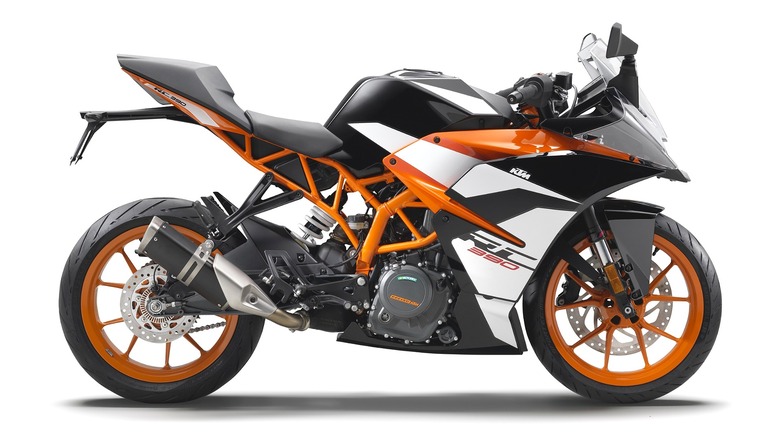
Everyone already knows KTM pulls tons of inspiration from MotoGP, and that's been the case at least since the RC 390 first showed up in 2015. With hundreds of racing titles under its belt, KTM finds ways to sprinkle that race-bike flavor into its newest models, and that's evident in the RC 390's stainless headers, lightweight chassis, aluminum muffler, and engine tuning. The 373 cc single-cylinder might be small on paper, but it puts down about 40 hp and roughly 24.1 lb-ft of torque through a six-speed gearbox, which is plenty for a bike this size. The 2017 refresh added additional benefits, including a side-exit exhaust, refreshed mapping for the engine, and ride-by-wire with EFI. That alone gave the bike a sharper throttle response without making it feel twitchy.
After those upgrades, the RC 390 remains a rider-friendly 342 pounds dry, with a 32.4-inch seat height and a 3.6-gallon tank. That manageable size works hand in hand with the trellis frame, adjustable suspension, bolt-mounted subframe, and 17-inch cast wheels that work together to keep the bike planted in corners and easy to flick around. On the braking and control sides, the power-assist slipper clutch smooths your downshifts and features cornering ABS that works with a suite of other rider aids to support new riders without holding back the pros. If you're looking at the 2025 model, all of this comes in around $5,899, plus a $575 freight fee.
Aprilia RS 457
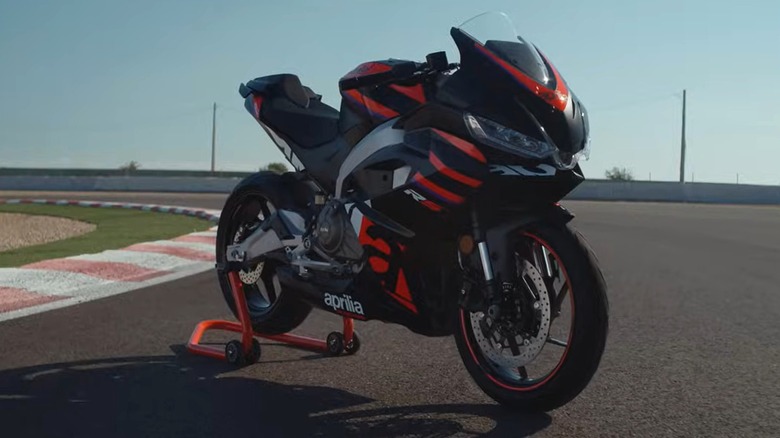
If you're a beginner looking for a budget-friendly sports bike that looks expensive, the Aprilia RS 457 is one of the easiest picks you can make. At $6,799 before fees, it cranks out around 47 hp and 32 ft-lbfrom its liquid-cooled 457cc engine, which is precisely the kind of power new riders can learn on without feeling intimidated. That output works hand in hand with a six-speed gearbox and a slipper (assist) clutch, all of which help keep downshifts smooth and predictable. Even with all that going on, the bike still comes in at roughly 385 pounds wet, thanks to its lightweight aluminum dual-beam frame. Once you're actually on the road, that low weight pays off through the tight turns even as it approaches an estimated peak speed near 120 mph.
If you're looking for an alternative to the Yamaha YZF-R3, the Aprilia could win you over the moment you look at its electronics package. It brings in features like a traction system, ride-by-wire throttle, wheelie control, cornering ABS, three selectable drive modes (Sport, Eco, and Rain), a five-inch TFT dash, the MIA connectivity suite, and even LEDs. All of that is managed by one brain — the Marelli 11MP control unit – to keep the bike supportive without ever getting in your way. If you're thinking long-term, Aprilia also has you covered with warranty options that extend beyond the standard two-year plan.
Kawasaki Ninja 650
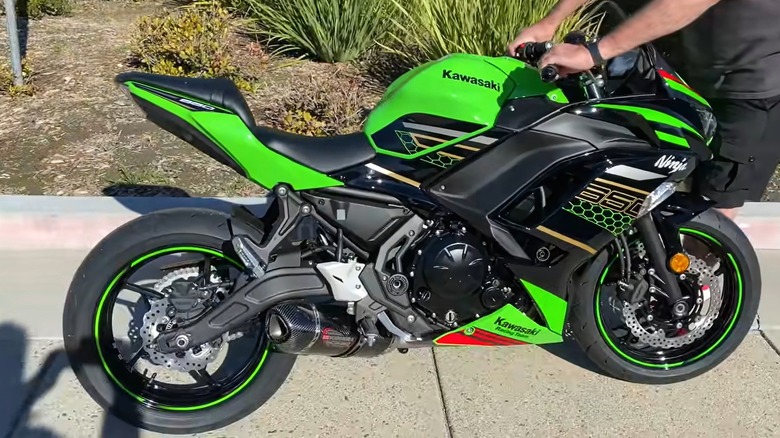
The Kawasaki Ninja 650 is a four-stroke bike that feels familiar the moment you climb on it, and that's because It runs on a refined 649cc parallel-twin engine that puts out about 67 hp and 48.5 lb-ft of torque through a six-speed gearbox. Thanks to its dual Keihin throttle setup, acceleration is smooth without feeling jumpy. At $8,199 (plus a $685 destination fee), you're getting a 425.6-pound ABS-equipped machine with a slim trellis frame and a 31.1-inch seat height that will make even newbies feel at home.
You'll also appreciate how the built-in traction control, Kawasaki's suspension setup, the slipper clutch, and the handlebar position all work together to keep the Ninja 650 settled through corners and steady over rough patches. That stability isn't just on paper: Four riders from MCN rated it a strong 4.8 out of 5.0 stars. You also get a standard one-year warranty and a Protection Plus extension if you qualify. For the latest model, you'll get the Rideology app for navigation, ride tracking, and basic connectivity.
Methodology
To figure out which sports bikes truly deserve a spot on this beginner's shortlist, the focus had to go beyond raw horsepower or even spec-sheet bragging rights. Everything started with what new riders actually need in the real world. That meant digging through manufacturer specs, rider feedback, long-term ownership impressions, and the kind of honest evaluations you get from seasoned testers at places like CycleWorld, MCN, and Motorcyclist. From there, each bike was lined up against the basics that matter most when you're still learning: smooth, predictable power delivery; manageable weight; a sensible seat height; and handling.
Cost also played a significant role because your first sport bike shouldn't drain your savings or surprise you with high running expenses. Factors such as maintenance intervals, fuel economy, and typical ownership costs were part of the equation. Modern safety features were another significant consideration. ABS, traction control, rider modes, and even slipper clutches can make a huge difference when your skills are still developing, so bikes with confidence-boosting tech scored higher. After a side-by-side comparison, only the models that consistently balanced performance, practicality, and beginner-friendliness made the final cut.