

Subaru's Crosstrek Hybrid Gets More MPG But That's Not The Biggest Improvement

Few cars make such a clear case for electrification as the 2026 Subaru Crosstrek Hybrid. After all, the automaker's smallest and cheapest SUV may have built its reputation on standard all-wheel drive and sturdy practicality, but nobody ever accused it of being especially frugal or all that fun to drive. Luckily, they're two areas a jolt of electric amplification can improve handily.
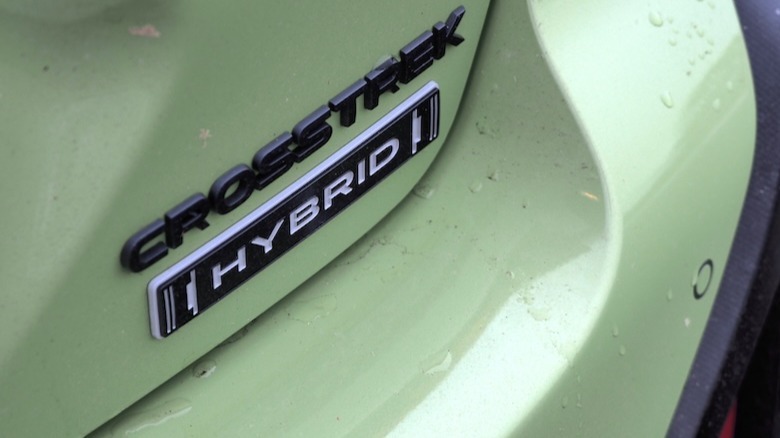
Where the regular Crosstrek starts at $28,415 (including $1,420 destination), you'll spend at least $35,415 all-in for the cheapest Crosstrek Sport Hybrid trim. This Limited version is from $36,415.
 Chris Davies/SlashGear
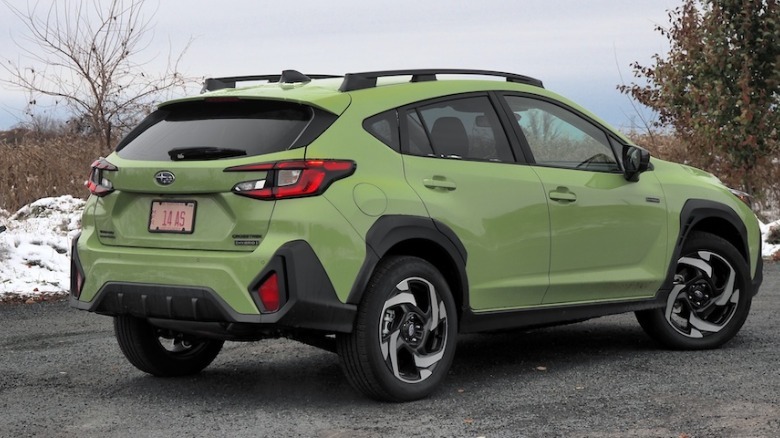
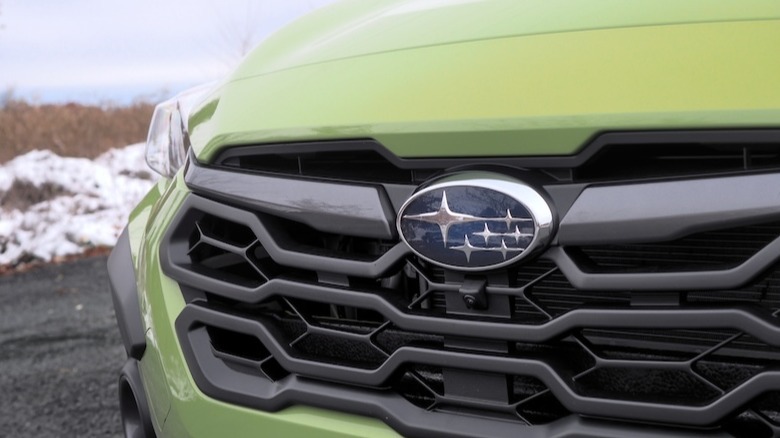
Would I, personally, choose Citron Yellow ($395) paint? Probably not, though I give Subaru credit for offering such a vibrant finish (along with a bold red and handsome blue) alongside the usual, more sober options. The chunky black cladding looks the part, too, less expansive than on the Wilderness trim (not yet available with the hybrid drivetrain) and all the better for it, to my eye.
 Chris Davies/SlashGear
Despite not — on paper — being the most rugged Crosstrek variant, the 8.7-inches of ground clearance here still bests what you'd get in a CX-50 Hybrid (up to 8.1 inches), RAV4 Hybrid (up to 8.6-inches), or CR-V Hybrid (up to 8.2-inches). Toyota's Corolla Cross Hybrid, arguably the closest competitor to the Subaru, has just 8-inches of clearance in its optional AWD form.
Not your usual hybrid crossover AWD approach
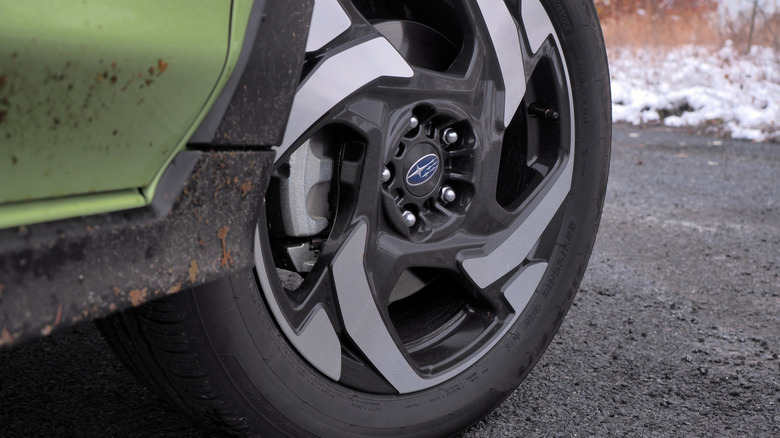
Where rival hybrids split front and rear axle duties between gas or electric, Subaru sticks to its mechanically-coupled Symmetrical All-Wheel Drive. The upshot, the automaker insists, is the same traction capabilities as in a gas-only Crosstrek, and the same responsiveness of the overall system.
The 2.5-liter BOXER four-cylinder — here supporting Atkinson and Miller cycles, for maximum efficiency — is paired with two electric motors, one a generator to top up the small lithium-ion battery, and the other adding tractive power. It means 194 horsepower in total, compared to the 180 hp of the non-hybrid Crosstrek (contrasting torque gets a little trickier, due to the hybrid system architecture, but it's worth noting that the 199 lb-ft of the Crosstrek Hybrid's electric propulsion motor alone exceeds the non-hybrid's 178 lb-ft).
 Chris Davies/SlashGear
A continuously variable transmission (CVT) links all that to the wheels, with a "manual" mode — six speed, here, versus eight for the non-hybrid — the same 1,500 pound tow rating, and two drive modes. The latter primarily adjusts the responsiveness of the accelerator; interestingly, though economy is a key part of Subaru's sales pitch for the Crosstrek Hybrid, there's no specific ECO mode.
More fun than frugal

Officially, the Crosstrek Hybrid is rated at 36 mpg across the board for city, highway, and combined cycle driving. That's seven points higher than the regular Crosstrek promises for the combined cycle, and 10 points up on the Crosstrek Wilderness (which rides higher and has grippier wheels, among other changes).
How that shakes out in reality wasn't quite what I expected. My own, mixed driving saw the Crosstrek Hybrid land just shy of 29 mpg: better, certainly, than when we reviewed the Crosstrek Wilderness, but not by the margin Subaru and the EPA suggested.
 Chris Davies/SlashGear
I'm inclined to blame the fact that the little hybrid is considerably more rewarding to drive, and so I was encouraged to treat it like more than just a mobility appliance. That electric injection leaves the Crosstrek Hybrid more eager to pull away from a standing start, and lends a spritely edge in urban traffic. It also saves the CVT — seldom accused of sportiness — from dampening fun so thoroughly.
Despite the relatively high ride height, the Subaru feels planted and predictable in corners. Not a rally car in the old-school Subie sense, no, but you can easily forget that this is officially considered a compact SUV.
Snug, and with an annoying touchscreen
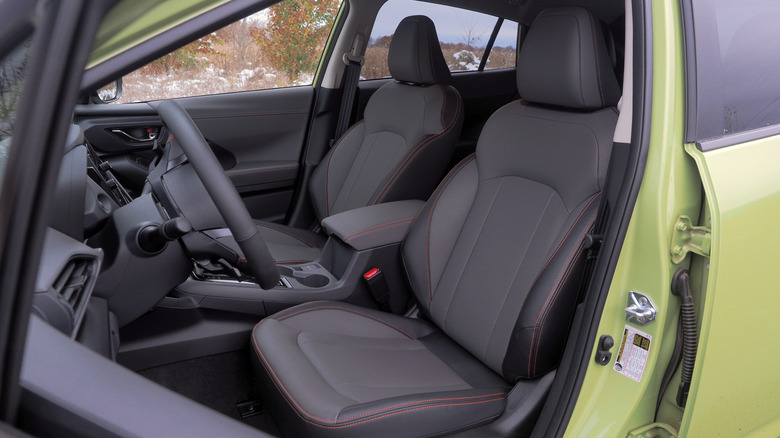
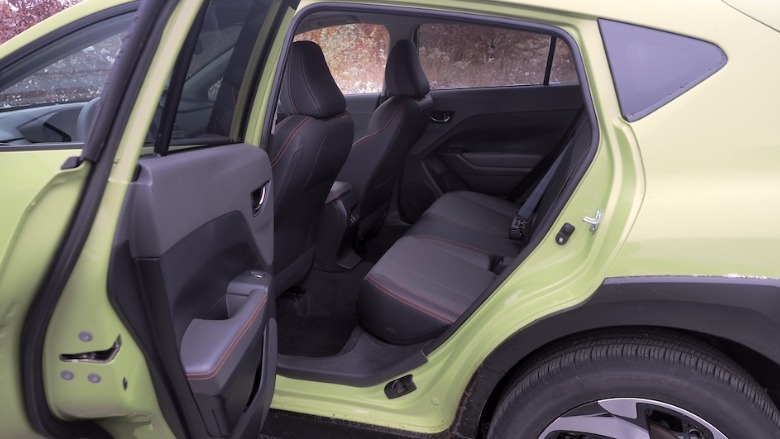
Clambering into the back seats will remind you of that dimensional reality, however. The Subaru's 36.7 inches of rear legroom is actually impressive, compared to the Corolla Cross Hybrid's 32 inches, but families may well want to look to the segment above. Both the CR-V Hybrid and RAV4 Hybrid are markedly larger SUVs — the Honda is nearly a foot longer, in fact — only really comparable by virtue of the fact that hybrid crossovers are still a relative rarity.
 Chris Davies/SlashGear
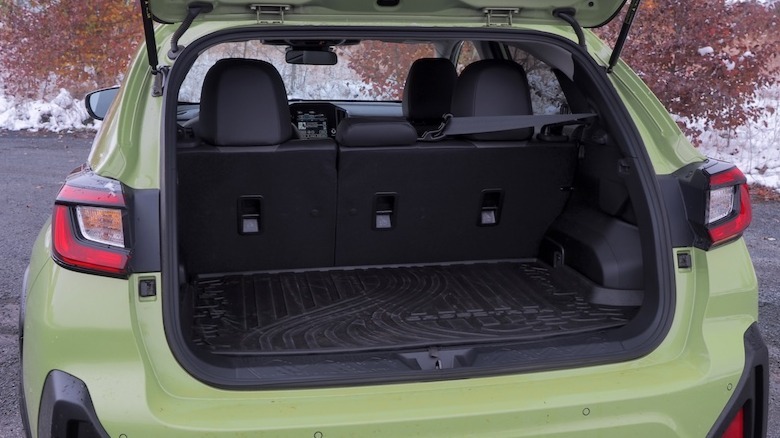
The payoff of their extra scale is found in the second row and trunk: the Subaru's 36.7 inches back there pales next to the Honda's 41 inches, while its 18.6 cu-ft trunk (expanding to 50.6 cu-ft with the rear bench lowered) looks snug compared Corolla Cross Hybrid's 21.5 cu-ft and positively diminutive versus the Toyota's 37.5 cu-ft and Honda's 39.3 cu-ft.
 Chris Davies/SlashGear
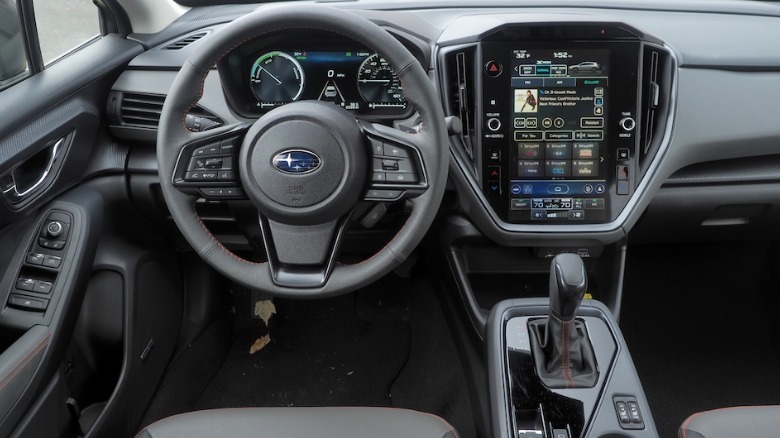
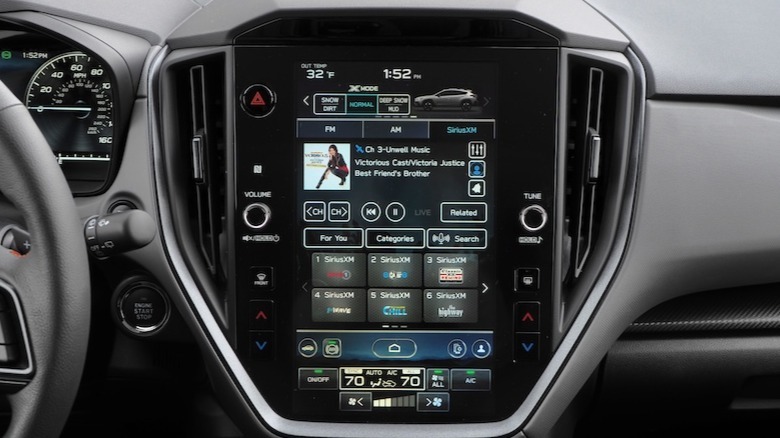
Subaru's infotainment system remains my biggest bugbear with the automaker's cars. The central touchscreen is certainly big enough to be competitive — 11.6-inches, with all Crosstrek Hybrid trims pairing it with a 12.3-inch digital cluster — and I appreciate Subaru surrounding it with physical controls for essentials like temperature and volume. Problem is, the software itself feels busy and unintuitive, and it's lumpy and often sluggish in its operation.
 Chris Davies/SlashGear
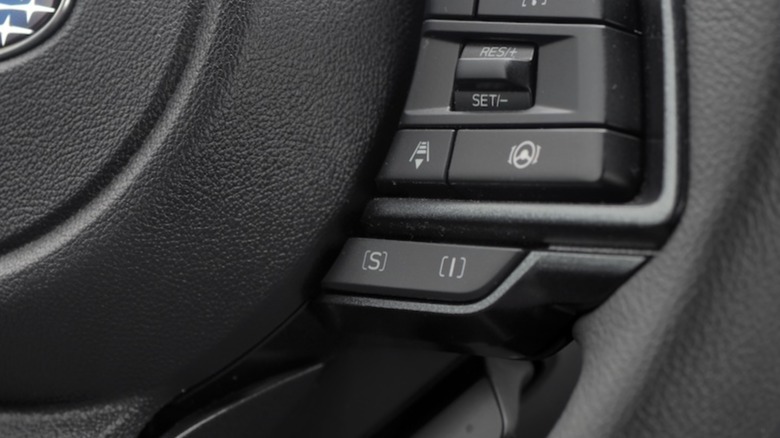
You do, at least, get wireless Apple CarPlay and Android Auto, and the essentials — like the extra-toasty heated seats, changing drive modes, and summoning the reversing camera — are handled by physical switchgear. The heated steering wheel and shifter are leather-trimmed, and there's dual-zone climate control, but otherwise the Crosstrek Limited Hybrid feels admirably sturdy in its focus. That means StarTex faux-leather on the seats (versus cloth on the Sport Hybrid) and some tough floor mats.
2026 Subaru Crosstrek Hybrid verdict
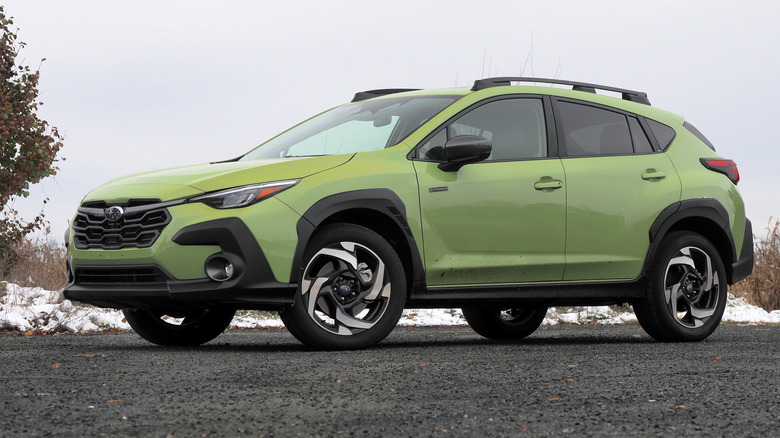
I suspect Subaru is one of a short list of automakers that wouldn't instantly bristle at my comparing their car to a wagon, but trust me when I say any such parallels drawn are entirely complimentary. The 2026 Crosstrek Hybrid feels right-sized for a lot of drivers, its standard all-wheel drive lends reassurance for those in cold-weather states, and the addition of electrification renders the whole thing surprisingly charming from behind the wheel.
The contrast, in fact, is oddly stark with the Corolla Cross Hybrid (not least since Subaru actually uses a Toyota-based hybrid system). A more spartan base trim (from $30,745 including AWD and destination) makes the Toyota cheaper, but I prefer how the Subaru drives. Almost identical in length, the Crosstrek prioritizes rear cabin legroom, while the Corolla Cross errs on the side of cargo space.
 Chris Davies/SlashGear
If economy is your lodestar, the Toyota has the advantage: in practice, it scored about 10 mpg higher than the Subaru. And honestly, the options in this particular niche are so small in number, I suspect most buyers already know if they want the proven all-weather talents of a Crosstrek or the more everyday approach of the Corolla Cross. Where in the Toyota's case hybridization only really improves economy, however, the Subaru Crosstrek Hybrid is a markedly better all-rounder than its non-electrified sibling.