

7 Of The Best VR Headsets You Can Buy, Ranked By Price
We may receive a commission on purchases made from links.
Virtual reality offers one of the most unique ways to interact with software. Whether you're playing intense games or meeting with others through your computer, using a high-quality headset will help immerse you completely in your experience. The history of virtual reality is filled with twists, turns, and technological improvements. Today, VR hardware has powerful options for those willing to spend more.
While most people are familiar with the Meta Quest 3, other companies have been making strides in the realm of VR. We still don't have a concrete date on the next Meta headset, so this article focuses on other companies with their own hardware options. Here, you'll be able to find some of the best VR headsets from major companies currently available today. While many of these companies have multiple VR options, this article will only look at the best of the best, the most capable and most feature-rich options you can find.
PlayStation VR2 ($400)

The PlayStation VR2 is Sony's latest virtual reality offering. Priced at $400, it offers OLED displays, a 2000x2040 resolution, a maximum refresh rate of 120Hz, and a 110-degree viewing angle. Although it's designed for PlayStation, it's not very difficult to get the headset working on your PC. For console-exclusive buyers, though, a PlayStation VR2 will be the best way to play virtual reality PS5 games.
While the PlayStation VR2 isn't Sony's first VR headset, it's certainly the best. The original PS VR had a much lower resolution at 1920x1080, though it did also come with the benefit of working on PS4 consoles. The VR2 headset doesn't have that bonus, and although the PS5 is backward compatible with most PS4 titles, the same can't be said for VR games. However, some releases offer separate VR modes for both headsets, letting you make the most of the VR2's improvements without locking you out of too much of your existing library.
Valve Index ($999)
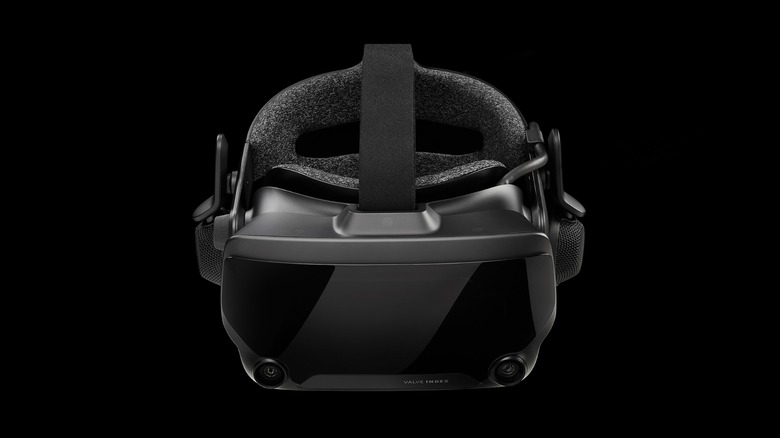
Even today, the Valve Index stands as a VR headset that's actually worth buying — even if your budget isn't quite unlimited. A full kit with the headset, base stations, and controllers is set at around $999, though the headset itself can be had for just $499. Its resolution isn't the most impressive at 1440x1600, but it supports 144Hz and comes with its own speakers. Plus, whether you buy the full kit or just the headset, you'll get a copy of "Half-Life: Alyx" for free.
It should be noted that this headset won't be the best option from Valve for long. The Steam Frame is set to release by early 2026, and it promises higher resolutions on top of wireless and standalone functionality. As a result of this new headset, the Index was discontinued. The kit is no longer available, though you can still get the older model's hardware through separate purchases while supplies last. But if you're willing to wait a couple more months, the Steam Frame will be the new best VR option from Valve.
Vive Focus Vision ($1,149)
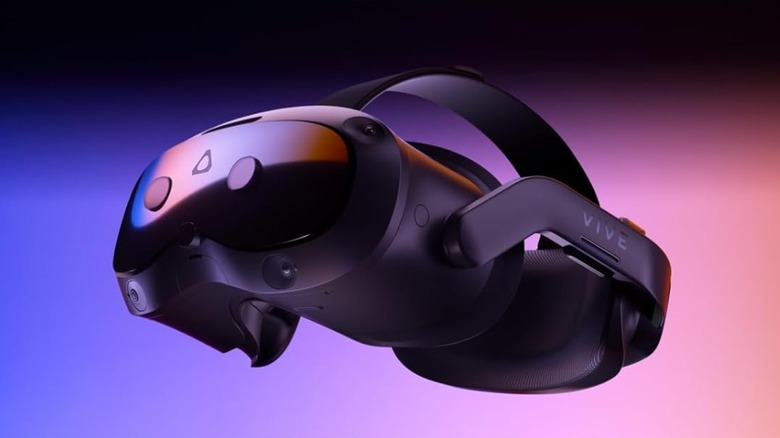
HTC has numerous VR headsets available today. While the most expensive option — the Pro 2 — might seem like the best due to its higher price, the $1,149 Vive Focus Vision stands far above the rest. It has the same 2448x2448 resolution and maximum 120Hz refresh rate as the Pro 2, but it also has inside-out tracking rather than relying on base stations. The Focus Vision is also a standalone headset, allowing you to play games without being connected to a computer.
In our HTC Vive Focus Vision review, we noted how the headset was comfortable and capable, though setup wasn't very smooth and its standalone library was lacking. Still, it sits above other Vive options thanks to its specs and features. Even its controllers are better than the Pro 2's, with longer battery life, actual control sticks, and more sensors for enhanced functionality. If you want to stick with Vive for VR, the Pro 2 just isn't able to stand up to what the Focus Vision can offer.
Bigscreen Beyond 2e ($1,219)
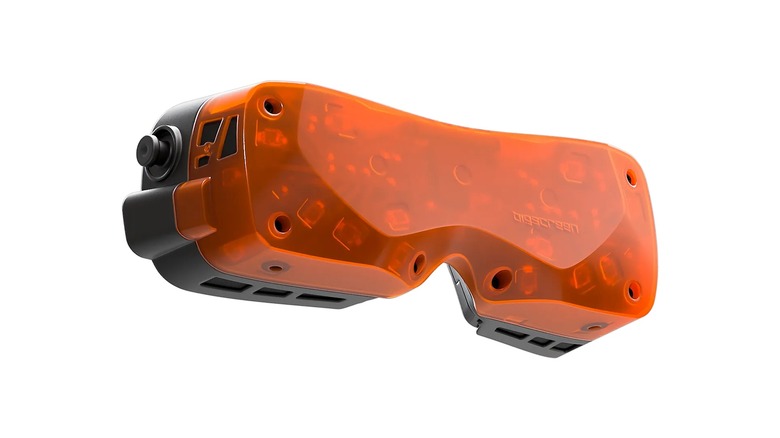
The Bigscreen Beyond 2e is the first headset on this list that makes some trade-offs compared to the previous ones. Despite lacking standalone technology and requiring base stations for tracking, it has a fantastic 2560x2560 resolution and is remarkably lightweight. It builds off Bigscreen's original sleek virtual reality headset, and the 2e adds additional features like eye tracking and adjustable IPD. The 2e starts at $1,219, though you can get a version without eye tracking for $200 cheaper.
It should be noted that this very high cost is only for the headset itself. No controllers are included, which means you'll spend quite a bit extra if you want full functionality with your library. The Beyond 2e also lacks any wireless options, so you'll have to stay tethered to your computer during use. Still, even at such a high price point, the physical comfort it offers is hard for any other full VR headset to compete with.
Pimax Crystal Super ($1,787)

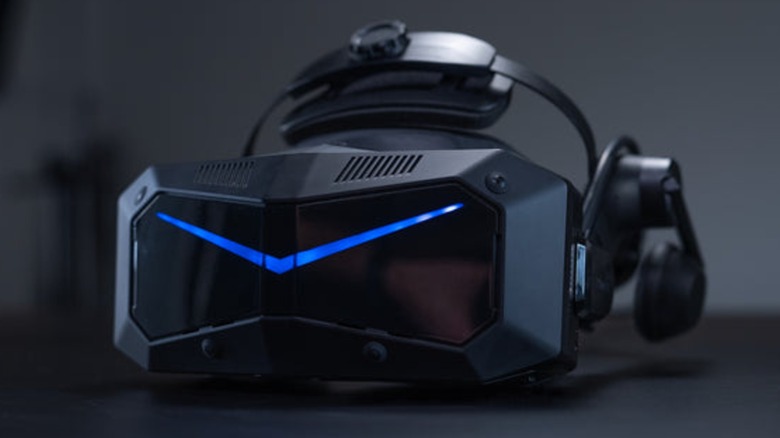
Like HTC, Pimax also offers a wide variety of VR headsets. Of these, the most powerful option is the Crystal Super, a $1,787 headset with a 3840x3840 resolution. One of its variants includes an extremely wide 140-degree viewing angle, allowing for one of the best visual experiences you'll find in VR. There's also an OLED model of the Crystal Super for $2,199, but that version has lower resolution and a lower viewing angle, so its actual specs aren't quite as impressive.
The Crystal Super includes a pair of controllers in its price. Pimax also offers a "Prime" service that lets you split the cost of the headset into two separate payments. This service lets you use the headset for two weeks, and you can still refund the headset within those two weeks if you don't like it. If you want the absolute best VR viewing angle, though, you probably won't want to return this one — even for the more expensive headsets listed here.
Samsung Galaxy XR ($1,800)
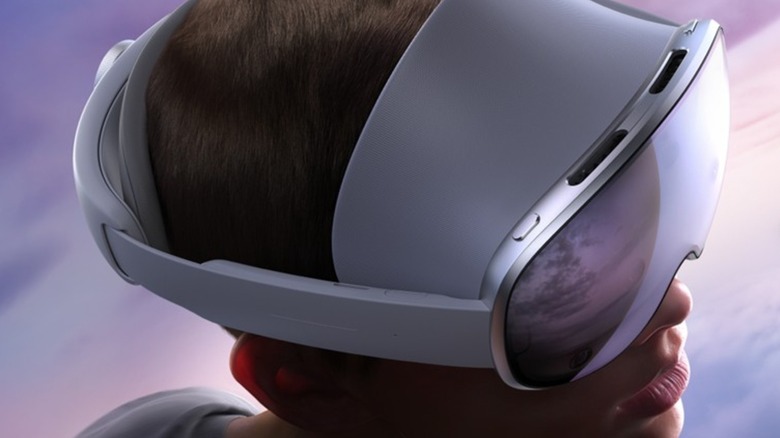
The Samsung Galaxy XR is a mixed-reality device. Rather than focusing fully on gaming or specific software, it seeks to mix the real and virtual worlds through immersive interfaces and AI assistance. For $1,800, you get a standalone headset with 3552x3840 resolution, a maximum 90Hz refresh rate, and a year's worth of subscription time for services like YouTube Premium and Google AI Pro. Anyone invested in modern artificial intelligence is unlikely to find a more appealing headset.
The Galaxy XR also allows you to play VR games, including any you might already have on your PC. It's not the smoothest process, and some users have faced issues getting it to work well. It's still the best headset for AI enthusiasts, but there are better VR setups for gaming than the Galaxy XR. Still, few of its rivals can handle the sort of standalone functionality it offers beyond this — at least not without a much higher price.
Apple Vision Pro ($3,499)
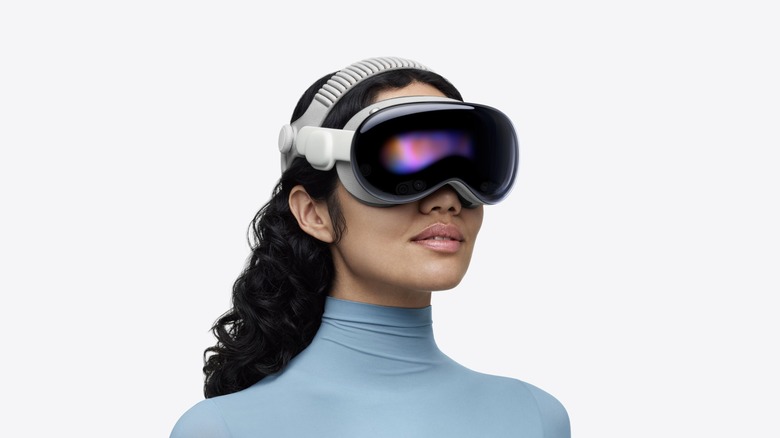
The Apple Vision Pro is the most expensive headset on this list at a base price of $3,499. You can increase that price up to $3,899 if you want a full terabyte of storage space rather than just 256 GB. Its specs include a 3660x3200 resolution and 120Hz refresh rate, and as a standalone headset, it offers more power than the Galaxy XR could hope to achieve. It also lets you play your PC VR library, though it requires its own workarounds without native support or direct connections.
We described the Vision Pro as great tech searching for a purpose. Being built on Apple's ecosystem keeps it from being as versatile as it could be, with many users complaining that it still lacks a good range of native apps. Its extreme cost isn't helping matters, especially if you're focused wholly on VR-specific experiences like games. The Apple Vision Pro is the best headset available today in terms of raw standalone power, but you might not get much out of it compared to the other headsets mentioned here.
Methodology
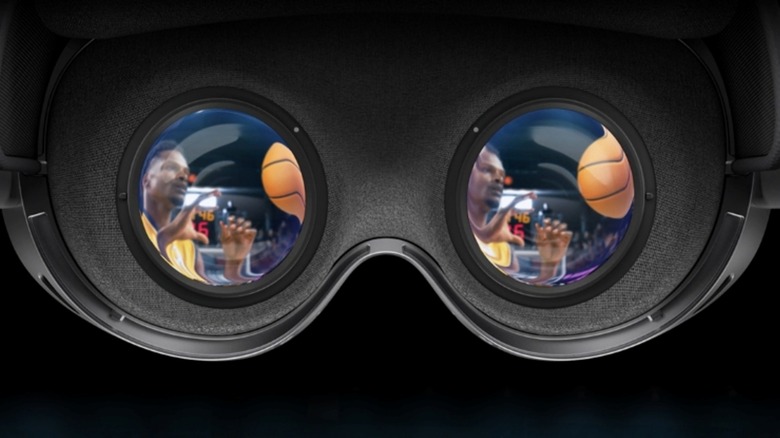
This article focuses on VR headsets considered the "best" based on their specs, functionality, and features. You might get more value out of cheaper options, but if you want the absolute best experience possible, these options are what you'll want to focus on most. Other included, required, and unnecessary accessories are also factored into measuring how great these headsets are, especially since some need base stations for tracking while others can function just fine without them.
The Meta Quest 3 wasn't included on this list primarily because it's the first headset that probably comes to mind when people think of the "best" choice. It can easily slot between the PlayStation VR2 and Valve Index, especially with its $499 price tag and competitive specs. But considering its exclusive ecosystem and insane popularity, there likely isn't much overlap between anyone interested in Meta's offering and those looking for a new best headset. The same could be said about the PlayStation VR2, but some users might not have known they could also use it on PC — especially since that functionality wasn't available at launch.