

15 Unusual Toyotas You Didn't Realize Existed
With 10.8 million vehicles sold in 2024 alone, Toyota remains the world's largest automaker by volume. Toyota's familiar badge can be seen on streets across the world, and its most famous models are familiar to enthusiasts and non-car people alike.
Among those models, names like the Corolla, Prius, and Camry stand out as being particularly ubiquitous. However, Toyota also has a long list of nameplates in its back catalog from the other end of the spectrum. Most fans of the brand will have never seen one in real life, and in some cases, they might not even know certain models exist at all.
Luckily, like most Japanese automakers, Toyota keeps meticulous, publicly available records of its historic models. We've gone trawling through those records to pick out some of our favorite unusual models from past and present, and it's unlikely that even the most dedicated Toyota fan will have heard of all of them.
Toyota Land Cruiser FJ45LV
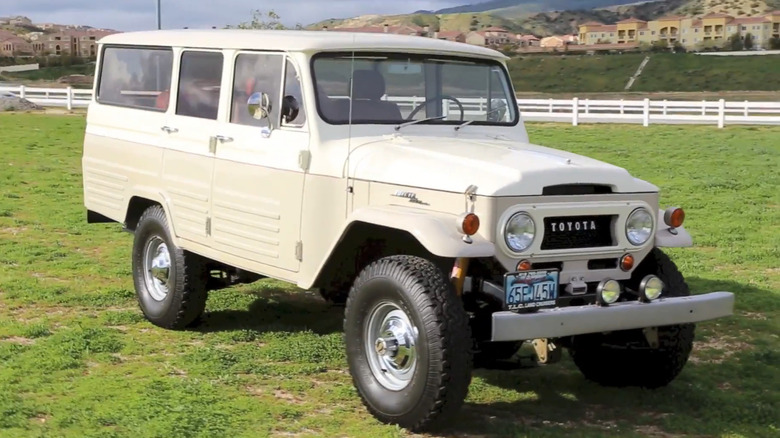
Toyota has a long history of making cool-but-obscure SUVs. Keen Toyota enthusiasts might recognize the Mega Cruiser, which was essentially the Japanese version of the Humvee, but even Toyota's best-known SUV nameplates have some obscure variants that many people won't know about. Take, for example, the Land Cruiser FJ45LV. It's an ultra-rare variant of the iconic SUV, with only around 5,000 examples produced between 1963 and 1967. Around 1,000 examples were brought to the U.S., while most were sold in Australia and various markets across South America.
The FJ45LV is unique in that Toyota contracted a coachbuilder, Gifu Auto Body Industry Company, to fit its bodywork. Each one was hand-built and featured a significant number of bespoke parts not shared with any other Land Cruiser variant, even a standard FJ45. As a result, they're particularly desirable among the most avid — and well-heeled — Land Cruiser collectors.
Toyota Century GRMN
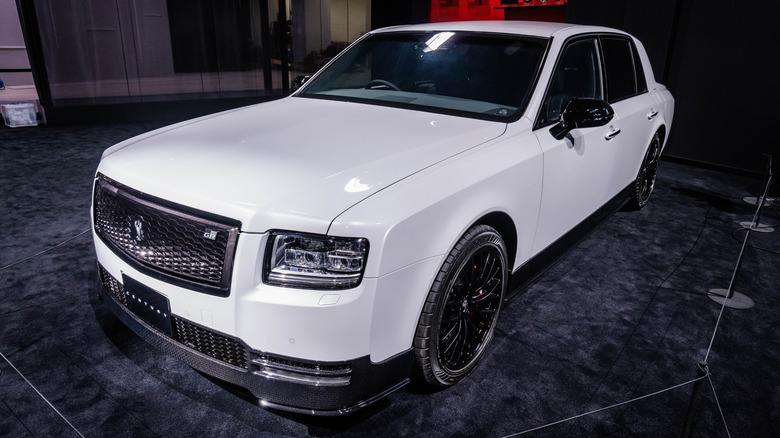
The latest generation of the Toyota Century is arguably one of the best-looking sedans that the brand has ever made. It's understated luxury at its best — well, understated until you look at the GRMN variant. Toyota's Gazoo Racing division was given free rein to give the Century a performance makeover, but regular buyers weren't able to get their hands on it. Pictures of a white Century GRMN first started circulating in 2018, with rumors claiming that it was built at the personal request of company boss Akio Toyoda.
It was initially believed to be a one-off, but in 2019, another Century GRMN appeared at the Tokyo Auto Salon, this time painted black. Another white example was shown off at the Japan Mobility Show in 2025 during the launch of the Century sub-brand. A slightly different grille and front skirt design compared to the original 2018 car suggests this is a third example of the model, although Toyota has never confirmed production numbers or whether any examples have been sold into private ownership. It also hasn't confirmed exactly what mechanical upgrades the GRMN has received, or whether the standard Century's 375-horsepower 5.0-liter V8 even remains under the hood.
Toyota WiLL VS
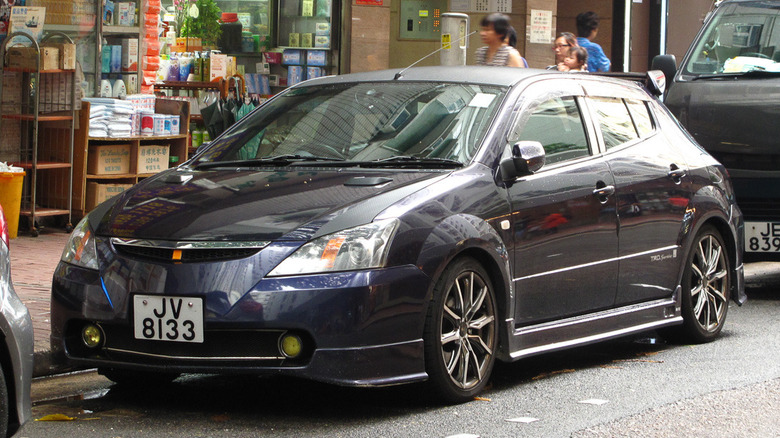
WiLL was a relatively short-lived collaboration among several major Japanese companies formed at the turn of the century. A variety of WiLL products were produced, each of which was designed to be innovative and appeal to young buyers, with Toyota building three cars under the WiLL brand.
The second of those cars was the WiLL VS, a sporty-looking hatchback that shared a platform with the Corolla. Despite its appearance, it wasn't particularly athletic, with buyers able to pick from a choice of two 1.8-liter, four-cylinder engines with a maximum of 187 horsepower. According to Toyota, the VS nomenclature doesn't indicate a thirst for competition. Rather prosaically, the V represents vehicle, while the S somehow stands for both smart and sporty.
The car was first launched in Japan in 2001, and a manual transmission variant arrived in 2002. However, the momentum for the whole WiLL project didn't last long, and by 2004, the WiLL VS had been discontinued.
Toyota Modellista VF130
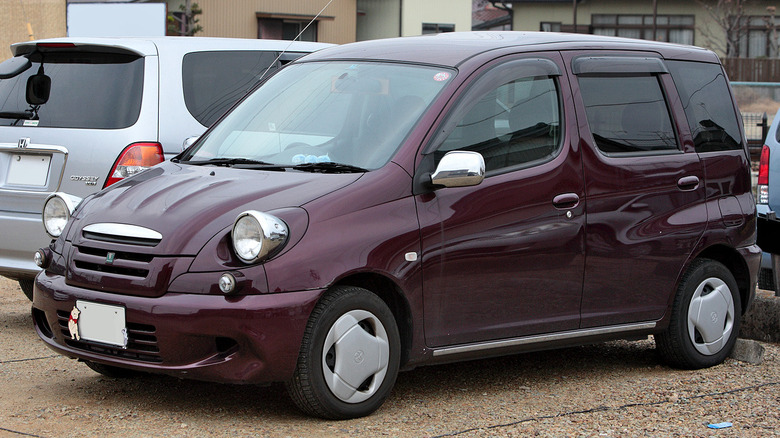
Since 1997, Toyota has had its own in-house tuning arm in Japan called Modellista. According to Modellista's website, its task is to "deliver customized cars to customers with design and speed that cannot be realized by the manufacturer itself." Over the years, it's unveiled plenty of unusual designs, including the VF130, which is based on the Toyota FunCargo.
It was a popular small van both in Japan and in Europe, but the FunCargo was pretty dull in its base form. Modellista's solution was to give it a retro redesign that took inspiration from the Citroën 2CV. It's not known exactly how many examples of the VF130 were built, although some reports claim as few as 350 left the factory.
Although its bodywork was given a makeover, the VF130's oily bits remained the same as the standard FunCargo. That meant buyers had a choice of either a 1.3-liter or 1.5-liter engine, both of which were mated to a four-speed automatic transmission.
Toyota Tundrasine
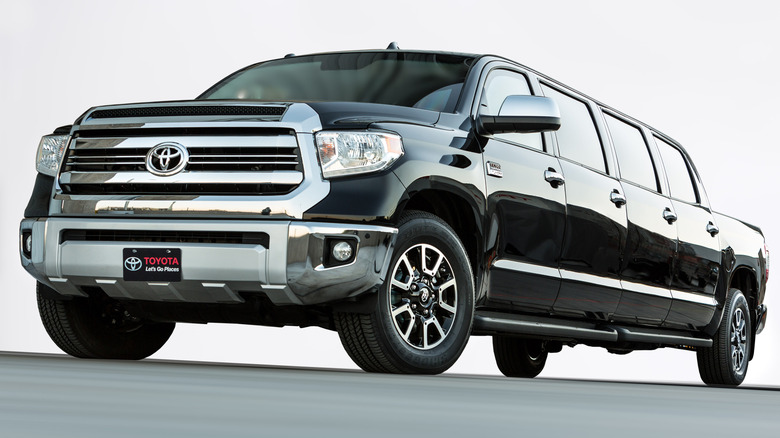
Plenty of manufacturers build spectacular concept trucks, but few look quite as attention-grabbing as the Tundrasine that Toyota unveiled at SEMA in 2015. As its name suggests, the truck was part Tundra, part limousine, and clocked in at more than 26 feet long. Thanks to its additional body length, it was also significantly heavier than a standard pickup, weighing close to 8,000 pounds. Unlike plenty of other concepts, the Tundrasine was fully functional, having originally started out as a production-spec Tundra CrewMax before being chopped up by Toyota's team in San Antonio, Texas.
It featured eight doors and a custom leather interior that Toyota said was inspired by high-end private jets. Under its hood sat the same 5.7-liter V8 engine that was fitted to the donor production pickup. Unfortunately, Toyota hasn't wheeled out the Tundrasine since the SEMA show, and it's not clear what happened to the truck after it completed its show duties.
Toyota Windom

The Lexus brand wasn't launched in Japan until 2005, but most Lexus vehicles launched before that time still ended up being sold in Japan under different names. JDM fans might know about the Altezza, which was the Toyota-badged equivalent of the Lexus IS, or the Harrier, which was sold outside of Japan as the Lexus RX. However, most of those fans likely won't have heard of the Windom, which was the JDM Toyota-badged version of the Lexus ES.
The ES and the Windom shared a platform with the export-market Camry of the same era. As a result, the Windom was front-wheel drive and featured the same 3VZ-FE 3.0-liter V6 engine that could also be found in the best-selling model. The first generation of the Windom was launched in 1991, and a second generation arrived in 1996 with new 1MZ-FE and 2MZ-FE V6 engines under the hood.
Toyota says that the Windom name came from fusing the English word "win" with the suffix "-dom," to mean "a state of perpetual victory." Confusing naming aside, the Windom wasn't much different from its Lexus-badged counterpart, sharing its bland styling as well as its mechanicals. That hasn't stopped a handful of examples of the Windom from making it over to the U.S. anyway, thanks to specialist JDM importers.
Toyota Classic
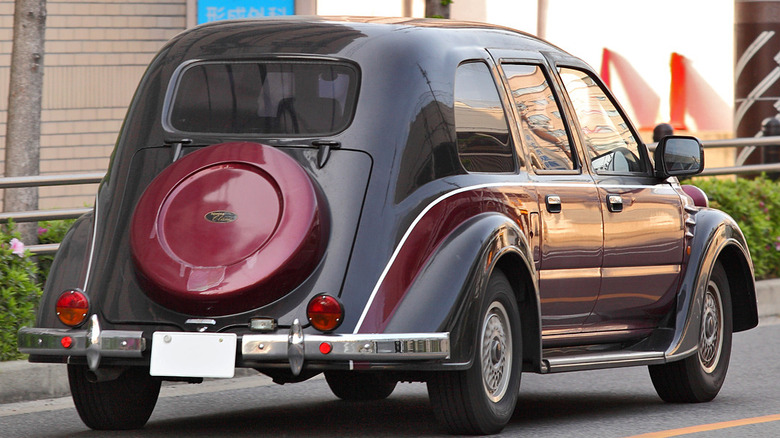
One of Toyota's most bizarre '90s cars is the Classic, which borrowed its styling from Toyota's first passenger car, the Model AA. The first examples of the Model AA left the factory in 1936, and Toyota timed the release of the Classic to celebrate the Model AA's 60th anniversary. Underneath its retro-inspired bodyshell, the Classic used the chassis of the Hilux pickup truck. Primarily, this was because the Hilux had a wheelbase more similar to the original Model AA than any of Toyota's other contemporary platforms.
The pickup's 2.0-liter four-cylinder engine was also carried over, making just 96 horsepower. Inside, the cabin was a far cry from the utilitarian Hilux, with a two-tone leather interior and a woodgrain dash. Each example was built by Toyota's in-house coachbuilding division, Technocraft, and only 100 examples of the car were made. The car was produced as part of Toyota's Excellent Conversion Series, or TECS, although the Classic was the most notable special edition to emerge from the series. A few examples are known to have left Japan, including an example that appeared at a Bonhams auction in the U.K. in 2003.
Toyota Brevis
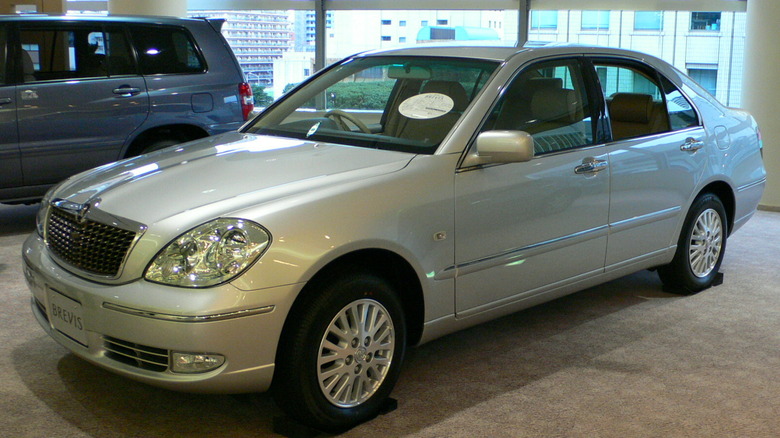
The Toyota 2JZ and 1JZ engines should need no further introduction to most JDM enthusiasts. They both picked up a reputation for being able to handle huge amounts of power with the right modifications, and featured in a range of Toyota and Lexus models, some of which have now become sought-after among collectors. However, some 2JZ- and 1JZ-equipped cars, like the Toyota Brevis, remain very much under the radar. The JDM sedan was available with either a 2JZ-FSE or 1JZ-FSE engine, with the former engine rated for 217 horsepower in its stock form.
The Brevis was just one of several sedans that Toyota offered in Japan at the time, and was closely related to the Progrès. According to the company, the Brevis was designed to target younger buyers than its stablemate. It was available with either rear-wheel drive or four-wheel drive, with optional leather seats and a woodgrain dash available. The Brevis first hit dealerships in Japan in 2001, and so the first examples are now almost old enough to be imported to the U.S. under the 25-year rule.
Toyota Copen GR Sport
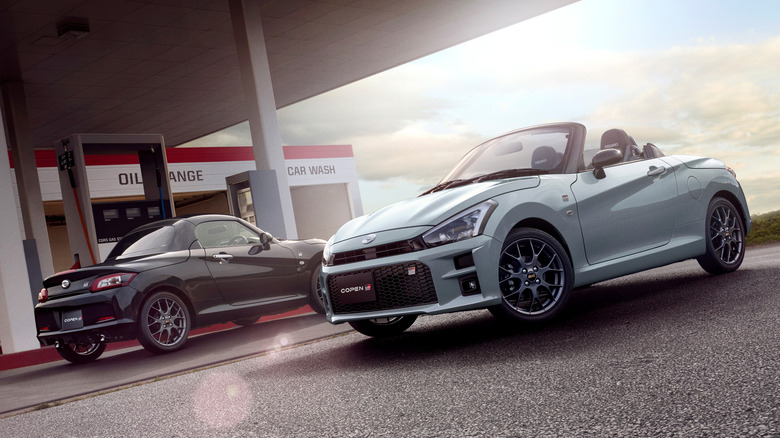
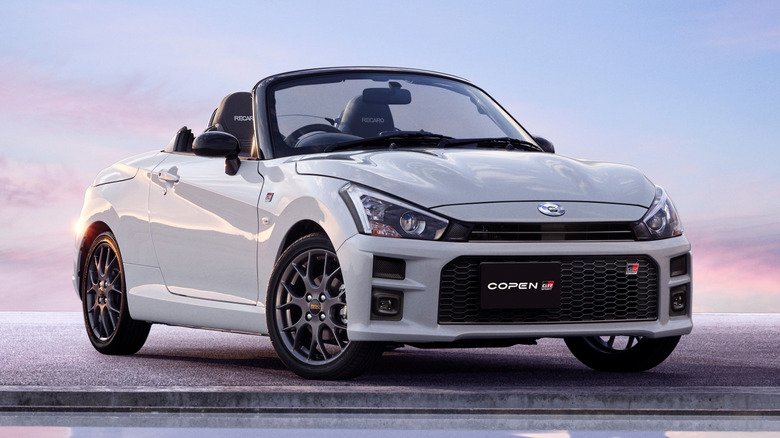
Japan's kei sports cars are unlike any other sports car segment, and you can still buy one new — for now. The Copen GR Sport is currently available to order in Japan for a starting price of around 2.5 million yen, which is just over $16,000. For a small additional premium, buyers can option the car with a five-speed manual transmission, but a CVT is standard. Powering the car is a tiny 0.66-liter engine producing 63 horsepower.
The Copen is also sold through Toyota's small-car subsidiary brand Daihatsu, where it's available in multiple distinct trims. The Copen Cero offers less aggressive, more retro-inspired styling with rounded headlights, while the Copen Robe is the base-spec offering. However, it's only the Copen GR Sport, which is also the only variant sold via Toyota's dealer network, that offers extras like Recaro seats and a Momo steering wheel. It won't be around for much longer, as production of the Copen is set to end in 2026.
Toyota Voxy Modellista
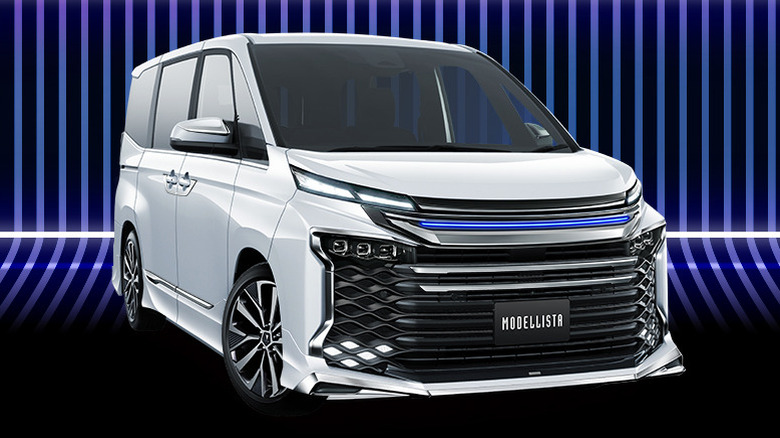
Modellista doesn't offer mechanical tuning parts for the Toyota Voxy minivan, but it does offer a body kit that deletes the Toyota badge, adds some more aero-friendly skirts, new wheels, and some additional chrome trim. Since Modellista is Toyota's in-house tuning arm, buyers don't have to concern themselves with any of the potential warranty issues that come with taking their van to a third-party aftermarket tuner. The Voxy is one of a broad range of minivans that Toyota currently offers in Japan, alongside the Vellfire, Alphard, Hiace Wagon, Roomy, and Noah. Japanese buyers looking for family-friendly transport without resorting to an SUV are spoilt for choice, while American buyers are stuck with just one minivan option, the Sienna.
The Voxy is just one of many Toyota models that can be customized with parts from Modellista in Japan. American buyers will recognize models like the Corolla Cross, RAV4, bZ4X, and Land Cruiser, but even Toyota's hydrogen sedan, the Mirai, has a Modellista kit available. Select kits are also available from Modellista's global distribution network, including from Modellista USA, which offers kits for the Prius, Corolla, and RAV4, among others.
Toyota Tank
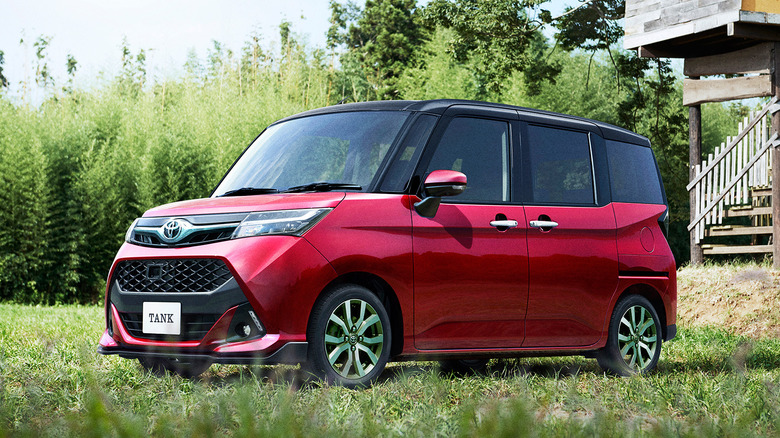
Its name might invoke images of intimidating military equipment, but the Toyota Tank is actually a shrunken minivan that's manufactured by Toyota's small car subsidiary Daihatsu. According to a Toyota news release, the Tank's design represents "dynamism and aggressiveness" — we're not sure we see where they're coming from on that one. In fact, there are very few minivans we can think of that look less aggressive than the Tank, although, despite its unassuming looks, it's a surprisingly capable small car.
Under its hood sits a 1.0-liter turbocharged three-cylinder engine, which can be mated to an optional four-wheel drive system for better traction in winter conditions. The seats can be slid forward, backward, or down into the floor, and can even be reclined up to 70 degrees so that drivers can take a nap in the car. In the right configuration, Toyota says the rear cargo area is roomy enough for a bicycle, or can stow four carry-on suitcases while still being able to carry five people.
Toyota Origin
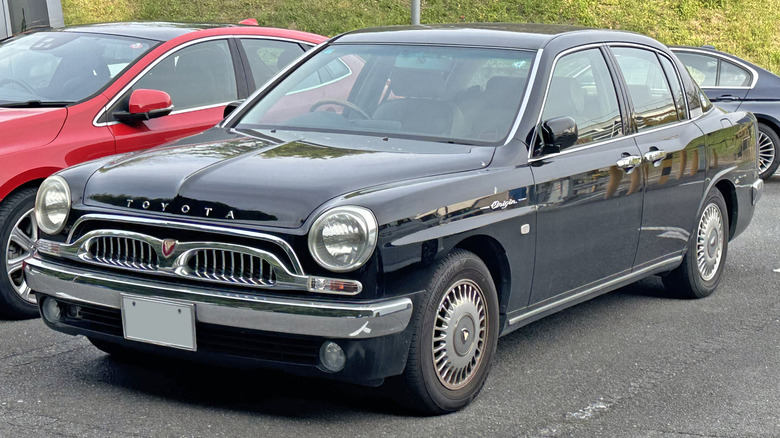
One of Toyota's strangest 2JZ-equipped cars is the Origin, which arrived in Japanese dealerships in 2000. It was timed to coincide with Toyota's 100 millionth car milestone in Japan and was a highly limited special edition, with only 1,000 examples produced.
It was built on the platform of the mid-size Progrès sedan, but featured reworked styling inspired by the first-generation Toyota Crown. It was also twice as expensive as the Progrès on which it was based, but part of that added price came from the fact that the Origin was handbuilt at Kanto Auto Works, a Toyota subsidiary.
Like most of Toyota's other special-edition cars from the era, the Origin was significantly more luxurious inside than a standard passenger sedan. The cabin was upholstered with generous leather appointments, while the dash was made from woodgrain. It also featured rear suicide doors, another design element borrowed from the original 1955 Crown sedan.
Toyota Sports 800
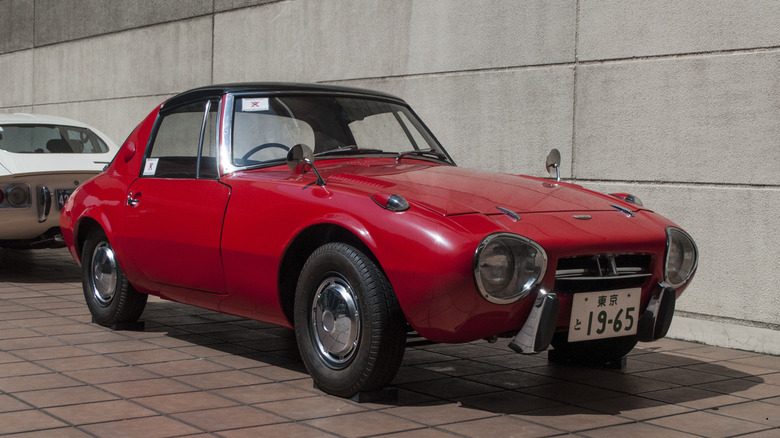
Toyota's very first production sports car is much less well known than other early Toyota sports cars like the 2000GT, and surviving examples are incredibly rare to find today. While a few examples have been imported into America, the Sports 800 was originally only sold in Japan and featured a two-cylinder engine. As well as selling the car to private buyers, Toyota also entered the Sports 800 into endurance races in Japan, such as the Suzuka 500km. Despite its modest power, it proved to be surprisingly effective against its competition, taking both the first and second place spots in the Suzuka race.
The oldest surviving race example was rescued from a garage and restored by Toyota's Gazoo Racing division, but many other examples of the Sports 800 weren't so lucky. A total of 3,131 examples were built by Toyota's Kanto Auto Works facility between 1965 and 1969, although only around 300 examples are thought to survive today.
Toyota Cavalier
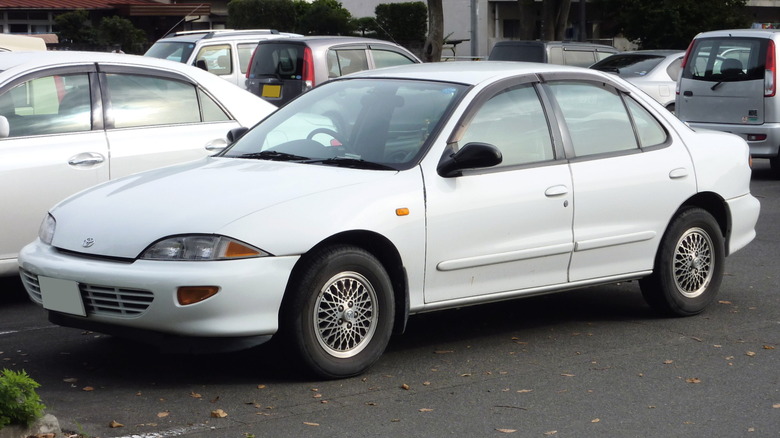
Automakers have historically rebadged a wider variety of cars than you might realize. There are many reasons they might do so: Sometimes it's simply a question of cost-cutting between different divisions of the same conglomerate, and sometimes it's because an automaker needs to fill a gap in its lineup and doesn't have the funds to develop a unique model of its own. Occasionally, vehicles get rebadged for stranger reasons — such as the Toyota Cavalier.
Americans will recognize the car as the Chevrolet Cavalier, but it was launched in Japan with a Toyota badge as part of a tie-up between GM and the Japanese manufacturer. The launch was essentially Toyota doing GM a favor, since Japanese cars were seen as flooding the American market, and so American automakers like GM wanted equal access to the Japanese market.
According to its press release at launch, the Cavalier was "born in the USA, yet carefully attuned to Japanese market needs and driving conditions." As well as converting the car to right-hand drive, changes were made to the steering and braking to better prepare the car for winding Japanese roads. The cabin was also altered to "tak[e] into account the generally smaller physical characteristics of Japanese people." Despite its alterations, the Cavalier never sold well in Japan. It launched in 1996 and was originally intended to be sold until 2001, but thanks to its low sales figures, Toyota ended up discontinuing the model a year earlier than originally planned.
Toyota Blizzard

Toyota first acquired a major stake in Daihatsu in 1998 and turned the small carmaker into a wholly owned subsidiary in 2016. However, long before then, the two companies had a history of collaboration, including on models like the Toyota Blizzard. The first generation of the Blizzard arrived in 1980 and was based on the Daihatsu Taft. A second generation, this time based on the Daihatsu Rugger, was launched in 1984.
The Blizzard was originally a way to capitalize on the increasing popularity of SUVs in Japan's domestic market, and was a win-win for Daihatsu and Toyota. The latter could fill a gap in its lineup by offering a small, affordable SUV, while the former benefited from increased sales thanks to the wide reach of Toyota's dealer network. Both generations came with a diesel engine as standard, with the second generation also featuring a 2.4-liter turbodiesel that produced around 95 horsepower. Part-time four-wheel drive was available as standard, while a winch and limited-slip differential were available as options.