

13 Tech Inventions From The 1800s That Shaped The Modern World
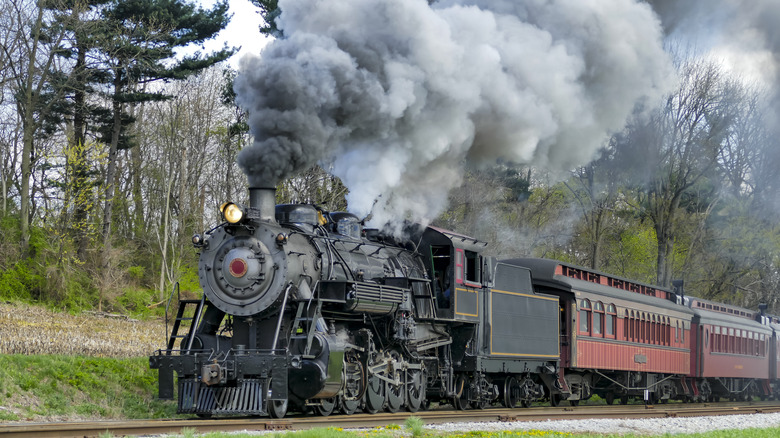
Before the 19th century, much of the technology that we take for granted in our daily lives simply didn't exist. The people of the time relied on letters to communicate over long distances. Artists were the best option to capture a moment in time. Traveling from one part of a country to another would take weeks or months. While that was the status quo, the inventors of the 1800s were hard at work looking for ways to make life easier.
Those inventors succeeded on many fronts, coming up with new developments that solved problems in transportation, communication, and daily living, amongst many others. The influence of many of these creations is not limited to that time alone, however. There are major aspects of modern life influenced by 19th-century inventions, with some serving similar purposes to the solutions of then, and others being direct evolutions of the creations of the time.
Mechanical computer
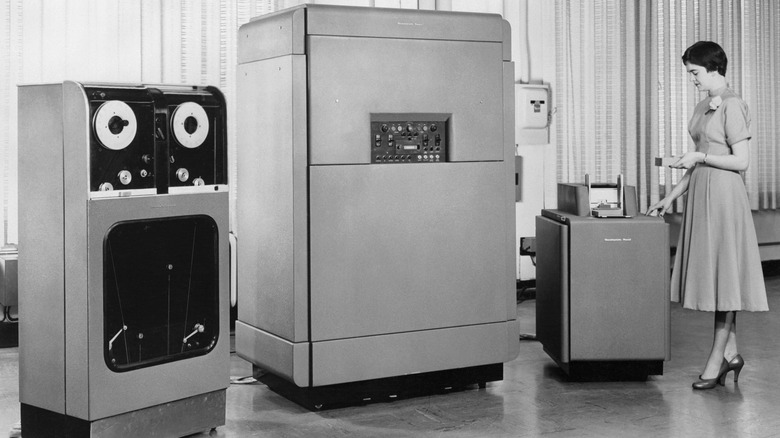
In 1821, the English mathematician Charles Babbage, regarded as the man who built the first computer, began to design the Difference Engine No. 1 in London. It could do addition and subtraction, store previous answers, and print the output of its calculations. However, its construction was never completed, and without being general-purpose, it couldn't technically be termed a computer.
The Difference Engine served as inspiration for his Analytical Engine, whose concept Babbage finalized in 1837. The machine was intended to be general-purpose and could be programmed using punched cards to input numbers, choose mathematical operations, and even access stored variables. Unfortunately, just like the engine before it, it was also never completed due to conflict with his engineers and his funding running out.
However, what is truly special is that despite these machines never being completed, the work Babbage did, particularly on the Analytical Engine, was a demonstration of the fundamentals for the computers of nowadays. They both have components for doing calculations, storing data, inputting data, and outputting results. Plus, they can both be programmed instead of merely performing a single task. Babbage's work on computers truly changed the world, even if not in his lifetime.
Batteries
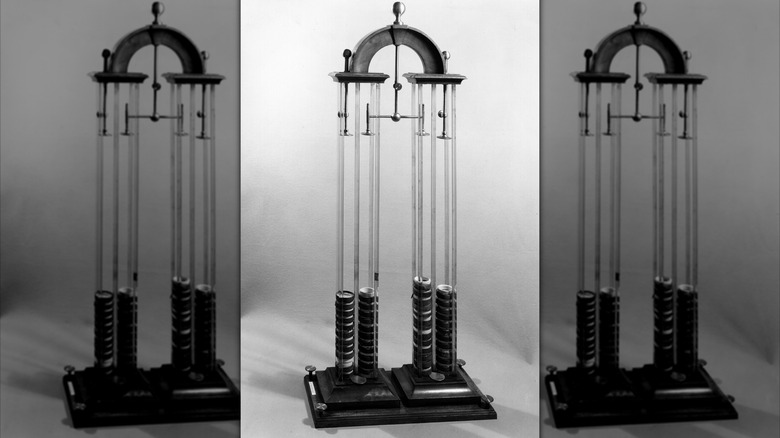
Before the 19th century, the rough concept of a battery already existed. The American politician and inventor Benjamin Franklin was the first person to use the word in the context of electricity. However, his experiments used Leyden jars, which only store electricity; they don't generate it. Modern batteries rely on electrochemical reactions to produce electricity, and the first invention of that sort was made by Alessandro Volta, an Italian chemist and physicist, in 1800.
Volta's invention, the voltaic pile, was made in his home lab in Como using alternating stacks of zinc and silver, and between each stack was cloth or pasteboard soaked with brine. This combination was capable of generating steady electricity, making it superior to Leyden jars which could only store electricity produced from an external source. With the ability to produce electric current on demand, the voltaic pile was an important part of a lot of scientific experimentation in the 1800s.
In 1859, the first rechargeable battery was made by a French physicist named Gaston Planté, showing that batteries didn't have to be one-time-use items. Rechargeable and non-rechargeable batteries are everywhere in the modern world, allowing us to keep devices and gadgets powered on even when we're miles from a wall socket.
Telephones
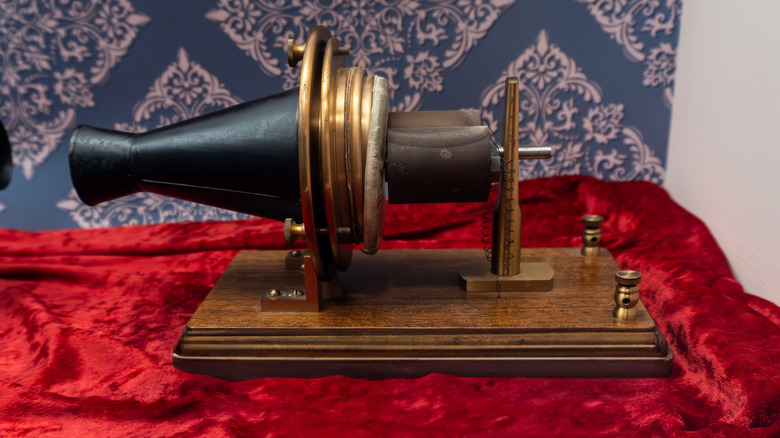
The telephone's contribution to the world of today is incredibly clear, as you might just happen to be reading this from a smartphone. While there's a lot of debate regarding who should truly be credited as its inventor, the Scottish-born Alexander Graham Bell is most frequently given that honor. He spent most of his life between Canada, where he conceived the telephone, and the United States, where he built the telephone and received the first patent for it in 1876.
The original telephone was split into a transmitter and a receiver. The transmitter worked by converting the vibrations made by a person's voice into electrical signals. That signal traveled through a wire to the other telephone, and through its receiver, it would be converted back into the same vibrations that produced it.
At first, telephones were solely used to communicate between two preset locations. With the advent of telephone exchanges, it became possible to be connected to any one of multiple places within a community. Over time, the average person could call between cities, and eventually, undersea cables connected continents. Leveraging radio waves made cellphones commonplace, and here we are now.
Cameras
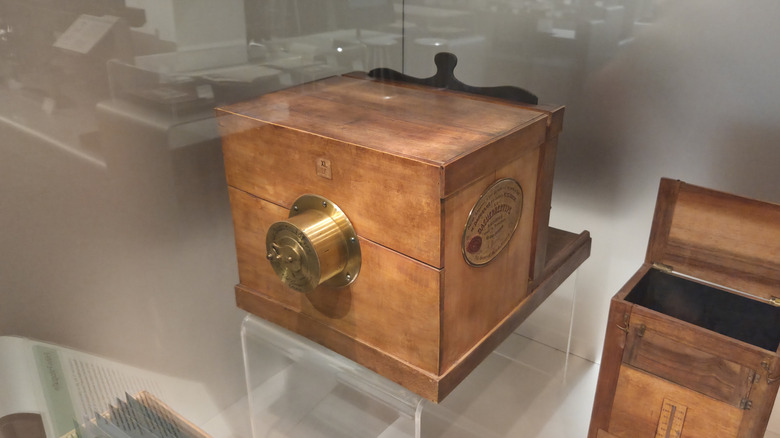
Before photography was a thing, people could only hope to get portraits of themselves painted by a talented hand. The French inventor Nicéphore Niépce, in 1826, made the first step towards changing the landscape by creating the oldest photograph that survives to this day. Niépce later partnered with fellow French inventor Louis Daguerre, a notable name in the history of photography, though he died years before daguerreotype photography was introduced at a meeting of the French Academy of Sciences in 1839.
What made daguerreotype photography such a leap was the high level of detail compared to the photographic techniques that came before it. In addition, it took only minutes to take the photo, instead of hours. It was the first photographic technique that could feasibly be used to take portraits of people. Over in England, William Talbot was concurrently developing a photographic technique that ended up being the basis for film photography.
As with all technology, the process continued to be refined, including the handheld Kodak camera and the first motion-picture camera, both made in 1888. Now, photography is quite literally invaluable in modern life. It's nearly impossible to go an entire day without seeing an image or a video taken by a camera.
Internal combustion engine
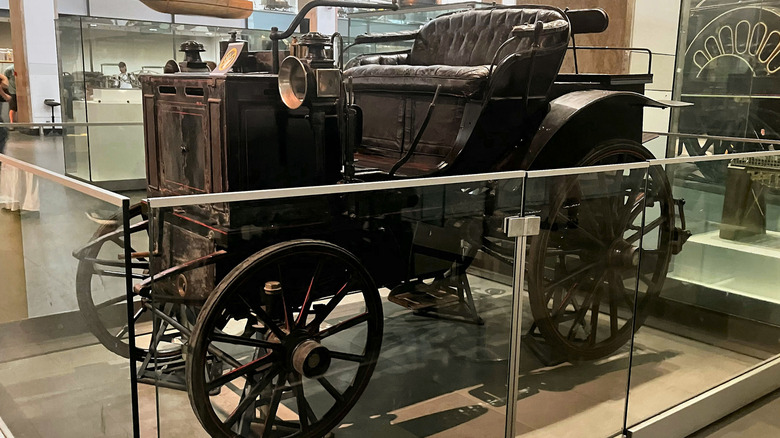
In a world that was well accustomed to steam engines (an external combustion engine), the internal combustion engine was revolutionary. Steam engines needed to boil large tanks of water, which made them heavier and slower. Internal combustion meant that the fuel being used to heat the water could be burned within the engine to produce power, which meant less weight, immediate operation, and better efficiency.
While there were successful attempts at designing internal combustion engines in the late 18th century, the first practical internal combustion engine was designed in France by the Belgian-French engineer Étienne Lenoir and patented in 1860. Similar to today's engines, it ran on liquid fuel. However, engines of the modern age can be argued to be most influenced by the four-stroke engine patented by Nicolaus Otto, a German engineer, in 1877, though that ran on coal gas. It only took a few years for the technology to be streamlined, and by 1886, the first automobile, the Benz Patent-Motorwagen, was patented.
Internal combustion engines in the 21st century might have more cylinders than they did back then, but they still mostly operate on gas and four-stroke cycles. While there's a lot going on with electric vehicles these days, fuel-powered cars still comprise the overwhelming majority globally.
Vulcanized rubber
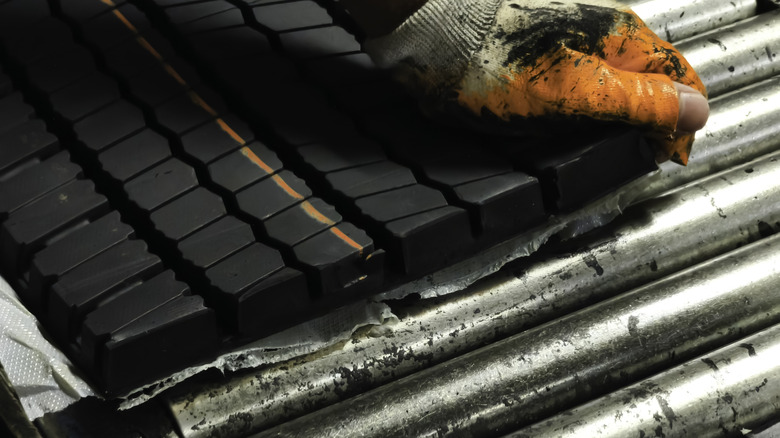
Humans were familiar with rubber well before the 1800s. It is gotten from latex, a fluid produced by rubber trees. Raw rubber has its downsides, though. It changes texture with temperature, getting softer in warm weather and brittle in the cold. It is also sticky and dissolves when exposed to certain chemicals. While raw rubber worked, it could be better.
After years of experimentation, a breakthrough was made in Massachusetts in 1839 by Charles Goodyear, an American chemist, when he accidentally placed a mixture of rubber and sulfur onto a hot stove. He noticed that the mixture, unlike raw rubber, stayed firm and even hardened at higher temperatures, eliminating the biggest problem with rubber at the time. In 1844, he patented the process, which was named vulcanization.
Today, vulcanized rubber is the most notable material for making tires (the Goodyear Tire & Rubber Company is named after him, but wasn't founded by him), as well as other automobile parts like hoses, gaskets, and engine mounts. The modern automobile would have had to find a different solution for its tires without vulcanized rubber.
X-rays
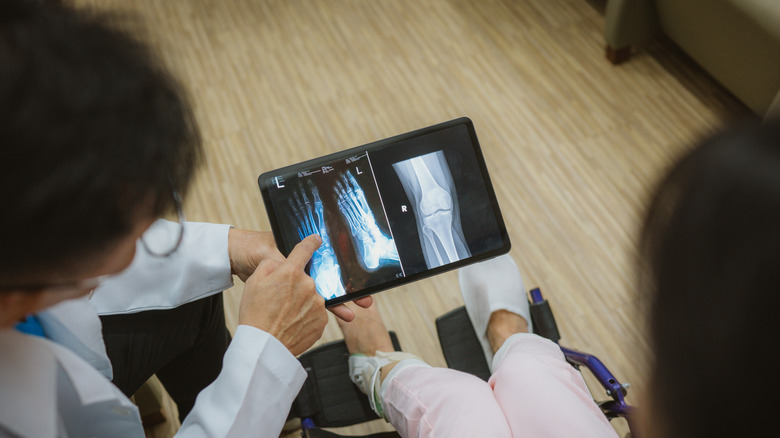
Before the first medical imaging technique was developed, the only real way to take a peek at what was happening inside the body was to make an incision. As a solution, that was far from practical. Thankfully, the work of German physicist Wilhelm Roentgen in 1895 provided the world with its very first medical imaging technology.
The X-ray was discovered unintentionally. In his lab at the University of Würzburg in Germany, Roentgen noticed a certain material glowing in response to a cathode ray tube that he had nearby, and that prompted him to do some investigating. He famously used his wife as a test subject, and with a combination of cathode rays and a glass photographic plate, he emerged with an image clearly showing the bones in his wife's hand and the ring on her finger. That was the very first X-ray ever made.
These days, the most obvious use of X-rays is in medical imaging, where you can examine bones and changes in soft tissues. Engineers can use X-rays to check the integrity of structural components. You'll also find X-rays scanning your luggage at the airport and other places that require baggage checks.
Electric light bulb

Once upon a time, people had to rely on different kinds of fuel to provide light. You would have lamps running on coal, kerosene, or oil to illuminate spaces. Thanks to work from British inventors, however, it was known that electricity could theoretically be used to produce light. The first form of electric lighting was the arc lamp, invented by Humphry Davy, a British chemist, in 1809. However, they were too bright for use in homes and were also noisy.
The incandescent light changed things. Instead of using an arc of electricity as the source of light, they would use electricity to heat a filament to the extent that it glowed and provided illumination. Carbon and platinum were the two elements most experimented with as the incandescent bulb was improved upon.
The first commercially successful light bulb was made in New Jersey by the famous American inventor Thomas Edison in 1879. While a large part of the world has moved away from incandescent bulbs toward more energy-efficient choices, the incandescent bulb was arguably the biggest piece of the electric lighting puzzle. In the early parts of the 21st century, they were the popular choice and you can still find them in many places.
Phonograph
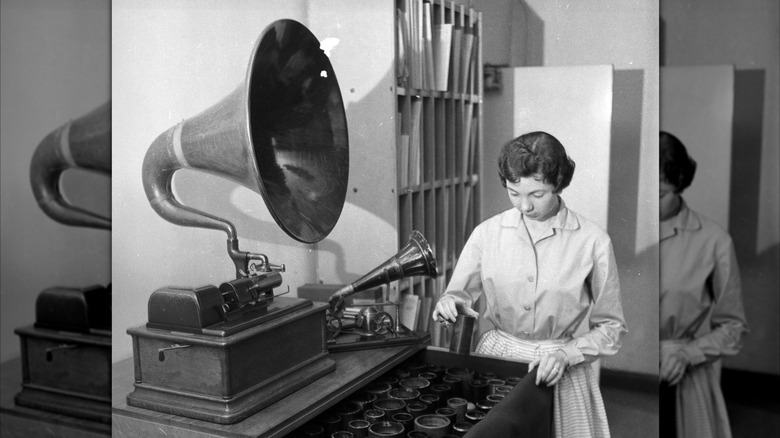
Thomas Edison was well established as one of the great American inventors of the 19th century, because apart from the electric light bulb, in 1878, he received the patent for the phonograph. Just like the light bulb, he also came up with the phonograph in his lab in Menlo Park, New Jersey. While the concept of a speaker existed before the phonograph, most notably in the receiver element of the telephone, Edison's invention introduced the ability to not only play sound, but record it as well.
To record sound, you spoke into the horn of the phonograph and the vibrations of your voice would move a thin membrane called the diaphragm. The vibrations were used to move a needle which carved grooves into a wax cylinder. To play sound back, the needle would follow the grooves that were made, returning identical vibrations to the diaphragm. The sound would get amplified through the large horn, and just like that, you would have successfully played back a recording.
Before then, while there were ways to produce sound from a device, there was no way to actually store sound. The phonograph's recording system was the first means to lock sound to a physical medium, predating inventions like the vinyl record, cassette tape, and optical disc. Each of those finds a way to embed sonic instructions into a medium for playback later on, just like the phonograph originally did.
Gyroscopes
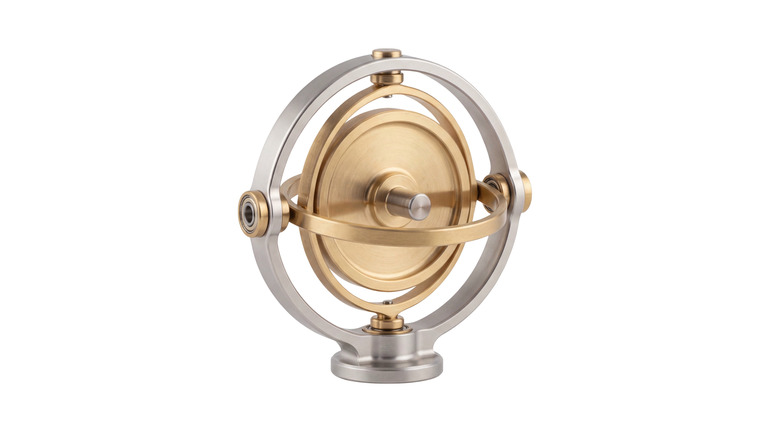
The honor of naming the gyroscope fell to a French physicist named Léon Foucault, who in 1852, refined existing designs and was able to use his gyroscope to prove that the earth was in constant rotation. However, as you might be able to tell, the gyroscope existed before then, and the German astronomer Johann Bohnenberger, all the way back in 1817, made the first instrument that could be designated as one. When left to him, though, he uncreatively named it the Machine.
While gyroscopes started off as entirely mechanical inventions, over the years, they've become less dependent on moving parts. The 20th century brought optical gyroscopes, which utilize lasers, are extremely accurate, and used where precision is required, such as in airplanes, satellites, and drones. Micro-electro-mechanical systems (MEMS), are a much smaller type of gyroscope, and they're the kind that you're most likely to find inside a phone or smartwatch. The history of virtual reality would also be bland without gyroscopes — the head tracking is essential for modern VR.
Steam locomotive
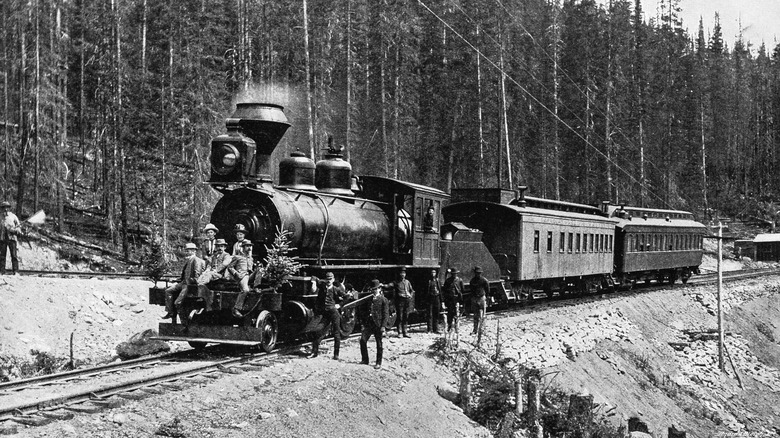
The locomotive is one of the most notable creations of the 1800s, and it is easy to argue that the development of the early United States wouldn't have gone the way it did if railroads and trains didn't exist. It transformed the global landscape by revolutionizing transportation of goods, raw materials, and people, and played a major part in catalyzing industrialization. All of that was mostly thanks to Richard Trevithick, a British engineer who invented the first working steam locomotive in 1803.
While locomotives have undergone a series of changes and modernizations in more than 200 years, the general idea and infrastructure remain mostly unchanged. Locomotives in the modern age run on electricity or diesel, which are more efficient sources of power than steam. Freight trains still carry containers and goods on a daily basis, and in some parts of the world, passenger trains are incredibly popular options for travel over both short and long distances.
Telegraph
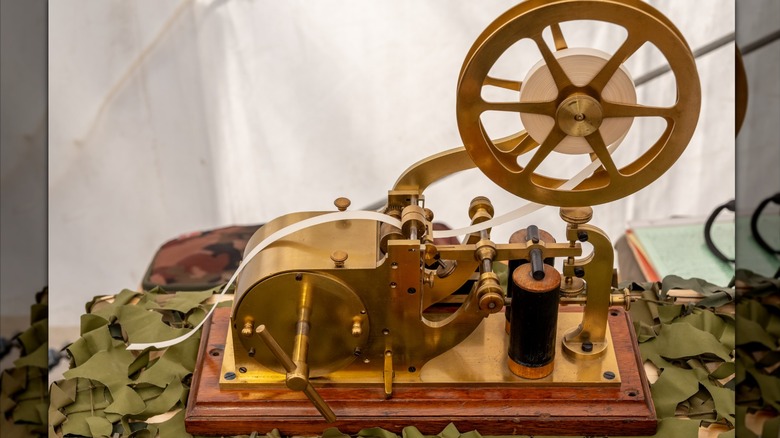
Before news could be read on a social media feed, information had to be shared at a crawl through letters or word of mouth. However, in 1844, the most important patent for the telegraph was filed. The invention played one of the largest roles in rapidly speeding up information dissemination in the 1800s.
Samuel Morse was an American portrait painter who co-developed Morse code with his countryman Alfred Vail. He also received a patent for the telegraph, and while there were successful attempts before him, they had drawbacks. Morse's system could transmit over long distances, and it was easier to manufacture than the earlier systems because it used electrical pulses from a single wire. It would automatically print out the pulses as dots and dashes onto paper, and that would be translated using the Morse code system. He filed his patent in the U.S. in 1844 and it was granted in 1849.
Telegrams could initially only travel between specific areas within a country, with telegraph lines running along the same paths as railroads. Soon, the need to communicate with other continents spurred the development of underwater cables. The first one ran between England and France in 1851, and in 1866, the first transatlantic cable was laid. Today, fiber-optic cables run underwater for both internet and mobile network traffic. The telegraph was the first system for sharing information from one region to another, just like the internet does today, and fun fact: you can still send a telegram today.
Alternating current
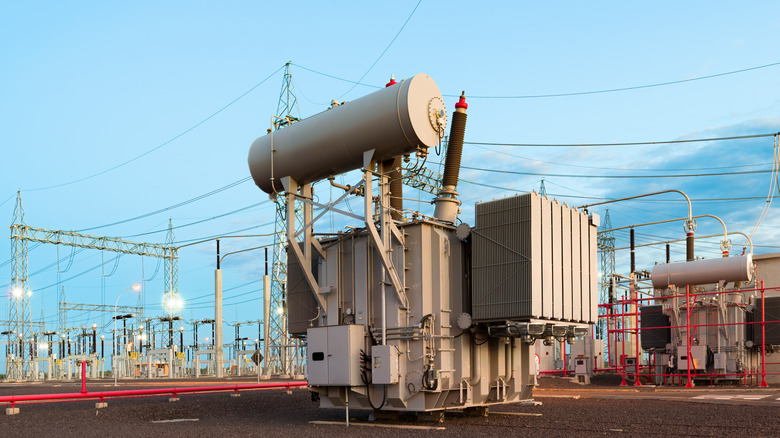
While the concept of public electricity did not exist until the late 1800s, throughout the century (and even prior), several inventors and scientists contributed to its invention. Notably, the French scientific instrument maker Hippolyte Pixii made the first alternating current generator in 1832, decades after the voltaic pile demonstrated direct current. However, his vital invention was still half a century before public electricity.
The first public power station was built in London in 1882, utilizing direct current. There are many differences between alternating current and direct current, and one is that direct current isn't great for widespread transmission. Alternating current overcame that limitation in 1886, when the first commercial electrical transformer was made by the American physicist William Stanley Jr. in Massachusetts.
Alternating current transformers made it possible to transmit power at high voltages, allowing for long distance transmission, and then the voltage could be lowered by local transformers in communities. Alternating current and transformers were arguably the two most important inventions to allow for the public electricity that powers lights, appliances, and electronics in the modern world.