

5 Reasons To Avoid Buying Another Foldable Smartphone (For Now)
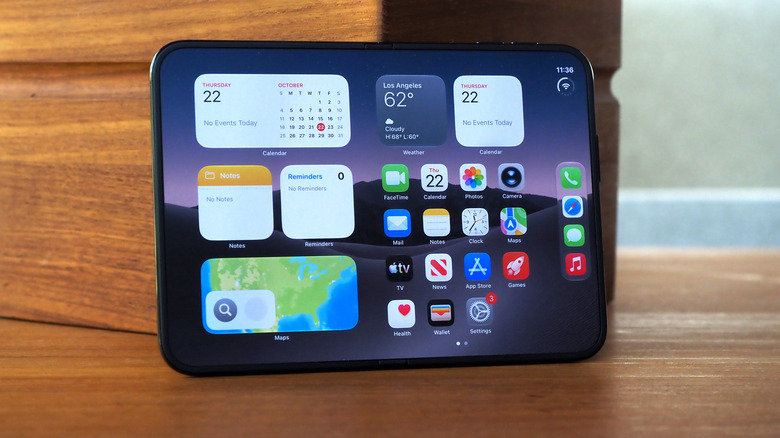
Folding phones are a curious segment of the market. Back when we first started seeing them in 2018, they seemed — to some — like they'd sweep across the market and eventually become the norm. Who wouldn't want a phone that could double its size in the most sci-fi way ever? Now we're eight years into foldables, and despite the tech industry pouring years into the R&D, they remain niche and few people actually want to buy one. Even after the reveal of Apple's long-awaited iPhone Duo, many likely want to stick with the latest-gen Pro. We think the way things have gone proves it might not be worth buying a foldable for the second time if you've already owned one.
If you love your foldable, hey, cool, stick with it. We have no intention of knocking a device you use and love. But if you're on the fence or have been having doubts come upgrade time, we'd like to examine why it might be time to put the foldable thing to bed until foldables change radically in what they offer. At least for now.
Durability remains a major issue
Every passing year, it amazes us how much more durable typical smartphones get. You can drop them screen-first, let them soak for almost an hour in your tub, and they will keep on trucking. But foldables? They have improved, make no mistake, but the exact same fundamental issues they had on day one remain. First, dust continues to be kryptonite; if your phone somehow survives being dropped at the beach without taking permanent damage, you'll be reminded of it every time you open and close it and hear that dust-in-hinge grinding. Meanwhile, dust poses effectively no threat to candy-bar smartphones.
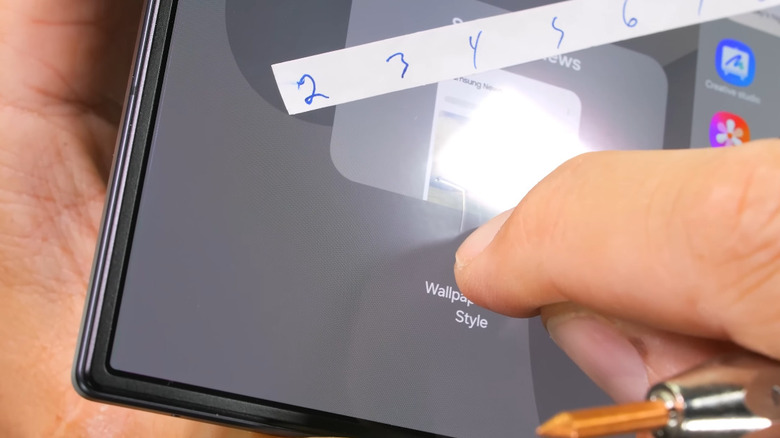
Second, inner displays remain — perhaps fundamentally — embarrassingly fragile. It's crazy to think that all you need to do is push your fingernail (a short fingernail, not even a long one) into the screen to damage it. Compare that to a flagship smartphone, which can take a utility knife blade to the screen without issue. Those flexible screens are also, unsurprisingly, more prone to damage when bent or sat on (you never know, it happens). They have worse durability overall, with even their external screens breaking before those of non-foldable counterparts. And for the record, we are talking about recent foldable models here, not ones from eight years ago.
Perhaps it goes without saying, but you shouldn't have to baby a $2,000 device against one of the most abundant substances on Earth. Normal smartphones can be dunked and thrown and dropped all day, yet foldables seem to continue to require the white-glove treatment. Since it seems like the situation isn't changing, you should probably just go back to candy bars and enjoy the peace of mind knowingthat a little tumble won't be enough to break your smartphone.
They continue to be expensive in every way imaginable

News flash to absolutely no one: foldable phones are crazy expensive. Take a look at a list of the best foldables available, and few drop below $1,000. To be fair, it makes sense. A foldable has a second internal screen, often with a second selfie cam, and a complicated hinge mechanism (among other things), all of which introduce all sorts of engineering and manufacturing costs. Yet expensive to most people implies "better," and so the poorer durability of foldables — and other aspects we'll discuss — really detracts from the value they provide for that price tag.
That expense factor doesn't go away once you buy it. Repairing foldables — foldables that, again, break more easily — is more expensive, too. A foldable screen replacement on a current-gen Galaxy Z Fold 8 costs $579, the price of a budget smartphone. Plus, foldables are getting more expensive to repair in more ways than they once were; Samsung is discontinuing its complimentary screen protector replacement program on December 1 and will charge $39, plus tax, for it. And good luck repairing any part of a foldable by yourself.
Now add on the fact that the RAM crisis keeps making things more expensive. Foldables lose even more of their value proposition when they cost more and have the same issues. How you spend your own hard-earned money is your prerogative, but if you want to stretch your dollars as far as you can, they're probably not an ideal choice.
They still make too many compromises
We know we're beating a dead horse over the pricing of foldables, but that horse is going to need a few more beatings still. For a phone that costs as much as a down payment on a cheap car, you would expect the best of the best, right? That's usually not the case. Comparing flagship smartphones and foldables side by side, there are always compromises. Understandable to an extent, when you consider the engineering marvel that has to be pulled off to jam-pack top-end specs into a slate that isn't much thicker than a normal phone. But you are not getting the very best of modern smartphones.
Let's compare a foldable and a flagship from two different brands: Samsung's Galaxy Z Fold 8 and Galaxy S26 Ultra, as well as Apple's iPhone 18 Pro and iPhone Duo. In both cases, foldables have inferior specs in various categories: camera systems, plus battery life, IP rating and charging speed (on the Galaxy Z Fold 8), and others sprinkled across the spec sheet. For the record, this is not to say that their camera systems — and other specs — are bad, but they are worse, and that matters when you're shelling out upward of $2,000.
Back in the early days of foldables, those compromises were taken on the chin since it was a new, developing technology with a bright future; early adopters expect growing pains. Fast-forward to today, and a more expensive phone being worse in key areas leaves a sour taste in the mouth — at least, we think so.
Apps still do a poor job with the screen ratio
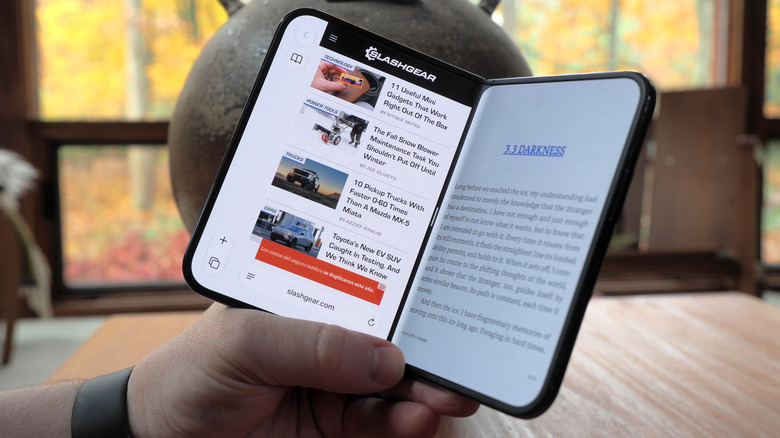
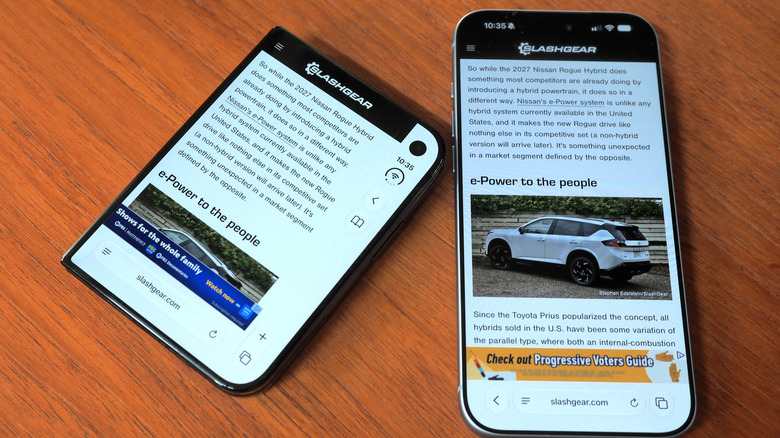
For normal smartphones, apps that are improperly scaled or sized for your screen are exceptionally rare. Not surprising, since phones generally stick to standard sizes and ratios, which makes it easy for developers to optimize their apps. Unfortunately, that is not always the case with foldables — at least not with book-style and passport-style ones. One of the biggest complaints about them is the aspect ratio and how content is arranged on the inner screen. Developers have to intentionally optimize their apps for foldable screens, which presents unique challenges for different content, like games. If they don't — which is common — apps become, at best, a frustrating experience, and at worst, borderline unusable.
This problem isn't new. It's been happening for a long while now. But it remains an issue, even in the current year. Some believed that the iPhone Duo would solve the problem, yet one of the biggest issues with the iPhone Duo right now is exactly that: content not optimized for the inner screen. If you're lucky, you can fix aspect ratio crimes in the settings. If you're lucky. Imagine for a second that one of those unoptimized apps is one you cannot live without.
Call it a personal opinion, but this should have been a problem solved in the early years of foldables. Either developers should have caught up by now and reconfigured their apps for foldable ratios, or Android and iOS should have enforced proper app scaling far sooner. Alas, here we are. You (almost) never have to worry about incorrect aspect ratios on a candy-bar smartphone. So why should foldables that have been nearly a decade in the oven be an exception?
You might not even use that inner display much
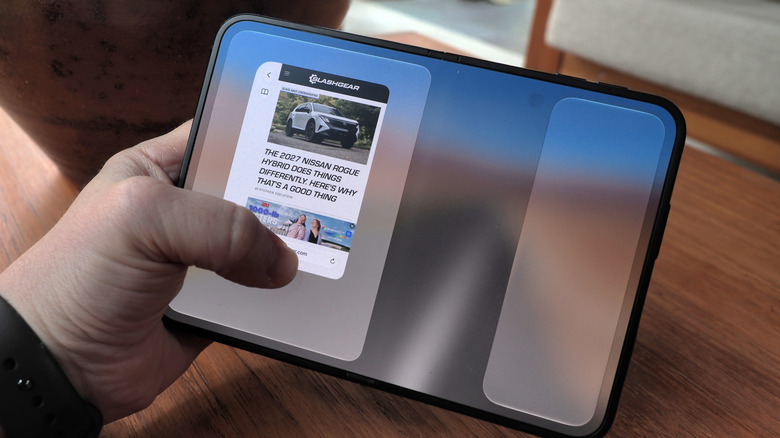
Only you can say how much you actually use your phone's inner display, and consequently, how useful having it has actually been. We will not claim to speak on behalf of anyone since it is a highly personal, case-by-case sort of thing. However, we'd wager many people use it less than they thought they would when they first bought it. There is some statistical basis that might back this notion up; in the past, foldable phones have had a higher-than-average return rate. An informal 9to5Mac reader poll on the recent iPhone Duo found that about 30% of buyers returned it.
Going off subjective experience, a lot of owners find the folding aspect to be more gimmick than game changer. Some of them only use it in a few rare situations. If that describes you, you have to ask yourself: why spend that much money on a notoriously expensive phone if you're not going to be using its marquee feature religiously? And more importantly, with foldables having been around for as long as they have, shouldn't they have proven to be irreplaceable in certain contexts?
Remember, mini, foldable-sized tablets exist, like the new iPad Mini. Sure, you can't fold them, and sure, toting them around everywhere without a bag is a non-starter. But think about how often you genuinely need a double-smartphone screen. Unless you're unfolding your folding phone a couple dozen times a day — and having that extra space genuinely makes a difference — we'd say it's hard to justify the price.