

iPad Mini (A20 Pro) Review: Apple's Latest Small Tablet Charms And Frustrates
We may receive a commission on purchases made from links.
Somewhere along the way, amid the data centers and the generative AI and the increasingly dire economy, tech got pretty dull. If you came of geek-age during the heyday of tablets, you'll likely remember the excitement as what landed on Best Buy shelves grew closer and closer to the make-believe gadgets in comics and movies. These days, there's a sense that CFO approval is more important than sparking genuine excitement.
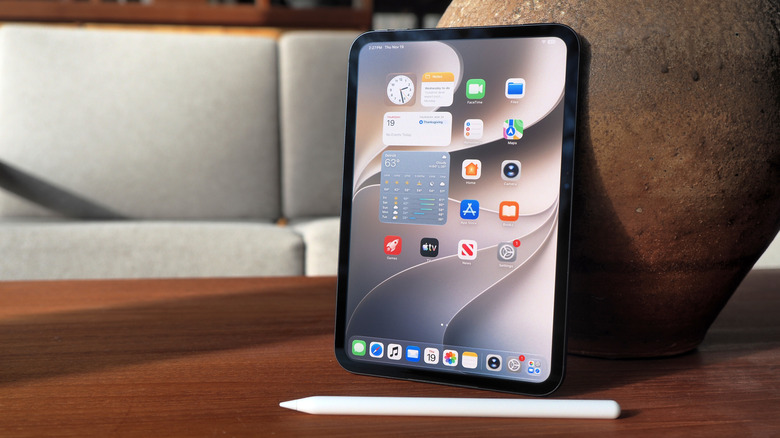
Apple's new OLED iPad mini is imperfect, and you can undoubtedly question some of the hardware and pricing decisions made, but in the hand I couldn't shake the feeling that it hadn't given up on that enthusiast vision of a sci-fi future.
 Chris Davies/SlashGear
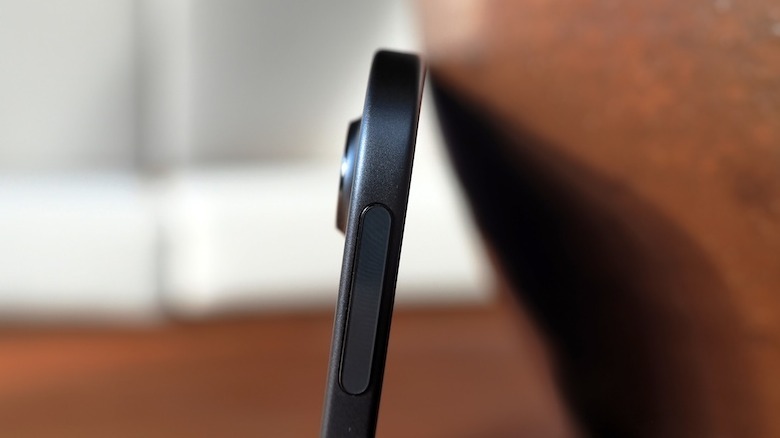
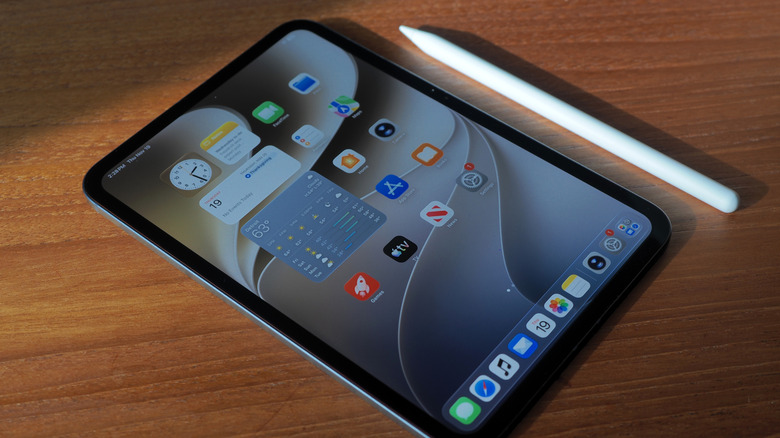
The iPad mini has always felt like a Star Trek prop; this eighth-generation update seems even more akin to something you'd find on the Starship Enterprise. I was skeptical whether Apple's "14% thinner" boast would make much of a difference in the hand, but the 5.4 mm thick iPad mini does feel astonishingly waif-like. At 255 grams (for the Wi-Fi only configuration; add integrated 5G and that bumps up to 263 grams) it's exceedingly comfortable to hold single-handed for longer periods.
It's so skinny, in fact, that Apple's digital pen — either $79 for the Apple Pencil USB-C, or $129 for the Apple Pencil Pro; both cling magnetically to the side, but only the Pro charges while it's there — is now noticeably chubbier than the tablet itself. There's IP67 splash and dust resistance, and you can apparently dunk the iPad mini in up to 1 meter (just over 3 feet) of water for up to 30 minutes, and still expect it to survive. Good to know, if you're an "ebook in the bath" sort of reader.
A host of clever design tweaks
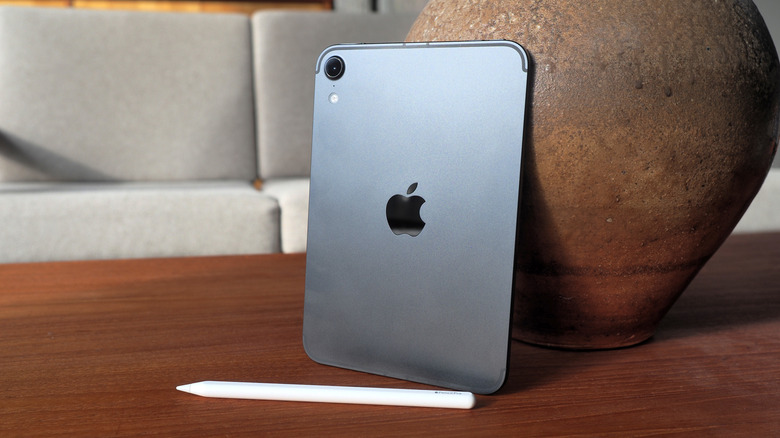
One way Apple added that resilience was by finding further ways to close up the casing: the USB-C port is the only opening, now, used for charging, data, or hooking up an external display. The 10 hours of battery life promised if browsing or watching video over WiFi is reasonably accurate; expect that to dip if you're using the 5G of a cellular version, or doing more system-intensive tasks. Fine, but I missed the all-day+ runtime the iPhone Duo somehow manages.
Gone are the speaker grilles of the old iPad mini, replaced by a so-called Acoustic Display. That turns the whole screen into speaker drivers, and it works unexpectedly well. There's actually a decent amount of bass, now, and video calls made without earbuds don't sound squeaky.
 Chris Davies/SlashGear
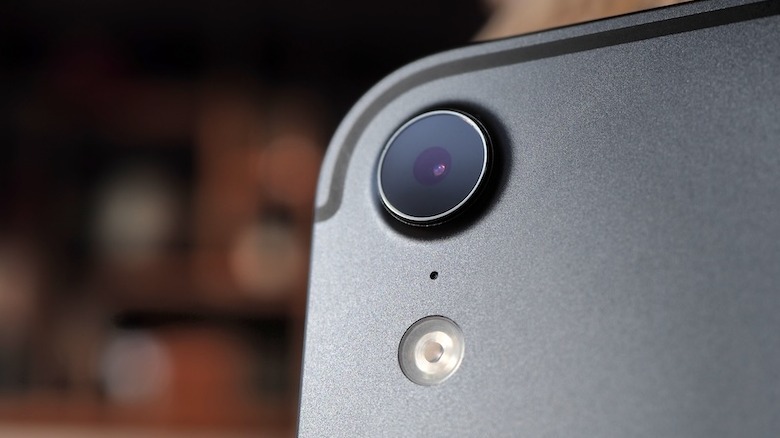
The 12-megapixel Center Stage camera to go with that is now positioned on the landscape edge of the iPad. That does affect the framing: if you're making FaceTime calls with the iPad mini in landscape orientation, it looks more like you're directly staring at the camera; flip to portrait, though, and it's now offset. On the back of the tablet there's a single 12-megapixel camera with 5x digital zoom; it's fine, but isn't going to rival the photos most recent iPhones can take.
The screen is great, but it'll cost you handsomely
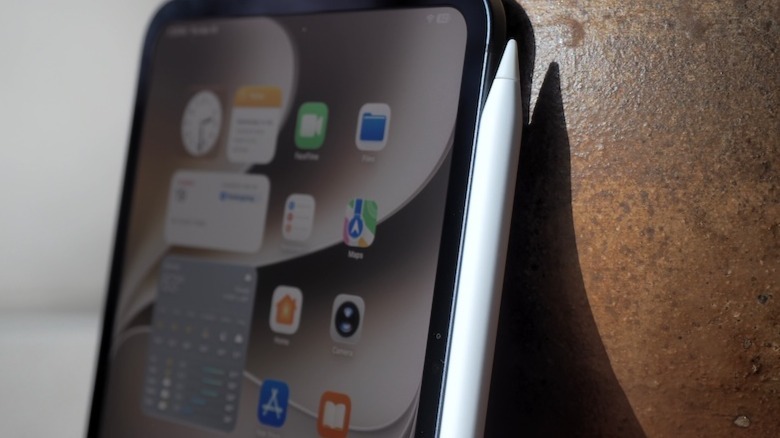
The new nano-texture glass — an option previously only available on the iPad Pro — is another surprising pleasure. Apple's anti-reflective treatment isn't a cheap add-on: it's not available on the base iPad mini, only on the 256 GB and 512 GB versions, where it adds another $100 to the price tag. That means you're looking at $899, at least, for the privilege.
In return you get a significant reduction in glare: even when I tried specifically to angle the iPad mini to catch overhead lights, the result was subdued. Apple says there's no impact on the OLED screen's own brightness, either. The 600 nits maximum (doubled if you're watching HDR content) is actually brighter than the smaller of the iPad Air models.
 Chris Davies/SlashGear
Combined with those deep blacks we know from OLED panels, it leaves the iPad even more pleasing to the eyes. Only the decision to stick with 60Hz for refresh rankles; the iPad Pro remains Apple's sole 120Hz-capable tablet.
I'd hoped that the nano-texture would also leave the iPad mini's display feeling more paper-like with the Apple Pencil Pro, but if there's any difference, it's scant. The stylus' nib runs smoothly across the screen — and there's angle and pressure recognition, along with squeezing the Pencil Pro's barrel to summon a "hover" menu of shortcuts — but it doesn't match the traditional notepad feel that reMarkable's e-paper tablets offer.
Ready for unexpected workloads
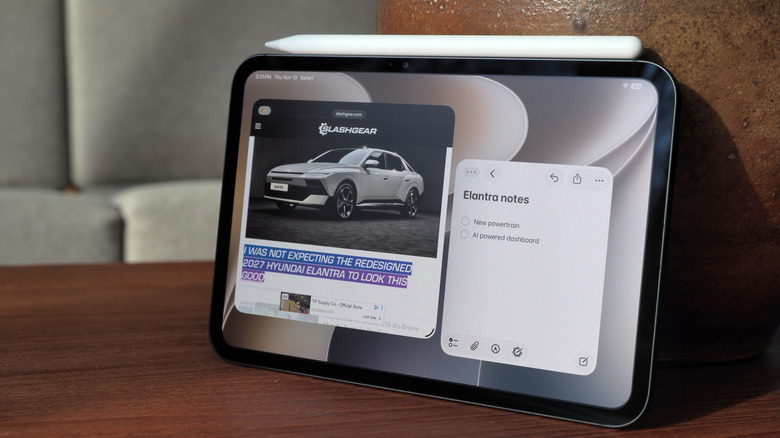
Apple's ambitions here are far broader than reMarkable's, of course, with the new iPad mini built atop the now-familiar A20 Pro. Exact specifications for the chipset vary depending on configuration — 128/256 GB models get a 5-core CPU; the 512 GB iPad mini has the 6-core CPU (with an extra efficiency core) found in the iPhone Duo, along with a second Neural Engine — but either way it's a marked step up from the A17 Pro in the previous-gen tablet.
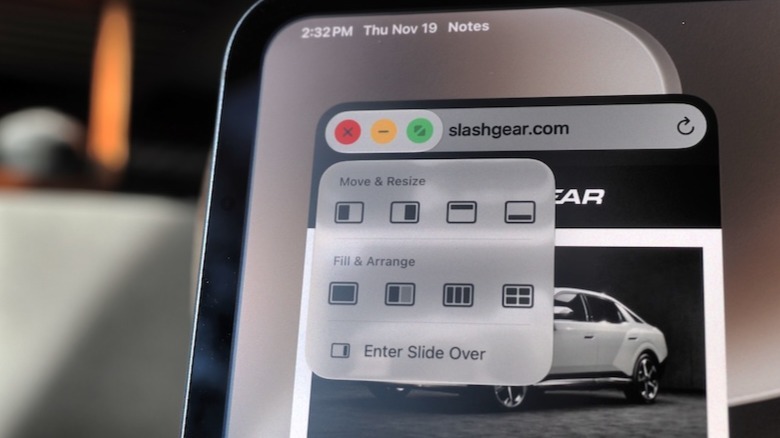
My review unit had the beefier chipset, but it's hard to imagine either falling short of the sort of tasks iPadOS 27 excels at. Multitasking using the optional Windowed Apps system — which replicates the sort of resizable app windows familiar from macOS — does take some getting used to, not least because resizing apps on the relatively small display demands more precise taps to drag the corners without inadvertently interacting with the app itself.
 Chris Davies/SlashGear
Still, it's far more flexible than the split-screen layout alone — which you can still use even in Windowed Apps mode — particularly if you hook the iPad mini's USB-C port up to an external display (up to 4K at 60Hz is supported) and expand the desktop. Throw in a Bluetooth keyboard and mouse (sadly Apple doesn't make an official keyboard case for the iPad mini, but third-party accessories can fill that gap) and suddenly things get a lot more Mac-like.
The A20 Pro is overkill for web browsing, email, messaging, and the like. However load up a more system-intensive app — like something from Adobe's Creative Cloud suite for photos, or Apple's own Logic Pro for music — and start laying on filters, effects, and other edits, and the little tablet flies. Then there's the longevity value of having a modern chipset when looking ahead to years of iPadOS updates.
So what about iPhone Duo?
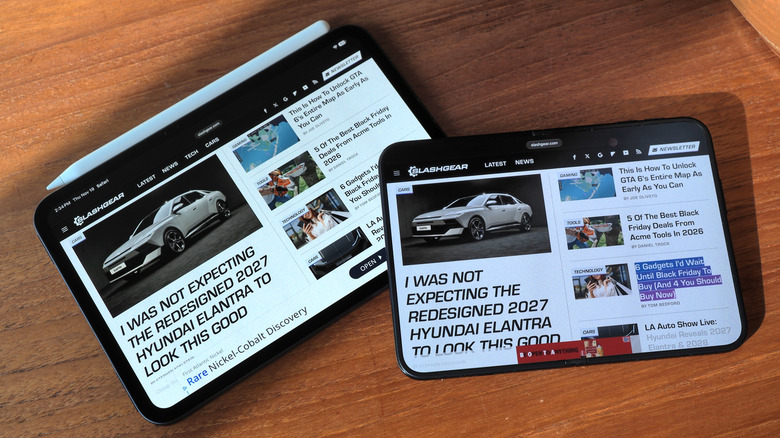
The gap between iPhone and iPad has never been narrower, at least in terms of screen size. The arrival of the iPhone Duo this year pits Apple's foldable 7.6-inch display against the iPad mini's 8.5-inches, though beyond the dimensions the two aren't really competition, to my mind. That's because, as intriguing — and capable — as the iPhone Duo may be, it's still running iOS rather than iPadOS, and we're still in the early days for apps that fully support its internal screen.
Meanwhile, though the raw measurements may suggest otherwise, side-by-side there's a noticeable difference in just how much more display real-estate you get on the iPad mini. The tradeoff there is that a foldable phone can slot into the pocket of your jeans — an iPad (even a mini one) not so much.
At $1,999, Apple's first foldable also makes the tablet look affordable, though that's a relative thing. iPad mini ownership may kick off at $699, but that can rise rapidly. If you want the nano-texture glass — which also means at least the 256 GB upgrade — plus an Apple Pencil Pro, you're at $1,028. Add 5G cellular connectivity, and that climbs to $1,178.
That's before you add a case (Apple's own Smart Folio is $79). At least, unlike with a new iPhone, Apple throws a USB-C power adapter in the box; annoyingly it supplies 20W, not the 35W+ you'll need to unlock the newly-added fast-charging support. Apple will sell you one that does, from $39, if you want to go from 0-50% charge in about half an hour.
iPad mini (2026) verdict
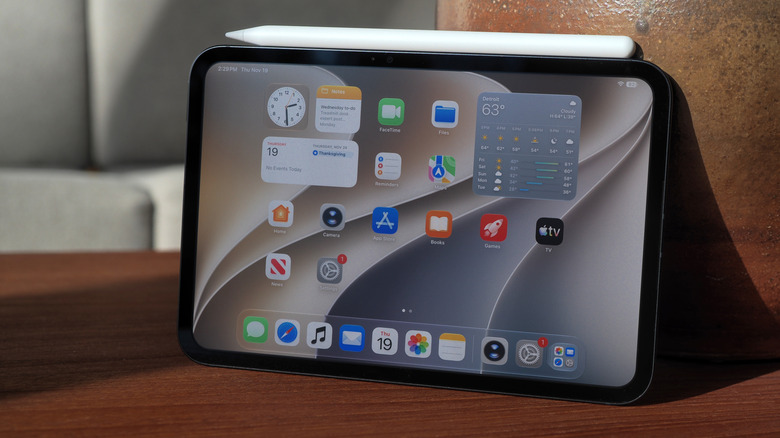
It all adds up, though the reality is that Apple's smallest tablet hasn't been its cheapest option in some time. Those on a budget get the regular iPad (from $449); the iPad mini feels more like an adjunct to the iPad Pro, for those who need extra portability. The Pro starts from $1,199, however, though the extra spend brings a 120Hz screen, Face ID, and even more power.
Not for the first time, I find myself surprised that Apple persists with the iPad mini. It's a niche within a niche; as much a demonstration of the company's engineering talents and manufacturing tolerances as it is a practical product in its own right. The decisions made for this 2026 iteration only lean into that. Apple could've made it thicker and squeezed in Face ID, more battery life, and even a ProMotion screen, rather than chase a slimmer form-factor.
As a geek, I can't help but appreciate the iPad mini. Rationally, I suspect most people would find their tablet needs comfortably sated by the iPad Air, which starts at $749 in 11-inch form. It's amply equipped, even if it lacks that sci-fi sparkle which makes the iPad mini so charming.