

5 Reasons To Buy An iPhone 18 Pro Instead Of An iPhone Duo
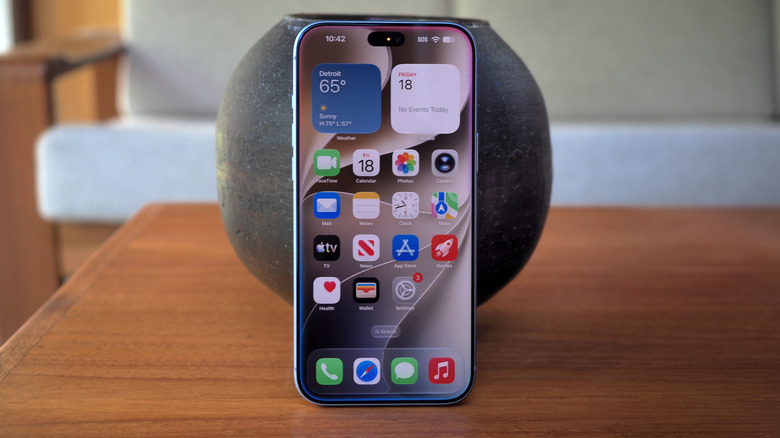
It's finally here. After years of rumors, the iPhone Duo is a real, actual thing in people's hands. We reviewed it, as did basically every other tech outlet out there, and in many ways it is pretty awesome. It does the folding aspect well (as it should) and Apple seems to have done an exceptional job adapting iOS for this new form factor. Not bad at all for a company's first-generation foldable. But let's not forget the iPhone 18 Pro is still around — even if its newer, younger sibling is hogging all the attention — and for many will actually be a superior phone.
There are, at minimum, five very good reasons why you ought to get the iPhone 18 Pro and either stick with that form factor for the foreseeable future or wait for coming iterations of the Duo. Don't just take our word for it; trusted reviewers from various outlets have been saying many of these things as well. I also had the privilege of speaking to Chris Davies (who did our iPhone Duo review) about his impressions. Grab Apple's latest non-folding flagship for these reasons.
App support for the Duo is still weak
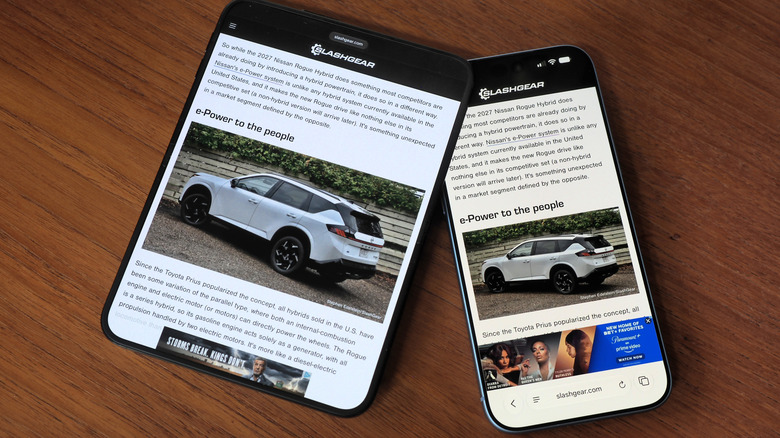
The iPhone Duo's new screen sizes mean developers have to reconfigure their apps to work for it. Understandable. But we're knee-deep in that transition and likely will be for a long while. "A lot of apps ... float in a sea of black, unused display," said Davies in his review. In our conversation, he told me that apps he uses multiple times a day still haven't been updated, and unfortunately, the Duo cannot use iPad versions of apps in the meantime.
Many other reviewers have said the same. And the problem is you, as the user, have to flip a coin as to whether the apps you personally use are supported, and if they aren't, hope that the developers provide support for them ASAP. When the apps are not optimized, they look terrible and are a huge pain to use. Imagine having an important work app not work properly and take months to be updated.
This whole situation reminds me of Liquid Glass, Apple's new design language that debuted in 2025 for iOS 26. Since Apple changed how many aspects of iOS looked and worked, apps that didn't adopt Liquid Glass could — anecdotally speaking — look off and throw off your muscle memory. Problem is, that transition is still happening over a year later. To give just one example, AnkiMobile, a popular, paid flashcard app, was only just revamped for Liquid Glass. Many others in my library only recently made the transition, too. If it took developers that long to incorporate Liquid Glass, then it seems likely the Duo could take just as long, or longer — especially for such a niche device. But the iPhone 18 Pro? No problem.
Face ID is way better than Touch ID
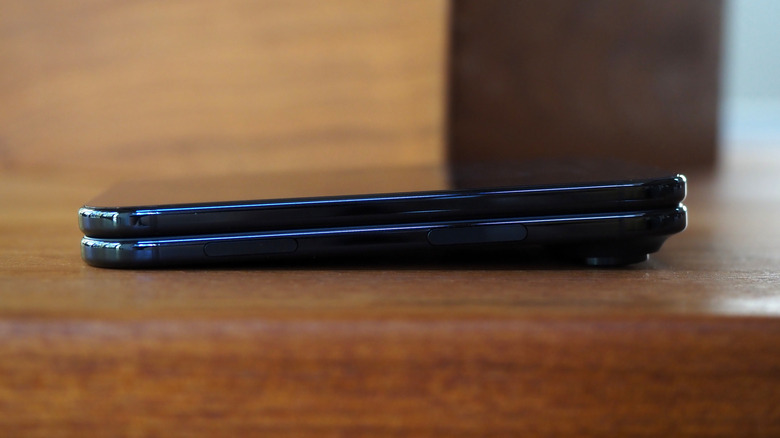
If you have an iPhone with Face ID, then you know it's amazing. Fast, convenient, secure, and, importantly for our discussion, it only requires that your face be visible; you don't need to reach your finger for a fingerprint sensor. The Duo's incorporation of Touch ID is viewed as a significant step back by longtime iPhone users. It might not sound like a big deal — perhaps even preferable to some, since iPhones with Face ID don't have Touch ID as a fallback — but if you're used to the iPhone's Face ID, then it can get under your skin quickly.
"I was surprised how much I missed facial recognition," said Davies in his review. He told me that Touch ID now requires new muscle memory to reach for the sensor depending on how you're holding the phone, and it adds just a bit of delay and friction to what was once (with Face ID) a seamless experience, even though it is fast and responsive. For some reviewers, like Marques Brownlee, Touch ID was actually the number one software issue. Touch ID adds an artificial delay so you can check notifications before unlocking the phone. Compare that to a Face ID-enabled iPhone, where you can swipe up if you want to unlock, or tap the screen to see notifications — as long as your face is visible, it works.
Touch ID was a gripe for many other reviewers, too, often sitting at the top of their lists of cons. If you use an iPhone, you know there are countless situations where you use Face ID — checking notifications, unlocking passwords, authorizing purchases — so if losing it would bother you, stick with the iPhone 18 Pro.
The 18 Pro's cameras are better
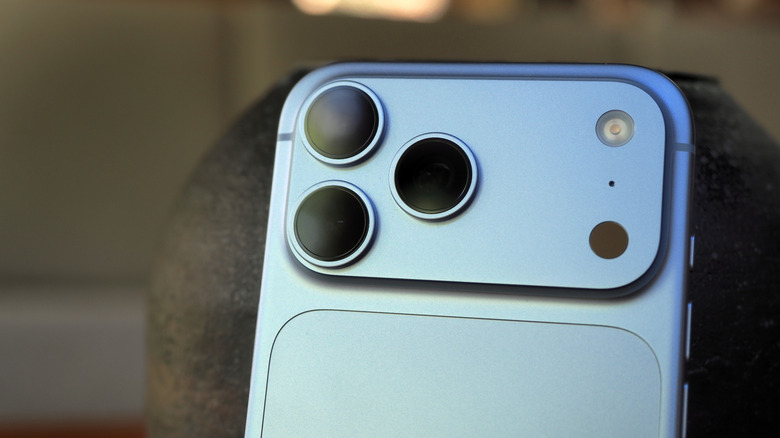
It is common for foldable phones to have weaker specs in some areas simply because they're trying to cram so much hardware into such a small, folding space. Take the Galaxy Z Fold 8, which is inferior to the cheaper Galaxy S26 Ultra when it comes to things like battery life and charging speed. In the case of the iPhone Duo, it has an inferior camera array compared to the iPhone 18 Pro. It lacks a telephoto lens and the new variable aperture, and is limited to 2x optical zoom — whereas the 18 Pro can go up to 8x optical zoom.
For people who casually take pictures and aren't too picky, none of that may matter. Reviewers were generally satisfied with the cameras, to be clear; Chris Davies was too. But they lack in ways that could quickly make you pine for an iPhone 18 Pro. For example, the lack of a telephoto lens. If you often take pictures beyond 2x zoom and want a clear, usable image, this could be a huge deal breaker for you — it absolutely would be for me since I use the optical zoom on my iPhone all the time. The camera on the internal display is also not ideal for anything beyond video calls. Limited zoom and poorer internal camera quality were common complaints among reviewers.
To be fair to the Duo, though, you can take better selfies by unfolding the phone and using the back cameras with the external display to frame your shot. There are also foldable advantages the iPhone 18 Pro doesn't have, such as Smart Take and Kid Cue. But if you want Apple's best smartphone camera system, the Duo doesn't have it.
Apple's folding tech needs more time in the oven
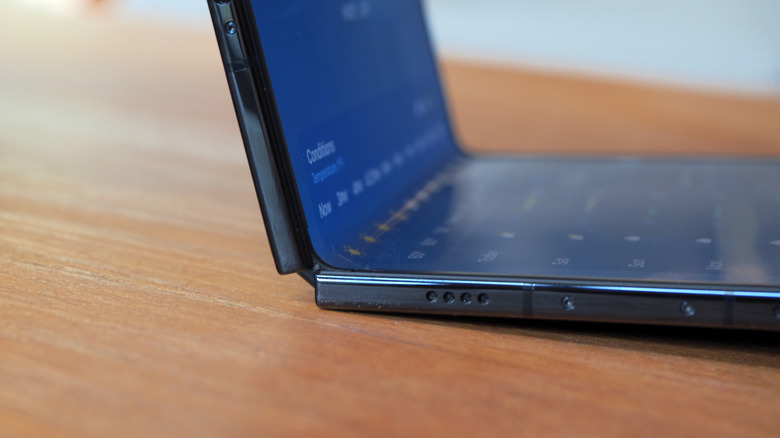
The folding screen on the iPhone Duo is a mixed bag. On the one hand, it has a well-built and well-implemented hinge that opens and shuts satisfyingly, with a beautiful internal screen that has one of the least visible creases in the industry. On the other hand, it's a first-gen product with huge caveats.
In JerryRigEverything's durability tests, the iPhone Duo performed poorly compared to other foldables, like the Galaxy Z Fold 8. After being covered in sand, the iPhone Duo could not shut properly. No one is ever going to sandboard their $2,000 foldable, fine, but the Galaxy Z Fold 8 subjected to the same torture test worked fine and only acquired a crunchy hinge sound. After the bend test (which the Galaxy Z Fold 8 again survived just fine), the iPhone Duo's screen was permanently damaged and became unresponsive. This isn't helped by the fact that a number of iPhone Duos have been afflicted by the so-called "Crackgate": Users' internal screens have reportedly broken with normal usage due to an alleged manufacturing defect. To be fair, Davies said that for him, the Duo has been more durable than he expected; it survived a drop onto hard tile without a scratch, though he said he is definitely more cautious with the Duo than with the iPhone 18 Pro.
I'd also argue the software is not quite there yet. YouTuber Snazzy Labs notes how the iPhone Duo lacks consistency in how it uses and organizes the sidebar, and implements basic things like a back gesture. "Like with any first-generation device — from Apple or any company," Davies told me, "it would certainly be most sensible to hold off and see how the software and hardware evolve."
The Duo's price is a tough pill to swallow
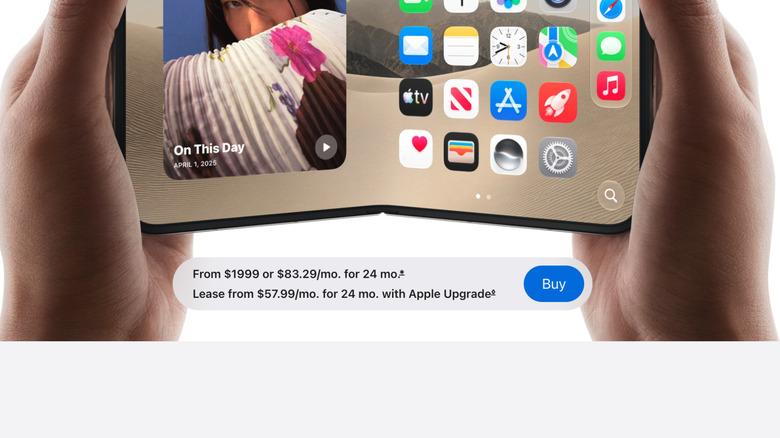
The best foldable phones you can buy are all expensive, around the $2,000 range for traditional book foldables. And compared to other foldables, the iPhone Duo is within the margin; it is only $100 more than the Galaxy Z Fold 8. Still, in a comparison between the iPhone Duo and the iPhone 18 Pro, it doesn't matter that $2,000 might be a reasonable price for a foldable. $2,000 is $2,000. It's the price of a nice laptop, and the iPhone 18 Pro's price tag is already exorbitant as it is.
The iPhone Duo starts at $1,999, while the iPhone 18 Pro starts at $1,199. That's a glaring price disparity, but it becomes even more pronounced when you consider that you could buy an iPhone 18 Pro and the latest OLED iPad mini (which starts at $699), and still have money left over. Don't forget, the iPhone 18 Pro has better specs than the Duo in many categories: longer battery life, better cameras, better microphones, and so on.
We mention the iPad mini because it is close in dimensions to the iPhone Duo when unfolded. If you don't absolutely need that screen real estate on demand, it's more economically sensible, I think, to buy an iPad mini separately. Even for some reviewers who are drowning in tech gadgets, the price gives pause, especially when you consider the lack of Face ID and the durability issues. Do you really want to buy a phone that costs more than the Z Fold 8 but can't survive the same abuse? That decision is up to you, but all things considered, the 18 Pro is probably the better choice for the overwhelming majority of people.