

8 Third-Generation Fighter Jets Still In Service
In mid-1944, Germany fielded the world's first production fighter jet, the Messerschmitt Me-262. Although it entered the conflict too late to make a difference, the Me-262 kicked off the Jet Age as the first-generation fighter jet. Since then, the world has seen five generations of fighter jets, with a sixth still in development as of this writing. For nations like the United States, advancing to a new generation often means retiring older aircraft.
While the U.S. has no 1st- or 2nd-generation jets in service, it does have some 3rd-generation fighter jets in its inventory, and it's not alone. Nations worldwide often buy older fighter jets from countries like the U.S., the United Kingdom, France, Russia, China, and others. They make up the bulk of a small nation's air force, which still operates numerous 3rd-generation fighters. You can find them in nations across South America, Africa, Asia, and Europe, as 3rd-generation fighters aren't useless despite their age.
The 3rd generation emerged during the Cold War, spanning the 1960s into the early '70s. Afterward, the 4th generation kicked off with aircraft like the F-14 Tomcat, F-15 Eagle, and many others. Before they took to the skies, 3rd-generation jets ruled, participating in combat operations in Vietnam and elsewhere around the globe. Of the many produced, only these eight remain in operation as of this writing, and they're spread around the world.
Sukhoi Su-17 Fitter
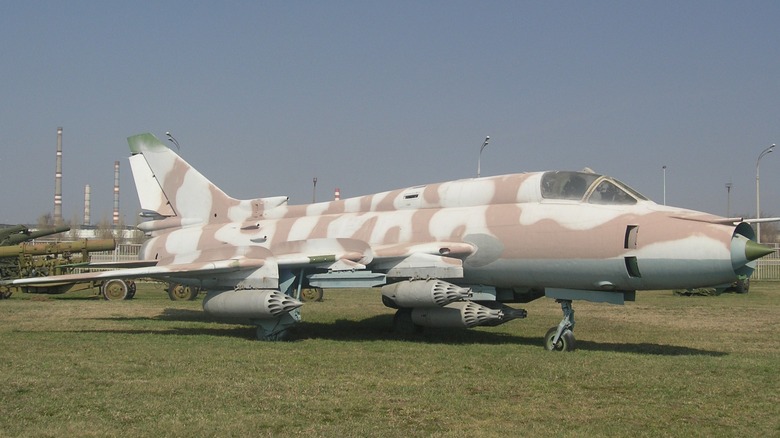
The Soviet Union introduced the Sukhoi Su-17 (NATO designation "Fitter") in 1970 as its first production variable-sweep-wing aircraft. It had a relatively long career spanning several decades and was popular inside and outside the Soviet Union, as it was, for its time, one of Russia's most advanced fighter jets. Not long after its introduction, the Soviets flew Su-17s over Afghanistan during the Soviet-Afghan War, and it continued to see combat service in various locations around the world.
In 1990, the Soviet Union ceased production of the Su-17. That didn't stop its operation, as Su-17s flew for Syria in the Syrian Civil War, which lasted from 2011 until 2024, so the fighter flew combat operations recently. Before its production ended with over 2,800 jets, the Su-17 featured numerous variants, each adding advancements or structural redesigns for various purposes.
Vietnam is the only country that hasn't retired the Su-17. According to "World Air Forces 2027," a compilation of known military aircraft published annually by Flight International, Cirium, and Embraer, Vietnam maintains seven Su-17s as training aircraft in the Vietnam Air Defense Force. It's unclear how operational the fighters are, as no one produces parts for them, which may be why they're relegated to training rather than operational status.
Sukhoi Su-22 Fitter
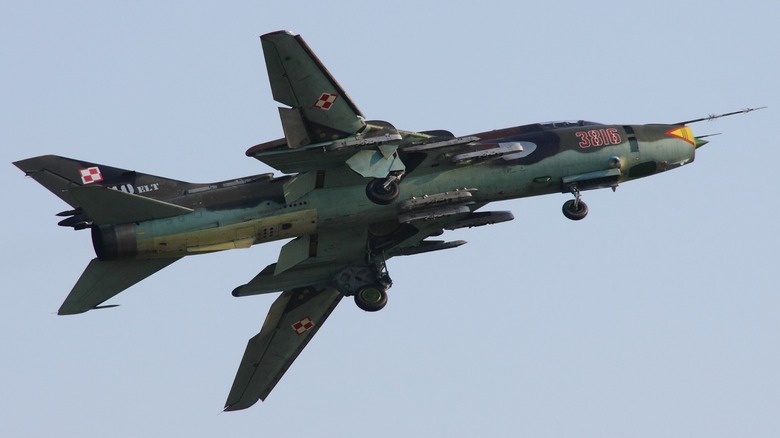
The Sukhoi Su-17 "Fitter" wasn't typically referred to by that designation, as that was reserved for the Su-22. Rather than an entirely new aircraft, the Su-22 is an export variant of the Su-17, and many countries flew them during the aircraft's heyday. Several sub-variants carried the designation, including the Su-22M4, the Su-22UM3K, and others. These differed in several ways, offering training, two-seater variants, and other benefits, depending on what the customer nation wanted out of the aircraft.
Because the Su-22 was an export variant, the Soviet Union didn't operate it. Despite its age, numerous nations still fly Sukhoi jets, including the Su-22. The Cold War-era fighter-bomber was operationally capable in its day, so countries like Poland flew many of them over the years. According to "World Air Forces 2027," four nations continue to fly the Su-22: Angola, Iran, Libya, and Vietnam. Angola has nine in its combat fleet, with another designated for training.
Iran has (or possibly had following the 2026 Iran war) 14 in the Islamic Revolutionary Guard's combat fleet. Libya operates a single Su-22 as a combat aircraft, while Vietnam has 19 combat-rated Su-22s and another 10 in its training aircraft fleet. It's unclear why Vietnam also received some Su-17s, when those weren't the typical export model, but it has far more Su-22s in its operational fleet as of this writing. Regardless, Vietnam continues to fly them and recently lost a Su-22M4 in a crash on January 9, 2024.
Dassault Mirage F1
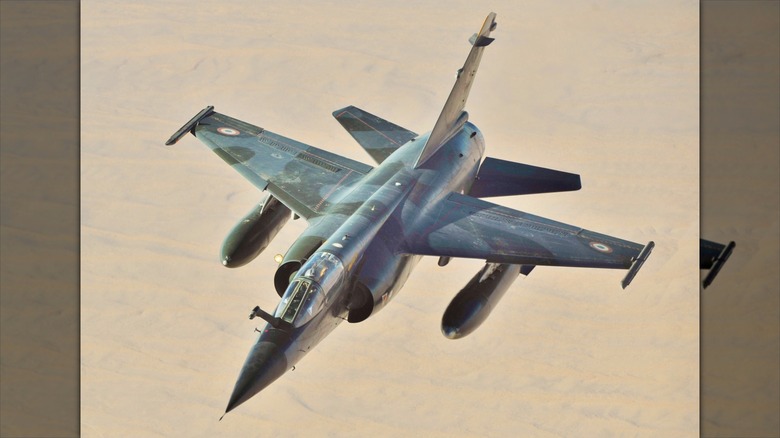
France has been producing its own fighter jets for decades, and its first 3rd-generation fighter was the Dassault Mirage F1. The single-engine light multirole fighter debuted in 1974 and remained in production into the early '90s. Over its service life, more than 700 Mirage F1s were produced, many exported to allied nations, including Greece, Spain, and others. This allowed the Mirage F1 to participate in operations worldwide, including Angola, Iran, Iraq, and elsewhere.
Throughout its primary service life, the Mirage F1 built a modest kill ratio of 35 to 58 air-to-air kills while losing 25 to 44. Although the French Air Force retired the Mirage F1 in 2014, several countries continued flying it for years. For some time, this included the Republic of Congo and Libya, though they've since stopped operating the Mirage F1. Despite this, three nations continue to fly them: Gabon, Iran, and Morocco.
Gabon continues to fly six as part of the Gabon Air Force's combat fleet, while Iran has (or had) 12 Mirage F1EQ aircraft originally exported to the Iraqi Air Force as part of the Islamic Republic of Iran Air Force's combat fleet. It also has four Mirage F1BQs, specifically designed for training, in its training fleet. Morocco operates the most active Mirage F1s, with 46 combat aircraft in the Royal Moroccan Air Force.
Mikoyan-Gurevich MiG-23 Flogger
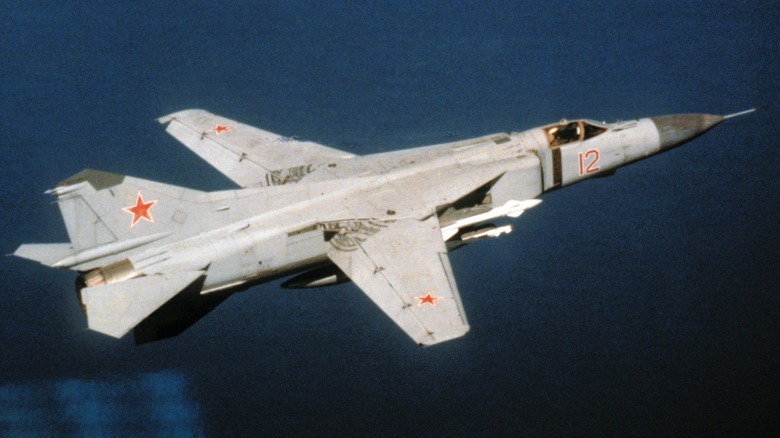
Throughout the Soviet Union's existence, the Mikoyan-Gurevich design bureau produced thousands of significant aircraft, including the Mikoyan-Gurevich MiG-23, NATO designation "Flogger." The variable-sweep-wing single-engine fighter remains the most-produced aircraft of its type, with more than 5,000 built during its service life. The aircraft's revolutionary design let it alter its wing characteristics mid-flight at 16, 45, and 72 degrees, depending on operational need. It was also incredibly fast, reaching speeds of Mach 2.35 (1,803 mph).
That said, it wasn't easy to fly, resulting in a poor combat record and reputation. Still, with more than 5,000 fighters made, the MiG-23 is one of its generation's most-produced fighter jets. While Russia ceased operating the MiG-23 in 1999, several nations continued to operate it. It wasn't an uncommon sight during the Gulf War, as the Iraqi Air Force flew MiG-23s against U.S. and allied aircraft. It didn't fare particularly well against USAF F-15 Eagles, losing eight in air-to-air engagements.
Despite these issues, several countries imported the MiG-23, and a handful still operate them. As of this writing, Angola has 22 in the Angolan National Air Force's combat aircraft inventory, while Ethiopia continues to operate 9 in the Ethiopian Air Force. Libya has three combat MiG-23s in the Libyan Air Force, with one more used solely for training. The Democratic People's Republic of Korea has the most, with 56 flying in the Korean People's Army Air Force, while the Sudan Air Force operates three.
McDonnell Douglas F-4 Phantom II
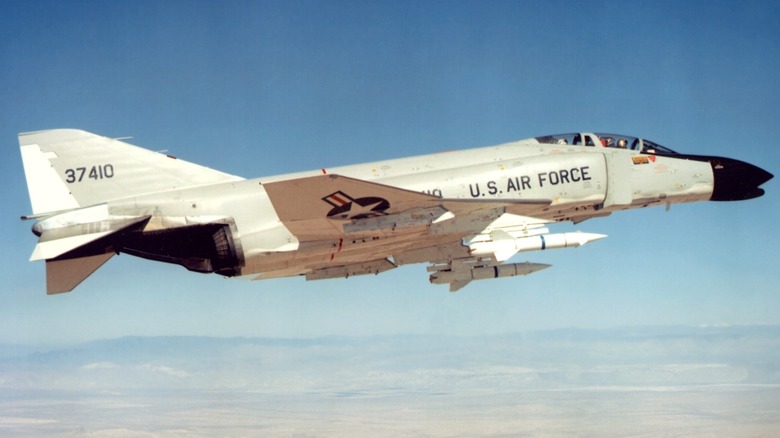
When the U.S. entered the 3rd generation of fighter jets, it did so with the McDonnell Douglas F-4 Phantom II. The USAF, U.S. Marine Corps (USMC), and U.S. Navy (USN) operated the impressive aircraft, and many were built. The F-4 is the most-produced American supersonic aircraft ever made, with 5,195 produced during its service life. As the first 3rd-generation entry, the F-4 Phantom II was one of the most innovative aircraft, and it participated in numerous combat operations, including flying throughout the Vietnam War.
That conflict saw five service members achieve ace status, each while flying an F-4 Phantom II. The aircraft also boasted an impressive record, with 150 confirmed air-to-air victories and 42 losses. This gives the F-4 a 3.6:1 kill ratio, which is significant compared with other still-operational 3rd-generation fighter jets. The U.S. retired the F-4 from active service in 1998, but it continued to operate them for decades, though not for their original purpose.
The U.S. converted some F-4s into QF-4s and used them as uncrewed target drones for training operations. The nation stopped using them for this purpose in 2016, when it transitioned to the QF-16. Other nations continue to fly the F-4, including Greece, which has 19 F-4Es in the Hellenic Air Force. Despite its ongoing hostility with the U.S., Iran has (or had) 64 active F-4s of different variants that were procured prior to the Iranian Revolution. Additionally, Turkey maintains 48 F-4Es in the Turkish Air Force.
Shenyang J-8 Finback
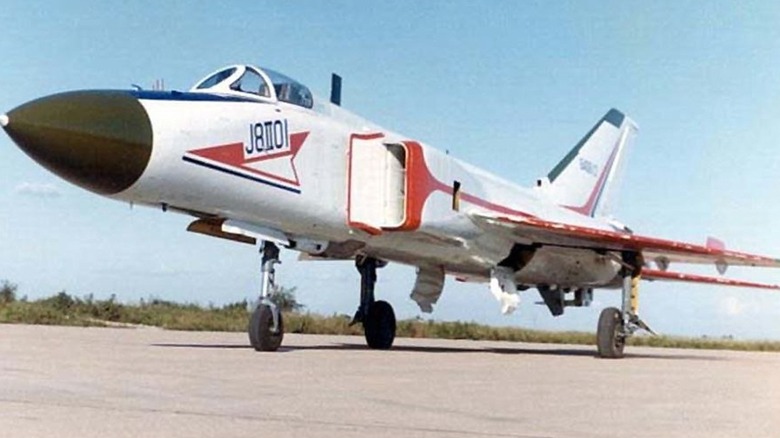
While the U.S. and the Soviet Union were the primary builders of 3rd-generation fighter jets, China also built its own aircraft. The Shenyang J-8, NATO designation "Finback," was introduced in 1980 and served as China's main interceptor for several years. The twin-engine interceptor took nearly 15 years to develop, so it wasn't competitive when it entered service. To compensate, China completely rebuilt the aircraft, producing the J-8II/B series.
The redesign replaced the nose air intake with larger radar and air inlets, upgraded the engines, and improved performance over the initial model. The J-8 is notable as China's first domestically designed fighter, as its predecessors were derived from Soviet models. Few J-8s were produced; China is believed to have made only 300 to 400, all used domestically, so no export models were made. Several variants entered service throughout the J-8's production, though it's unclear how many of each type remain operational.
In April 2001, a J-8II collided with an American EP-3E, downing both aircraft, which was perhaps the J-8's most notable "engagement." No public record shows a J-8 engaging in combat operations, and while most have left service, many remain in China's inventory. According to "World Air Power 2027," China continues to operate 96 combat-designated J-8s in the People's Liberation Army Air Force, with another 47 in a combat role for the People's Liberation Army Naval Air Force.
Sukhoi Su-24 Fencer
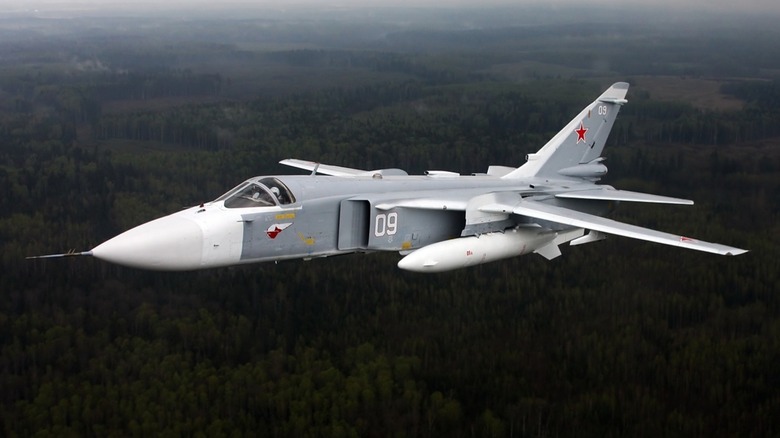
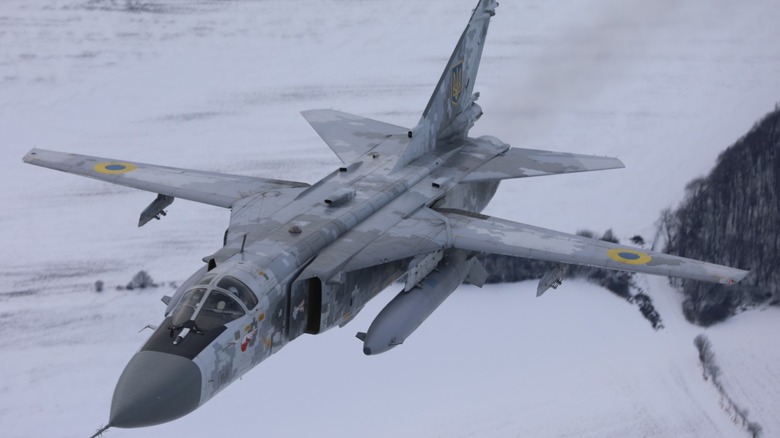
The Sukhoi Su-24, NATO designation "Fencer," is another Soviet-designed 3rd-generation fighter still in service today. It features a variable-sweep wing and two engines, and its two-seater configuration places crew members in a side-by-side arrangement, which is unusual. American aircraft like the F-14 Tomcat and others typically feature a tandem, forward-and-rear seating configuration. The Su-24 entered service in 1974, and it remained in production until the early 1990s.
Ultimately, around 1,400 total Su-24s were produced, though the number remains unconfirmed. The Su-24 was designed to penetrate deep into hostile airspace and strike ground targets in all-weather, day-or-night operations. The Soviets upgraded the aircraft over the years, and its variable-sweep wings could be adjusted between 16 and 69 degrees, depending on operational conditions. Although it's comparatively old, several countries still fly the Su-24, and it has seen recent combat operations. Algeria, for example, has 41 operational aircraft in the Algerian Air Force.
Libya maintains two in the Libyan Air Force, while the Libyan National Army has two more in operational status. Russia is the largest operator; while it had 260 in 2025, only 162 remain in the Russian Air Force due to losses in the Russo-Ukrainian War, and it also has 41 in Russian Naval Aviation. The Sudan Air Force has seven, while Ukraine has (or had) 14, which it has used successfully as a Storm Shadow platform, striking Russian targets with the deep-strike weapon provided by MBDA.
Northrop F-5 Tiger
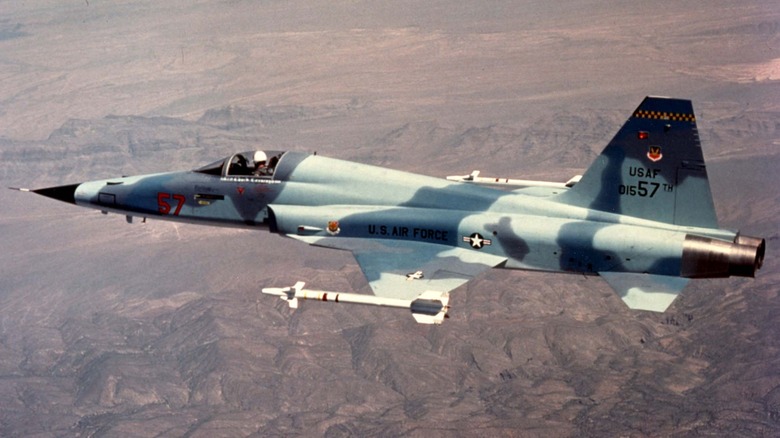
Of the eight currently operational 3rd-generation fighter jets, the Northrop F-5 Tiger is the most widely used. The supersonic light fighter entered active service in 1964 and flew for the USN and several allies worldwide. More than 2,600 were produced across its many variants, and because it was cheaper than the F-4 Phantom II, it became a popular export. The F-5 flew for years, with its final delivery in 1989.
The USN operated the F-5, and it saw combat in the early days of the Vietnam War. F-5s also flew during the Ogaden War for Ethiopia and the Iran-Iraq War for Iran. During those combat operations, the F-5 racked up 15 to 30 air-to-air kills with 10 to 25 losses, for a 1.7:1 kill ratio. Despite its small size, the F-5 proved its worth in multiple conflicts, and while the USN stopped using it as an operational fighter, it still maintains several in its inventory.
The U.S. isn't alone, either, as 16 other countries still fly the F-5 as of this writing. These include South Korea with 62, Iran, which has (or had) 48, both Brazil and Thailand with 33, and many others. In total, 411 F-5s remain in operation worldwide, though they're used less for frontline combat operations than for training. The USN and USMC still operate 46 F-5s, though they're designated for training and adversary combat tactics. They are flown as the opposing force (OPFOR) during training simulations, though they're slated for retirement.