

11 Common Problems With String Trimmers (And Potential Fixes)
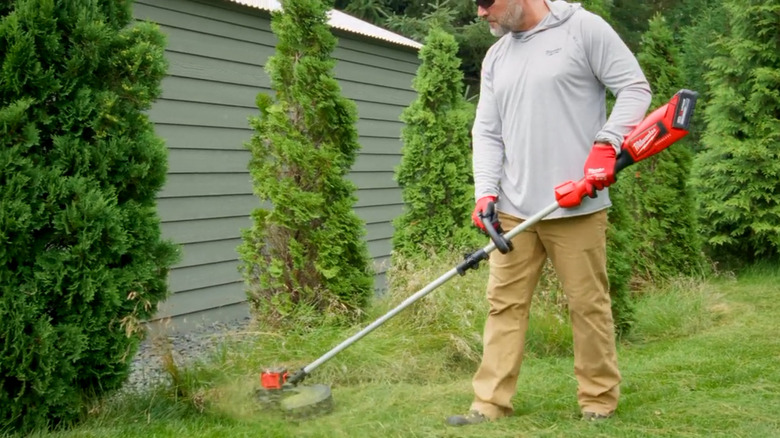
Your string trimmer, also known as a weed eater, is a precise tool for cleaning up your yard, cutting down tall grass, and reaching areas a lawnmower can't reach.
You may run into a few common problems with this tool, from failed starts to the string refusing to come out of the motorhead. These problems can happen with any model of string trimmer, across all major brands on the market.
We've identified the 11 most common problems you can have when using a string trimmer, along with possible fixes. These solutions aren't perfect or exact for every model, but they should help you figure out what's wrong so you can get back to work and keep your yard looking fantastic.
Fuel string trimmer won't start up
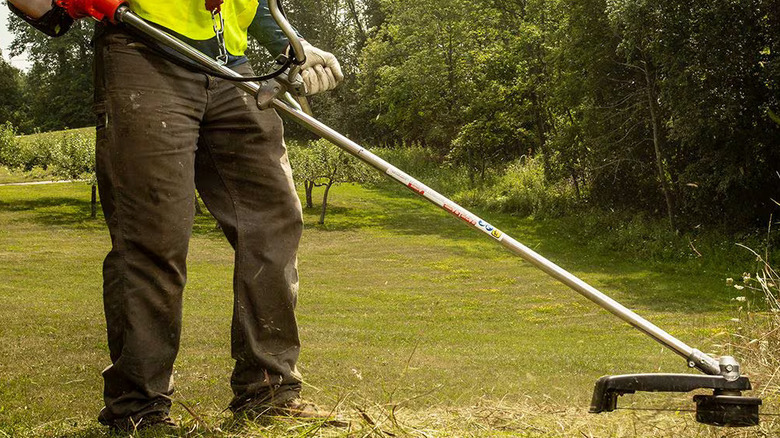
Before you get started, if you're using a fuel-based string trimmer and it won't start, try a few quick fixes to figure out what might be causing the problem. Power it down and let it sit for a few minutes before checking it.
The first and quickest thing to check is whether the air filter is clogged. A dirty air filter could be preventing your string trimmer from starting. Another solution is to spray starter fluid inside the carburetor. If that works and it starts running, you likely have a fuel problem. You'll want to swap out the fuel you're using in your trimmer for something new. However, if that doesn't work, you have a bigger problem on your hands. Next, check the spark plug and the ignition coil, as either could be faulty. One or both could be preventing the machine from starting, and you'll need to replace them to get it running.
Battery-powered string trimmer won't start
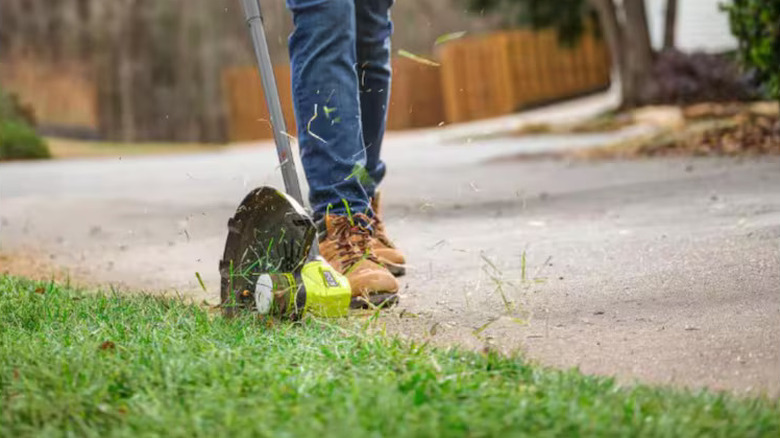
If you're using a battery-powered string trimmer, it may not start, and there are several reasons why. Rather than focusing on the fuel or the string trimmer, check the battery first, as this is a common issue with Ryobi models.
First, check whether the battery is completely drained, or use a multimeter to see if it still has charge. It may have died, or something unforeseeable could have happened. If you're getting a voltage and the battery charger shows that it's full, it might not be the battery.
Next, quickly check around the head of the spool to make sure you don't have grass clippings wrapped around it. If obstructions or large clippings are wrapped around this section, they can also prevent your electric string trimmer from starting. Disassemble this section to remove as much debris as possible that could be stuck inside the motorhead, then reassemble it and try turning it on again for testing.
String trimmer starts but won't keep running
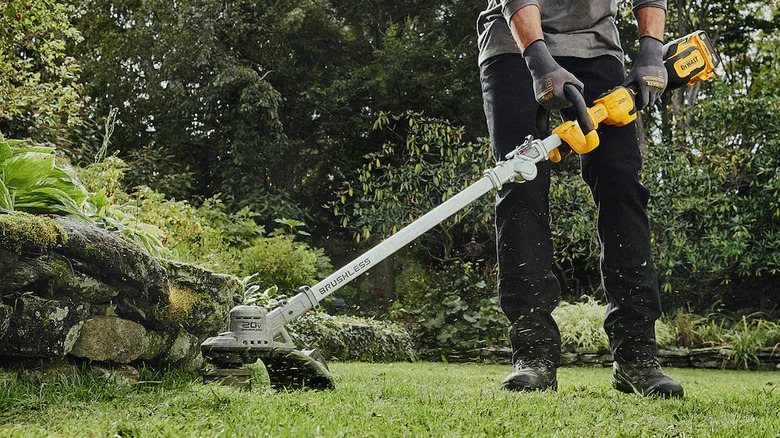
Even if you can get a string trimmer to start, it may not keep running. If it only starts and dies after a few seconds, there are a few ways to fix this.
A common first step is to check whether the air filter is clogged, as it might not be giving the carburetor enough air. You'll encounter this problem with a fuel-based model. You can open the side to clear it out and check whether it's full of gunk. If that's okay, the next step is to check the fuel lines when they're connected to the carburetor. You'll need to open the fuel tank and take apart the carburetor to see how the parts fit together. You may need to replace the fuel lines and adjust the carburetor to deliver more fuel. You'll run into these issues with a fuel-based model.
For electric string trimmers, it comes down to cleaning the motorhead and making sure debris isn't blocking the string. You'll also want to double-check that the battery has enough charge, since it might not last long.
String trimmer line keeps breaking
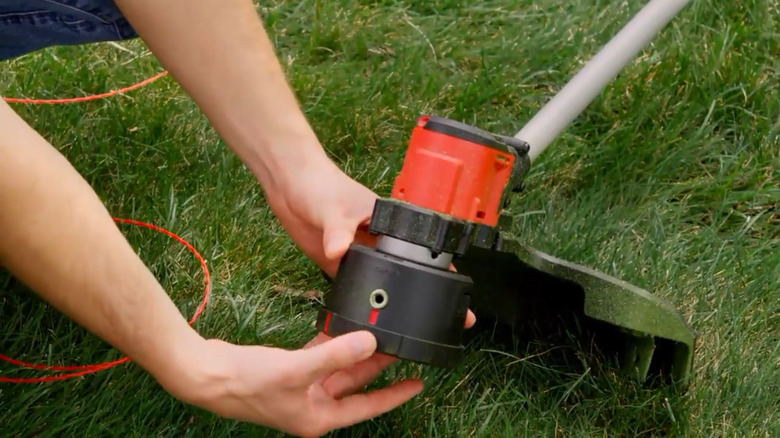
When you use a string trimmer, the string can gradually break during use or after long jobs. But if you notice it breaks often and you have to replace it frequently, that's an issue you should fix before you run out of the spool.
A good idea is to check if you're using the correct string thickness for your string trimmer. Each trimmer uses a different line, and using the same spool type across different trimmers could be why it breaks so often. Also check whether the string is brittle. These strings are made of nylon and need moisture to maintain their quality. Soaking it in water overnight before using it can help prevent your weed eater line from breaking. Make sure that the string is properly on the spool and feeding into the string trimmer. If the line is too loose, it won't feed properly and will break while you're using it. Reapply the string to make sure it's seated correctly.
Finally, check the bump head. If it's worn out, it dumps out too much line at once, causing it to break off on the blade guard.
String trimmer line won't feed
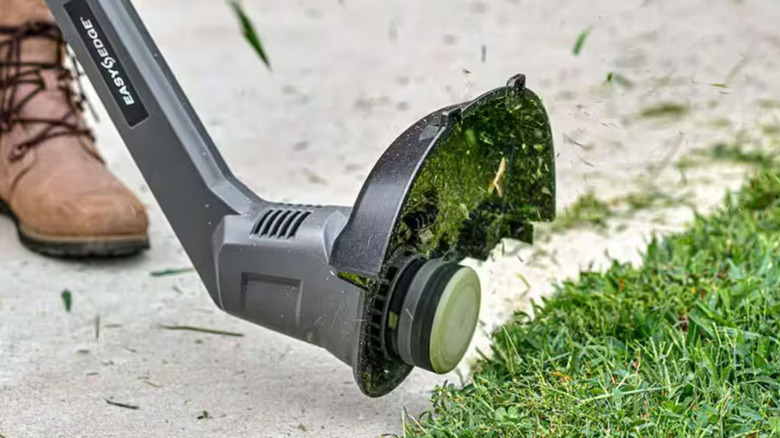
A common issue is that the string won't come out when you use the bump head because it isn't fed properly into the sides. One side may be feeding out while the other isn't, or both may be coming out in different proportions, which can damage your grass. This can happen even with the best string trimmers.
First, remove the spool and check how you have wrapped it around the interior. The string may be wrapped around itself or tangled. Checking that, or reapplying it if that was the problem, can help you find a solution. You want to make sure you're properly feeding it through to the end channel so it comes out, too. It can take practice to string a weed eater the right way.
Also, make sure you're using the correct string size for the trimmer, as devices require different sizes and they're not all the same. Next, clean out the motor head interior as much as you can. Grass, dirt, or other debris may have gotten into this area and is preventing the string from coming out when you try to get more.
String trimmer line not coming out at all
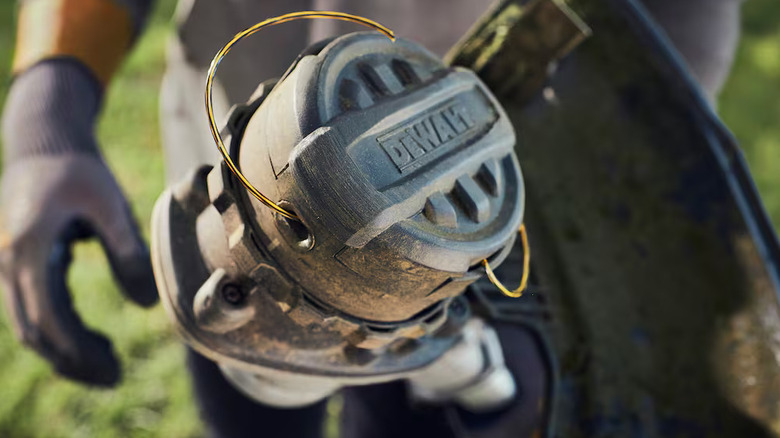
You might notice that when you attempt to use the bump head to bring out your string, nothing comes out. If you're not getting any string when you use the bump head and you've double-checked the spool, a few issues on your string trimmer could be causing it.
Take the head apart and look inside, checking for debris, grass, or dirt blocking the channel. Something may be caught here, and the string isn't coming out. If everything's clean, the next step is to check the bump head itself. Check whether the button is no longer working, as it may need to be replaced. The bump head may not be clicking down, and you may need to replace it.
The last thing to check is the spring, another component inside the motor head. If the spring is broken, your spool won't come out. You'll need to replace it before you can use the string trimmer again.
String trimmer consistently overheats while on
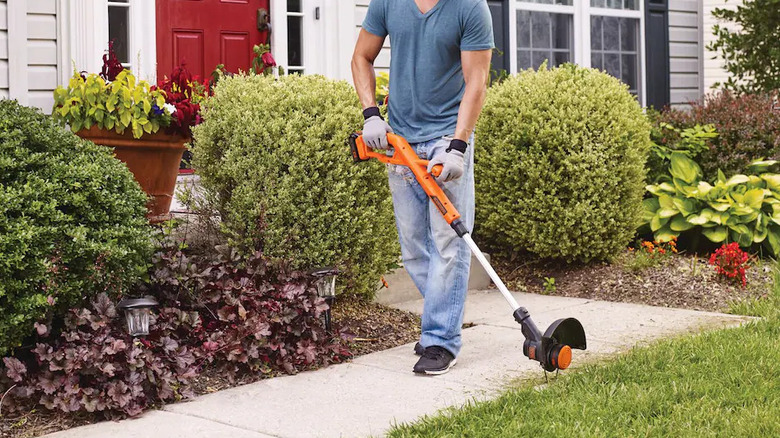
When you use a string trimmer, a battery- or fuel-powered device generates heat while it runs. However, a common problem is that it can release too much heat and overheat. If you keep using it in this state, it can damage the engine and the device's components.
First, check the air filter to make sure nothing is blocking the air passage and that it doesn't need to be replaced. Next, check the fuel level, as too little fuel can cause overheating. Then, check the cooling system on the flywheel to make sure nothing is blocking it, and check the cylinder cover on top of the engine. These need to be regularly cleaned. Finally, check whether the carburetor needs adjusting, as an incorrect fuel-air mixture can cause overheating.
After you've made these fixes, let the string trimmer rest for half an hour to cool properly before using it again.
String trimmer shakes too much while in use
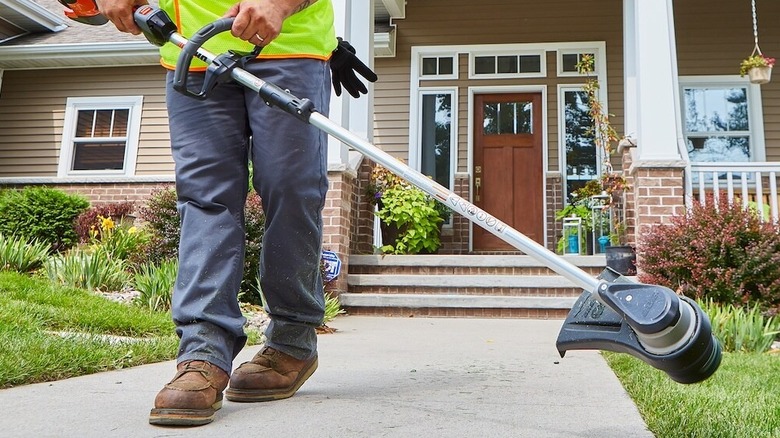
A string trimmer shakes a little while you're using it because the front section spins so fast, but you feel more vibration with a gas-powered engine. It may also be shaking too much, which can indicate a problem.
A common reason your string trimmer shakes too much is dirt or debris stuck inside the motor head. Dirt chunks can also contain rocks, which can damage the interior. Turn off the string trimmer, remove the head, and clean out any dirt and rocks caught inside. Also, make sure the string line is coming out, or check whether it's too short. Check that the motorhead is seated properly, too. If it's unbalanced, it can cause this vibration.
Finally, check the clutch. Worn or uneven clutch springs can cause your string trimmer to vibrate. The plastic liner around the flex shaft could also be worn and may need replacing.
String trimmer motor head is not moving
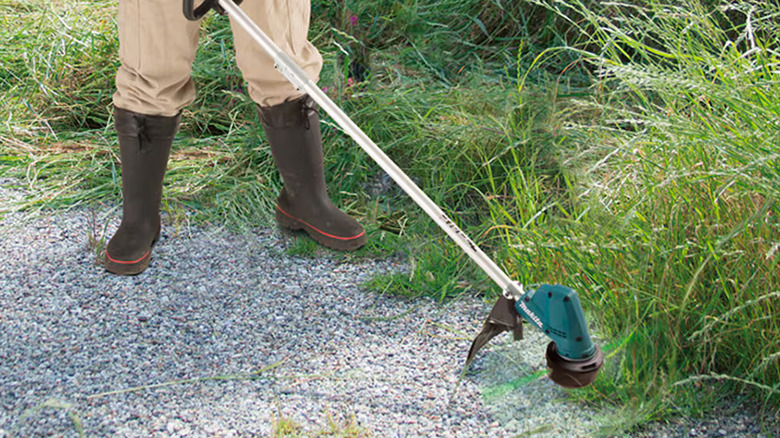
When your motor head won't turn or move at all, that's a serious problem because your string trimmer won't function. Even if the device starts and runs fine, it won't cut anything without a suitable motor head.
To fix this, remove the motor head from the front and inspect it. If you've had the string trimmer for several years, the gears inside the motor head may no longer function properly because they've worn down. You can remove the front and try to move the head to see if it moves. If it doesn't move at all, no matter how much you shift it, you'll need to replace it. Replace the entire gear case. When you put it back together, make sure the screws and square head are properly aligned.
String trimmer runs rough while on
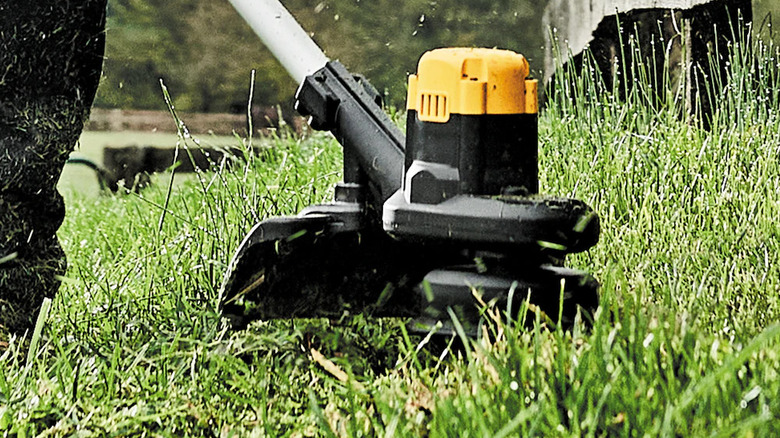
Although your string trimmer turns on and runs, it may still run rough. It may need more revs to stay on, the motor may not sound very strong, and it may run and then shut down. There are a few solutions you can try.
Focus on the internal parts of your string trimmer to help it run more efficiently. Start by checking the air filter and the carburetor. The air filter may need cleaning or replacement, and the carburetor needs to be removed and cleaned. Also check that the fuel filter is clear, the muffler has a clear airway, and the fuel lines connect to the correct carburetor lines. Finally, check the fuel itself. The fuel might be stale or contain water. Replace it if you suspect that.
String trimmer head won't stop spinning while on
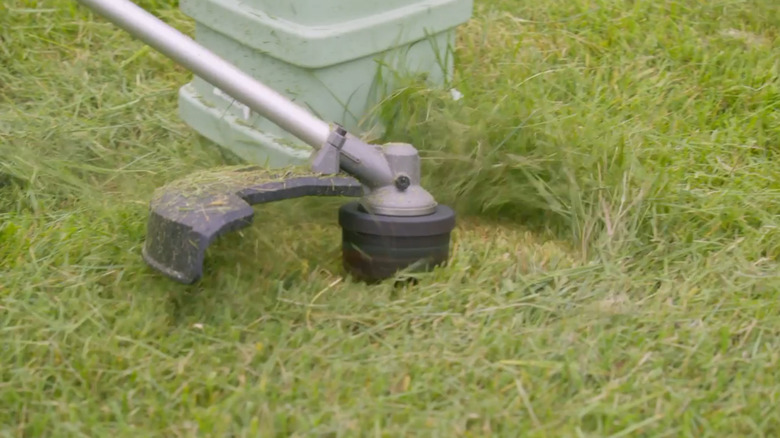
If your string trimmer keeps spinning at idle, that's a big problem. There are two ways to help fix this. The first option is to adjust the idle screw. You can find it on the carburetor. Adjust it so the screw isn't too far in, or check that the connected cable isn't stuck. Check the cable, and if it's fine, adjust the idle screw and see if that helps the motorhead.
If you're still having problems, the next thing to check is your clutch. You'll find it underneath the hub on the motor. Check whether the metal has broken off, whether it's come off, and whether the springs are damaged. Any damage to the clutch will require you to replace it, and you can do that without needing an entire unit.