

Want To Stop Your Weed Eater Line From Breaking? Here Are A Few Solutions
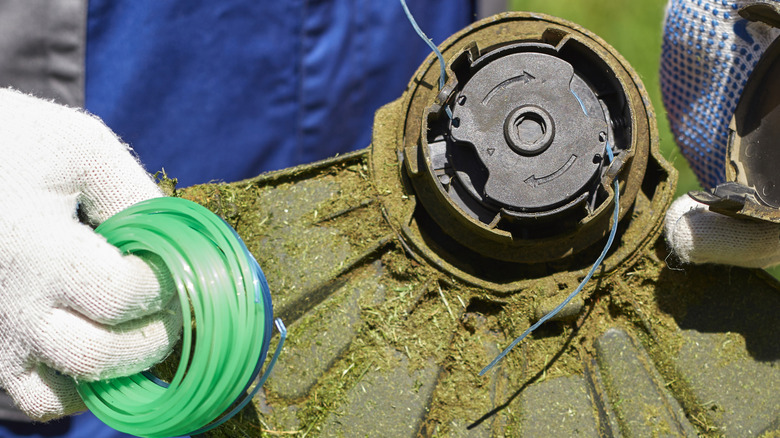
If your goal is to have a pristine lawn that your neighbors will envy, then a weed eater or string trimmer may be worth the investment. These are versatile outdoor power tools ideal for trimming weeds and tall grass, as well as cleaning up areas where lawn mowers can't reach. Yet if you've ever used a string trimmer, you've probably experienced this at one time or another: Less than three minutes into your trimming, your line breaks. With a sigh, you fix the issue — only for the line to break again.
It's one of the most common problems associated with weed trimmers and can be quite frustrating and time-consuming. After all, you'll be forced to stop working to reload the string line, and you'll have to constantly buy new reels. This is completely normal, but there are things you can do to reduce the frequency of this happening.
If your line keeps breaking, you might be using the wrong line diameter range. This can also happen if the line itself is old and brittle, or if the spool is damaged. The surface you're trimming can also affect your string line, as it will definitely snap if it comes into contact with a hard surface. Avoiding surfaces that could damage the trim line and maintaining your weed eater as recommended, along with a few other tricks, are essential to keep your line from breaking.
Try soaking your weed eater line in water
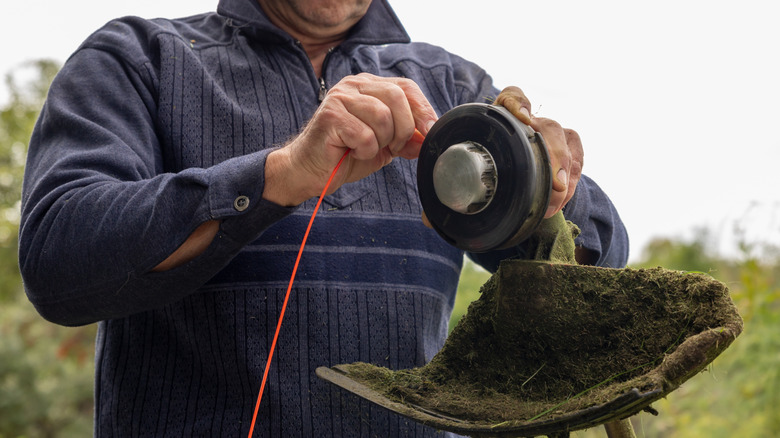
It is pretty much inevitable that your line breaks at some point, but to make that happen less frequently, you can try getting the line wet. Most string trimmer lines are made of hardened nylon because it is highly flexible and durable. The only problem is that this material tends to lose moisture. This means that if you store your weed eater line in your garage for a long time, it will become quite dry, brittle, and prone to breakage.
To reduce the number of line breaks you may encounter when tackling unwanted plants in your yard, soak the line in a bucket of warm water for a few hours. Nylon is a hygroscopic material, meaning it can absorb moisture and build resilience toward breakage. For the best results, it is recommended that you let the line sit in water overnight. Alternatively, you can store your line in a plastic bag along with a damp cloth.
Other ways to reduce string trimmer line breakage
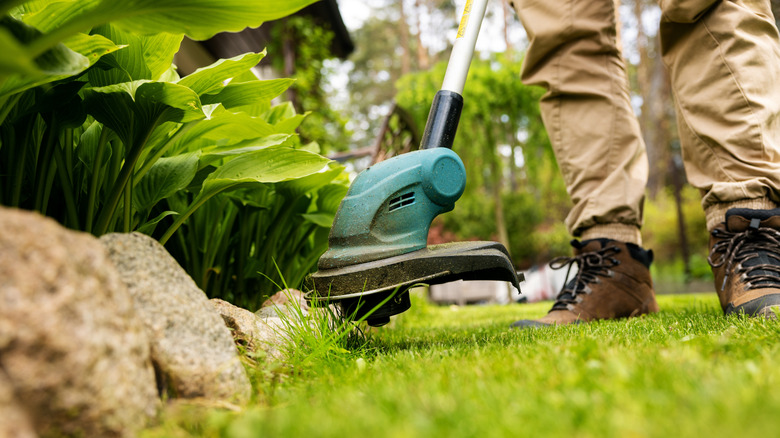
Weed eater lines come in different shapes, textures, and sizes. Consider opting for a round trimmer line, as these are more resistant to hard surfaces, cut more quietly, and are much more affordable than other options. You'll also want to pick a thicker weed eater line. However, when choosing the correct line size, make sure you consult your owner's manual. Using the wrong type can lead to a host of other issues, such as poor cutting performance, unpleasant vibration, and increased motor load.
Besides that, you'll want to check out the age of the line you are using. Older lines are usually not flexible enough and can become brittle over time, which can easily cause premature breakage. While you're at it, make sure to inspect the condition of the string you have loaded. If it's damaged or frayed, have it replaced immediately to keep your trimming tasks smooth and uninterrupted.
Simple maintenance, including applying lubricant at the right times, can also go a long way in preventing breakage. Be sure to clean the power tool after every task to prevent a build-up of dirt and grass clippings. You'll also want to inspect the spool regularly for cracks and worn-out parts.