

12 Mini Gadgets That Can Save Space In Your Emergency Kit
We may receive a commission on purchases made from links.
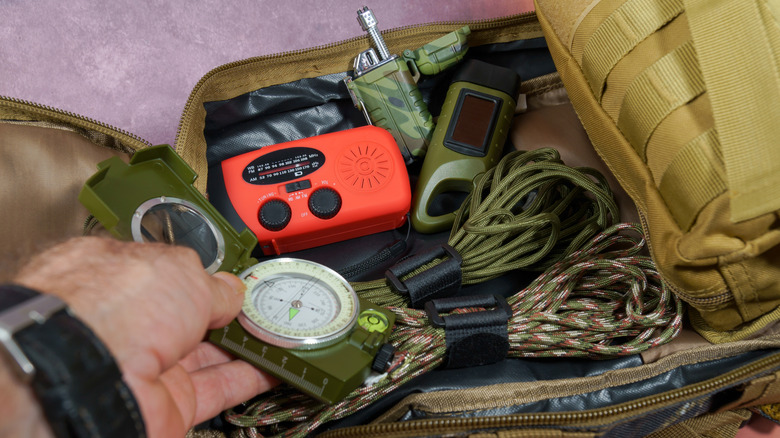
Emergencies can strike at any time — it could be a power outage, an extreme weather event, a sudden evacuation, a car breakdown, or a camping accident, among many other things. You can never be too prepared for such scenarios, and having an emergency kit ready to go is one of the best ways to prepare. Official guidance from organizations like the Department of Homeland Security, the American Red Cross, and others does a pretty good job of listing the things you need to have for your kit. However, these guidelines usually list supplies in broad categories like tools, communication, food, and lighting.
The lists are useful but may leave you staring at an endless shopping list. For this reason, we want to help you narrow it down to a dozen specific, compact, and useful gadgets so you settle on items proven to work well for their given functions. You also need to have as many functional items as possible — so this collection seeks to help you survive without hogging space. Of course, you need to have them alongside other recommended non-gadget emergency kit items.
Leatherman Wave Plus 18-in-1 multi-tool
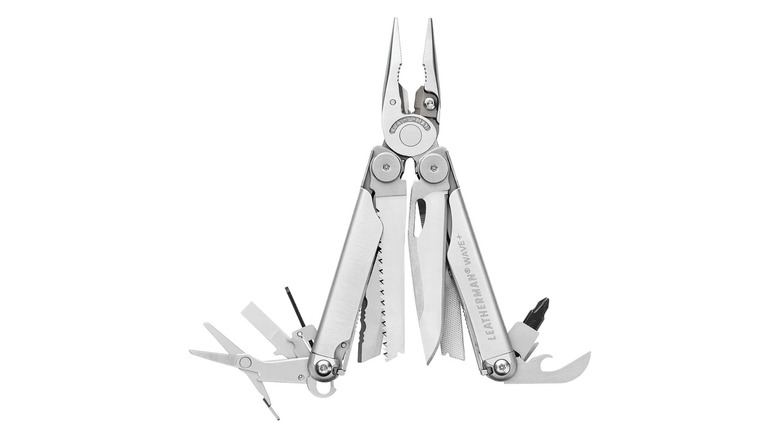
One tool with many functions is the epitome of saving space in any setting. Leatherman's Wave Plus multi-tool comes with 18 different tools in one pocket-sized unit. Here's what you get: pliers, screwdrivers, knives, a file, can and bottle openers, a ruler, a wire stripper, a pair of scissors, and a saw. With all these, this one item can handle most minor repairs or cutting situations you come across.
We love it for its perfect balance of utility and portability, and it is one of the coolest gadgets any handyman can get use out of. Also, if you're not familiar with Leatherman multi-tools, the Wave Plus is a great starting point — it's around the middle of the brand's price range and is able to deliver an impressive number of tools to work with. You can evidently get a lot done with this one tool without having to haul a whole toolbox. Given the size, it can always be in your pocket or on your belt, so technically no space is taken at all from your emergency kit.
Nitecore EDC37 flashlight
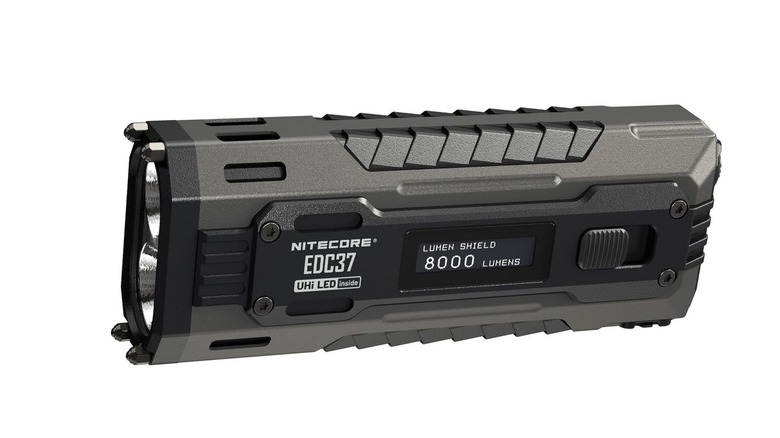
A powerful flashlight is a must-have in an emergency kit, but it doesn't have to be a bulky unit. Nowadays, there are many small but powerful flashlights you can buy, and one of the best ones is the Nitecore EDC37. It can easily slip into a bag or your pocket thanks to its flat 4.25-inch body. Despite the small size, the EDC37 can produce up to 8,000 lumens' worth of brightness and throw a beam up to an impressive 1,378 feet. In emergency situations, this tiny flashlight can help you get close-up tasks done, let you illuminate wider areas, and send a signal at a considerable distance.
The EDC37 has four brightness levels, with the lowest level rated for 190 hours of continuous use, so you can save power if all you need is to navigate small dark spaces. On the side, it has an OLED display so you know how much juice you have left, the brightness level, and other information. To prevent it from accidentally turning on in your pocket or backpack, it has a switch that disables the controls. It's also quite durable thanks to a stainless steel build with IP54 dust and water resistance. One other nifty feature it has is ceramic emergency glass-breaker tips that may come in handy when every second counts.
Noco Boost Plus GB40 jump starter
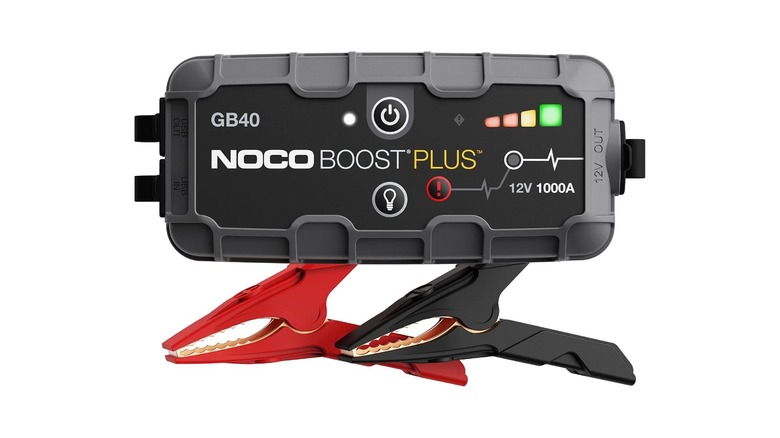
A dead vehicle battery during an emergency is the last thing you need, especially if you need to move or are stranded in an unfamiliar place. For this reason, it's worth having a jump starter like the Noco Boost Plus GB40. This unit is rugged and is small enough to fit under a car seat or in your glovebox — making it a must-have for a vehicle emergency kit. Despite the compact size, it packs enough juice to jump-start vehicles with up to 6-liter gas engines.
Apart from the compactness of the GB40, another important selling point is its clamps. They have a secure grip and are narrow enough for hard-to-reach battery terminals you might find on modern vehicles. The jump starter also comes with spark-proof technology as well as reverse-polarity protection to minimize any mistakes that may leave you stranded when attempting to jump-start your car.
You can also use the GB40 as an ordinary power bank, but its single output USB port is slow. We wouldn't recommend using it as a road-trip power bank for obvious reasons, but it works reliably for its primary function. Tests have shown it capable of jump-starting cars up to three times in a row even in cold weather, and the brand claims up to 20 jump starts on a single charge. Just be sure to check charge levels at least once every three to six months to ensure it's always ready to go when needed.
Rocky Talkie Mountain Radio
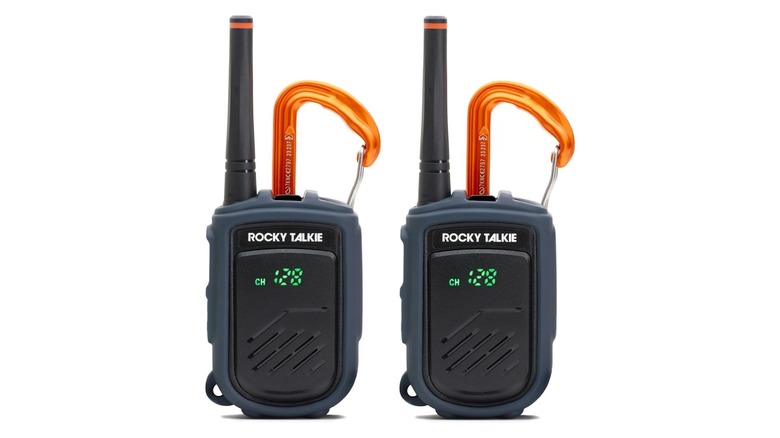
Whenever cell service is unavailable during an emergency or you just need a way to communicate with people within the same environs, a pair of reliable radios always comes in handy. The Rocky Talkie Mountain Radio is one of the best long-range radios you can buy today. It covers quite a distance, is very clear with minor obstructions, is rugged enough to survive the outdoors (IP56-rated), and weighs just under seven ounces per unit. You don't need an FCC license for the Mountain Radio, as it works within the Family Radio Service (FRS) system.
With minor obstructions, expect a range of close to five miles, and just a mile with major obstructions. With a clear line of sight, the range bumps up to more than 10 miles. Calls are consistently clear, which is critical in emergencies, and it comes with a 1,550 mAh USB-C rechargeable battery that should see you through around four days. Each piece is 6.6 inches on the longest side, meaning a pair wouldn't noticeably dominate your emergency kit. It doesn't come with NOAA weather channels, but it's still an excellent communication tool you can use to coordinate a small group when phones become unusable.
Midland ER310 emergency radio
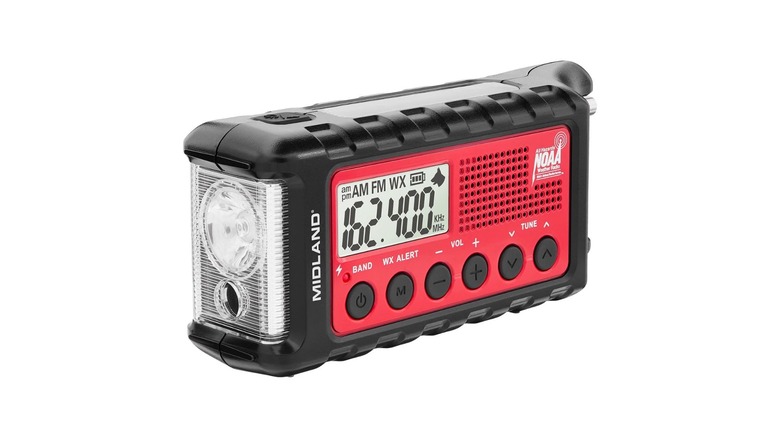
The Midland ER310 emergency radio is a must-have in any kit, and it combines several functions in one small device. It's particularly critical during an emergency evacuation, and its main job is to keep you informed through NOAA alerts and local radio when power and communication lines are completely gone. Where this radio really shines is in its redundancy — it comes with three different power sources: solar, a rechargeable battery, and a hand crank in case the other two sources fail. As such, you can still get local broadcasts, weather information, and light if your phone dies.
In case you get trapped and need to alert rescuers, the built-in flashlight and the dog whistle that it comes with become genuine lifesavers. Of course, the small solar panel and hand crank might not do much in regard to charging your phone. We'd treat this as purely a safety and information device rather than a power bank. Go for a dedicated mini power bank for this purpose, like the one below.
Iniu 25,000mAh 100W power bank
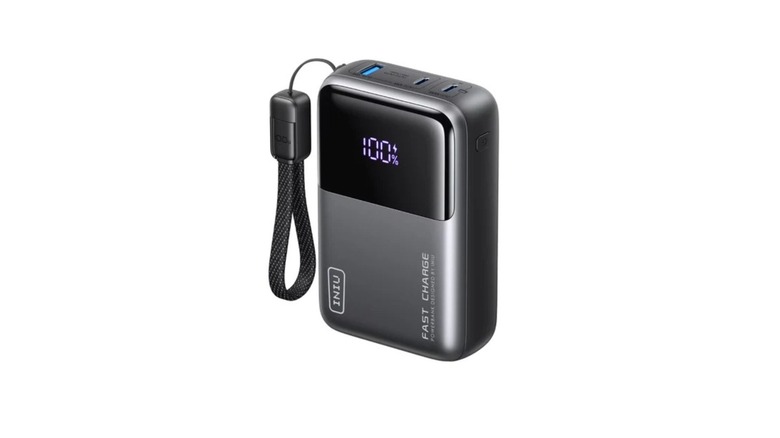
During emergencies, your phone can be a lifesaver if you still have cell service available. The only problem is that smartphone batteries barely last a day without needing a charge. Having a power bank like this 100W one from Iniu as part of your emergency kit solves this problem. Despite packing 25,000mAh worth of juice, it takes little space compared to most power banks with similar or, in some cases, less capacity. It's just 4.3 inches on its tallest side and weighs 13.8 ounces — so it should be able to fit into most palms.
The Iniu power bank comes with three ports — two USB-C ports rated at 100W and 45W, and one 18W USB-A port. Maximum output is 100W, which means you can charge larger or multiple devices without an issue. This high output is particularly valuable since it can charge your phone and other devices in a matter of minutes if they support fast charging.
Another nifty addition to the power bank is a detachable 100W USB-C cable, which guarantees you always have a cable available in your emergency kit. You also don't need to worry about finding yourself with the wrong cable when you really need one. There are many decent power bank options you can get for your phone, but Iniu's offering is one of the most space-conscious without necessarily sacrificing capacity.
LifeStraw Personal Water Filter
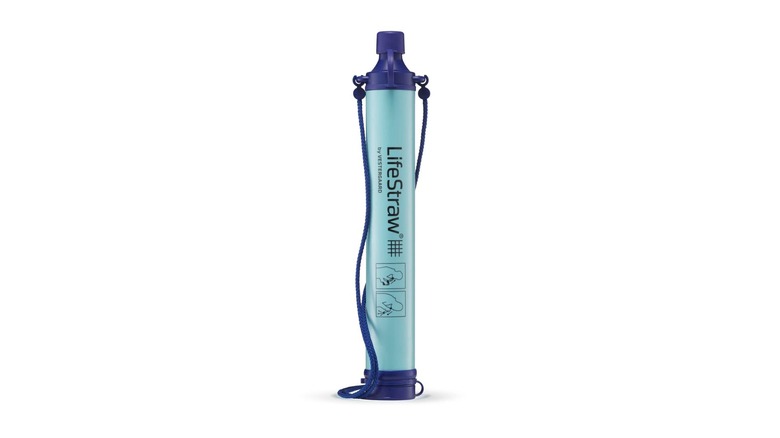
Water is the first thing you should have enough of in your emergency kit. However, if the situation and setting allow you to access various outdoor water sources, you need to ensure the water you're consuming is safe. Having the LifeStraw Personal Water Filter with you, and one for each person if you're in a group, can sort that out. You can squeeze several of these in a backpack without taking up lots of space.
How the Personal Water Filter works is simple — find your water source, put the straw in, and drink. You can also fetch the water in a bottle or cup and insert the straw there. As you drink, it uses a 0.2-micron hollow-fiber filter to remove particles, bacteria, and protozoa such as Cryptosporidium and Giardia, among others. Even if you already have clean water stored, the filter will without a doubt come in handy in case it runs out. To be clear, the filter will have its limits, like clogging due to dirt, not letting you store water, and not removing viruses — but it's still a great, cheap emergency filtration option to have.
Anker Solix C300 DC portable power station
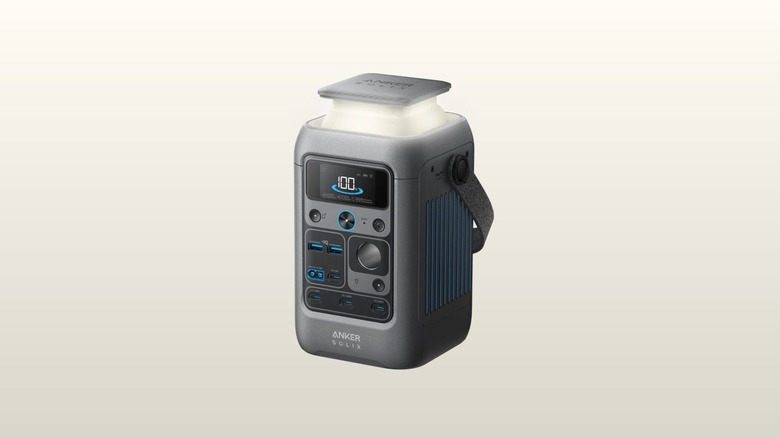
The Anker Solix C300 DC is the biggest gadget on this list, but it's quite small as far as portable power stations are concerned. It's roughly football-sized and can be carried with a shoulder strap. The goal of having this mini power station as part of your emergency kit is to provide more serious power than a standard power bank can offer to keep essential small electronics alive. The battery on this unit is rated at 90,000mAh, which should be more than enough to get you out of trouble during emergencies.
It comes with four USB-C ports — two of these can output and take in up to 140W, one outputs 100W, and the fourth 15W. According to Anker, you can charge up the C300 DC via the two high-wattage USB-C ports in one go for an 80% charge in just one hour with the right charging adapters. You also get a couple of 12W USB-A ports, making enough room for running several devices at once.
Another useful feature for emergencies this power station comes with is a pop-out LED light that eliminates the need for a separate lamp. There are two more charging options in case it runs out of power — your car or a solar panel, both at up to 100W. For the latter, you could go for a nice foldable 100W solar panel unit if you have the extra space.
BigBlue 28W solar panel
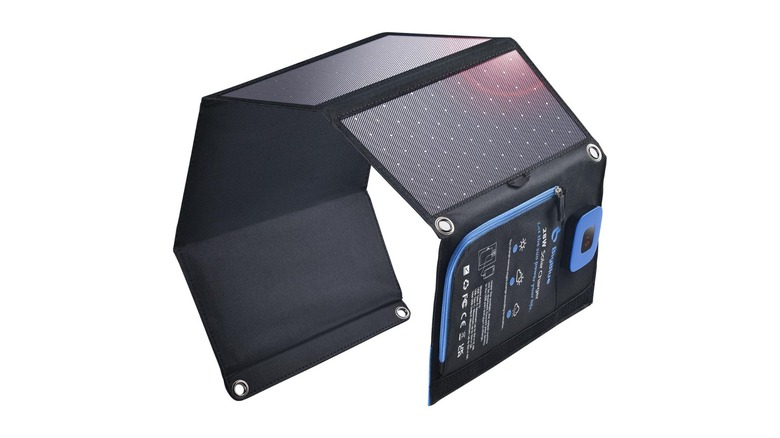
Speaking of solar panels, you can grab yourself a small, compact one to charge your phone and other small devices whenever the sun is available. The BigBlue 28W solar panel is one of these, and it comes with USB-C and USB-A outputs and an ammeter to show you the amount of current being generated, and it can be folded up to about 11 inches on its longest side. The ammeter is the most practical feature here, as it allows you to reposition the panels accordingly for the best possible angle against the sun. This is particularly useful when cloud cover is inconsistent and you need to squeeze out as much power as possible.
Being a small portable panel, this unit doesn't offer the highest output out there — it's rated at 28W when the sun is at its best — but is a nice option to have during extended outages. As long as the sun is out, you can slowly top up your power bank or phone, which is a lot better than having nothing at all. The narrow folded shape also means easier packing or even hanging, thanks to supplied carabiner clips, when you want to use it on the move.
Black Diamond Spot 400-R headlamp
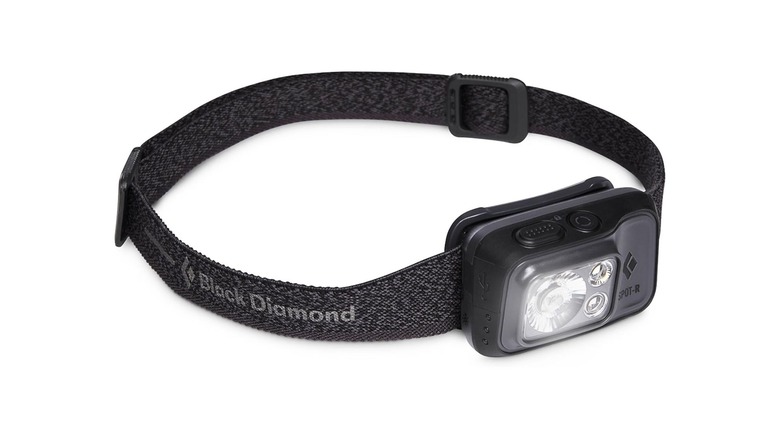
We mentioned having a flashlight earlier, but a headlamp like the Black Diamond Spot 400-R can do even better without taking up any extra space in your emergency kit. The ability to use the headlamp hands-free when you need both hands for other tasks makes it an indispensable gadget to have. It weighs about three ounces, can put out up to 400 lumens, and can illuminate a distance of up to 328 feet. Given the weight and almost negligible footprint, you can even have it on your head all the time and turn it on whenever the dark sets in.
The main light is dimmable, and it also comes with peripheral lighting, a red-light mode, and an emergency strobe to warn other people or alert rescuers to your location. The 400-R headlamp does come with a rechargeable battery, which should last you up to four hours at maximum brightness, up to eight hours on medium, and an impressive 200 hours in low-light mode. It's also waterproof, so it can be useful regardless of weather if you're outside.
Garmin inReach Mini 3 Plus satellite communicator
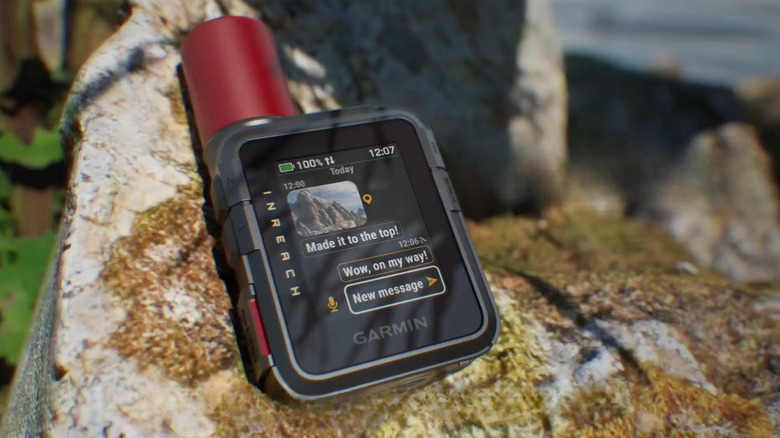
The Garmin inReach Mini 3 Plus satellite communicator is the priciest and most specialized of all gadgets here, but we could argue a case for it being the most valuable during emergencies. For one, it's a reliable primary SOS device thanks to satellite messaging and SOS communication even in areas with no cell coverage. It has a dedicated emergency button that will instantly send your exact coordinates and a distress signal to Garmin's response service, and it will liaise with local rescue agencies to get you help.
On top of satellite communication, the inReach Mini 3 Plus also shows the weather and provides breadcrumb tracking to help with outdoor navigation. Back to communication, this device also lets you send photos and 30-second voice notes. Text messages can go up to 1,600 characters long, so you can always provide lots of critical info to the emergency dispatcher. Another solid feature is an emergency siren, which can be heard from up to 500 feet away even in heavy vegetation.
The catch is that satellite and emergency features on this device require an active subscription, and you don't get detailed maps. The battery should last you up to around 40 hours with all systems enabled, and low-power mode will get you well over 100 hours with 10-minute tracking. Given the steep initial investment ($500) and subscription, this might not be it for home emergencies, but if you spend time in remote areas, it might be worth every dollar when disaster strikes.
Black Diamond Moji R+ lantern
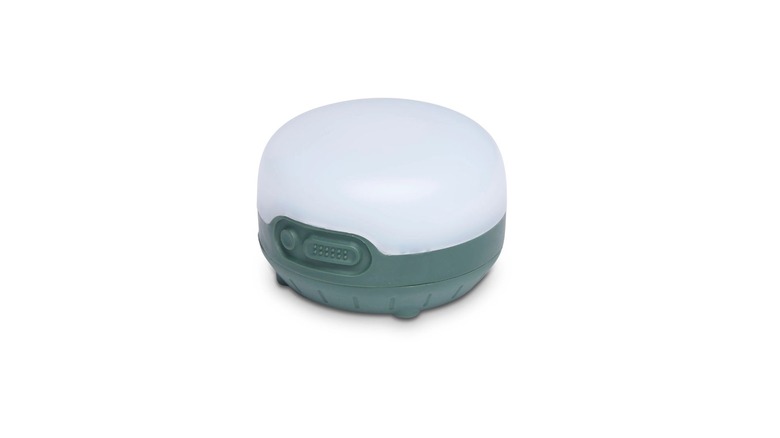
We've seen a flashlight and a headlamp as space-saving lighting solutions you can have. Lanterns like the Black Diamond Moji R+ are another solution for a different lighting problem — they create soft, usable light around any indoor or outdoor space. Unlike standard-sized lanterns, this one is small enough to sit in the palm of your hand, so it won't be taking any significant space among your collection of gadgets. Besides that, you can hang it almost anywhere (using its hooks or embedded magnets), and it can survive wet weather conditions thanks to its IPX4 rating.
The Moji R+ outputs just 200 lumens, which may not seem like much, but it has a frosted lens that diffuses the light quite well. For this reason, lighting tents, a room, and other small areas shouldn't be an issue — it's comfortable enough for tasks like finding your gear or doing repairs. On a single charge at maximum brightness, it should see you through just over five hours, and Black Diamond claims up to 16 hours at the lowest setting. It also has a strobe mode, and the main gripe you may have to live with is its outdated micro-USB charging port.
How we selected these gadgets
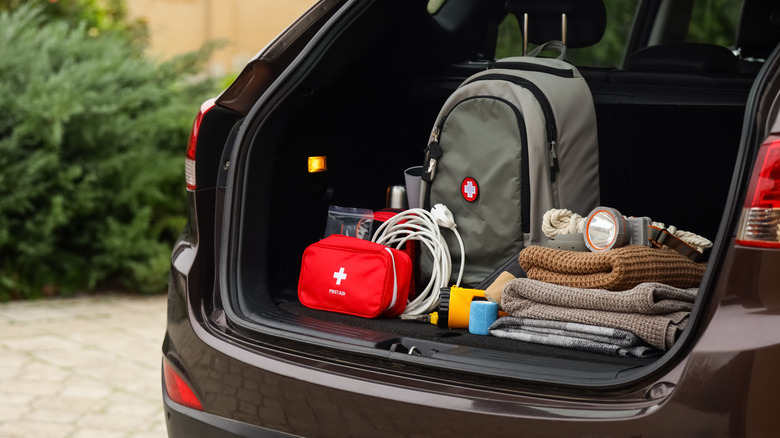
First, we had to narrow the list down to essential gadgets by using DHS' and the Red Cross' emergency kit checklists as a starting point. We then went for compact gadgets and alternatives to otherwise larger options, like the small Anker power station, which is a large device but small by the standards of your typical power station. All these options can be real lifesavers when you're in survival mode. For quality assurance, we settled on mostly major brands with strong reputations, checked professional reviews from other outlets, and considered customer ratings from their respective retailers (a 4.3-star minimum from at least 100 reviews).