

5 Disadvantages Of Oil-Filled Space Heaters
We may receive a commission on purchases made from links.
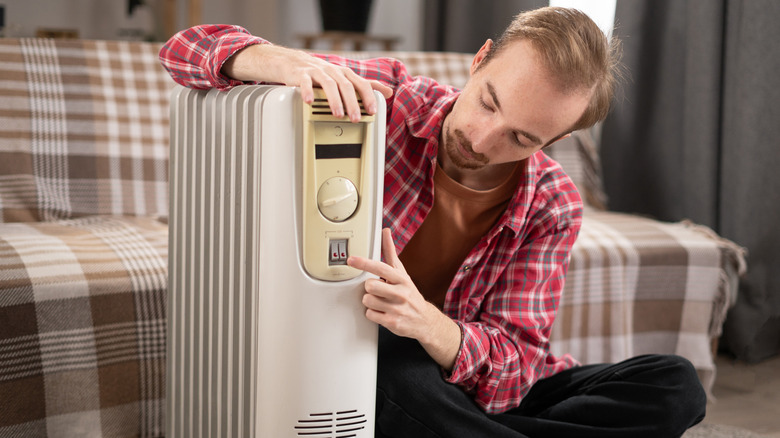
It's that time of the year again: Temperatures are dropping. The weather hasn't turned into a winter blizzard just yet, but it's probably wise to consider alternative or supplementary heating options. Given the price of electricity these days, an oil-filled space heater might sound like a good idea. We must, unfortunately, dash those hopes. Sort of.
To be fair, you can find plenty of reasons to purchase a space heater that uses oil. These devices are quiet, so you don't need to turn up the volume on your TV during a late-night binge-watching session, and oil-filled heaters don't have exposed flames or elements, which reduces the odds of starting a fire. That's enough to convince some people they should purchase an oil-filled space heater, and we can't say we disagree.
If you do enough research, though, you will find plenty of issues that might give you second thoughts. Continue to learn some disadvantages of oil-filled space heaters. Let's just say there's a reason Costco's best-rated space heater doesn't use oil.
They have high initial costs

Depending on where you shop, you can buy a pure electric heater that isn't too expensive. Heck, that's probably why they're so popular. However, the true cost of electric heaters comes into play due to the ever-fluctuating costs of electricity — and the inefficient nature of the systems many use. For oil heaters, the opposite is true.
The first problem all oil-filled space heater owners must face is the price. For example, if you go shopping at Target, you will find no shortage of space heaters. You can buy a 1500W Dreo ceramic heater for as low as $35.99. Meanwhile, Dreo 1500W oil-filled space heaters begin at a comparatively whopping $99.99. You can find cheaper options at stores such as Home Depot, but price patterns don't change — oil-filled space heaters are always more expensive.
The secret behind the cost difference stems from the underlying thermodynamics. When a store listing says you are buying an oil-filled space heater, the name is literal; the device doesn't burn oil but heats a sealed container of it. This heat is eventually released into the device. Oil-filled space heaters cost more up front because of the extra manufacturing that goes into filling them with oil and sealing the reservoirs. However, by that same token, these devices use less electricity because once the oil is up to temperature, it releases its heat slowly, providing a comparatively long-lasting source of warmth. Kilowatt-hour for kilowatt-hour, it costs more to run an electric heater during the winter than it does an oil-filled heater, but only because their cheaper constructions make them less efficient.
They aren't good for large rooms

If you own or have gone shopping for oil-filled space heaters, you probably noticed they resemble radiators. That is not by accident. Both rely on the same methods of heat transfer: convection and radiation (no, not the kind you get when you split an atom). However, while this design is more efficient and less costly than standard electric space heaters, it is not without its limitations.
While oil-filled space heaters can evenly distribute warmth throughout a room, you need to buy one that is properly sized for your room. If you don't, it won't evenly heat the entire room, just the area around it within a certain radius. The secret behind this achievement and flaw lies in the aforementioned reliance on radiation. Heat uniformly wafts off oil heater radiator fins and relies on the thermodynamics of plain old air to spread. Comparatively, oil-filled heaters have a lot less range than standard electric heaters since the latter often use fans to provide directed heat, which makes them better suited for big rooms where you work in one small area. Consider this when shopping for space heaters to put in, say, your garage.
The heating mechanics of oil-filled space heaters also convey another disadvantage: They take longer to heat up than similar devices. As previously stated, oil-filled space heaters have lower operational costs because their stores of oil retain heat, but the opposite side of that coin is the fact that oil takes longer to heat up. Oil can't start transferring heat until it gets up to temperature, so oil-filled space heaters aren't ideal in situations when you need immediate respite from the biting cold.
They're heavy and difficult to move
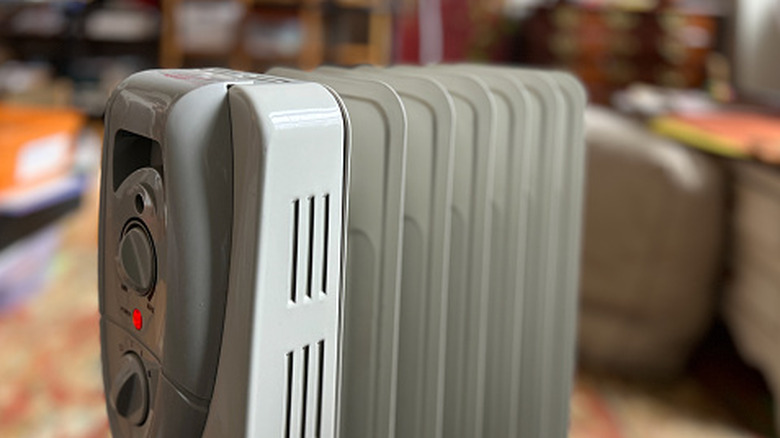
Electric space heaters make ideal supplemental heating sources because many are so portable. You can't exactly carry them around in your pocket, but you can pick them up and take them from room to room. However, the bigger a space heater becomes, the more it transforms into an immobile fixture.
Every advantage we've listed for oil-filled space heaters comes with a tradeoff, but you know what they say about items being greater than the sums of their parts. For oil-filled space heaters, that means the oil reservoir, heating element, and radiator fins weigh down the final product and makes it bulky, which limits portability. Sure, many designs implement wheels that let you roll the devices around — perfect for big rooms — but that doesn't completely mitigate the size or weight problem.
Let's say you are looking for heated gadgets that will keep you warm in a cold office. If you want a space heater, you need to bring/buy a small, portable electric one instead of an oil-filled alternative because you can at least fit electric heaters in bags. Have you ever tried rolling an electric heater through a parking lot, into an elevator, and through an office to your cubicle? It ain't easy, and people will stare at you like you've got three heads the entire way.
They get extremely hot while in use
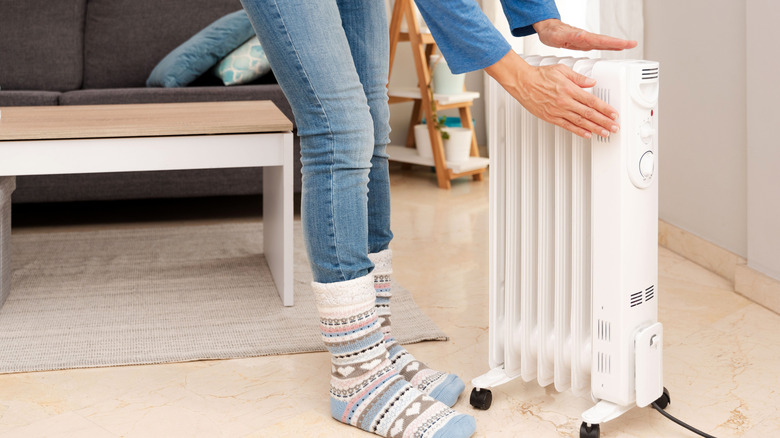
Space heaters get very hot. Shocking, we know, but you can't provide heat without producing heat. However, while this danger is fairly obvious with electric space heaters, oil-filled space heaters aren't as upfront. One could argue this design makes oil-filled heaters slightly more dangerous around the unwary.
Traditional electric space heaters have exposed heating elements that glow orange when active, advertising a clear and present burn danger. While the heating element of an oil-filled space heater is fully enclosed within the device (which is one less fire threat when keeping warm during the winter), the same cannot be said for the radiator fins. Those components get very hot; not hot enough to set paper on fire, but definitely hot enough to burn anyone who touches them.
Let's say you want to move an oil-filled space heater while it's in use. If you touch it in the correct location, you're fine, but if you brush against the fins, you could receive a nasty burn. And that's just for people who understand the danger. What if you have a young kid? Then the threat increases tenfold because they might straight up grab a hot oil-filled heater's fin. That's a surefire recipe for a trip to the emergency room. Just because you can't see a heater's heating element, doesn't mean it can't burn you.
The oil is a double-edged sword

As previously stated, oil-filled space heaters don't burn oil, so you never need to refill their containers. However, just because you don't need to top up the reservoir every now and then, doesn't mean some oil can't escape to horrific results.
If you take good care of your space heater, oil-filled or otherwise, it should continue to work for potentially many years. But on the flipside, if you don't properly maintain your device — or worse, don't properly check it after it tips over and falls to the ground — the oil could leak out, which poses an extreme fire danger. Any exposed flame or even a spark could set the oil ablaze, along with everything it touches.
Admittedly, an electric space heater damaged by a fall poses a fire risk, but leaking oil can cause fire to spread quicker than a cracked electric heater. And what happens if a space heater is exposed to a fire but isn't the source? Then the device will rupture, which in the case of an oil-filled space heater means the oil can spray out and make the fire even worse. To be safe, keep oil-filled space heaters far away from any (popular) gadgets that are potential fire hazards,