

6 Downsides Of Using Wider Tires
We may receive a commission on purchases made from links.
Many sports and muscle cars come with wider tires, which is why they are often associated with performance vehicles. If you look at the list of cars that come with the widest tires from the factory, you'd find legends like the Bugatti Veyron, Dodge Challenger SRT Demon, and Lamborghini LM002. Because of this, some drivers think that vehicles equipped with extra rubber on their wheels pack a bigger engine under the hood. It's also for this reason that when some people upgrade their rides, one of the things that they do is to pick between narrow or wide tires.
But while there are benefits to switching to wider tires on your daily driver, you should note that they also come with their own set of disadvantages. Some of these downsides might be readily apparent, like higher prices, but some of them are also quite surprising. It's good to know what these trade-offs are — that way, you know what you're getting into before you spend good money to put meaty tires on your vehicle.
Wider tires are typically more expensive
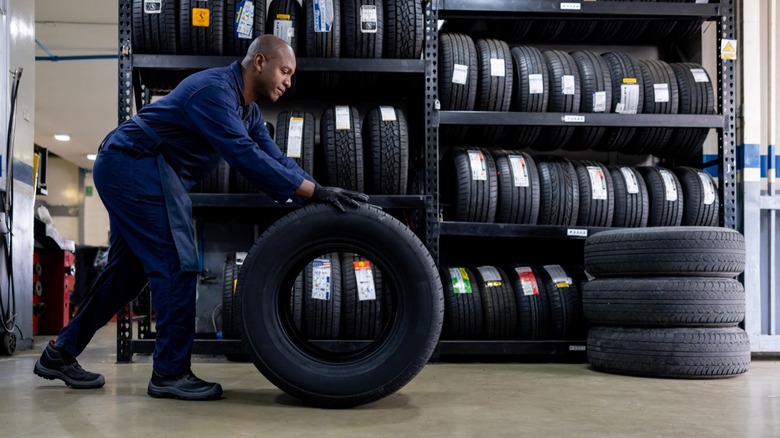
This is the biggest, most glaring downside when you decide to upgrade to wider tires. Since wider tires often mean that the manufacturer is using more material to build them, it's just natural for a wide tire to cost more than the standard tires that would come with your vehicle. For example, my car uses 235/50 ZR18 tires. A tire of this size from Continental ExtremeContact costs about $201.99 on Amazon, but if I choose a slightly wider 245/50 ZR18 size, that price is bumped up to $231.99. You need to purchase a set of four because it's not a good idea to put on mismatched tires on your car, meaning the price difference is already $120. We can also see this price difference with the Michelin Pilot Sport 4S — a 245/40ZR18 (97Y) XL tire costs $253.99 on Amazon, while a 255/40ZR18 (99Y) XL tire would set you back $288.99. That's a $35 price difference for each tire, meaning you're spending $140 more for a complete set of wider tires.
Note that this does not take into account the larger rims that you'll need to properly accommodate wider rubber. You could put up to a 20 mm wider tire than the stock tire on your current wheels, but if you want to go wider than that, you'll have to consider replacing your rims, too. Aside from that, the price difference we showed earlier would only apply if you're replacing worn out tires. If your current set of tires are still up to date and you're replacing them because you want the bigger look (or you've upgraded your car), then with new rims you're spending around $1,000 easy, labor not included.
Wider tires have worse fuel economy
Bigger tires offer worse fuel economy because they weigh more and have greater rolling resistance compared to smaller tires. The same is true for wider tires, even if they have the same inner radius and diameter as the one you currently have on your vehicle. A wider tire also means a wider contact patch, increasing its rolling resistance. This higher rolling resistance means that your car's engine or motor has to work harder to get it moving, meaning it's using up more fuel or battery power to travel the same distance.
Wider tires often have worse aerodynamics, too. Since they're wider than what you have typically installed, that means they would have more aerodynamic drag on your vehicle. This might not be a problem for short hops within the city, but if you're taking long drives up and down the interstate, you'd soon feel that impact of wider tires on your car's MPG. When you combine these things with the heavier weight of a wider tire, you'll end up paying more at the pump.
Wider tires increase your car's unsprung weight
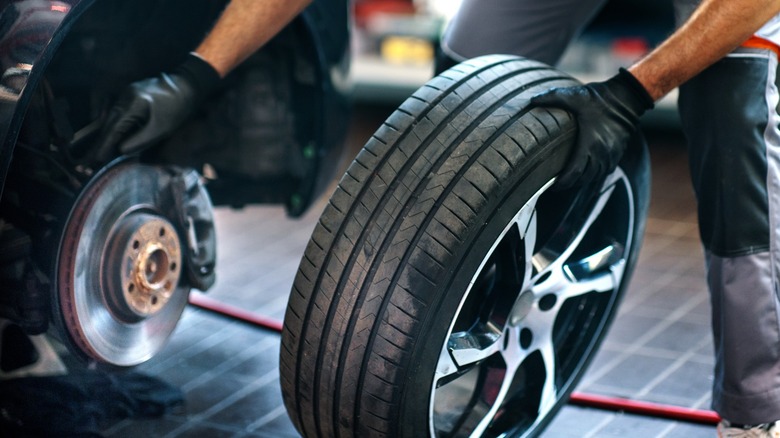
Wider tires do not just add weight to your vehicle; instead it adds unsprung weight. Unsprung weight is the weight of your car's components that are not controlled by the suspension system, like its wheels, tires, brake system, and hubs. Because these parts are not cushioned, they follow the shape of the surface they travel on — every pothole, rut, bump, and whatever you may encounter on the road. Since heavier objects have higher inertia, your suspension has to fight harder to keep heavier unsprung weight firmly planted on the ground.
One way enthusiasts can offset the weight of a wider tire is to use lighter alloy wheels over steel wheels, helping improve their car's grip and handling. But if you just add wider tires without changing anything else, you might actually not see any improved performance and even get worse performance compared to a smaller and lighter wheel and tire combination.
Wider tires lead to a higher risk of aquaplaning or hydroplaning
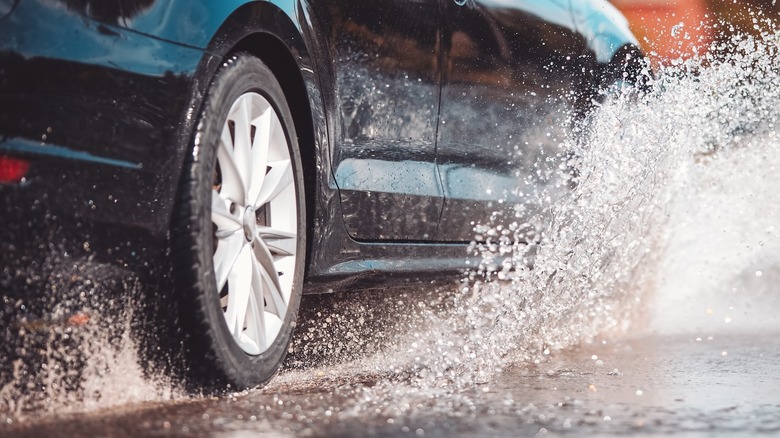
This is another disadvantage of wider tires that many would not expect it to have. Aquaplaning or hydroplaning is when the tires lose contact from the road surface because of a layer of water sitting between them. This often happens during heavy rain, when the tire cannot evacuate the water fast enough to the point that it starts to pool under the tire, especially if you're moving at speed.
While wider tires offer better grip in dry conditions, this isn't true in inclement weather. Narrower tires are able to cut through water more effectively, while wider tire's larger wider contact patch means that its treads would have to work harder to move water out of way. This is also true in shallow snow — since wider tires spread out your car's weight over a larger area, it has less pressure per square inch of contact compared to narrower tires, making it harder for wide tires to grip the pavement underneath the snow.
Note that even though narrower tires reduce the risk of hydroplaning, tread depth is still more important than the width of your tires. This is why not replacing bald tires is one of the most dangerous mistakes you can make with them.
Steering feels heavier with wider tires

Just putting wider tires on your front wheels would make your car's steering feel heavier. You would especially feel this in vehicles that do not have power steering, as the larger contact patch means that you're fighting against more friction when you're turning the wheel while you're stopped. Modern power steering units should be able to overcome this, though, but you will still get the same heavier steering feeling even if you're at speed.
The reason for this goes back to the heavier unsprung weight of larger tires. Since the greater weight has higher inertia, you actually get less grip while driving, resulting in slower turn response and less precise feedback. If you want to enjoy the greater grip that wider wheels offer, you must counteract the extra unsprung weight they bring with a lighter set of rims. You should also ensure that you have the proper tire width for the rim that you have, as going too wide could even reduce performance.
Wider tires are just too big
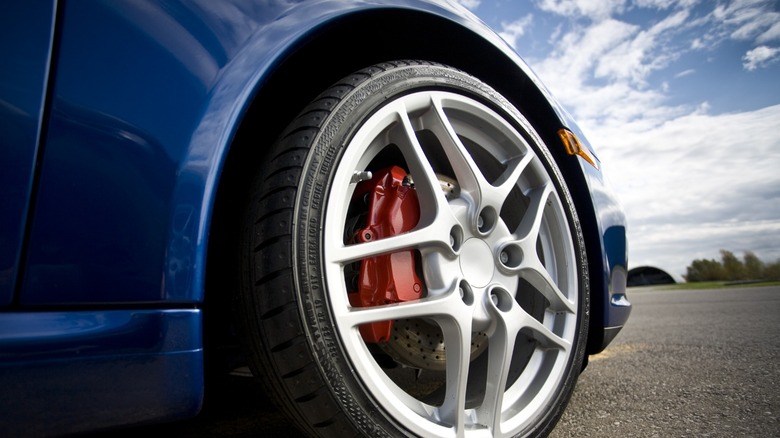
Finally, there are times that wider tires are simply too big to fit your vehicle. This is especially true for the front tires because they pivot, meaning wide tires that look like they fit when the wheels are straight could come into contact with the car body and suspension components when your turn your steering wheel completely to one direction or the other. This could cause rubbing, potentially damaging both your tires and your vehicle.
If that is the case for you and you really want to install those wider tires, you generally have three options — you can either install spacers to add more space between the tire and body, replace your rims with those that have a more appropriate offset, or modify the car body to add more clearance. You also just cannot pick one of these solutions and call it a day. Instead, you must consider your vehicle's current setup and what you intend to use it for.