

What Are The Benefits Of Using Alloy Wheels Over Steel?
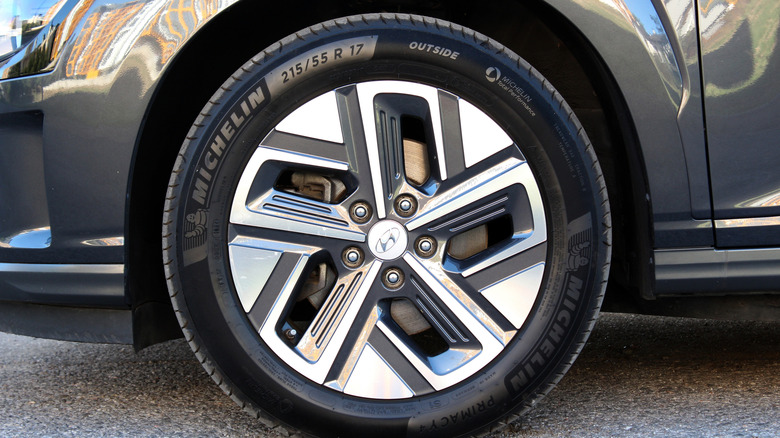
When it comes to replacing a vehicle's wheels, some people decide to go for more specialized options like the often expensive three-piece wheel design, which allows for extreme customization. But for others, the decision comes down between alloy wheels versus traditional steel wheels, and the fact that alloy wheels are typically lighter than steel. This reduces a vehicle's unsprung weight, which refers to the parts under a vehicle's suspension that follow the road during driving.
Because alloy wheels are more lightweight, they can help improve steering response and overall vehicle handling. Their reduced weight can also help a vehicle accelerate more quickly and improve braking performance by reducing the amount of effort needed to spin and slow the wheels. Additionally, alloy wheels can transfer heat away from the brakes more effectively and can even be modified to improve airflow. This helps decrease the likelihood that a vehicle's brakes will fade during tough driving conditions.
Alloy wheels can also give drivers more choices when it comes to the appearance of their vehicles. That's because alloy wheels are made from alloyed aluminum (hence the name), which allows manufacturers to create different styles and designs that can better match a car's overall look. As a result, alloy wheels give vehicle owners more options for customization than their steel wheel counterparts. In fact, alloy wheels can feature a wide range of finishes and spoke patterns, making them an easy method for drivers to personalize their ride.
Steel wheels still have their advantages
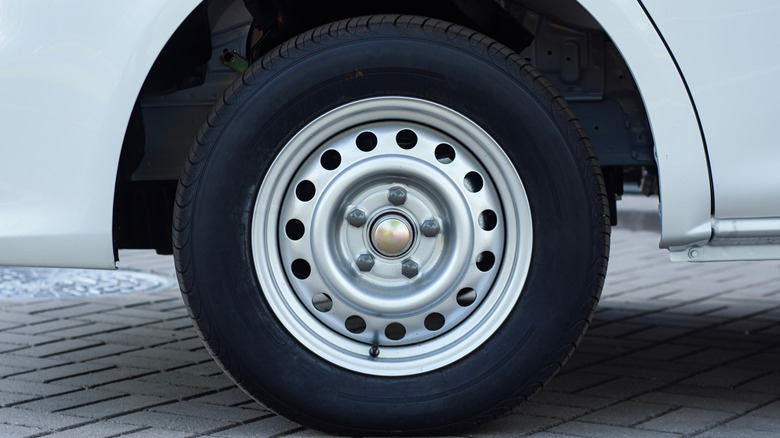
While alloy wheels have certain advantages in terms of both performance and appearance, steel wheels continue to be the right choice for some drivers. That's because steel wheels are typically more affordable than alloy wheels, and they're generally more durable as well. Steel wheels can handle rough road conditions and they're often less likely to crack after severe impacts. Some of that impact damage, depending on the situation, can even be repaired without having to replace the wheel. Steel wheels are heavier as well, which can give drivers better traction in winter weather.
Steel wheels can also be customized, as some manufacturers offer different designs, coatings, and color options. Some modern steel wheels are even built with styling in mind, with features like full-face designs and finishes that can give vehicles a more distinctive look. However, while steel wheels can offer more personalized options than many drivers may expect, alloy wheels still provide a wider range of customization.
In the end, choosing between either steel or alloy wheels depends on how you use your vehicle. Because of their durable construction, steel wheels are a better choice for off-roading, and for use on heavy-duty work trucks. In contrast, alloy wheels can be the right choice for drivers who want better handling and more styling options. Though neither one is necessarily right for every driver, the final decision can come down to meeting a vehicle's needs.