

5 Dangerous Mistakes You May Be Making With Your Tires
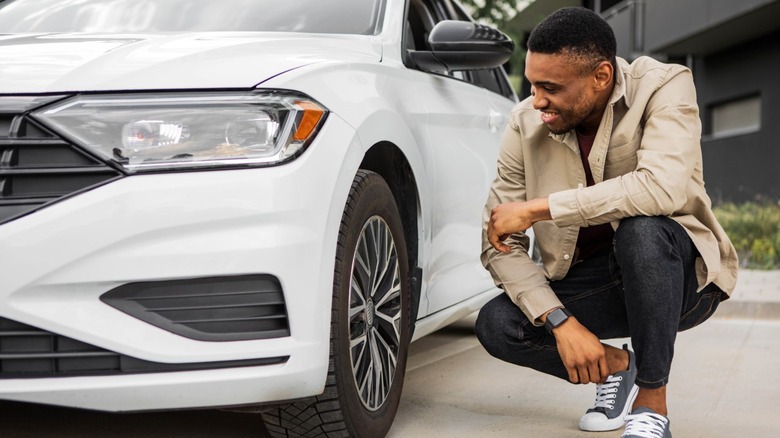
Tires are often the most underrated part of your vehicle. They might not be as flashy as big twin-turbo engines or massive disc brakes flanked by brightly colored four-piston calipers, but all these performance parts are useless without a good set of tires. These four pieces of rubber (although they're also made of other materials) are the only things that keep your car on the road, so they must handle everything that you do at the wheel.
Acceleration, braking, steering, handling, comfort, and grip are all affected by your tires — but, most importantly, tires affect your safety. That's why you should treat them properly and ensure that they're in tip-top shape whenever you go out on the road. Unfortunately, many drivers take the tires for granted and get behind the wheel without checking them regularly. This can be dangerous, especially if they already show signs of wear.
So, to avoid any inconveniences (or worse, an accident) on the road, keep in mind these dangerous mistakes that you might be making with your tires. By avoiding them, you can extend the tire's lifespan, keep your car's performance optimal, and increase safety on the road.
Underinflating your tires
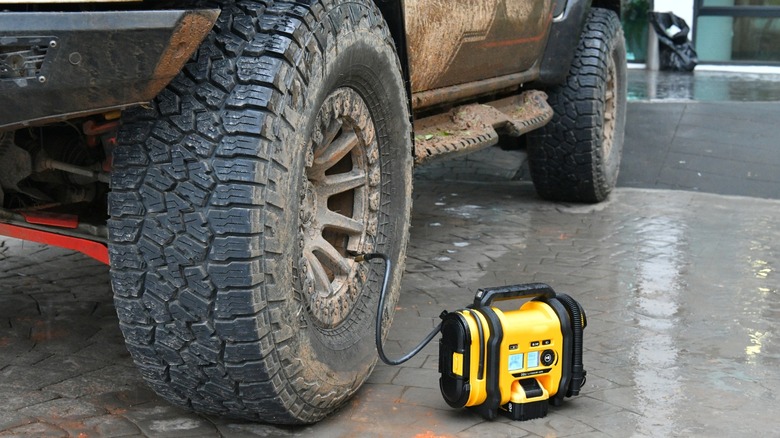
Car manufacturers work with tire makers to find the optimal tire pressure for every rim and model combination, so it's best that you keep your tires at the recommended pressure indicated in your car's manual or on the driver-side door jamb. But even if you purchased a brand-new car with its tires set at the correct pressure from the dealer, it will eventually lose some of that air, even if you don't have a tire puncture. The weather also affects tire pressures, with tires losing about one PSI for every 40 degrees Fahrenheit drop in ambient temperature. So, it's wise to monitor your tire pressure to ensure that it stays at its optimal level.
Many new vehicles come with a tire pressure monitoring system that tells you in real time the tires' pressure. If you're driving an older model, you'll have to check the pressure manually every month or so by using a portable tire pressure gauge or the air pump at a gas station. Alternatively, you can buy a third-party TPMS, a useful safety to keep in your vehicle, that will keep you updated on your tires' pressure levels.
Driving with underinflated tires increases their risk of failure, as it can cause them to bend and flex beyond their designed limits. This causes heat to build up, which could lead to sudden failure. Furthermore, underinflated tires make for a larger contact patch than necessary, increasing rolling resistance. That means your car must work harder to drive forward, reducing fuel efficiency and affecting the lifespan of your tire.
Not replacing bald tires
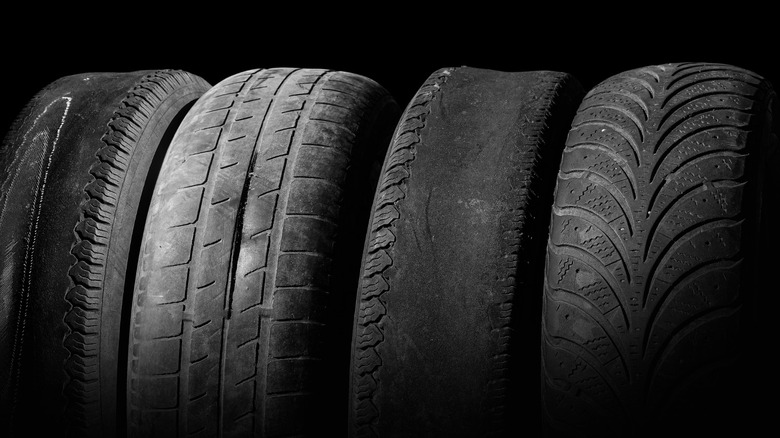
Most tires have tread grooves on their surface, which channel water away from your tire's contact patch. If your tires are worn out and the grooves are no longer as deep as they should be, the risk of hydroplaning increases. Hydroplaning is when water gets in between the road and your tires, and your car starts coasting on it. Because of this, you lose direct contact with the road, potentially losing control of the vehicle.
Experts say that tire tread depth, which you can measure using a tread gauge, should be greater than 2/32 of an inch. You can also check your tire's tread wear markers, which are rubber strips found on the tires. Once these bars touch the surface of your tires, the treads no longer have optimal depth, meaning that your tires need replacing. If you don't have a tread gauge handy and you're having a hard time looking for the tire bars, you can also use the penny test to check on your treads. You just need to place a single penny into the tread, with Lincoln's head pointing toward the tire surface. If you can see the top of his head, it means the treads are too shallow and won't be able to push water away like brand-new tires do.
That said, if you live in a region that experiences a lot of rain and snow, consider replacing your tires a little before they hit the 2/32-inch threshold. After all, while replacing your tires infrequently might save some money in the immediate term, getting into an accident because of bald tires is a much more expensive (and potentially dangerous) situation.
Forgetting to rotate your wheels
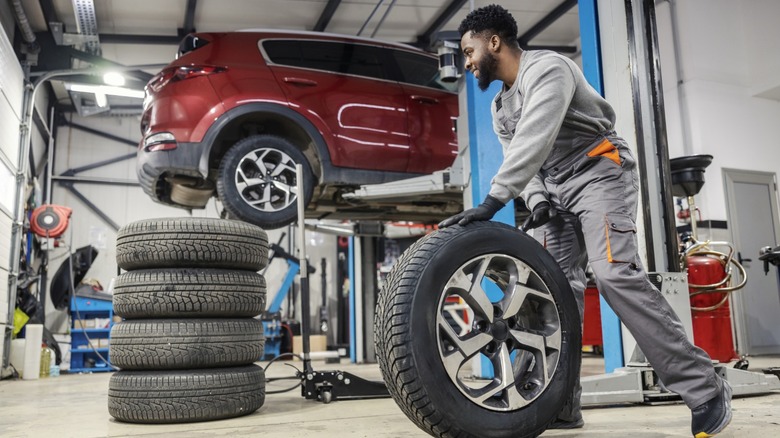
One of the things that many car owners forget when it comes to their vehicle's maintenance is tire rotation. Tire rotation means swapping the position of your wheels, helping the tires wear evenly. This is an important procedure that must be done regularly, following the instruction in the car manual, as each corner of your vehicle experiences different wear conditions. For example, the front wheels apply the majority of braking pressure, so these tires are likely to wear faster than the rear tires. Front-engine, front-wheel drive configurations put even more pressure on the front tires, accelerating their wear.
You can rotate your wheels at home, since you don't need a specialized tool to do it. You just need to ensure that you're following your manufacturer's recommended tires rotation pattern to get the optimum wear. Note that some tires are designed to roll in a specific direction, meaning you cannot move them on the other side of the car. Also, if your car is equipped with TPMS, you might have to reprogram it to ensure that it's measuring the pressure for the correct tire marked on the screen.
If you have a full-size spare tire, you can also include it in your tire rotation. Doing so ensures that it's worn evenly, and also forces you to check the spare and ensure that it's in good condition, helping you avoid an unpleasant surprise if you experience a flat tire in the middle of nowhere.
Ignoring tire age
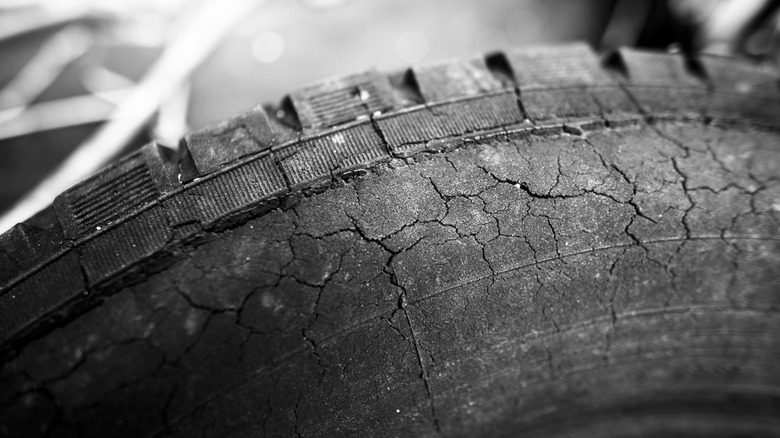
Although tires may look physically okay even after years of being on a rim, they actually have an expiry date. That's because the material used in tires degrade over time, meaning they might not be a strong and durable as they used to be when they were new. Some fatal accidents have even been attributed to old tires, including the in one in which actor Paul Walker died. Because of this, it's wise to replace your tires after a certain number of years even if they still have plenty of tread left.
Unfortunately, at time of writing, the industry hasn't set a standard lifespan for tires. Some manufacturers recommend replacing tires after 10 years no matter how good they look, while some safety groups say it's best to change them every five to six years. One rule of thumb is to follow the five-year rule, which is to have your tires checked by a professional annually after they pass five years. That way, they can spot issues with your tires like cracking or bulging, so you can have them replaced before they become a real problem.
One way you can determine the age of your tires is to check the DOT code printed on them. These numbers show the year and week when a particular tire was manufactured. For your own safety, both tread wear and tire age are important to keep in mind when maintaining your vehicle.
Driving on damaged tires
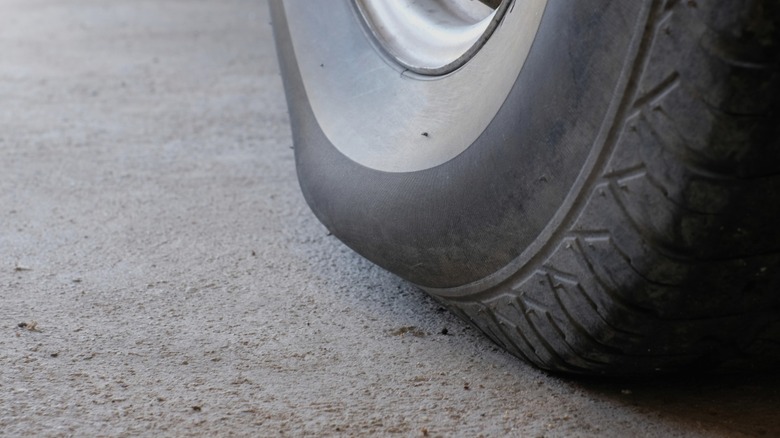
One of the most dangerous mistakes that one can make is to drive on damaged tires, which could appear as cracks, cut, bulges, or blisters on the sidewall or the contact surface. Unfortunately, these damages cannot be repaired, and your only recourse is to replace the affected tire.
If you see this type of damage, don't tempt fate by driving on it. It's best to replace it if you have a spare and then take the damaged tire to your nearest shop for replacement. If your car only comes with a repair kit, then you'll either have to call a tow truck, or you can remove the damage wheel yourself and then bring it to a shop. Continuing to drive on damaged tires like this increases your chance of a blowout, which is especially dangerous if you're driving at highway speeds.
If you notice that one tire has been slowly but steadily losing air pressure compared to the other tires on your car, it could be a sign that it might have a tiny puncture. If you recognize this symptom, you should take your car to a tire shop to have it checked — that way, you can get the puncture repaired and stop the leak. You don't want to ignore damage like this, even if it's manageable, because, just like a blister, it increases your risk of a blowout. If that happens, what is supposed to be a cheap patch could turn into an expensive tire replacement.