

5 New Foldable Phones To Consider Instead Of The iPhone Duo
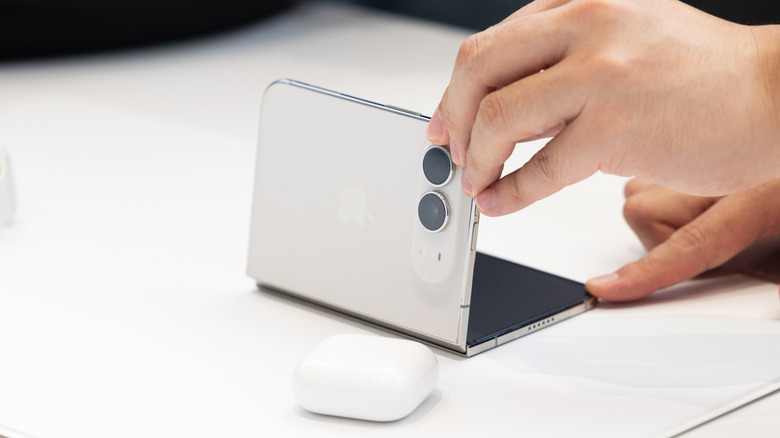
Apple isn't known for adopting industry trends early with new hardware features — it usually likes to sit back, watch how the new technology evolves, and then jump in with its own refined take once the competition has ironed out the early issues. This has also been the case with foldables. Other manufacturers are currently several years into their foldable lineups, with Samsung already on its eighth generation of Galaxy Z Fold devices. Apple finally unveiled the iPhone Duo alongside the iPhone 18 Pro series, and it's already been a head-turner.
Apple went with a passport-style form factor for the iPhone Duo, with a 5.4-inch cover display that unfolds to reveal a larger 7.6-inch screen. Both displays are OLED and support refresh rates of up to 120Hz, with the inner display utilizing a nano-texture finish that almost makes it impossible to spot its crease from some angles. The iPhone Duo is powered by the new 2nm A20 Pro SoC and comes with two rear cameras — a wide and an ultrawide shooter.
Pricing for the iPhone Duo starts at $2,000, which is a bit higher than competing foldables. Early hands-on impressions from reviewers have been rather positive, particularly when it comes to the Duo's design and thoughtful software. If you're not deep into Apple's ecosystem, however, there are other Android foldables worth checking out. Based on reviews by experts in the industry, here are five foldable devices you might want to consider before locking in your iPhone Duo purchase.
1. Samsung Galaxy Z Fold 8
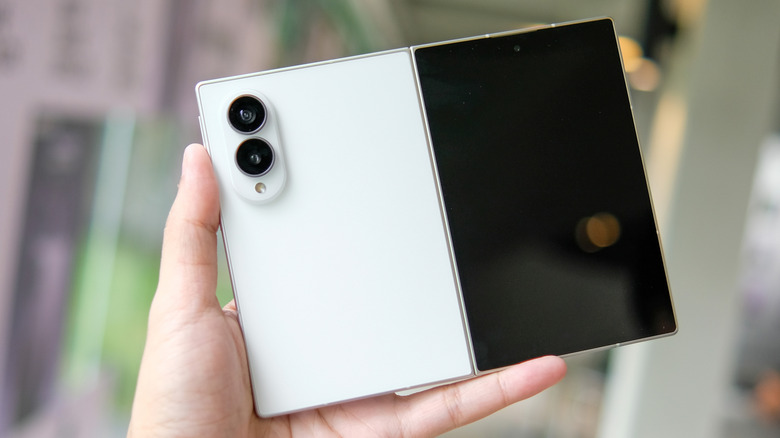
Samsung unveiled its new Galaxy Z Fold 8 series less than two months before Apple announced the iPhone Duo. While we've come to expect Samsung to release the usual foldable and flip-style phones every year, the company added a new form factor this time. Technically, the successor to the Galaxy Z Fold 7 is the Galaxy Z Fold 8 Ultra, since it features the same taller form factor. The regular Galaxy Z Fold 8 is now a wider, more compact foldable, something that's much closer in footprint to the iPhone Duo.
When folded, the phone offers a 5.5-inch cover display, and unfolding it reveals a 7.6-inch canvas. Both the inner and outer displays are Dynamic LTPO AMOLED 2X panels and refresh at up to 120Hz. Samsung is using what it calls "Flex Titanium technology," which is designed to improve the durability of the foldable display while minimizing the visibility of the crease that runs down the middle. Tom's Guide appreciated the reduced crease visibility in its review of the Galaxy Z Fold 8, which also highlights the phone's improved batteries, now that Samsung is starting to incorporate silicon-carbon battery technology into its foldables.
The Galaxy Z Fold 8 runs on the Snapdragon 8 Elite Gen 5 SoC, features wide and ultrawide cameras, and comes with a seven-year One UI update policy. Pricing starts at $1,900, undercutting the iPhone Duo by $100 while offering the same 256 GB capacity.
2. Google Pixel 11 Pro Fold
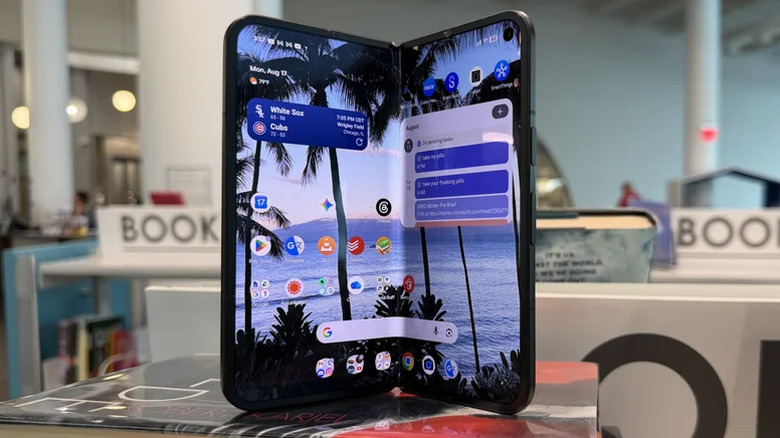
Also priced at $1,900 is the Google Pixel 11 Pro Fold. Despite how it's named, it's only Google's fourth foldable, but it packs in some notable improvements. For starters, it's slimmer and lighter than last year and features a new glass fiber composite back panel that Google says is "nearly impossible to crack." Like the iPhone Duo, the Pixel 11 Pro Fold has an IP68 rating, but it doesn't officially support stylus input. It also uses an aluminum frame, which might not feel as premium or be as sturdy as the iPhone Duo's titanium frame.
The phone narrowly beats the iPhone Duo when it comes to peak brightness, featuring two 3,600-nit displays. The cover display measures 6.5 inches, and the inner screen spans 8 inches. Both panels refresh at up to 120Hz and are OLED. Like other Android foldables, the Pixel 11 Pro Fold houses its front-facing camera in a hole-punch cutout. Apple, on the other hand, has opted for an in-display camera, but it does come at the cost of image quality.
Powering the software experience is Android 17. Google's Pixel UI continues to offer a clean experience with a ton of AI features sprinkled in, courtesy of Gemini. They don't always work as intended, as we've explored in our review of the Pixel 11 Pro Fold, but the ones that do work can be genuinely useful. We also reported a decent camera and battery experience, though nothing exceptional.
3. Samsung Galaxy Z Flip 8
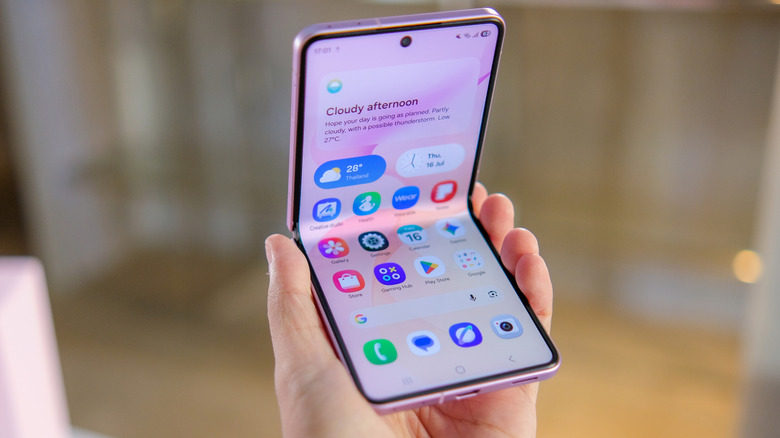
The wider form factor of the iPhone Duo seems to be where the industry is headed, with many Android manufacturers adding passport-style foldable options to their lineups. However, flip phones continue to enjoy a place in the foldable market, and Samsung's Galaxy Z Flip 8 is one of the best you can get. It's powered by the Snapdragon 8 Elite Gen 5 SoC and 12 GB of RAM, and starts at $1,200 for the 256 GB variant.
Aesthetically, not much has changed on the outside. You still get the edge-to-edge cover display that wraps around both cameras. Being a squarish panel, it's best suited for quick interactions like controlling music playback or checking notifications. This time around, however, you can use the cover display to interact with more of your phone. You can swipe up to reveal the app drawer, swipe down to access notifications, and even use the recent apps switcher to jump between apps.
Camera performance is decent, but it doesn't match the optics that regular candybar flagships offer. In PhoneArena's review, the device narrowly beats the Motorola Razr Ultra, which is another compelling flip-style offering on the market. The Galaxy Z Flip 8 is a bit thinner and lighter than before and comes with a similarly reduced crease as the Galaxy Z Fold 8. While it is more expensive than its predecessor, it is still considerably cheaper than the iPhone Duo and can be a good first foldable for most people.
4. Xiaomi 18 Fold
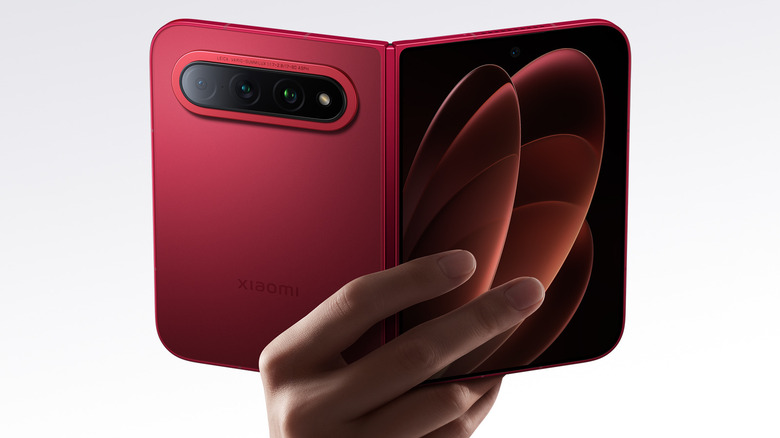
Xiaomi makes some of the most feature-rich Android smartphones, even if it means some of them unapologetically borrow hardware and software design cues straight from Apple. That said, Xiaomi's phones do tend to outdo their sources of inspiration in other areas. Announced just two days before Apple's event, the Xiaomi 18 Fold is probably the closest you can get to the iPhone Duo in the Android world, at least in terms of design. In fact, both foldables are exactly the same height, down to a tenth of a millimeter.
Both displays on the Xiaomi 18 Fold are 120Hz LTPO AMOLED panels, support Dolby Vision and HDR10+, and get brighter than the iPhone Duo at 4,000 nits of peak brightness. Xiaomi is using its own Xring O3 chipset inside the 18 Fold, which is built on a 3nm process. It might not outperform Apple's A20 Pro SoC in raw benchmarks, but reports indicate that the Xring O3 delivers around the same performance as the Snapdragon 8 Elite Gen 5 while being noticeably more efficient.
The Xiaomi 18 Fold also one-ups the iPhone Duo when it comes to camera versatility, offering a 50-megapixel 3x telephoto lens in addition to its 200-megapixel wide and 50-megapixel ultrawide shooters. The phone runs Android 17 with Xiaomi's HyperOS 4 interface. Xiaomi doesn't officially sell its phones in the U.S., but if you're willing to splurge on a foldable, importing the device is always an option. Carrier compatibility is something to keep in mind, though.
5. Motorola Razr (2026)
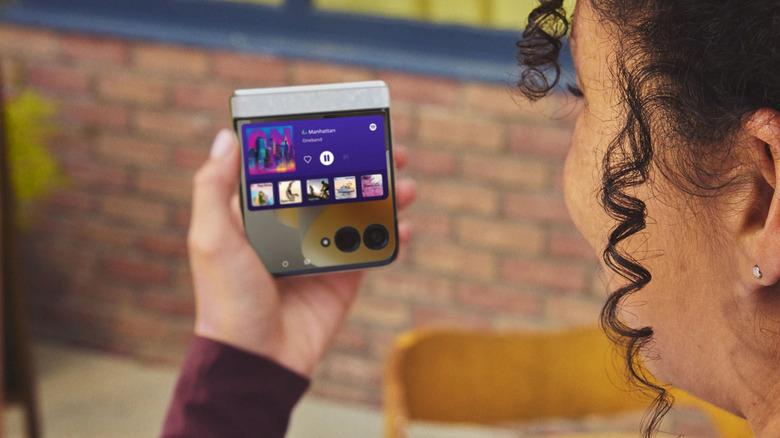
Given the complex engineering of foldables, we've come to accept that they command a premium over traditional smartphones. Most foldable devices tend to cost more than the best slab-style flagship phones, despite often making compromises in the camera and battery departments. If you're looking to buy your first foldable but don't want to spend upwards of $1,200 on one, the Motorola Razr (2026) is a pretty reasonable buy at $800. It doesn't have the most powerful processor or the fanciest displays, but it does pack in all the essentials you'd expect from a clamshell foldable in 2026.
The Motorola Razr features a smaller 3.6-inch cover display, and although it's AMOLED, it can only hit refresh rates of up to 90Hz. Still, like its costlier sibling, the Razr Ultra, and the Galaxy Z Flip 8, the cover display on the Motorola Razr wraps around its dual-camera system, making it look quite modern. The inner display is an LTPO AMOLED 120Hz panel that peaks at 3,000 nits.
Powering the phone is MediaTek's Dimensity 7450X SoC, which isn't built to compete in the high-end performance segment. It also comes with 8 GB of RAM and a starting storage capacity of 256 GB. PCMag called it the "best budget-friendly foldable yet," giving it a four-star rating. Plus, Motorola tends to run bundle deals, frequently throwing in a pair of wireless earphones and a Moto Watch with its devices, potentially making the Motorola Razr an even better value.
How we picked these foldables
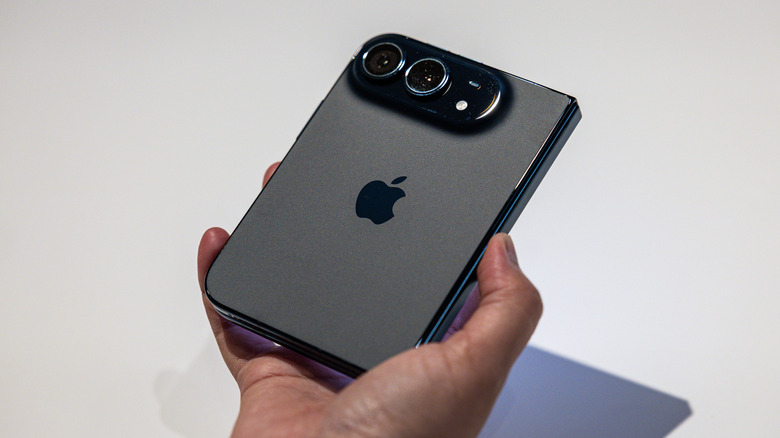
The iPhone Duo may be Apple's first foldable smartphone, but the product category has been in existence for several years now, giving us a healthy variety to choose from. When scouting options for this list, we referred to reviews by expert publications like Tom's Guide, PhoneArena, and PCMag. Our in-house review coverage also helped us narrow down contenders for lists like this one. Of course, regardless of which foldable you're picking up, it's worth keeping in mind that they are more prone to accidental screen damage than regular phones. App support also plays a huge role in the overall experience.