

Google Pixel 11 Pro Fold Review: The Most Durable Foldable
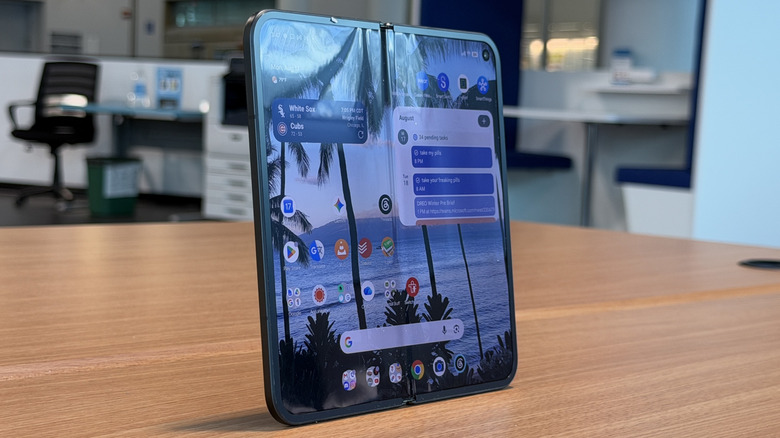
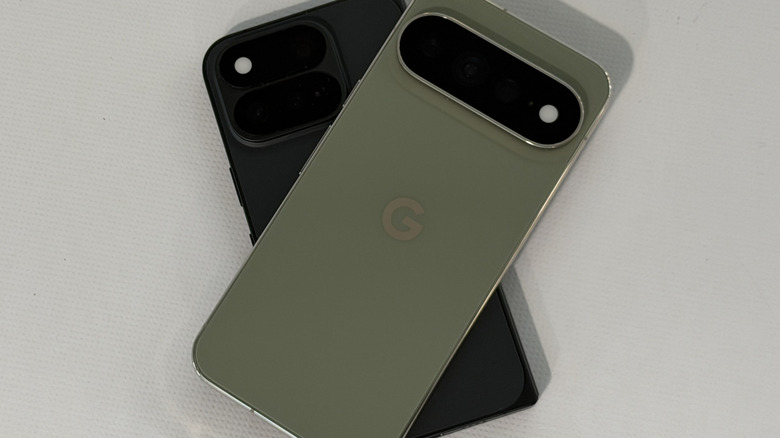
2026 has been a great year in the world of foldable smartphones. Oppo started it overseas with its basically creaseless Find N6. Then Motorola, who has been eating Samsung's lunch in the flip sector decided to go full fold with the Motorola Razr Fold, and really knocked it out of the park. Samsung showed up with the Galaxy Z Fold 8, a.k.a. the Short King. Now Google launched the Pixel 11 Pro Fold, and on the surface, it doesn't look too different from last year's Pixel 10 Pro Fold. But while last year's Fold was chunky and heavy, Google slimmed things down this year is a great way, while still retaining (and indeed increasing) the durability of the phone, to produce arguably the toughest foldable in the United States.
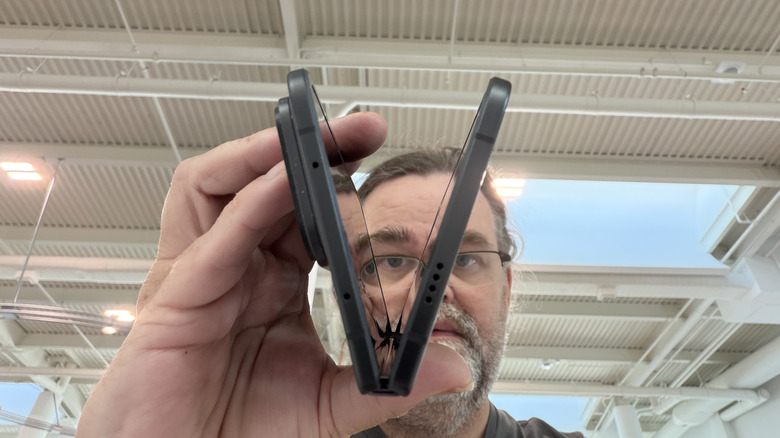
That's a big deal. I just returned home from a beach vacation, for which I left my Galaxy Z Fold 8 at home in favor of a candy bar phone specifically because of I was going to a beach. The value of the IP68 rating is huge. Google also added what it calls "nearly impossible to crack" back glass to the design, and between those two things, I think the Pixel Pro 11 Fold carves out a real niche for itself in a world that is still leery about foldables and fragility. I wish I could have taken this phone to Myrtle Beach, but instead I've been carrying it for three days, and these are my thoughts.
Slimmer, harder, faster
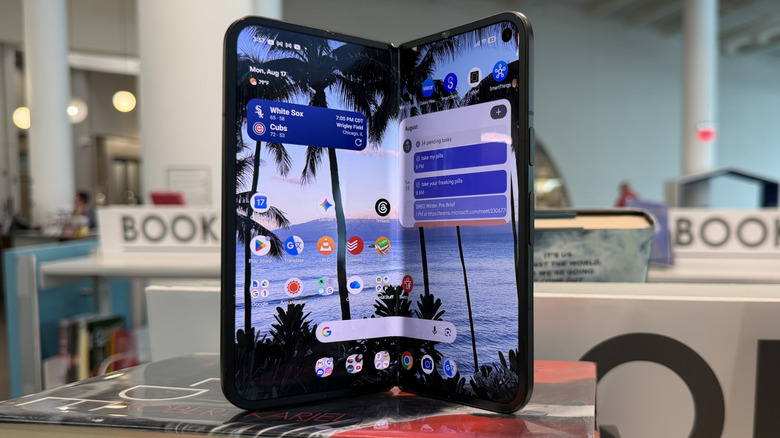
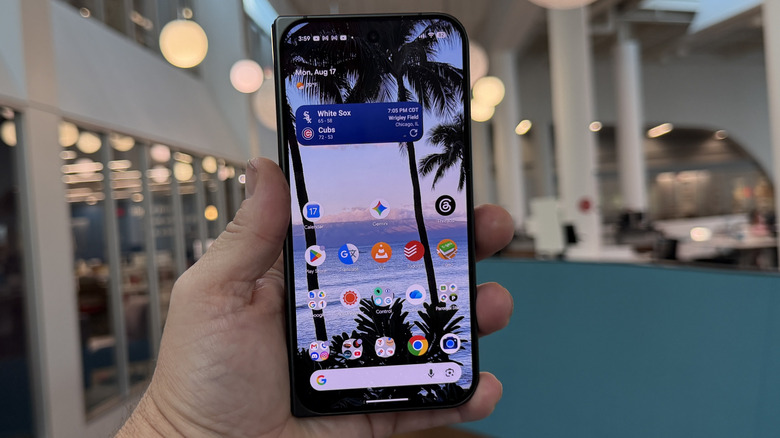
As mentioned, Google added a lot of durability to its foldable this year, which is great. Like last year, the inner screen of the fold is an 8-inch Super Actua OLED display with a 120 Hz refresh rate. The cover screen is a 6.5-inch Super Actua OLED display that looks and feels like a normal smartphone. This is becoming pretty standard in the industry, with one notable exception. Google still has the four rounded corners with "filler" material squaring off the hinge side; I'm not a fan. I think it looks a little meh, to be honest, but I get why it's necessary.
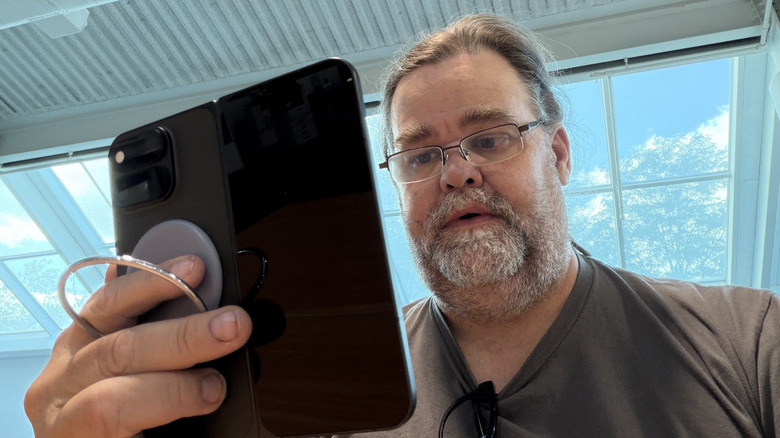
The phone comes with 16GB of RAM and between 256GB and 1TB of storage. It also packs a 4,750 mAh battery that charges at 30W wired or 25W wirelessly. Of course, Google continued the wonderful tradition of Pixel Snap, for magnetic wireless charging (and accessories). I still have my Snap Ring from last year, so I slapped it onto this phone as soon as it rolled in.
All this comes in a packages that is indeed a tad thicker (5mm) than Samsung's offerings and even Motorola's, but manages to come in under the Razr Fold by a few grams. That's including IP68 protection and magnets. I wish Google had gone with the same size battery as Motorola, but alas.
Software that wants to be there
On the software side, Google is bringing a number of Gemini-powered enhancements like proactive suggestions, and Magic Cue that came out last year. The problem is, none of the scenarios Google outlined actually worked for me. When someone messages you and asks you to make a reservation to a restaurant, you should get a chip that shows you the restaurant in Open Table. That did not work. You also should see a suggestion for the restaurant when you tap the search bar in Maps. That also did not work.
These suggestions would be nice, but, like every other AI tool a phone has offered, it's locked to Google's own apps — Messages, Maps, GBoard. In this particular case, that's okay, because I use Google's apps, But again, they didn't work, which is deflating. I want my phone to be smarter, but these features just aren't there. I recognize it's possible that I need to spend more time with the phone to get these to work properly — that was the case last year with Magic Cue, but if that's the case, devices should be sent to outlets sooner.
Thinking Out Loud
Two features that did work pretty well are called Rambler and Live Translate for media, though these features also only work in Google's apps — GBoard and YouTube. Live Translate for Media is pretty neat in that it will take a video in a foreign language and translate it to your language on the fly, but it does it in the voice of the person speaking in the video. There is a slight delay, which isn't surprising, but it was more of a delay than I was expecting. At first I tried a Bad Bunny video — that did not work at all, but when I found a few other videos of people speaking Spanish, the feature worked pretty well.
Meanwhile, Rambler is a feature I have mixed feelings about. GBoard's voice typing was already pretty good, and Rambler adds another dimension to it. Basically, you can ramble — talk in a very stream-of-consciousness manner — and Rambler will decipher it into cogent text, including lists if necessary. It's pretty cool, but my brain doesn't work like that. Perhaps, given time, I could train it to work that way, but as a writer, I have zero interest in that. I can definitely see how this might be valuable to some — just not me.
Speaking of Gemini
As for the camera, there are a couple of tools that are pretty neat that I could see getting a lot of use out of. The first is a suite of creator tools built into the camera app. This includes a teleprompter and an audio visualizer, both of which are fairly self-explanatory. The teleprompter allows you to type in a script — hello rambler? — and as you read it, the text advances automatically. That's a tool that is frankly long overdue for every phone ever.
The audio visualizer is another long overdue addition — it's a level meter for the camera. As the camera hears audio, the visualizer moves up and down.
Finally, there's Magic Capture, which is a feature I'm optimistic about. Magic capture allows you to shoot up to two minutes of video. From there, Gemini will pull five good photos out of the footage. Imagine a birthday party and you're filming singing to the honoree and Gemini pulls out the smiling subject, and a shot blowing out the candles and another with people clapping — I don't know — do people clap at birthday parties still?
I tested this in a scenario that wasn't celebratory. We were literally just walking down a path in a forest preserve. Still, the photos that Magic Capture produced from that footage seemed pretty good. I will be anxious to test this feature out in the future when I'm actually trying to capture slightly more significant memories.
That brings us to cameras

 Adam Doud/SlashGear
Overall, the camera situation with the Pixel 11 Pro Fold is a mixed bag. There's a 48-megapixel main sensor, a 10.5 MP ultrawide camera and a 10.8 MP 5x telephoto sensor. Last year, that wouldn't be a bad setup; this year, that's not the same story.
Fortunately, during the day, the camera is great. Portrait mode in particular is very good. It absorbs some stray hairs into the background blur, but it does so in a way that blends very well. Macro shots are good, but not amazing. There's a very shallow depth of field which is what you want to see in a macro shot, but there's a lack of detail that I'd normally like to see that just isn't there.
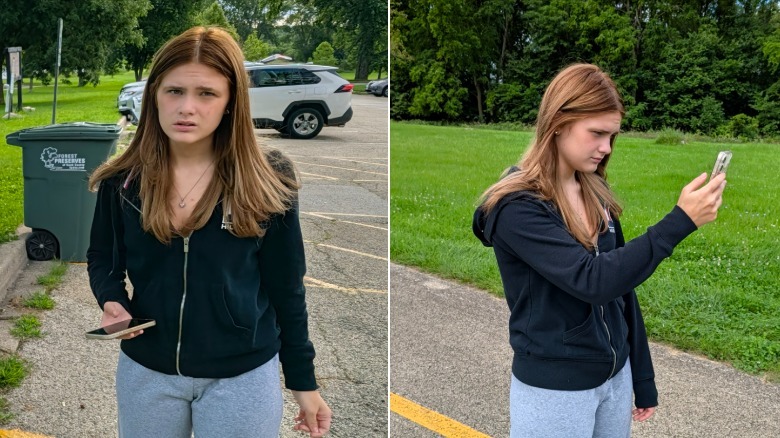
One thing that Google did particularly well is the use of the cover screen for main camera selfies. When you enable the option, the back screen gets disabled entirely, and the camera functions just move to the cover screen, so you can hold the phone out and hit the shutter, press the volume key to take the shot, or hold up your palm with fingers closed to trigger a shot. Disabling the inside screen is the right move, because in the past, I have struggled with this mode by accidentally triggering a shot or shifting focus just by holding the phone.
 Adam Doud/SlashGear
Zoom is good up until 5x and falls off quickly after that. Similarly, the ultrawide sensor is fine, but you don't capture nearly the detail you can get with the main sensor. It really feels like Google just cheaped out on the cameras here, and that's a shame, especially when night falls.
Night photography and videography isn't great
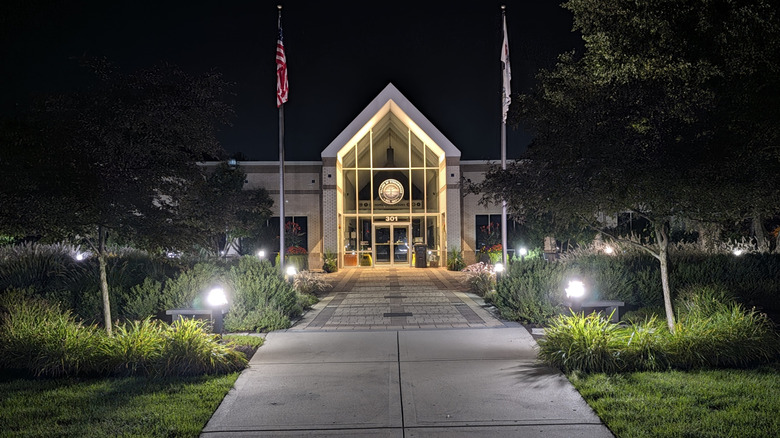
At night, the cameras are pretty bad. Google sped up the ability to take night sight photos, and to its credit it made the process shorter — a matter of a few seconds. But the results are just not good. The main sensor is your only sensor — forget the others exist. Even the main sensor is not amazing. Light sources are absolutely terrible balls of white surrounded by blobs of uneven color bands in final processed images.
 Adam Doud/SlashGear
Video is actually worse. Dark videos are grainy with noticeable banding around light sources. Banding is when you get a dithering effect and you can see stripes of various shades that transition from light to white colors. There's little stabilization as well, even with a subject in frame. Good photos are possible as long as your subject remain absolutely motionless and there are no light sources in the frame. Anything beyond that is frankly not good.
Google used to be the go-to company when it comes to mobile photography and that just simply isn't the case anymore, which is a shame. Google needs to refocus its efforts on the actually physical lenses rather than relying too heavily on processing after the fact.
Pixel 11 Pro Fold Price, Availability, and Verdict
Unfortunately, I didn't have much time with this phone before the review came due, so I can't really speak about performance or battery metrics. What I can say is that they both seem good. I didn't notice any lag in any apps I ran and I went to sleep with the phone at around 50% regularly. Bottom line, I suspect both of these will be fine, but not amazing, and if more usage reveals something else, I'll be sure to update this review accordingly.
That said, the phone retails for $1,899.99 in the Google Store online. For that price you get good durability, software with some solid potential, and a camera that works as well as the light it's capturing. I keep coming back to the durability aspect. This is a phone that will last a long time — seven years of OS, security, and Pixel Drop updates. That's a long time to use this phone. I like that. But I also keep coming back to the camera which in a vacuum isn't bad, but in a world with two other foldable options with measurably better cameras.
So, it comes down to priorities. If you think IP68 resistance is important, this is the phone to buy. If you value cameras, then the Motorola Razr Fold is the choice. If you like new form factors, then the Galaxy Z Fold 8 is your best move. This phone has its niche, and durability isn't terribly sexy, but it's no less important than the others.