

4 Old-School Flip Phones That Scream Nostalgia
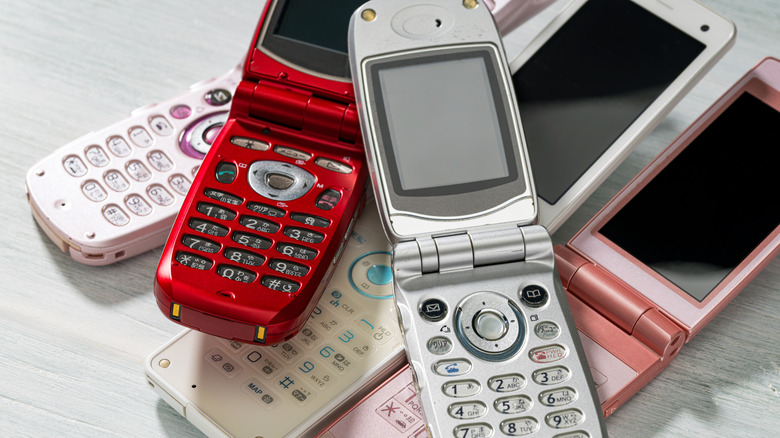
Angrily hitting the End Call button on modern cellphones is rarely satisfying, especially if you remember the days of slamming down the receiver or even snapping closed your first flip phone. Of course, today's smartphones have plenty to offer, from advanced photography features to real-time navigation. In the modern hustle and bustle, however, some long for the days of simpler cell phones.
Foldable phones are seeing a bit of a comeback today — even Apple is getting in on the game. But the iPhone Duo and the Samsung Galaxy Z Flip8 are much more advanced than the flip phones you may remember from the late 1990s and the early 2000s. Despite the plastic screens and clunky texting, however, those old-school phones had charm, and no one can deny how satisfying it was to snap one closed.
One of the first clamshell flip phones was the Motorola StarTAC. Other manufacturers quickly followed, and soon, it was the ultimate must-have. Additions like color screens and cameras raised the bar, but flip phones got left in the dust once smartphones came along. Here are four phones that represent the peak flip phone era.
LG VX-6000
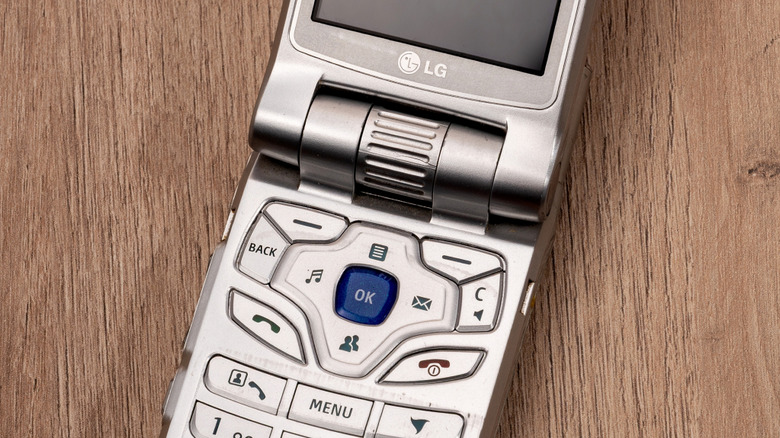
The VX-6000 was the first camera phone LG made for Verizon Wireless subscribers. It was one of the earlier camera phones and part of the stunning transformation of cell phones. And sure, it could only hold 20 photos, but you could snap a selfie! Some of those 0.3MP photos may still be floating around on your laptop somewhere, and though you'd be aghast at the image quality today, it was a novel concept two decades ago.
The VX-6000 had a stylish blue-and-silver color scheme and weighed just under four ounces, making it easy to slip into your pocket. The external screen displayed useful information including signal strength, a battery indicator, and even caller ID. When you flipped it open, it had a large, six-line color display, and you could personalize it with a color scheme and wallpaper. Much like smartphones today, you could even use one of those 20 photos as a background.
If you look down on early flip phones for being bare-bones, you may be surprised to learn the VX-6000 offered more than voice services. It had two-way SMS texting, an onboard phone book, an alarm clock, a calendar, a calculator, and your choice of 31 ringtones.
Motorola Razr V3
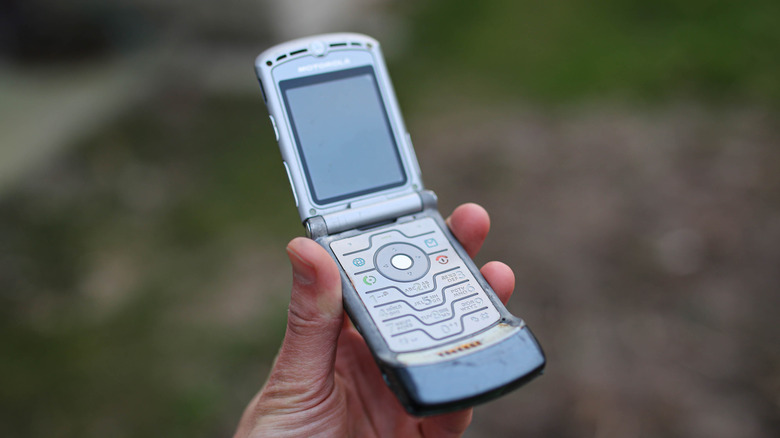
Though the Motorola Razr debuted in 2004, it captures the ultimate flip phone aesthetic. It was not only extremely popular, but its edgy look also reshaped the landscape of mobile phone design. It was slim, silver, and offered technology never before seen in a flip phone. It had a flat, electroluminescent keypad that glowed in the dark. When it was first released, the etched keypad was only made by one supplier. The external screen didn't protrude like competitors' screens, and it was protected by glass.
The Razr V3 could take both photos and videos, though modern users would be disappointed to learn that it didn't have a dedicated selfie camera. The call records would remember your last 10 dialed and 10 received phone calls, along with a missed call history. You could download MP3 ringtones and games. You could also text and instant message your friends, though you had to rely on the numeric keypad, a skill that few possess in 2026!
We're now accustomed to phones that cost four digits, but the Razr's original $1,000 price tag was shocking at the time. That's about $1,800 today, or more than the new Apple iPhone 18 Pro. The price was lowered about a year later, and eventually more than 100 million original Razr V3 models were sold. Today, Motorola still sells flip phones bearing the Razr name.
Ericsson T28
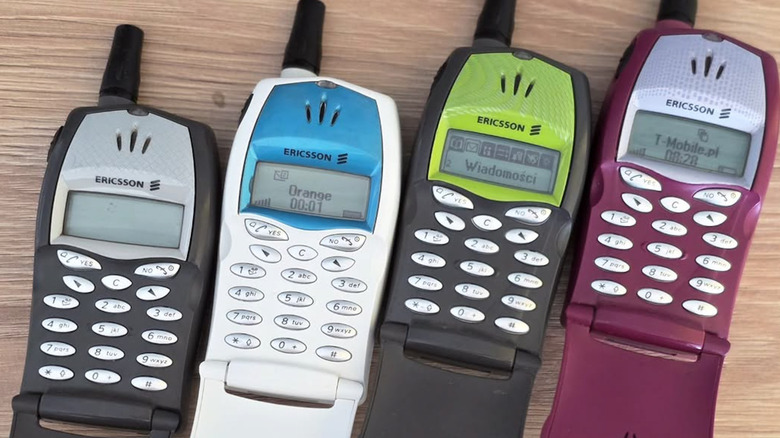
Modern cell phones come in all sorts of colors and designs, and you can always liven them up with a bright case. It was a different story in the early days of mobile phones, when most were only available in black, gray, or silver. Ericsson shook things up a bit in 1999 when it released the T28 in four colors that included slate blue and beige. These may seem tame compared to vibrant hues like the bright Hibiscus found on the Google Pixel 11, but the T28 exhibited other unique qualities.
Today, many of us unlock our phones using Face ID, but the T28 had a tactile button on the side that users pushed to open the flip plate. This flip plate covered the keypad when the phone was closed, and it was the lightest and thinnest phone at the time. Modern mobiles have endless ringtone options, but in the late 90s, the ability to compose your own ringtone on the T28 using the My-melody menu was a premium feature. You could also play Tetris or Solitaire while on the bus to work, and it could both send and receive SMS text messages.
The T28 was the first phone ever to use a lithium polymer battery. This new technology allowed Ericsson to design the phone with an arched look that stood out in comparison to the brick-like cell phones of the 1990s.
Motorola StarTAC
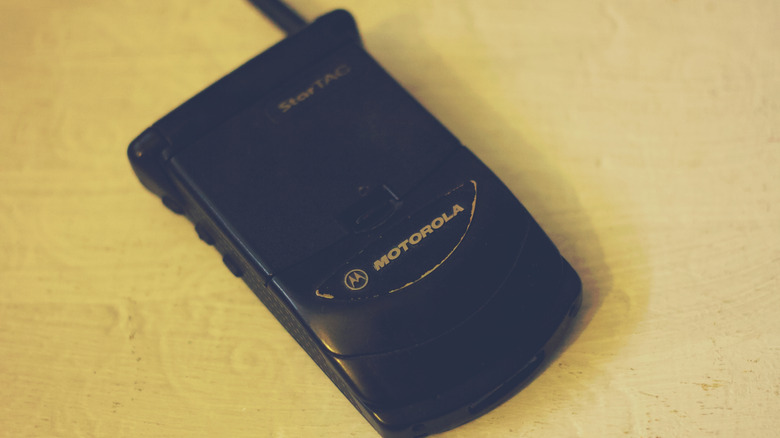
Motorola's StarTAC was advertised as a "wearable cellular telephone" and hit shelves in 1996. Not only was it the smallest cell phone in the world at the time, but it was also the first pocket flip phone. To cap off its series of pioneering milestones, it was also the first phone to offer a vibrate mode. The StarTAC was designed with the microphone and keypad on the lower half. When you opened the clamshell, the earpiece swung up into position, and there was a stubby antenna on top. The 12-key number pad had raised buttons, and the monochrome screen was small.
The original StarTAC was made from black plastic and sold for a whopping $1,000. Its clamshell design was very reminiscent of the handheld communicators from the 1960s Star Trek series, and this small, cool design was a hit with consumers. The earliest models only had about 60 minutes of talk time, which seems laughable today, but for the most part the design of the phone has held up remarkably well over 30 years.
If you spotted a Rainbow Edition of this phone in a thrift store today, you could be forgiven for mistaking it for a children's toy. This special edition featured the same clamshell design in a multitude of bright colors. Ultimately, Motorola released several versions of the StarTAC, eventually adding extended battery life and even a color screen. The line was retired after the StarTAC III, released in 2007, failed to take off, but many people fondly remember the StarTAC as the first true pocket cell phone.