

5 4-Cylinder Cars That Can Out-Tow A V6
Towing is a lot more niche than truck commercials make it look. A Strategic Vision owner survey covered by The Drive found that three out of four truck owners only hitch up a trailer once a year at most. Still, a big group of people do tow loads with their trucks on a regular basis, and RV makers alone shipped more than 306,000 towable examples in 2025. Add in the boats, horse trailers, utility trailers, and ATV haulers rolling down the highway every summer weekend, and it's clear that towing capability matters to a lot of buyers, even if the average pickup owner never uses it.
The people who do tow tend to be serious about it, and they need a vehicle that can handle a loaded trailer without breaking a sweat. So what should that vehicle look like, and what should be under the hood? Everybody knows that heavy-duty V8 diesel trucks excel at towing, as some of these beasts can even tow up to 40,000 pounds. More often than not, a superior towing experience has to do with the size of the engine.
The bigger and more powerful the engine, the greater the chances that the vehicle in question is going to be good for towing. However, the modern-day cylinder count is not what it used to be. You don't have to buy a V8 or even a V6 to be fast, and there are plenty of turbocharged 4-cylinder engines that leave their V8 rivals in the dust. But can you say the same for towing? Well, it looks like you can. Here are five 4-cylinder cars that can out-tow a V6.
Chevrolet Colorado vs Nissan Frontier
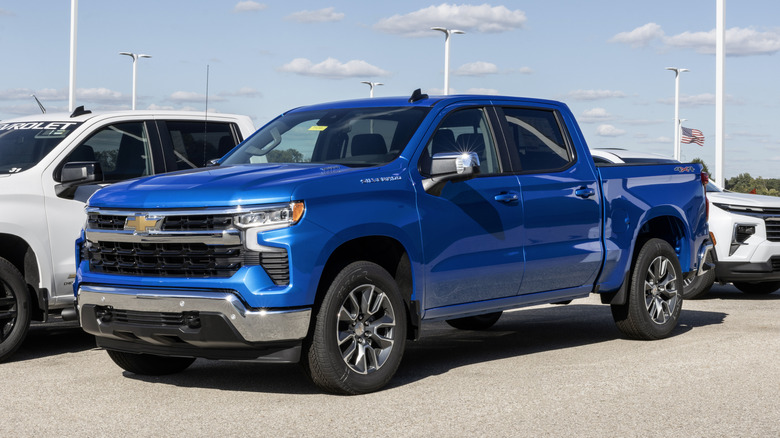
For years, the formula for a midsize truck that could tow was simple: pair it with a V6. The Chevrolet Colorado ignores that formula completely and goes its own way. Every 2026 Colorado gets the same turbocharged four-cylinder, which Chevy markets as the 2.7L TurboMax. Its output is 310 hp and 430 lb-ft. There is no other engine to choose.
The Colorado's best tow rating, 7,700 pounds, is available on the Work Truck, LT, Trail Boss, and Z71. The Work Truck and LT only get there with the Advanced Trailering Package, and are rated at 3,500 pounds without it. The ZR2 is limited to 6,000 pounds, and the ZR2 Bison to 5,500. Now compare that to the Nissan Frontier, which still relies on a V6. Nissan lists the 2027 Frontier at 310 hp, the same output as the Colorado, along with 281 lb-ft of torque and a maximum towing capacity of 7,150 pounds.
The horsepower figures match, but the Chevy's turbo four makes 149 lb-ft more torque, which works out to roughly 53 percent more. It also tows 550 pounds more than the Frontier at its best, which is an increase of about 8 percent, and it does that with two fewer cylinders. Of course, the Frontier's V6 has its own appeal, and the 2.7 TurboMax has its own share of problems. Still, if the goal is to pull the heaviest trailer possible, the Colorado shows that a four-cylinder can beat a V6, at least when the V6 in question is the one in the Frontier.
Land Rover Defender vs Jeep Grand Cherokee
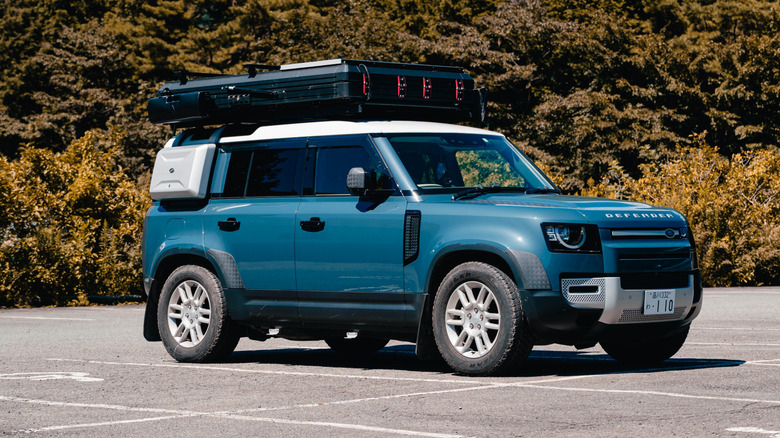
Although most people associate trucks with towing, an SUV can also tow, and plenty of buyers would rather skip the bed. For example, the Land Rover Defender 110 is a five-door SUV, and its P300 engine is a 2.0L turbocharged four-cylinder making 296 hp and 295 lb-ft. Land Rover dealer tow charts put that version at 7,716 pounds. The Defender's 8,201-pound figure belongs to its six- and eight-cylinder versions, so the four-cylinder is the one being measured here. Even so, the smaller engine gives up only 485 pounds to its bigger siblings.
Its V6 opponent in this case is the Jeep Grand Cherokee. The Grand Cherokee is a more family-oriented vehicle, but it can still do most of the stuff you expect from an SUV. Under the hood is the iconic 3.6L Pentastar, rated at 293 hp and 260 lb-ft. Jeep puts the towing limit at 6,200 pounds. The Defender is up 3 hp and 35 lb-ft of torque, which works out to about 13 percent more twisting force. It also handles 1,516 more pounds than the Grand Cherokee, roughly 24 percent more trailer, and it does that with 1.6 liters less displacement and two fewer cylinders.
We noted the Land Rover Defender because it is actually one of 2025's 13 SUVs with the most towing capacity. Besides just being good at towing, the Defender is largely known for its superior off-road credentials. So if you want a family hauler that can pull a big trailer and still handle a trail, a turbo four SUV makes a convincing case against one with a V6.
Ford Ranger vs Honda Ridgeline
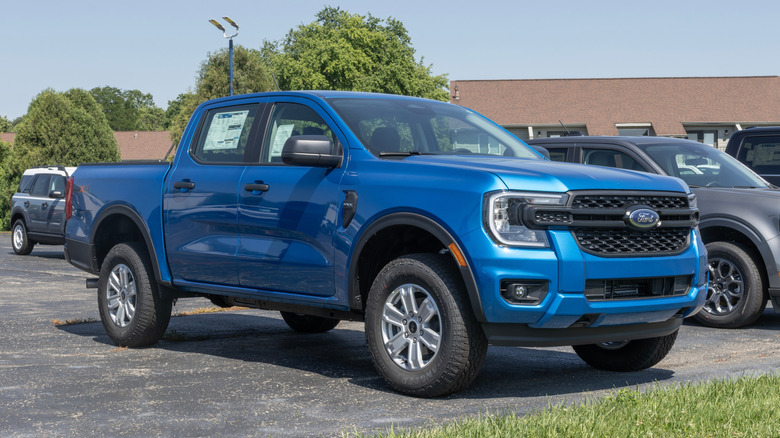
The Ford Ranger is a great example of how capable a four-cylinder can actually be. Its 2.3L EcoBoost is a four-pot that's rated at 270 hp and 310 lb-ft. This may sound modest on paper, but when you hitch a trailer to it, this four-pot can out-tow more powerful V6s. Ford rates the 2.3L Ranger for up to 7,500 pounds of towing. That figure requires Ford's Trailer Tow Package, which isn't standard on every trim.
The Honda Ridgeline is a fitting rival of the Ford Ranger, since it's another midsize pickup. Honda lists its V6 Ridgeline at 280 hp and 262 lb-ft, with a towing capacity of 5,000 pounds on every trim. The V6 does come out ahead in horsepower by 10, but the Ranger's turbo four makes 48 lb-ft more torque, which is about 18 more more. The gap in towing is far bigger than that.
At 2,500 pounds more than the Ridgeline, the Ranger can pull 50 percent more trailer than the Honda's V6, and it does so with two fewer cylinders. To be fair, the engine isn't the only thing that decides these numbers. Ford also sells the Ranger with a 2.7L EcoBoost V6 that makes 315 hp and 400 lb-ft, yet its maximum towing figure lands at the same 7,500 pounds as the four-cylinder.
In other words, the extra cylinders buy Ford's truck nothing in this department, and they don't explain why the Ridgeline's V6 trails the Ranger's four-cylinder so badly. If you want a midsize truck that can haul a camper or a boat without a V6 under the hood, the Ranger's four-cylinder makes a strong case, as it out-tows the Ridgeline's V6 by a wide margin.
Chevrolet Silverado vs Ford F150
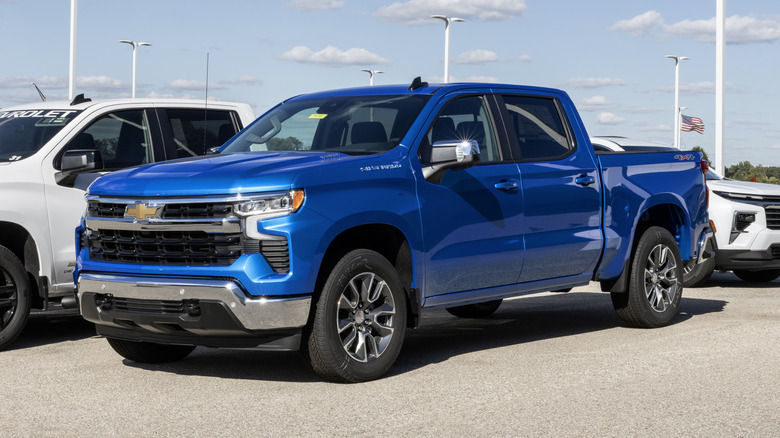
A full-size truck used to mean a V8 under the hood, but these days, even a four-cylinder engine can handle just about anything the average Joe would ever need to tow. The smallest Chevrolet Silverado 1500 engine is a 2.7L turbocharged four-cylinder that makes 310 hp and 430 lb-ft. Chevy rates it for up to 9,500 pounds of towing with a regular cab, a long bed, and two-wheel drive.
With the crew cab and different drivetrain options, the numbers run from 9,000 to 9,300 pounds. The rival here is the Ford F-150 and its 2.7L EcoBoost V6, which makes 325 hp and 400 lb-ft. Both engines offer 2.7 liters of displacement, so this is a fair fight. Ford advertises the V6's maximum towing at 8,400 pounds with two-wheel drive and 8,200 with four-wheel drive.
For the 2027 model year, the 2.7 EcoBoost is gone from the F-150, replaced by a 3.0L V6 with the same 325 hp and 400 lb-ft. That said, the V6 has 15 more horsepower, but the Chevy's turbo four makes 8 percent more torque. Translated to towing, the Silverado's best number tops the Ford's by 1,100 pounds, or roughly 13 percent. It shows once again that you don't need six cylinders to be able to tow a lot.
Moreover, if you switch to the crew cab, the 4WD Silverado's 9,000 pounds still beats the 4x4 F-150 by 800. This isn't a clean sweep for four-cylinders, of course. Ford also sells the F-150 with a 3.5L EcoBoost V6 that's rated for up to 13,500 pounds, which the Silverado's 2.7L can't touch. But at the same displacement, the Chevy's four-cylinder out-pulls Ford's V6.
Toyota 4Runner vs Honda Pilot
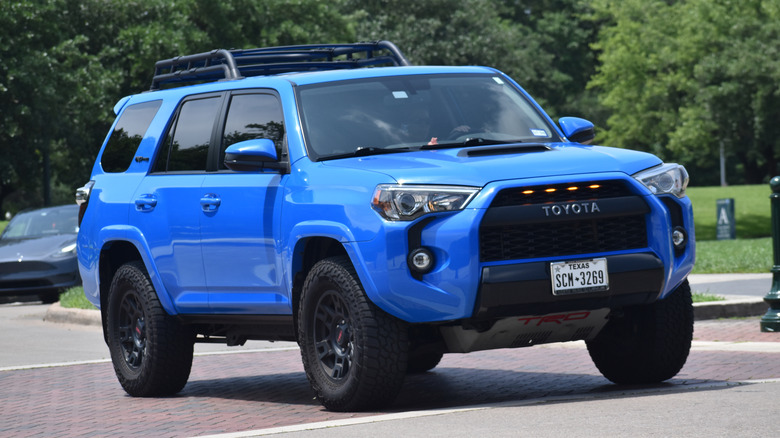
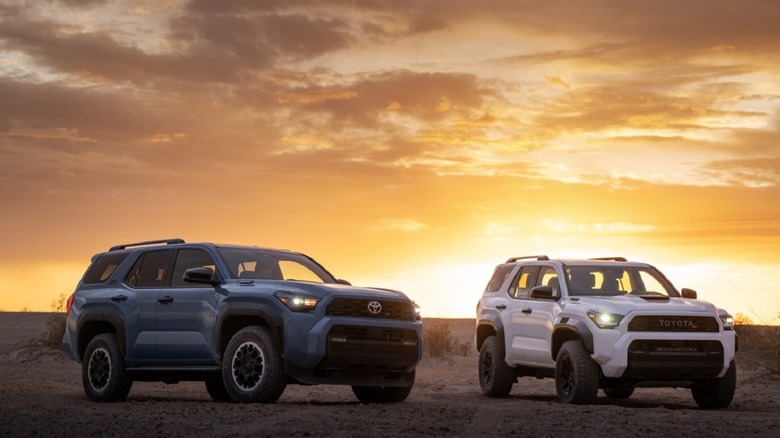
The Toyota 4Runner also gives us a good example of what a four-pot can do when put against a V6 with the same brief. The 2.4L i-FORCE turbocharged four-cylinder pushes out 278 hp and 317 lb-ft. Toyota rates the 2.4 4Runner for up to 6,000 pounds of towing, which is a lot of trailer for an engine this compact. When we put this engine against the 285 hp and 262 lb-ft of torque of the Honda Pilot's 3.5L V6, the 4Runner's four-pot takes the cake.
Specifically, Honda lists the AWD Pilot's 3.5L V6 with a towing capacity of up to 5,000 pounds when equipped with the required towing equipment. Although the V6 comes out ahead in horsepower, the 4Runner's turbo four makes 55 lb-ft more torque, which is about 21 percent more. The gap in towing is just as clear. At 1,000 pounds more than the AWD Pilot, the 4Runner can pull 20 percent more trailer, and it does so with two fewer cylinders and 1.1 liters less displacement.
To be fair, the engine isn't the only thing in play. Toyota also offers the 4Runner with a 326-hp, 465 lb-ft i-FORCE MAX hybrid, yet Toyota dealers put the three trims that come standard with it at 5,800 pounds of towing, which is 200 less than the four-cylinder trims. In other words, more power doesn't mean more towing here, so the Pilot's V6 likely trails for reasons that go beyond cylinder count.
If you want an SUV that can pull a boat or a camper without a V6 under the hood, the 4Runner's four-cylinder makes a strong case, since it out-tows the AWD Pilot's V6 by 1,000 pounds. Moreover, the 2026 Toyota 4Runner makes huge promises, but the variety of choice can make it difficult to pick the right trim for you.