

BMW Made The 2027 X5 As Different As Can Be, But Is It Better?
The human brain is hardwired to love a good story, and BMW has one of the best in the auto industry. In the 1960s, the automaker was staring off the edge of a cliff after its existing models failed in the chaotic postwar market. So BMW introduced the Neue Klasse (German for "new class"): small cars that emphasized engineering precision over traditional luxury excess. They quickly won over driving enthusiasts, and set BMW up for decades of motorsports success that made car fans love the Bavarian firm even more.
And for quite a while, BMW's image and bottom line were tied to the successors of the Neue Klasse, cars like the 3 Series. But things began to change in 1999 when BMW introduced its first SUV—the South Carolina-built X5. Over the ensuing 25 years, SUVs came to dominate the market, and BMW's sales charts. But while BMW's SUVs have always been pretty good, making the same type of car that everyone else is making has never been a path to success for this automaker.
To recapture some of that Neue Klasse magic, BMW is introducing a new new class. Only this time it's a family of EVs with next-generation tech. And while the redesigned 2027 BMW X5 isn't officially part of that family, it's borrowing that tech in both gasoline and—for the first time—all-electric iX5 forms to differentiate itself from the many midsize luxury SUVs on the market.
BMW deserves credit for creativity, but that alone doesn't make a good design
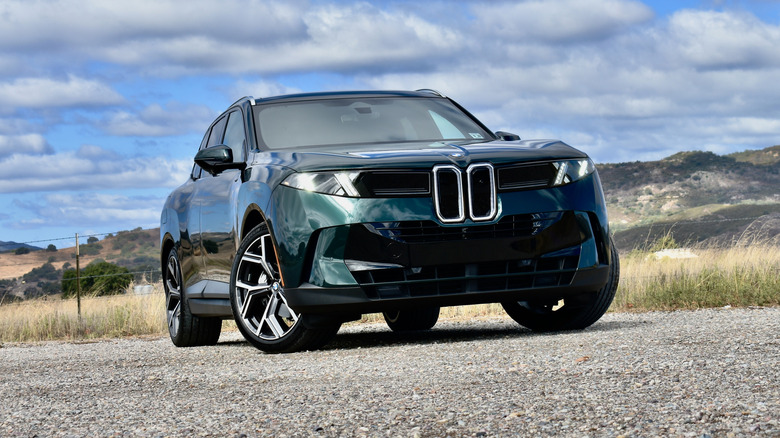
That BMW is putting extra effort into the new X5 is apparent from the design. Over its four previous generations, the X5 was always conservative, design-wise, applying whatever the current form of BMW's trademark twin-kidney grille and quad headlights was to a traditional boxy SUV shape. Not this time.
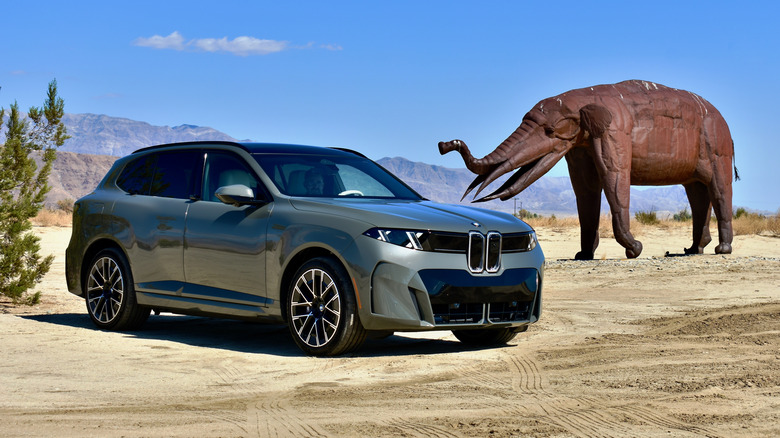
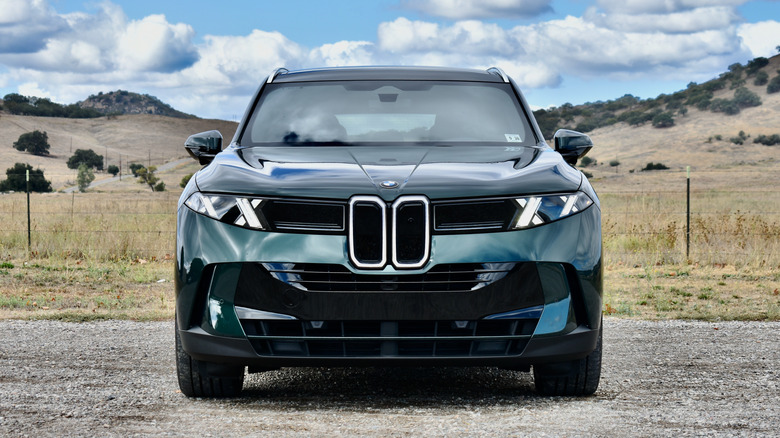
The fifth-generation X5 looks like an enlarged version of the iX3, the smaller SUV that launched the Neue Klasse line. Bold C-shaped fenders, a sleeker roofline, and wing-like taillights transform the X5 into something that won't be confused with rival luxury SUVs. The door handles have been replaced with tiny "winglets" (that require a complex system of redundancies). But while it's admirably different, the new X5 (and its all-electric iX5 counterpart, which has identical styling) isn't exactly handsome.
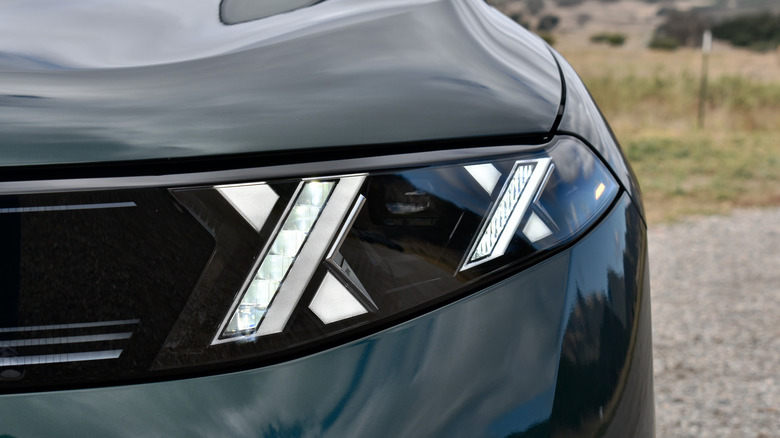
It's the front end that's the problem. At a preview in Munich earlier this year, designers said proudly that the redesigned X5 has the highest front end in the model's history. That helps give the X5 proper SUV proportions, but means the front-quarter view is pretty ungainly. I'm glad BMW shrunk the grille, which now looks a lot like the ones on the original Neue Klasse models. But the combination of smaller grille and taller front end leaves a lot of extra space that isn't adequately filled. The way the headlights (which can be programmed with a too-on-the-nose "X" shape) bow out also gives the X5 a goofy visage.
The interior is a clean break from luxury-car tradition
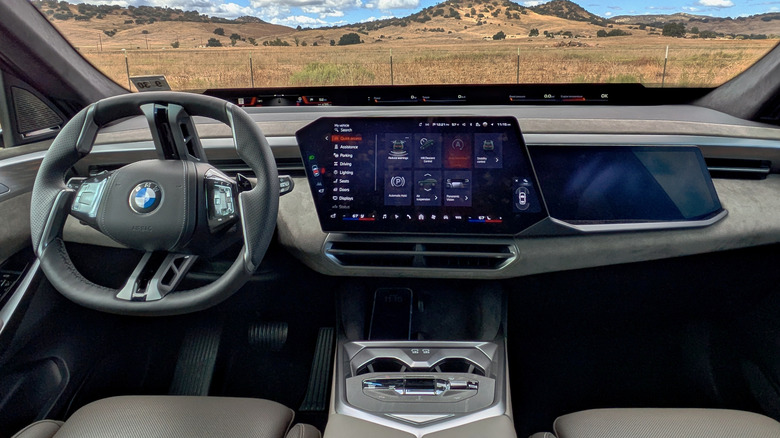
Like the exterior, the interior will be unrecognizable to anyone stepping out of a current-gen X5. That's mainly because BMW installed its new Panoramic Vision display (another Neue Klasse feature), which runs the full width of the dashboard, just below the windshield. Below it is a conventional touchscreen and an (optional) front-passenger screen that are nested together in a more stylish way than the screens in rivals from Audi and Mercedes-Benz.
The panoramic display necessitates a new steering wheel with a flat top to avoid blocking it, while vertical spokes and molded hand grips make the wheel look futuristic. So do the haptic touchpads, which automatically reprogram based on what features are being used. Instead of dreary piano black, they're clear, making the wheel look even more like a sci-fi prop.
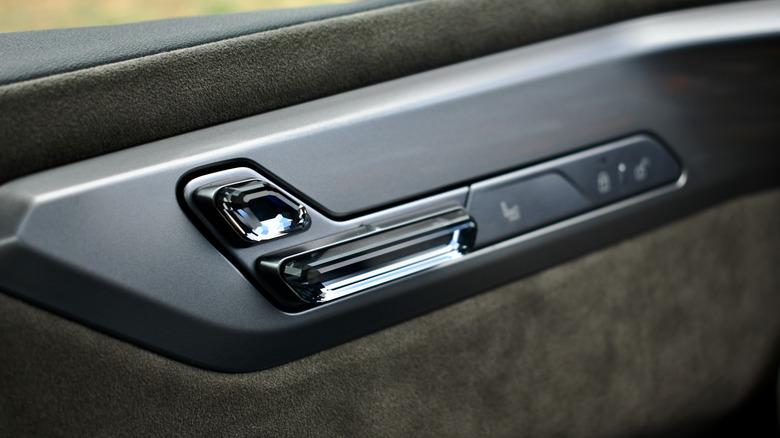
Some of the buttons on the center console are made from slate, while others can be rendered in crystal, along with the seat controls on the doors. All of these creative elements come together to give the cabin a truly luxurious feel, but in a modern way that doesn't reek of cigar smoke. And all the expected convenience features are still on the menu, from massaging front seats to automatic doors on the iX5.
Tech that works, but still needs to be dialed back
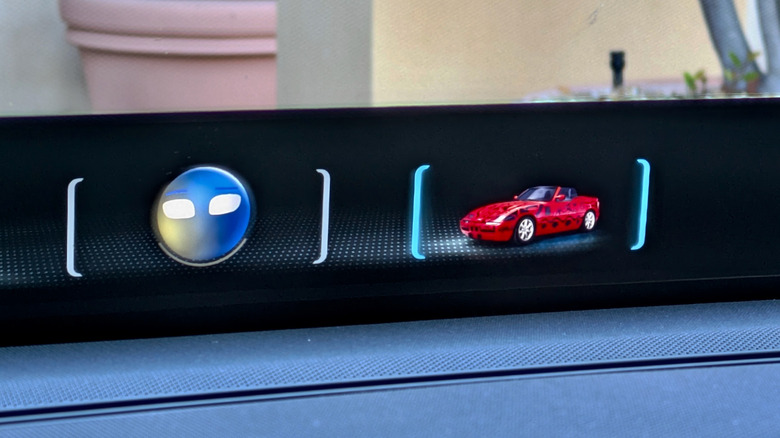
Automakers are so convinced that customers want more screens that usability is often a secondary concern. BMW's panoramic display appears to be a step in the right direction. Lincoln released a similar display on the Nautilus a couple of years ago, but BMW's is thinner and has a 3D effect that makes it easier to read. Locating the display at the base of the windshield also means the driver is looking ahead, rather than down. And moving some information to the right declutters that view compared to a regular instrument cluster.
The 17.9-inch touchscreen is the primary control interface (there is a volume scroll wheel, at least) and it's generally easy to use. The new Operating System X brings nicer-looking graphics and a new home-screen layout that overlays widgets on a map, similar to Mercedes' "zero-layer" concept. That eliminates some menu exploration right off the bat. Wireless Apple CarPlay and Android Auto return as well.
However, the large number of software-based features means that you'll still spend plenty of time searching through menus. The natural-language voice-recognition system helps with some of that; simply asking it to find a settings menu to switch the panoramic display from metric to 'Murican actually worked. AI integration doesn't add much, though, nor does the 14.6-inch front-passenger screen. But at least it won't be missed if it's deleted, unlike in an Audi or Mercedes.
First-ever iX5 EV headlines the powertrain lineup
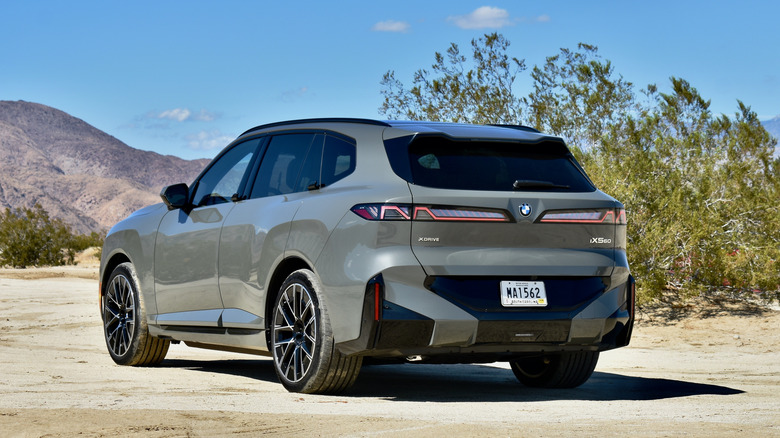
The big news, powertrain-wise, is the addition of the iX5 EV. Launching in dual-motor all-wheel drive 60 xDrive form, it has 570 horsepower and 590 pound-feet of torque, which will get it from zero to 60 mph in 4.4 seconds, according to BMW. The iX5's 144-kilowatt-hour (usable capacity) battery pack uses cylindrical cells and cell-to-pack construction like the other Neue Klasse EVs, affording a BMW-estimated 435 miles of range. The iX5 can also DC fast-charge at up to 460 kilowatts, ensuring that big pack can still go from 10% to 80% charge in less than 30 minutes.
The gasoline X5 40 and X5 40 xDrive (with rear-wheel drive and all-wheel, respectively) continue with the familiar B58 turbocharged 3.0-liter inline-six and eight-speed automatic transmission. A new turbo increases output by 19 hp and 45 lb-ft of torque, to 394 hp and 428 lb-ft. Zero to 60 mph happens in a BMW-estimated 5.1 seconds, quicker than a six-cylinder Mercedes GLE 450 4Matic, but not the redesigned 2027 Audi Q7.
A plug-in hybrid X5 50e xDrive will follow these models, with 483 hp and a BMW-estimated 44 miles of electric range. A V8-powered M Performance model and a hydrogen fuel-cell version of the iX5 are further out.
Still the BMW of SUVs
With all the emphasis on design and tech, it's easy to forget that the X5 and iX5 are cars, and that cars are meant to be driven. Thankfully, BMW's engineers didn't forget.
I started the day of test driving in an X5 40 xDrive with the optional air suspension. It made a long highway drive down to some twisty roads less draining, and once there, the X5 did its best impression of BMW's classic sports sedans. In the corners, it felt smooth and nimble, not like a big vehicle struggling to keep up with the driver's inputs. As in BMW's other large models, impressively precise steering made that possible. The suspension also did a great job of keeping body motion in check, so the X5 didn't flop around as weight transferred from one side to the other while negotiating a corner. A Mercedes GLE or Volvo XC90 can match the X5's comfort, but not its handling.
The iX5 adds silent electric power, quicker acceleration, and an available active anti-roll system. On paper, it's the better car, but in practice it's perhaps too cool and collected. If the X5 is smooth, the iX5 is polished to the point of featurelessness. It did all of the same things as the gasoline X5, but didn't make them feel fun. That being said, the iX5 is a well-executed EV. You don't feel the extra weight of its battery pack, and regenerative braking is strong enough for one-pedal driving.
Driver-assist tech shows promise, needs improvement
At least from the perspective of people making decisions at automakers, how a car drives matters less than the sophistication of the driver-assist features that lighten the workload for people who don't care about such things. BMW's got that covered as well with its "Symbiotic Drive" strategy, which tries to keep driver aids in the background and anticipate the driver's intentions, rather than second-guess them.
BMW of course plans to tweak things over time with over-the-air updates, but one example I experienced out of the box is the more flexible approach to lane-keep assist. If you deliberately steer into the next lane, and look in that direction, without signaling, the system will intuit that you're trying to change lanes and activate the turn signal rather than try to force you back into your original lane.
The optional Highway Assistant system allows hands-free driving on divided highways, and you can even tell it to change lanes just by glancing at the appropriate exterior mirror. But it relies on driver-monitoring tech that I found to be overbearing and finnicky. Driving into the sun in late afternoon, the driver-monitoring cameras and infrared sensors failed to track me and issued numerous distraction warnings. When the system was working, it wouldn't tolerate even slight glances away from straight ahead. If BMW was so concerned about distraction, maybe it shouldn't have filled the cabin with screens.
2027 BMW X5 and iX5 verdict
X5 pricing is about average for a German midsize luxury SUV, starting at $71,250 for a rear-wheel drive 2027 X5 40 model. The all-wheel drive X5 40 xDrive starts at $72,650, and the X5 50e xDrive plug-in hybrid starts at $78,950. Compared to the base gasoline model, it's big step up to the 2027 iX5, which starts at $81,250 for the sole-available 60 xDrive spec.
Compared to past BMW models, there's a reasonable amount of standard equipment. Some notable features like leather upholstery and the more interesting paint colors are still optional, however. The X5's biggest rivals, the Audi Q7 and Mercedes-Benz GLE, also have standard all-wheel drive and can be equipped with third-row seats, although the latter isn't a necessity in this segment.
Most of BMW's rivals took a more conservative approach to design inside and out. The X5's styling might not be for everyone, but it's nice to see BMW try something different. The same goes for the interior, which remains very functional despite the novel dashboard layout. The gasoline X5 is also as nice to drive as ever, and the iX5's impressive range and charging performance should make it a good EV to live with.
This new X5 might not begin a new era for BMW like the original X5 or Neue Klasse, but it shows that same ambitious spirit.