

Was The Tesla Roadster Flip Real, Or An AI-Generated Stunt?
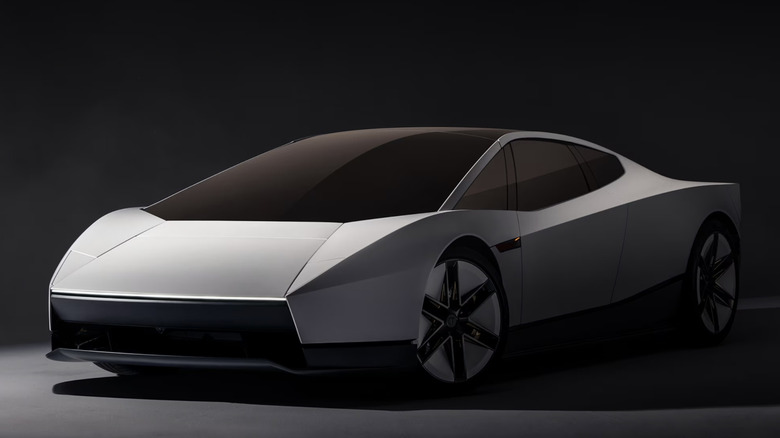
For people who have been eager to see what the new Tesla Roadster will look like, the wait is over. It's decidedly not the sleek, two-door supercar the world saw a number of years ago. It, in typical modern Tesla styling fashion, is a conglomeration of angles and flat surfaces. The profile is reminiscent of somewhere between a Ferrari Testarossa, Lamborghini Gallardo, and De Tomaso Pantera. There's also the obvious Cyberpunk and Blade Runner vibe.
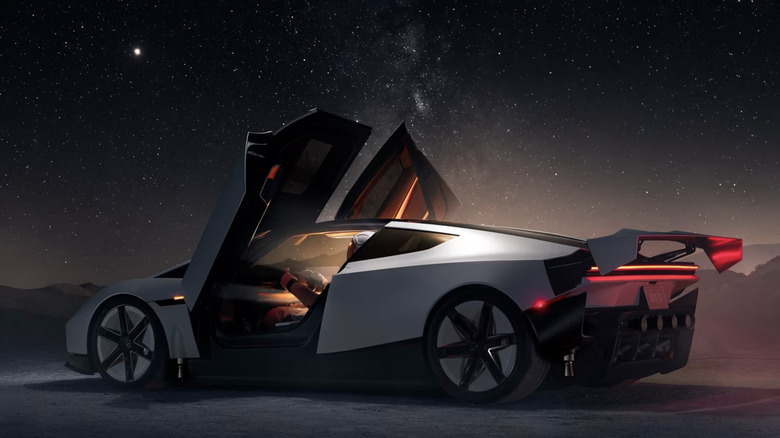
There's also active aerodynamics, a rear-wheel drive layout, scissor doors, and the whole nine-yards you would expect from a modern sports car. But, as you might have seen during the demonstration, the Tesla Roadster purports an ability to fly. It reportedly was shown, through the use of its "cold-gas thrusters," jumping and doing a kickflip over a Tesla Semi and other Tesla models.
Was the stunt AI-generated? It's very important to remember that Elon Musk also owns Grok, which powers X's (formerly Twitter) AI-generation. It likely wasn't AI-generated. A Tesla Roadster (or something approximating one) did do a kickflip and (probably) drive upside-down. As for whether or not those features are something you can expect to see on an actual production car in, supposedly, a few year's time? That's another question entirely.
Smoke and mirrors
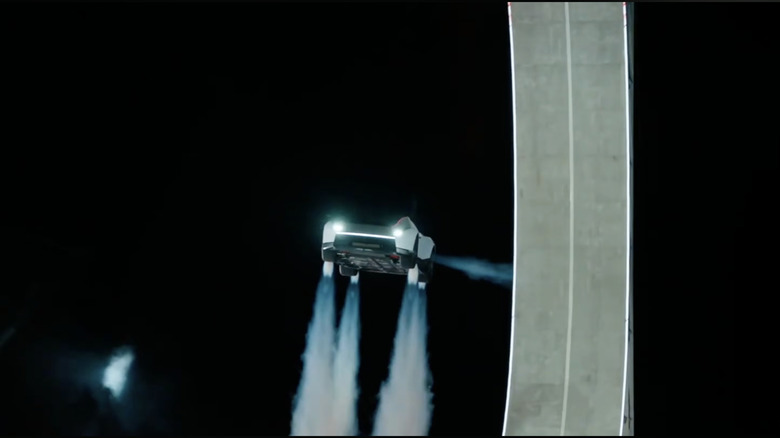
It's extremely unlikely that the Roadster shown during the stunt (and that's exactly what it was, a "stunt") was a production-ready car, or even one in late pre-production. There's just no possible way a car like that could exist in reality with the specifications laid out by Elon Musk and Tesla. The company and CEO have a very long track record of overpromising and under delivering. This is the same company that has only made one new car and a handful of updates in about seven years. So it pays to be a little incredulous about the claims that Tesla can deliver a vehicle entirely unlike a century-plus of cars (and some aircraft) before it.
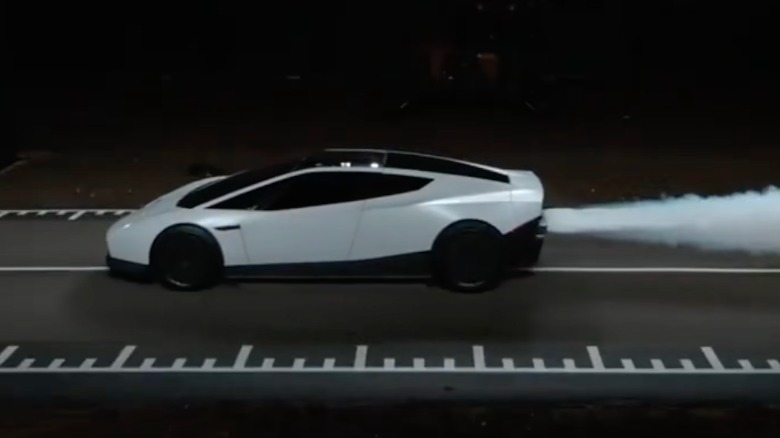
As for the car featured doing a kickflip? It was very likely a hollow or significantly lightened mockup built specifically for the feat. It was literal smoke and mirrors, or exactly what we have come to expect from Elon and Tesla; a lot of showmanship, very little concrete information. It was likely meant to wow diehard Tesla fans, get clicks on the internet, and boost pre-order deposits, which are upwards of $50,000.
Old and new tech
There are, in fact, cars that have shown a limited ability to drive upside-down and display unconventional aerodynamic abilities. The Chaparral 2J from the late 1960s and early 1970s used giant fans to provide downforce and suction. There's also the McMurtry Speirling fan car that made the rounds on the internet a few years ago. Fans for downforce are nothing new.
Very quick electric sports cars with sub-2 second 0-60 times are also not new. Cars like the Lucid Air Sapphire have been around for years, and cars like the Dodge Challenger SRT Demon 170 broke the two-second mark with a gasoline-powered engine.
The rocket thrusters are what you shouldn't suspend your disbelief for. Tesla claims there's a big storage tank behind the driver to store the gas used for the thrusters and that the flying/jumping version will only have one seat to accommodate additional thrusters for elevation, pitch, and yaw. That technology has also existed since at least the 1950s with the very early space missions. The Nazi Luftwaffe also experimented with small rocket-powered planes during World War II, like the Me-163 Komet (with poor results). But putting all of that in a road-legal car that's available for the public to purchase just flat out isn't going to happen.
Aerodynamic impossibility
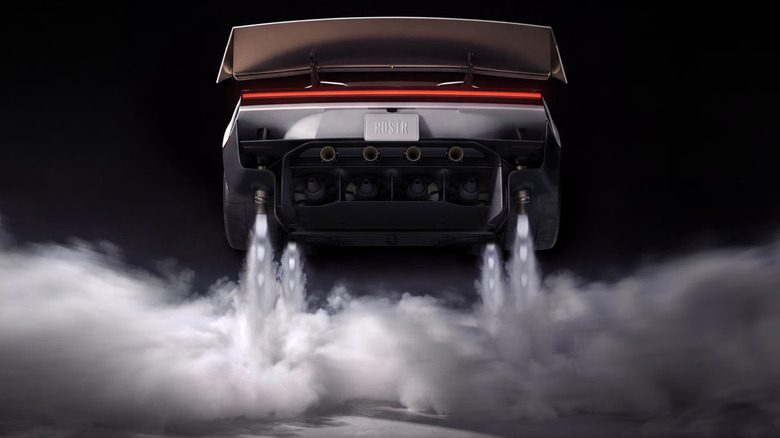
You might ask "Since Tesla and SpaceX are so closely related, why can't Tesla use that same tech to make the Roadster?" That's certainly a valid question, but breaking down the claims that Tesla puts out, combined with the stunt performed, the idea of a flipping Tesla Roadster you can actually buy doesn't hold water.
Let's take a look at a small commercially available jet, the Cirrus Vision. Empty, it weighs 3,550 pounds, a little bit under the "just under" 3,747 pounds the Tesla Roadster claims to weigh. It's powered by a Williams-International FJ33 engine that puts out 1,850 pounds of thrust. In order to get off the ground, the Vision needs a minimum runway of 1,910 feet. It also carries a 296 gallon fuel tank. The jet also rests comfortably in the $2 million to $3 million price range.
The Tesla Roadster, which reportedly weighs more than the Cirrus Vision, just outright won't be able to perform aerobatic stunts. It doesn't even have wings for lift. Even if Tesla managed to break the laws of physics and 100-plus years of aerospace engineering principles, getting flight certification for an automobile would be the nightmare of all nightmares. It just isn't possible. As with most claims put out by Elon Musk and his company, you'll have to wait and see for the actual truth to be revealed when (or if) the Roadster ever hits a road that isn't a stage.