

9 Common Problems With Push Lawn Mowers (And Potential Fixes)
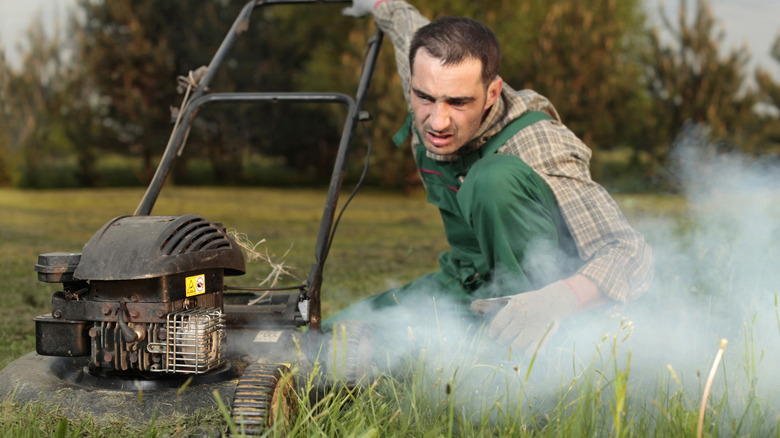
Using a push lawn mower is the classic way to cut your grass. Traditionally, these tools run on an internal combustion engine, usually a two-stroke variant that offers streamlined performance and less maintenance than a more complex four-stroke build. Even so, this is a mechanical piece of equipment that requires routine maintenance and it can experience breakdowns and performance issues of all sorts. There will be times when a trip to a small engine mechanic is necessary, but the lawn mower is often a tool that you can diagnose and fix on your own. Often, the trouble can be found quickly, and you'll usually end up performing a relatively simple fix to get the mower running properly again.
These nine issues are among the most common faults you'll encounter with a traditional gas-powered lawn mower. Some can be defeated by switching to a battery-operated model instead, but these models come with their own set of drawbacks and complications. Often, your mower just needs a good cleanout to remove physical blockages that affect moving parts and air intake. But as is always the case when troubleshooting tools, every problem you find will be somewhat unique.
The mower turns over but won't start

A lawn mower that won't start creates a major roadblock when you try to cut the grass. While there are a few potential avenues to explore, the most likely culprit is the gas tank. You might just be trying to run the engine on empty, and filling the tank is all that's required to get the mower going. However, another problem occurs when you try to pull the cord while running old gasoline. After about 30 days of inactivity, the gas in your tank starts to spoil. Extend this out to the entire winter season while your mower sits dormant in the garage and you're looking at a tank of expired fuel. Fortunately, the gas tank of a typical push mower is pretty small, so dumping the spent fuel and starting over isn't going to break the bank.
Emptying the tank is the first step here, but you'll also want to open the carburetor bowl and drain any fuel you find sitting there as well. It's also a good idea to add some carburetor cleaner to this part while it's open to truly reset your fuel system. Old gasoline can gum up the works and leave a residue that affects ongoing performance, even when the fuel itself is removed. Clearing blockages or residue in the carburetor also addresses potential clogs, another issue that may be preventing the mower from starting. Finally, if none of this works, consider replacing the spark plug or air filter.
Your pull cord won't move (or won't pull all the way out)
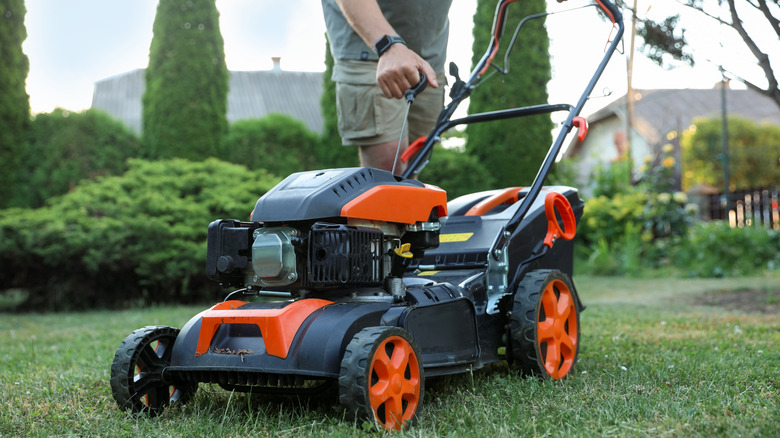
The pull cord acts as your mower's ignition. Holding down the bar and yanking the cord lets fuel into the engine and gets the moving parts spinning. The whole assembly is linked together, though, and a blockage in the engine or down within the blade assembly will prevent the pull cord from moving. Usually, the problem can be found beneath the cut deck. Grass and debris can build up around your blade, getting in the way and preventing you from physically rotating the assembly. However, it's also possible that a portion of the mower itself has become stuck to the blade. The plastic or rubberized guard component is easily pulled away from the bottom of the mower's deck when debris builds up underneath the tool, pushing it out into the path of the blade. You may also find that the back flat that prevents grass from flying out at you as you mow has become stuck.
Tipping the mower backward allows you to get a clear look at what's going on beneath the cut deck. Removing debris and returning any components you find out of position to their proper alignment will typically allow the blade to spin freely. This, in turn, frees up the pull cord to move along its complete path.
Your blades are dull and cutting poorly
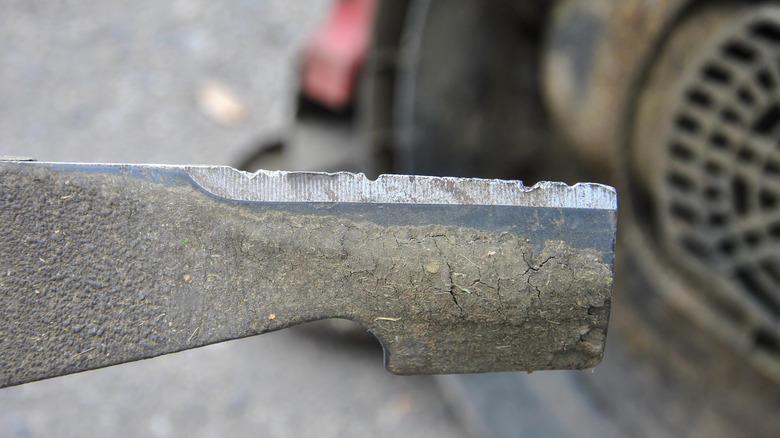
A dull lawn mower blade is a common issue that plagues the performance of the tool. Generally speaking, you'll want to sharpen your blades after about 20 to 25 hours of use. This frequently means refreshing the edge once or twice per year, and it's often a good idea to start the season with a newly sharpened blade. Sharpening your mower blades isn't particularly difficult, and performing this act of tool maintenance will eliminate poor cutting results that leave the lawn looking ragged while also damaging the health of the grass.
A surefire sign your lawn mower could use a blade sharpening is frayed ends after you pass over a section of grass. It's also a good idea to tackle this job if you've recently heard and felt large debris hit the blade during a mow. Rocks, large tree roots, and even sprinkler heads can damage the blade's edge and leave it underperforming when you pull the mower out for the next cut.
Smoke is emanating from your lawn mower
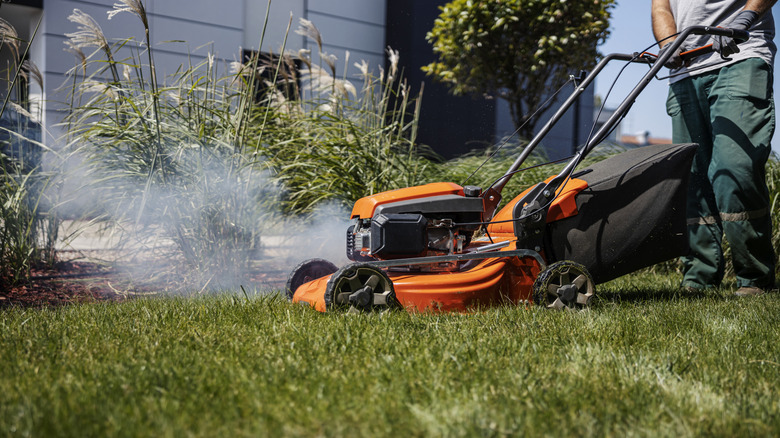
A smoking lawn mower feels like an emergency, but in many cases it's actually a pretty mild issue that will resolve itself. However, if you see blue or other colored smoke instead of a white plume, you may be dealing with an internal issue that requires a visit to a professional repair shop. For run of the mill engine smoke, the most common issue is an overfilled oil tank or a leak from the tank into or onto another area of the tool (namely, the engine). This can happen if you tip the mower over on its side, for instance.
Generally, the presence of smoke like this means that the mower is burning off the excess oil, and it will usually clear up on its own. Running the mower for a while and waiting for the smoke to stop billowing out of your mower is really all that's needed here, although it is a good idea to clean the tool after the smoke issue is resolved to prevent it from reappearing. Similarly, if it doesn't stop smoking, you're likely dealing with an air intake issue, so cleaning these components and replacing the air filter will help limit the chance of it coming back.
Your mower is cutting at a strange angle or uneven heights
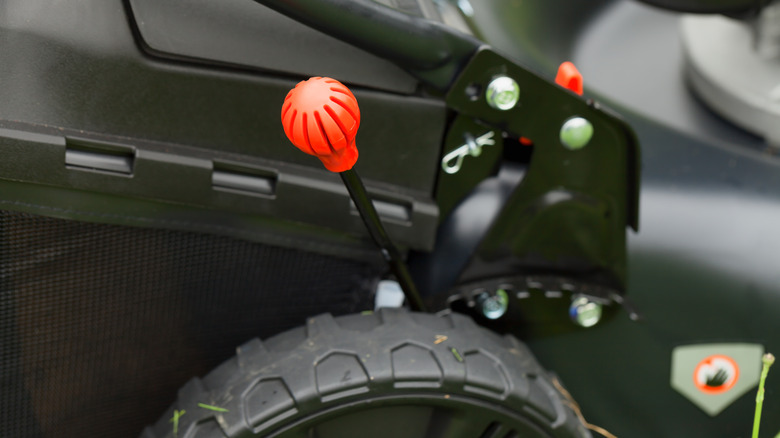
The typical push mower can handle a range of cutting heights. These are often set with independent levers on each of the two front wheels. In my experience, these levers loosen over time, so adding this component to your routine maintenance inspection list is a must. Neglecting these adjustment tools can result in unwanted setting changes as you mow. Hitting a bush or wall, or even rolling over a bump with a bit too much force, can reset the height on one or both wheels without your knowledge. Uneven height settings create an uneven approach as you move around the yard, which can cause a strange cutting effect or even scalp parts of the lawn.
The fix is simple. If you're already experiencing the problem, get out your toolkit and tighten the retaining nuts that keep the front wheel assemblies held firmly in place. If your mower runs on pneumatic tires that need to be refilled, also check the pressure regularly. In the same way that uneven height settings can throw the mower out of balance, uneven tire inflation rates can create an uneven drag on the tool as you push it around the yard or result in the same wonky height calibration.
The lawnmower slows down during cutting
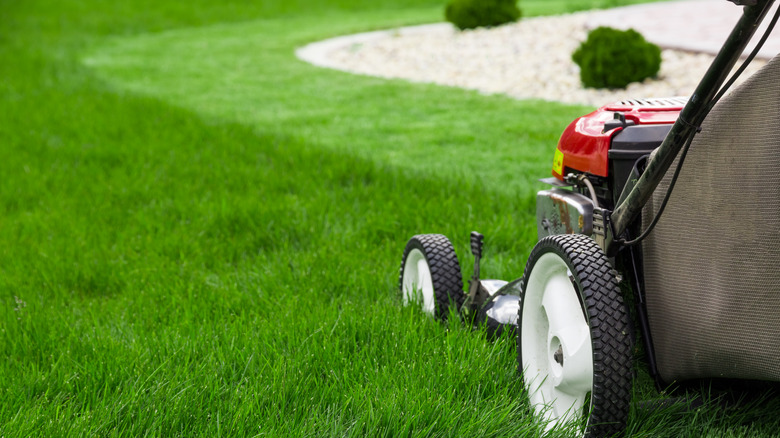
Every lawn maintainer with even a single growing season under their belt will likely know the feeling of a lawn mower that's struggling to cut through grass. Most commonly, this phenomenon happens when you mow tall, dense grass with a standard push mower (instead of a lawn mowing tool designed for tall grass), or when you cut wet grass. Traditional mowers struggle with both of these characteristics because of the added weight and thickness. In both conditions, grass tends to stick around in the cutting area, clogging the mower.
These are commonplace and have everything to do with the user. But sluggishness can also happen in dry, favorable cutting conditions. If you're experiencing this outcome during routine mowing operations, the mower is likely experiencing air intake problems. You may need to replace the air filter, but at the very least you'll need to inspect the mower for a buildup of debris that may be clogging the system. Cleaning out your mower will typically resolve this performance issue fairly quickly and typically only requires some compressed air to blow built up dust off the filter's papery mesh surfaces.
The mower is leaking fuel

You'll know that your mower is leaking fuel by the smell. Gasoline gives off a pungent odor that's fairly easy to spot, especially in an enclosed space like a shed or garage. The pooling moisture beneath your mower is another key indicator. A fuel leak is a fire hazard, and it can damage your lawn, too. Unfortunately, there are many potential fault areas that can leak. You may just have a loose fuel tank cap or a worn-out gasket. Either fix is simple, but if you're dealing with a worn-out carburetor seal, a loose or cracked fuel line, or another internal issue, bringing the mower to a small-engine mechanic may be the best approach.
It's also possible that seasonal weather changes through the years or physical damage has led to a cracked fuel tank. This component is generally made of plastic, and so a few ways to fix a tank crack exist. The first step involves draining the tank and leaving the cap off to minimize pressurization issues while you work. You'll then want to apply epoxy or use plastic welding techniques to close the crack before refueling and getting back to work with the landscaping tool.
You're experiencing overheating issues
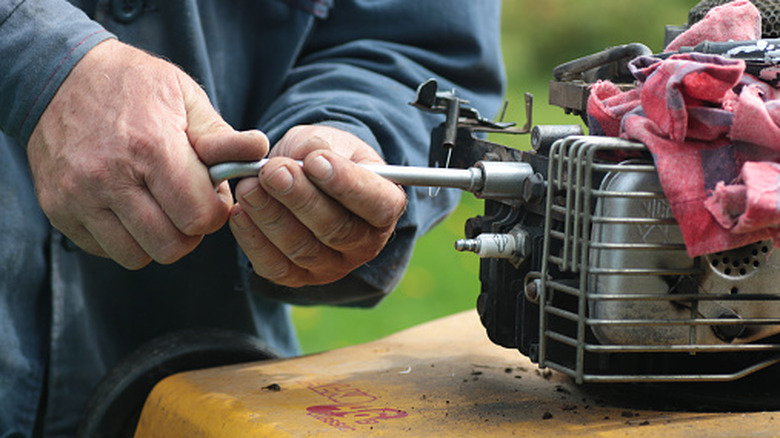
Your lawn mower may start overheating if there's a blockage in the air intake components. Even if your mower is performing reasonably well, you should take an overheating tool seriously and work through the proper maintenance steps to address the issue. The first, and easiest step is to check the oil level. Oil acts as a lubricant for the engine's moving parts, but it also plays a role in heat regulation, so low oil can result in improper heat dissipation. The most likely cause of heating troubles is the air filter though. Clearing debris around the mower and changing the air filter will give your mower a fresh start. You'll also want to inspect the cooling fins and clean the engine compartment while the mower is "on the workbench." Use an air compressor to deliver a delicate yet targeted blast of air to clean these parts.
A lawn mower that's overheating is one that's prone to faster wear and tear. The entire system is pushed harder than it needs to be to perform the job. The mower is also likely to experience a weaker power output and cut performance while gobbling up gas at a faster pace than usual.
Extreme vibration is running through the mower

A lawn mower with significant vibration may have one of two main problems. A more serious concern involves engine components, and this is better left to a professional in most circumstances. However, the other pain point that can amplify vibration is easy to diagnose and more common, allowing you to easily determine the culprit. If your mower's blades aren't sharpened correctly, the tool may operate with a weight imbalance.
This happens when one side is ground down more than the other, or if you hit something in the yard that causes one side of the blade to dull significantly or even deform. An unbalanced blade will undulate, often just slightly, as it spins around at the bottom of the mower. This translates into increased vibration throughout the machine more broadly. Resharpening the blades and ensuring that the unit is properly balanced will typically fix this frustrating problem. If the issue persists, you're probably looking at an engine malfunction that may require a more detailed investigation.