

12 Tools And Supplies You Should Buy Before Winter Comes
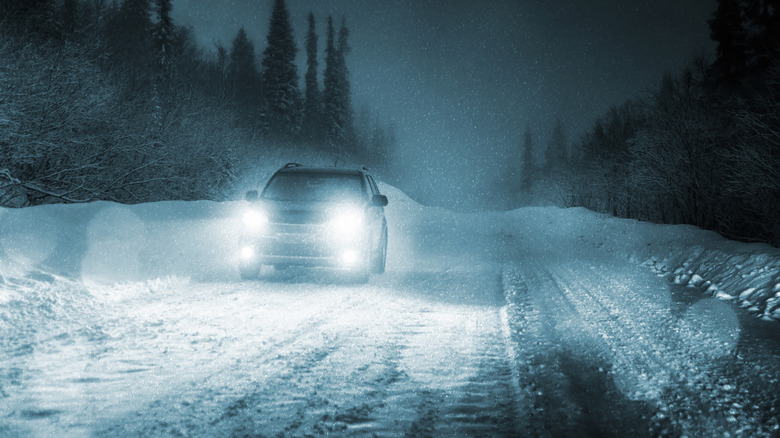
As the weather calendar flips into winter, a lot of grunt work shows up. Mundane tasks like salting and shoveling snow off driveways and windows become inevitable; no matter how annoying they can be, you need to stay on top of them. The hassle is even worse if you plan on driving actively during the snowy months. Just as you'd typically prepare your car for summer by making sure the air conditioning is in tiptop shape, winter comes with its own challenges for your automobile.
Snow management, whether on the car itself or in the surrounding environment where it's parked, is just one such challenge. Drivers also contend with the reduced grip and limited visibility that snowfall brings. Beyond that, car parts like tires and batteries don't do well in cold weather, and if you don't care for them properly in these conditions, you could easily find yourself stranded. So, how do you keep up with all the curveballs cold weather throws at you?
It's pretty simple: before winter comes around, stock up on certain tools and supplies. This approach has two benefits. First, you don't get any nasty surprises on the roads. Second, you can avoid the buying rush (and any potential price hikes). If you're compiling a shopping list, consider adding the following 12 tools to make your life easier during the colder months.
Ice scraper
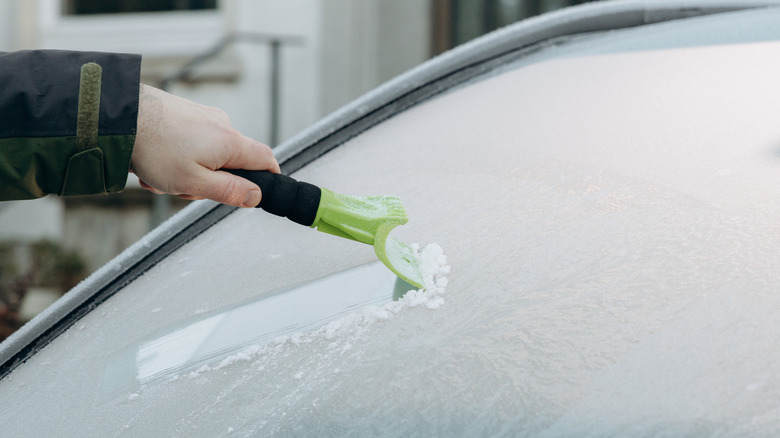
Winter's novelty can get old fast as the biting cold and bleak skies persist, but one of the most annoying challenges drivers face is managing snow and ice. There are only so many times you can slide snow off your windshield with a loose piece of cardboard or wait for a defroster to work its magic without getting frustrated—and you certainly don't want to give in to intrusive thoughts about using your wipers or pouring hot water.
Simple snow brushes can remove snow, but they don't handle ice very well. That's a real concern; using wipers on an icy windshield is one of the fastest ways to break them (or chip away at their fibers). That's where ice scrapers come in. They can do what simple snow brushes can, and their small teeth (or ridges, if you will) make all the difference in weakening and fracturing ice sheets stubbornly clinging to your windows and windshield.
When the ice is especially thick, crack at it from one end of the glass to the other with the scraper. Then, turn on your defroster and work in circles once again. This way, the defroster has an easier job of warming up the windshield, and after enough passes, you should be able to slide the ice right off. Ice scrapers are pretty cheap too; you can typically find a decent option for anywhere between $10 and $25.
Portable jump starter
It's no secret that driving in extreme heat is very stressful for a car. If you've ever had an overheating engine at the peak of summer, you'd probably appreciate the reprieve winter brings — at least for the first few weeks. However, cold weather has its own complications for combustion engines. The battery has to work harder to start the car, fluids can freeze, and oil thickens. Any of these factors can ground your car at an uncomfortable location.
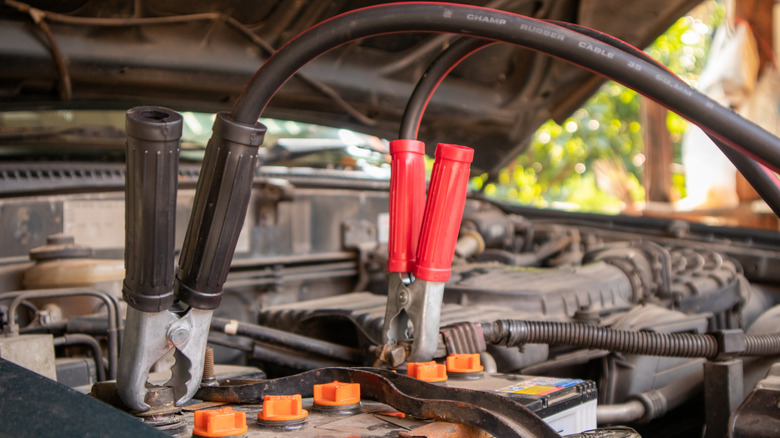
As battery failures happen regularly in winter, buying a jump starter is probably the most prudent investment you can make for your car's mobility. Having one in the car prevents you from being stranded; you should at least be able to drive to a place where your vehicle can get proper attention. When searching for a jump starter, though, you'd want to get one that can independently charge your car battery.
We've previously recommended the NOCO Jump Starter for this line of work; as a brand, NOCO topped our list of best jump starter brands. It can shock your battery back to life and charge other electronics if need be. It's easy to use, too: connect the jumper cables to your battery terminals, let the battery charge, then drive away.
Folding snow shovel
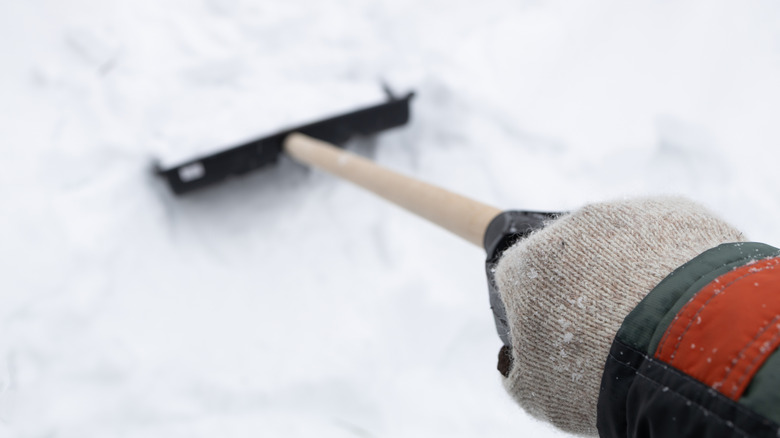
Unless your driveway has fancy heating pads installed, you'll need some tools to manage snowfall. That's especially true if you live in a region where it snows heavily enough to box your car in. This is probably the most annoying grunt work of all — clearing space to park and drive out every day throughout winter.
Shovels do that job easily; digging around the tires and clearing away packed snow is firmly in their jurisdiction, although the manual labor can be exhausting. An ordinary shovel makes a fine addition to your car's winter kit, but its metal construction makes storing it in the trunk a headache. When you use tools regularly, storage is half the battle, so flexible tools are better than rigid ones.
A folding snow shovel's storage advantage over a regular metal snow shovel can come in handy in many situations. Since foldable versions are cheaper on average (about $30 for a collapsible shovel versus roughly $45 for metal), adding one to your inventory isn't the worst idea.
Traction mat (or bag of sand)
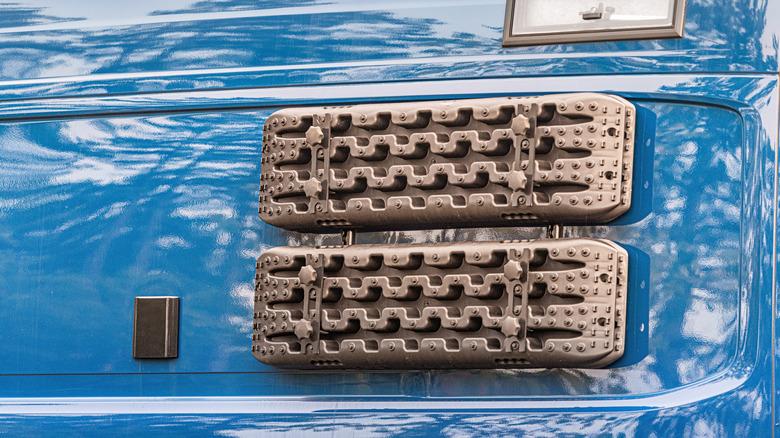
With snow and ice coating the roads in winter, it's not uncommon to park your vehicle for a few hours, only to find a sheet of ice has covered the ground and stripped it of the traction you need to get moving again. That's where traction mats or a bag of sand can come in handy.
Traction mats are made from high-density materials like plastics and polymers, and they're designed to give your tire tread enough grip to get you out of sticky situations. Slide them under your tires in the direction you're driving, and let the rough texture do the rest. Of course, that means you'll risk muddying your trunk or storage area after using them—roads are dirty and wet in the winter, after all. How much they'll set you back depends on your car type (mats designed for pickup trucks are usually more expensive) and the brand you choose.
A good alternative to traction mats is a plain old bag of sand. Sand grains have a gritty texture that reduces slickness on any surface. So, sprinkling sand alone on an ice sheet might be enough to give you all the grip you need. It won't melt the ice like salt, but it also removes the risk of damaging concrete or your car's bodywork from salt spray.
Ice melt
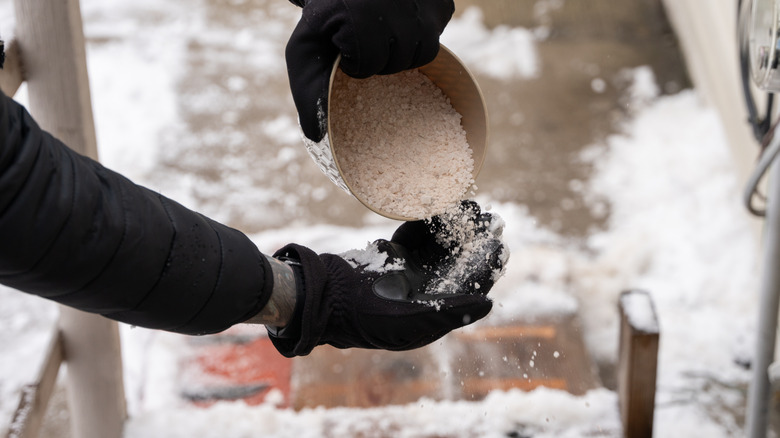
If the mess of handling traction mats and sprinkling sand all over your driveway doesn't suit your fancy, ice melt is another handy option to keep on hand. They work by lowering the freezing point (the temperature at which liquids change into ice). Essentially, it's much harder for water particles from fallen snow to form crystal lattices and turn into ice when you apply ice melts to sidewalks, driveways, stairs, and any other surface.
The best way to use ice melts depends on the type you're buying. Solid ice melts can be applied on top of ice that has already formed; they dissolve and gradually work their way through the layers, loosening the crystal lattices and creating brine as a byproduct. Liquids work best as a preventive measure — they're already in brine form, so the salt prevents snow and ice from building up.
However, one factor to consider carefully is how ice melts affect the environment and your pets. Although a few options on the market use urea- or acetate-based alternatives, most ice melts are salts. As we've said before, they can damage your concrete by causing corrosion, but they can also soak up moisture your plants need to grow if runoff accumulates in your garden soil, and they can irritate your pet's paws as well. If you use ice melts, adding an abrasive like sand to the mix can help neutralize some of the harmful effects.
Windshield washer fluid with de-icer
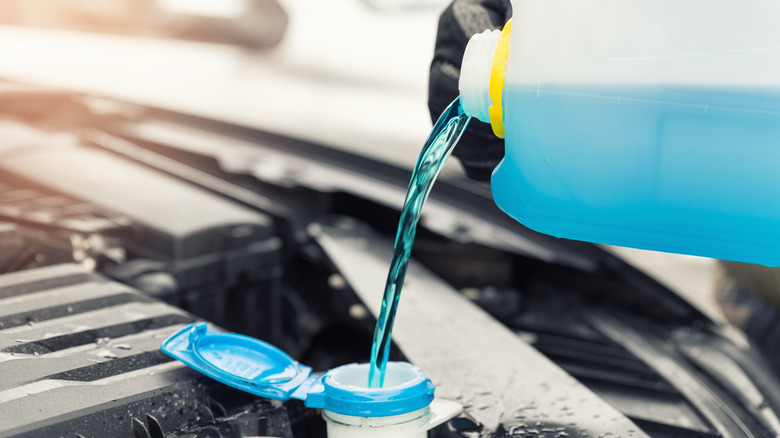
One of the more annoying effects of winter driving is dealing with things freezing over. Ice creeps over everything: your windows, doors, exhaust pipes; if there's moisture, it'll freeze. When it comes to engine fluids, cold weather affects them differently. For instance, engine oil may not freeze, but it can thicken into an almost clump-like mix.
Wiper fluids are a different story, though. Summer wash fluid, for instance, can start freezing at 32 degrees Fahrenheit—and we all know how important washer fluid is for seeing clearly in any weather. You could keep them from freezing by parking in a garage, but that's not always feasible. A better solution is to use winter-grade washer fluids, especially those with de-icers.
De-icers work as ice melts; they lower the washer fluid's freezing point. In this case, they use a high concentration of alcohols like methanol or ethanol to melt ice and frost before they build up. This way, washer fluids with de-icers work properly even in extreme conditions reaching up to -30 degrees Fahrenheit. They're generally inexpensive—most sell for under $30 a pop — so they should be one of the first items on your shopping list.
Tire pressure gauge/inflator
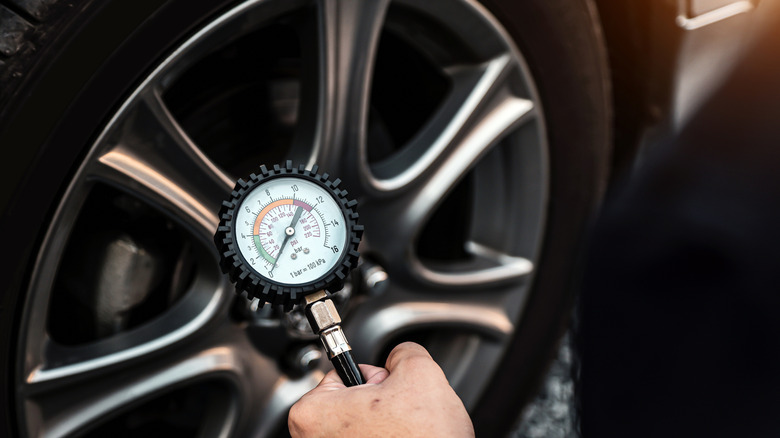
Much of caring for your car is watching out for any untoward changes in its operation or the appearance of its components. Tire problems are among the easiest to spot, if you know what to look for. If a tire starts losing pressure, you'll generally notice one of a car's four corners sitting closer to the ground than it should be long before you experience a flat. During winter, though, eyeballing becomes much harder.
Every car model has a recommended tire pressure setting (you can find it in your owner's manual or on the sticker inside the driver's side door). Below that specification, tires could wear faster, increase fuel consumption, or even reduce handling. That's why you need to monitor your tire pressure during winter: cold weather constricts the flow of air molecules inside a tire. This constriction means your tires will lose around 1–2 psi for every 18-degree-Fahrenheit drop in temperature.
So you might think your tires are properly inflated when they actually need air. To be sure, use a tire gauge to check the tire pressure after your car has been parked for about three hours. If it's lower than it should be, having a tire inflator on hand to pump them back up can literally be a lifesaver. Many inflators double as gauges, and these versions typically cost less than $50, too.
Emergency flashlight
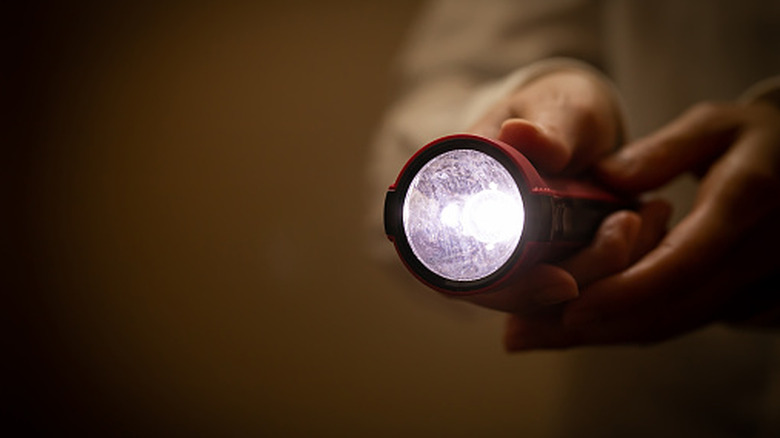
Cold isn't the only change winter brings — the days get shorter too. Where the sun regularly sets between 8 and 9 pm in the summer, nightfall can start as early as 5 pm during the winter. Naturally, that means more hours commuting in the dark, and that comes with its own driving demands. For instance, the likelihood of a car breakdown after dusk is higher simply by driving in the dark longer.
If you're going to work on your car, whether it's a quick fix like changing a tire or something more delicate like jump-starting the battery, you need a light source to illuminate your surroundings. Groping in the dark is far from ideal; you could spend more time than necessary on simple tasks and even put yourself in danger because you can't see clearly.
That's why the NHTSA recommends keeping an emergency flashlight in your vehicle. However, you can't just choose any unit you come across. Waterproof flashlights are better for winter — they last longer in the cold by resisting condensation buildup. Battery type also affects how long a flashlight lasts, so a lithium-powered flashlight, for example, is preferable to an alkaline one.
Reflective warning triangle
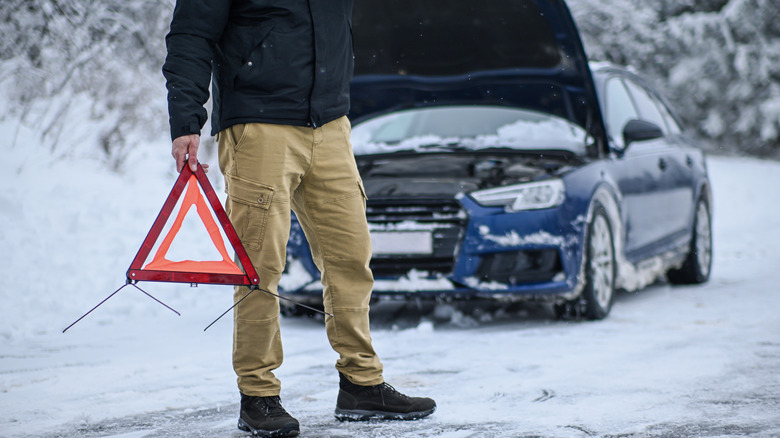
Just as it's important to see what you're working on in the dark if a breakdown occurs, it's also imperative that other drivers see you. Say you have the misfortune of car trouble on the freeway, and your only option is to pull over to the shoulder. One might think that being out of the direct flow of traffic should make you safer.
Unfortunately, you'd be wrong. About 12% of interstate highway fatalities occur on the shoulder. Those numbers are high but understandable; not every driver is paying full attention to the road ahead, and that lapse in concentration can be deadly. It's even harder to spot a parked vehicle on the shoulder in falling snow, and the longer stopping distance in adverse conditions is a recipe for disaster.
Placing reflective warning triangles behind your car increases your visibility to approaching vehicles, and it's a necessity given the many factors that impede vision. You can even take things up a notch by also adding an LED road flare to your inventory. This way, you'll have a beacon likely to catch a driver's attention, which should buy you enough time to complete the necessary repairs to get going again.
Electric space heater
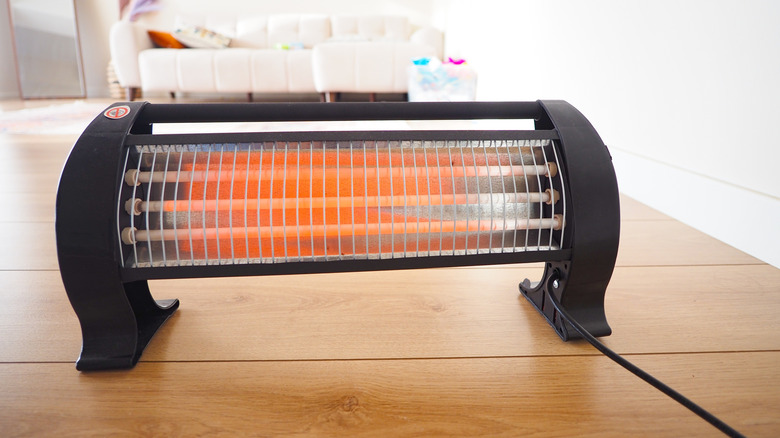
Winter can be stressful on HVAC systems, so it never hurts to have an extra heating source to chase the cold away. Raising temperatures in each room in your home will inflate your energy bills, so a portable device like an electric space heater is valuable; just carry the device to the room you want to heat up and let it work its magic.
Space heaters use a fan to circulate warm air generated via resistive heating (the resistance of a material to electric current) throughout a room. If you have a garage and your car is prone to freezing, a space heater can keep it warm and free of any ice buildup that can freeze your washer fluid or turn your oil into a clump. However, consider these safety tips before moving a space heater to the garage.
First, only use an electric space heater; using propane or other gas-based space heaters in enclosed spaces can lead to carbon monoxide poisoning. Second, placement matters. The space heater should sit on a flat, even surface where there's minimal risk of fall damage (the floor, for example), and it should reside a good distance away from flammable materials and doorways. As an additional precaution, you could opt for a version that is equipped with tip-over protection.
Carbon monoxide detector
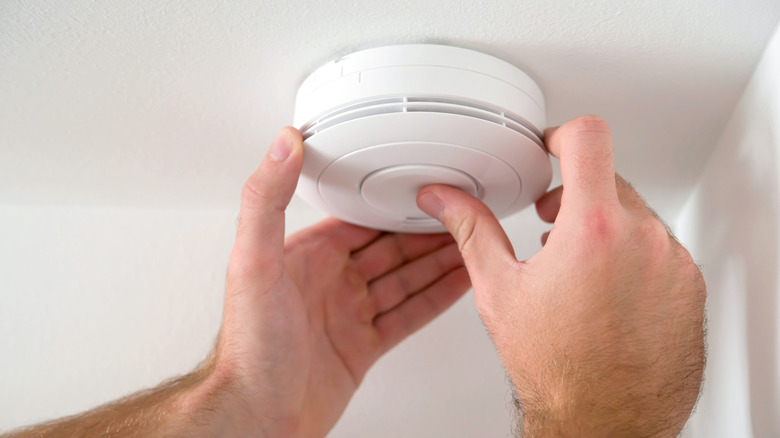
As we discussed regarding space heaters, carbon monoxide poisoning is a real concern during the winter. A research paper found that winter weather accounted for a quarter of all weather-related carbon monoxide fatalities in the United States, and more than 400 deaths each year are attributed to carbon monoxide.
That share isn't particularly surprising—winter is when residents're most likely to use generators and other fuel-powered energy to keep their homes warm. However, the danger was significant enough that the Consumer Product Safety Commission recommended carbon monoxide and smoke alarms as part of winter storm safety measures last year.
Carbon monoxide detectors work as they sound: they measure carbon monoxide levels in the air. If the concentration crosses a certain threshold, it sounds an alarm to draw attention to the threat. For maximum effectiveness, place a detector on each story and inside each bedroom. If available, connect the detectors in your home, too— so when one alarm sounds, all the detectors ring out and you don't miss the danger. You can buy some battery-operated carbon monoxide detectors for as low as $25.
Foam pipe insulation
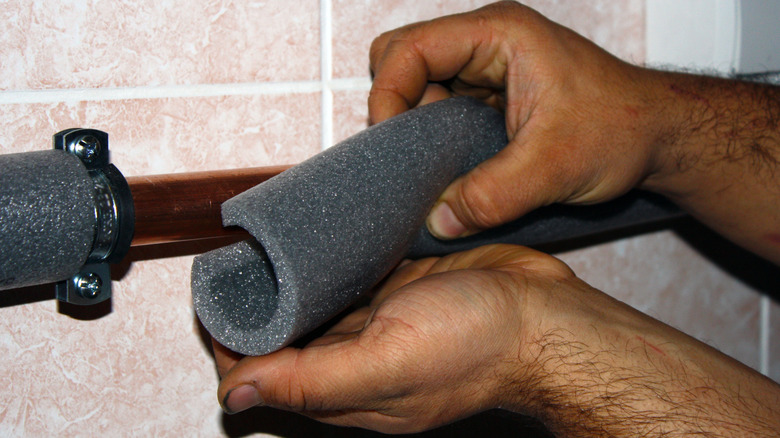
If you've ever been stuck with a trickling or gurgling faucet in winter, your plumbing has likely frozen. As you probably know, it can be a pain; nobody enjoys hauling out a mop, a bucket, and towels soaked in hot water (or any other heat source) to start the arduous process of restoring water flow.
Instead of going through all that (and potentially avoiding burst pipes), you could invest in pipe insulation before winter. Insulation keeps your pipes warmer by slowing heat transfer between the water in the pipe and the cold air outside. You don't need a fancy installation either — simple foam sleeves can do the trick.
Just slide the sleeves over the pipe by prying open the slit in the middle, and if they come with self-sealing strips, peel them off and press the seam tightly to secure the fitting. That's pretty much it. It's not a perfect fix; insulation only buys your pipes (and water) time. If temperatures stay low too long, you'll still have to contend with the effects, but it's worth adding a layer of protection.