

9 Tablets That Outperform The OnePlus Pad Go 2
We may receive a commission on purchases made from links.
People who want a budget-friendly Android tablet will likely find the OnePlus Pad Go 2 to be suited to their needs. The 12.1-inch 120Hz LCD screen supports both HDR10+ and Dolby Vision, with its 900 nits of peak brightness being quite sufficient. Reviewers had mixed opinions about the performance of this affordable tablet — the MediaTek Dimensity 7300 Ultra chip does its best, but it's a mid-tier CPU at heart. Thankfully, the lack of bloatware on this device is much welcome. The 10,050mAh battery that comes with this device also pulls its weight and lasts for more than 14 hours on a full charge. A charging speed of just under two hours to reach 100 percent battery isn't the greatest, but that's a minor gripe.
At $399, this is a good value-for-money tablet. However, not everyone will be completely in line with what this device brings to the table. The lack of a fingerprint sensor and the stylus not coming in the box show the extent to which OnePlus has implemented certain cost-cutting measures to make this tablet reach this affordable price point. Most people would either want tablets that are more feature-rich in the same price range, while others wouldn't mind splurging a bit more to get a state-of-the-art tablet that outclasses the OnePlus Pad Go 2 in terms of performance, battery life, display quality, or anything else along the same lines. The following list covers both those bases.
Honor MagicPad 4
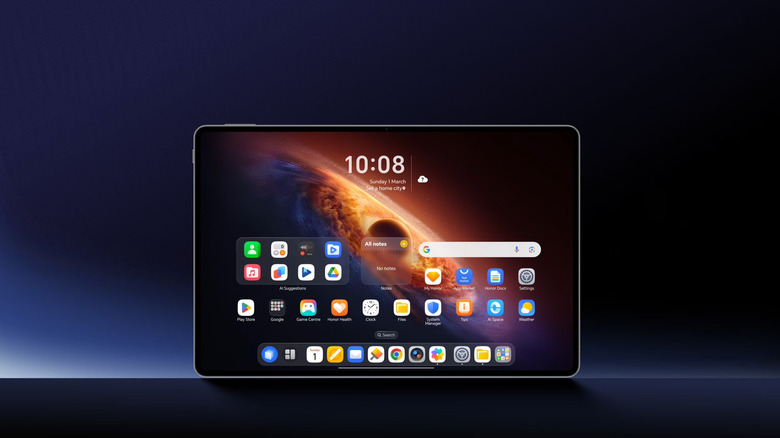
People who love the affordable price point of $399 will find it a tough ask to spend $1,029 on the Honor MagicPad 4. Thankfully, this tablet is on sale for $838 at the time of writing, which does alleviate the sting of spending so much on this device. Whether this tablet is worth this inflated cost depends totally on what you prioritize, so it's important to know where the MagicPad 4 is a marked improvement over the Pad Go 2. For starters, the sleek form factor of Honor's flagship tablet is worth highlighting — at just 0.19 inches, the MagicPad 4 is one of the slimmest tablets on the market and is 30 percent thinner than OnePlus' device. Compared to the Pad Go 2's 1.32-pound weight, Honor's tablet is far more lightweight at just under one pound.
On the performance side of things, the 5th-Gen Qualcomm SM8845 Snapdragon chipset outclasses the Pad Go 2. Comparing their Geekbench scores makes this clear as day — the MediaTek Dimensity 7300 Ultra has a score of 2,901, while the MagicPad 4's CPU has a higher score of 9,335. The OLED screen is also better than the Pad Go 2's LCD in every way — the 12.3-inch screen is slightly larger, the refresh rate of this screen tops out at 165Hz, and the screen boasts more than double the brightness of OnePlus' tablet with a peak rating of 2,400 nits. As long as you don't mind doubling your budget, the Honor MagicPad 4 will be an excellent Android tablet. As a bonus, it includes a PC mode that works in tandem with Honor's keyboard case to make this device good for office use.
Apple iPad Air (M4)
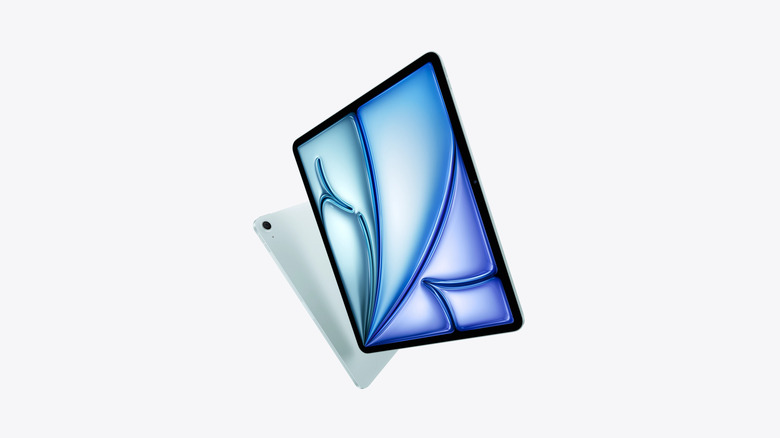
For $749 — a price point lowered by $100 on sale at the time of writing — The M4 Apple iPad Air is an easy recommendation for anyone who's not sold by the OnePlus Pad Go 2 and doesn't mind increasing their budget for what they perceive as a better device. The biggest upgrade here is overall processing power — the M4 chip is robust enough to be used in MacBooks and iMacs, with its 13,106 Geekbench score making it vastly superior to the Pad Go 2 in terms of overall performance.
Both devices use an IPS LCD screen, although you can enjoy a larger display on the iPad Air if you opt for the 13-inch Liquid Retina display. It lacks Face ID recognition, but the fingerprint reader is convenient enough to use — something that is missing in the Pad Go 2. Another thing to note is that while OnePlus's tablet only supports Wi-Fi 6, the iPad Air doesn't share this constraint. It supports modern Wi-Fi 7 standards, making its connections faster and more stable. Finally, what might be the most substantial selling point of the iPad Air is its integration with the robust Apple ecosystem. Not only does the App Store usually have higher-quality apps and programs as compared to the Play Store — courtesy of a strict approval process — but using the iPad Air in tandem with other Apple gadgets like the iPhone or MacBook is pretty simple.
Xiaomi Pad 8
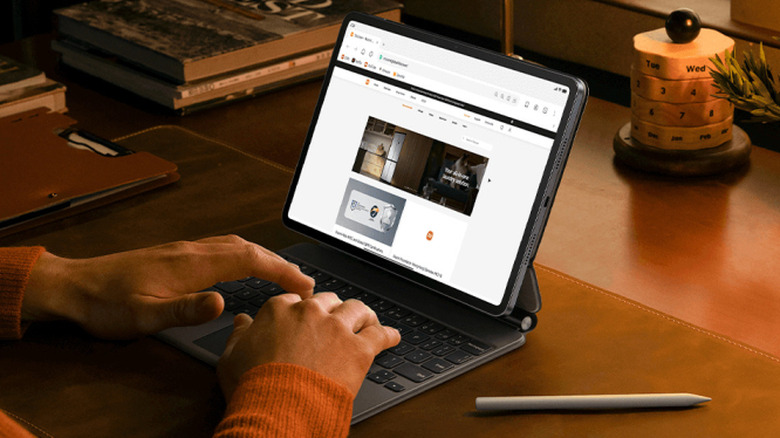
At $435, the Xiaomi Pad 8 is a good alternative for people who want a cheap tablet that's actually worth buying, like the OnePlus Pad Go 2. Some of the ways that this major Android tablet brand outperforms its competitor are minor. It's thinner and lighter than the Pad Go 2, but not by much. The display is capable of reaching a 144Hz refresh rate as opposed to the 120Hz that OnePlus has restricted its tablet to, but this comes at a trade-off — the screen is smaller by almost an inch. The Dolby Atmos speaker array on the Pad 8 makes this arrangement superior to the Pad Go 2.
It's the processor where these two tablets show a massive difference in performance. The mid-range MediaTek Dimensity 7300 Ultra and its 2,901 multi-core Geekbench score can't hold a candle to the Qualcomm SM8735 Snapdragon 8s Gen 4 used in the Xiaomi Pad 8. The 6,633 Geekbench score makes it a very powerful tablet processor, which is why multiple reviewers were impressed by its performance across the board. The other areas where it cuts corners are similar to what the Pad Go 2 does, like using an LCD screen instead of an OLED and not adding a fingerprint sensor. For just $36 more, the Xiaomi Pad 8 outperforms the Pad Go 2 considerably and can be a valid replacement as long as you're aware of its drawbacks.
Apple iPad Pro (M5)
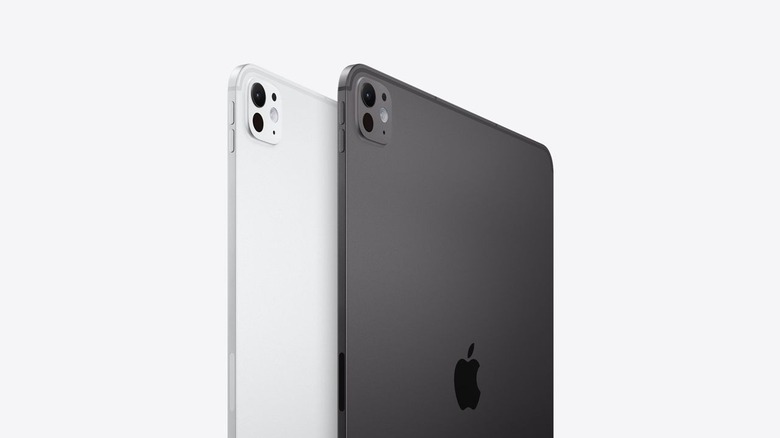
Addressing the elephant in the room is important when trying to compare a flagship tablet to a cost-effective variant. At $1,199, the M5 Apple iPad Pro is far, far more expensive than the OnePlus Pad Go 2. This puts it strictly out of the budget category and into the premium space, but that doesn't mean anyone interested in a cheaper tablet shouldn't consider the iPad Pro at all. If their sole requirement is to get a simple tablet that is capable of getting the job done without burning a hole in their wallet, then the Pad Go 2 is a good choice. However, if what you want is a robust machine that is capable of replacing your laptop with the right accessories and works harmoniously with other Apple devices — so much so that it almost looks like a perfect tablet — then a strong case can be made for the iPad Pro.
We've already talked about the superiority of the M4 chip over the Pad Go 2's CPU, so it goes without saying that the M5 is even more superior in this department. This can be seen in its 15,684 Geekbench score. While the display's maximum refresh rate is similar to that of OnePlus' tablet — 120Hz — it's the rest of the package that's superior. The Ultra Retina Tandem OLED screen is a massive improvement over a simple LCD display, with a 1,600 nits peak brightness rating almost double that of the Pad Go 2. That's not all — support for Wi-Fi 7, 12GB RAM, and compatibility with the Apple ecosystem all make the iPad Pro a good prospect for anyone in the market for a quality tablet.
Samsung Galaxy Tab S11 Ultra
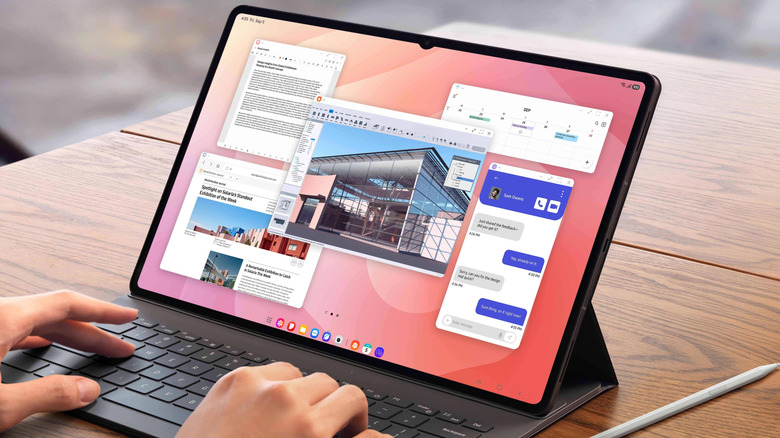
Just like the iPad Pro, the Samsung Galaxy Tab S11 Ultra is a flagship tablet offering that is currently retailing for about the same price — $1,115 in this case. This is an even tougher sell for people interested in the OnePlus Pad Go 2 — not only do they have to burn a considerable hole in their wallet for this tablet, but Samsung's device ecosystem isn't as widespread as that of Apple's. That being said, it's hard to make a case against the Galaxy Tab S11 Ultra if your goal is to get an Android tablet with so much power that you may not even require a separate laptop for all your work needs.
Despite being heavier than the Pad Go 2, the Galaxy Tab S11 Ultra is noticeably slimmer. The AMOLED screen looks nice and boasts a peak brightness rating of 1,600 nits, similar to that of the iPad Pro. It's also massive — perhaps too much — with its 14.6-inch screen comfortably dwarfing OnePlus' offering. As the name would suggest, the MediaTek Dimensity 9400+ chip used in the S11 Ultra is far more powerful than the Pad Go 2's 7300 Ultra, as seen in its 8,969 Geekbench score. Base S11 Ultra models start with 12GB RAM, as opposed to the Pad Go 2 and its 8GB-only configurations. Whether the AI-specific features — like Gemini Live, Note & Drawing Assists, and the AI drawing tool in Photos — are a perk or not depends on your preferences, although you can't deny that the S11 Ultra coming with the Samsung S Pen is pretty neat.
Xiaomi Pad 8 Pro
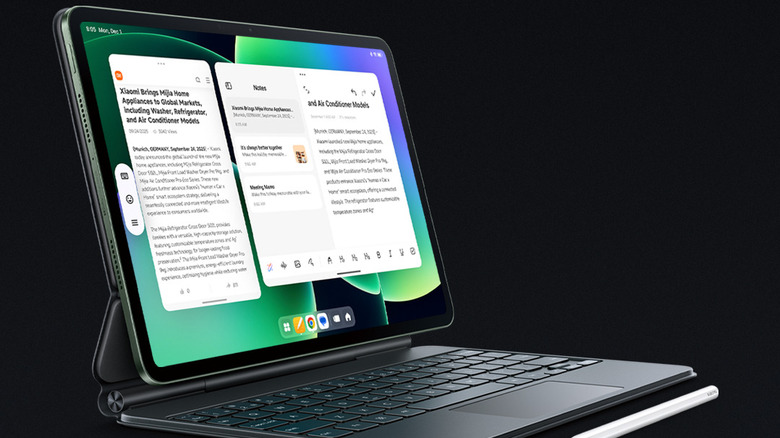
Given how the Xiaomi Pad 8 was still slightly more expensive than the OnePlus Pad Go 2, it's understandable why some people may assume that the Xiaomi Pad 8 Pro is totally out of their price range. Don't write this tablet off, though — it costs $555, which isn't a huge jump over the Pad Go 2. For a slightly higher price, you'll get a tablet that is thinner, lighter, and more powerful — there's no competition when comparing the Qualcomm SM8750-AB Snapdragon 8 Elite and its Geekbench score of 9,287 to the SoC in the Pad Go 2. The screen of the Xiaomi tablet might be smaller, but a higher 144Hz refresh rate makes up for it.
Charging speeds are also superior on the Pad 8 Pro, reaching 100 percent charge in just under 80 minutes. If you are planning to use your tablet as is to watch movies or play music without using headphones, then the Pad 8 Pro is better in this regard. It uses four Dolby Atmos-powered speakers to project an impressive soundscape that outclasses the Pad Go 2. If you need another reason to push you toward the Pad 8 Pro, then behold — this tablet also comes with a fingerprint reader.
Apple iPad Mini
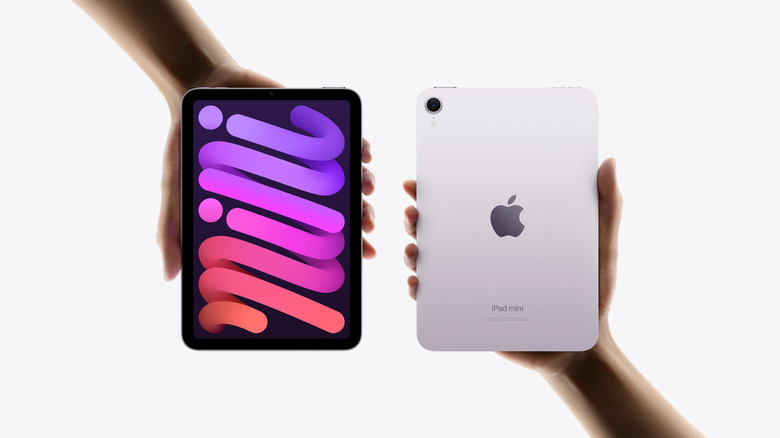
In case you're wondering whether any Apple tablet will cost way too much to justify it as a valid replacement for the OnePlus Pad Go 2, then the Apple iPad Mini's $599 price tag — further reduced by $100 on sale at the time of writing — will definitely interest you. Sure, the Pad Go 2 has a bigger screen, but the iPad Mini uses a Liquid Retina IPS LCD display that arguably looks better. This may be subjective, but what isn't up for debate is the superiority of the A17 Pro chip. The 7300 Ultra's 2,901 Geekbench score is completely outclassed by the 7,383 score of the iPad Mini's chip.
Portability is another area where the iPad Mini wins out. The small form factor makes it far easier to lug around, with its weight being half that of the Pad Go 2. While tablets aren't known for capturing images, you'd much rather have an iPad Mini around for clicking pictures than OnePlus' tablet. The latter has two paltry 8MP cameras that can't record anything beyond 1080p video at 30FPS. Meanwhile, the iPad Mini has two 12MP cameras with support for HDR videos that can record 4K videos at 60FPS. If you stick to 1080p recordings, then the frame rate can be as high as 240FPS.
Lenovo Idea Tab Pro
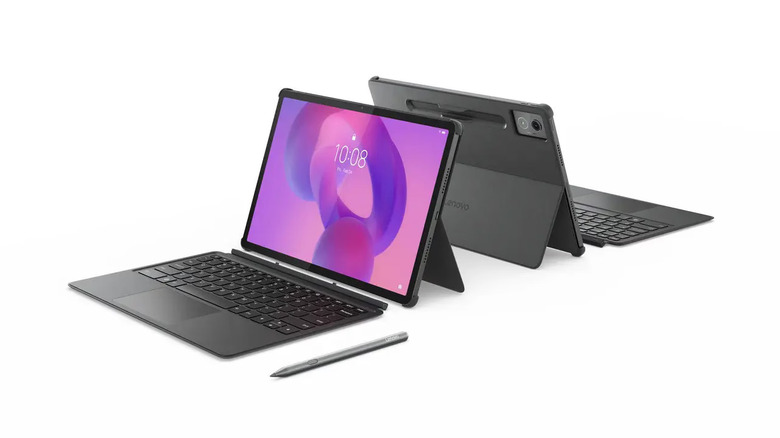
Until now, the tablets we've talked about have been more expensive than the OnePlus Pad Go 2 — some more than others. Given how all these devices are better than the Pad Go 2 in one form or another, this seems natural. So, the first thing that will pop out regarding the Lenovo Idea Tab Pro is how affordable it is. At $344.99, it's cheaper than a budget-friendly tablet like the OnePlus despite arguably being a stronger performer. Take the screen — a paltry 400 nits peak brightness rating isn't anything to gloat about, but Lenovo still managed to pack in a 144Hz screen with this device that's slightly larger than the Pad Go 2.
Another area where it excels is processor power — the MediaTek Dimensity 8300 used in the Idea Tab Pro is stronger than the Pad Go 2's 7300 Ultra, as exemplified by the 4,541 multi-core Geekbench score. While all models of the Pad Go 2 are restricted to 8GB RAM, the top model of the Idea Tab Pro comes with 12GB of RAM. As long as you don't mind getting a tablet that's heavier than the Pad Go 2, the Lenovo Idea Tab Pro is a cheap Android tablet that's better than you'd think.
RedMagic Astra 2
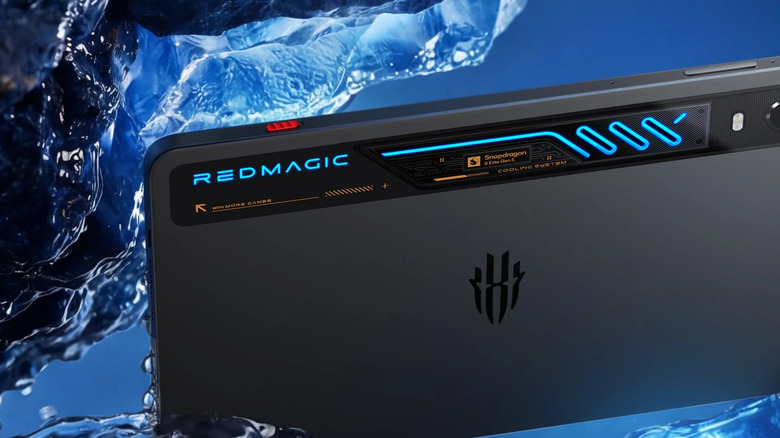
People who want to get a tablet for gaming purposes may not find the OnePlus Pad Go 2's performance to be the greatest. If your bank account can accommodate a $749 tablet, then the RedMagic Astra 2 is a valid alternative. Despite being a gaming tablet at heart, the Astra 2 is eight ounces lighter. On the performance side of things, the 5th-Gen Qualcomm SM8850-AC Snapdragon 8 Elite chipset does a far, far better job than the mid-tier hardware of the Pad Go 2, and understandably so — the 11,047 Geekbench multi-core score speaks for itself. Gaming is the biggest priority of the Astra 2, so much so that it holds the distinguished honor of being the first-ever tablet with liquid cooling.
The display is another area where the Astra 2 comfortably outperforms the Pad Go 2. At a glance, the 9-inch screen is notably smaller than OnePlus' tablet, but it's the rest of the package that is superior. It's the only tablet on this list with an 185Hz display, and the OLED screen has a peak brightness rating of 1,600 nits. In terms of charging speed, the Astra 2 wins out yet again. It takes less than an hour to top up your battery from zero, so you don't have to wait too long before resuming your gaming adventures. Another neat addition to the Astra 2 that's missing in the Pad Go 2 — which, to be fair, isn't common in tablets — is an additional USB-C port. Not only can you charge it no matter what the orientation of this device may be, but you can also use USB-C Alt Mode to connect this tablet to an external display.
Methodology
All the tablets on this list outperform the OnePlus Pad Go 2 in one form or another, whether it be screen quality, hardware, battery life, charging speed, camera, form factor, or features. To guarantee high-quality recommendations, all these tablets have high review scores — 4 out of 5, 8 out of 10, or 80 out of 100 and higher — across three or more publications. These outlets include IT Pro, Creative Bloq, Notebookcheck, Android Central, GSMArena, TechRadar, CNET, PCMag, Gizbot, Android Authority, Wired, Laptop Mag, Digital Trends, Tech Advisor, What Hi-Fi?, Stuff, GadgetGuy, Trusted Reviews, AppleInsider, Mashable, Can Buy or Not, and PhoneArena.