

10 Downsides To Solar Farms Everyone Should Be Aware Of
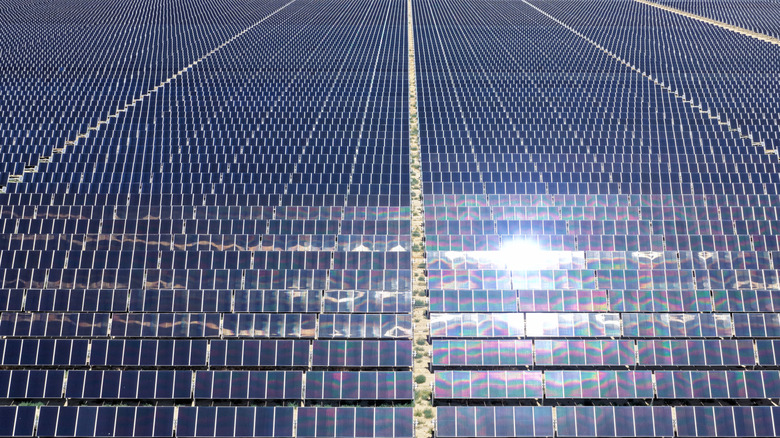
Solar power is one of the most promising and fastest-growing sources of clean, renewable energy on the planet — and it has had an interesting evolution. It has been available since the 1950s, and President Carter even installed solar water-heating panels in the White House as early as 1979. But utility-scale solar farms barely existed by the turn of the century. In fact, the first large-scale farm capable of supplying power to the grid didn't go online until 2007. Since then, their numbers have grown so fast that by 2020 they were producing over half of all solar electricity in the United States. In May 2026, solar generated more electricity in the U.S. than coal for the first time ever.
But as with any kind of large-scale development that moves at such a pace, it's worth pausing to take a look at what we might be missing. Large solar farms come with a real set of consequences that might not always be the topic of dinner-table conversations. It's important to note that we're talking about the large, ground-mounted kind that covers hundreds of acres of land and not the panels on someone's roof or other solar-powered gadgets that can come in handy for homeowners. They are two very different things, and the downsides of one are not necessarily the downsides of the other.
We're not aiming to make a case against solar power here, either. It is, after all, one of the best tools we have for generating clean energy at scale. What we are aiming for is to simply lay out what peer-reviewed research and official bodies actually say about the issues that come with these farms. Nothing is perfect, and solar farms are no exception. But understanding where the problems lie is the first step toward doing solar better.
They are taking over increasing areas of farmland
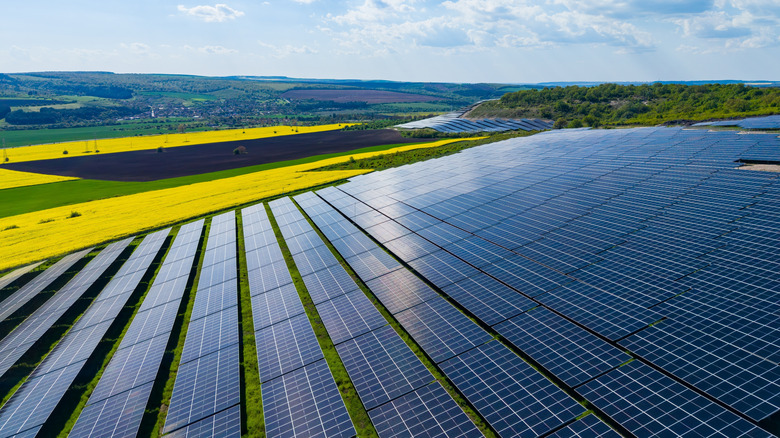
According to a 2024 report by the Economic Research Service, a branch of the U.S. Department of Agriculture, most of the land now occupied by large solar farms in rural America was previously used for farming. This has happened even in areas where there was little cropland to begin with. And that's because solar farms need what farmland offers: flat land with plenty of sun. In other words, solar farms and regular farms compete for the same ground. A 2022 study by researchers Mark and Greta Bolinger, published in the IEEE Journal of Photovoltaics, notes that the rapid buildout has raised concerns about land use. It also suggests many more utility-scale solar farms are on their way, given that they are considered central to cutting U.S. carbon emissions.
However, the land taken up by these large solar farms (and wind farms) is still only a small slice when measured against the total amount of farmland in the U.S. In fact, it's only around 0.05% out of roughly 897 million acres of farmland as of 2020, according to the USDA report. Furthermore, the Bolinger study found that between 2011 and 2019, solar farms became much more space-efficient, with somewhere between 43% and 52% more solar-panel capacity packed into each acre. This means that older figures that many still rely on make solar farms out to be far more land-hungry than they really are.
They can strain water supplies in dry regions
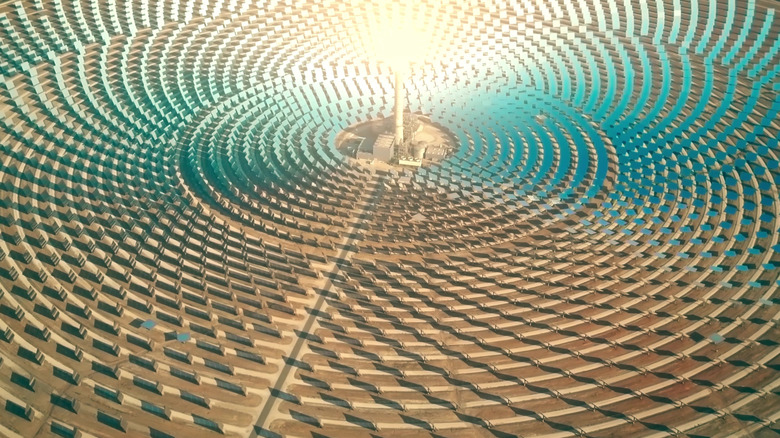
It's a fact of life that solar farms work best in dry, sunny places. It's also a fact of life that these are the places with the least amount of water. While regular photovoltaic (PV) solar farms use very little water, concentrated solar power (CSP) plants can consume large amounts of it. Despite this, CSP plants are increasingly used because they can store heat and continue to generate energy long after the sun has gone down. But the process needs water to clean the mirrors used to concentrate the sunlight, while large amounts are also needed for cooling and steam cycling. Some CSP plants even use as much water as coal-fired power stations, a concern flagged in a 2025 review by a researcher at Al-Baha University in Saudi Arabia.
Northwest China is a region that shows how serious the problem can become. The Chinese government is pushing huge solar projects into the country's desert areas, where there is an abundance of sunshine and vast open land. But there is little water in these arid regions. A 2023 study in the scientific journal Resources, Conservation and Recycling found that solar power places around 23 times more pressure on water resources in the country's dry provinces than it does in the wetter ones. It also found that most of the northwest area will not have enough water for future solar expansion unless it gets more supply. Droughts are expected to become more frequent and more severe. The study concludes that solar farms need to be planned around the water that is actually available, especially when using technologies like CSP.
Chemicals from panels may build up in nearby soil
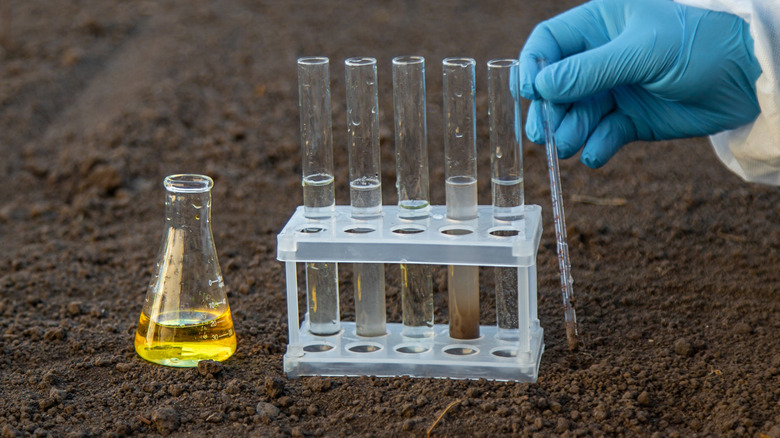
A preliminary research paper from 2025 investigated one of Poland's oldest photovoltaic solar farms and found elevated levels of indium and antimony in the surrounding soil. Indium can stunt plant growth and interfere with plants' ability to absorb essential nutrients, while antimony is toxic and can build up in plant tissue. Writing in the scientific journal Environmental Geochemistry and Health, researchers suggest the presence of these chemicals may be down to long-term use of the panels. They imply that as solar panels age, tiny cracks eventually leak micro amounts of metals from inside, which are then carried down by rainwater into the soil below.
The study also noted, however, that the area researched is Upper Silesia, one of Poland's most heavily mined and industrially developed regions. The far bigger contamination risk actually came from the region's long history of mining and smelting, with cadmium, chromium, lead, and zinc all showing up in much higher levels. Tests also showed that, despite the elevated levels, concentrations of indium and antimony were only moderate. This suggests that the chemicals had either built up in the soil over time, given the plant's age, or were already there long before the plant was built. Because of this, the researchers say their work should be considered preliminary, and they call for similar studies to be carried out in areas without the same industrial background before any firm conclusions are drawn.
Old panels become hazardous waste
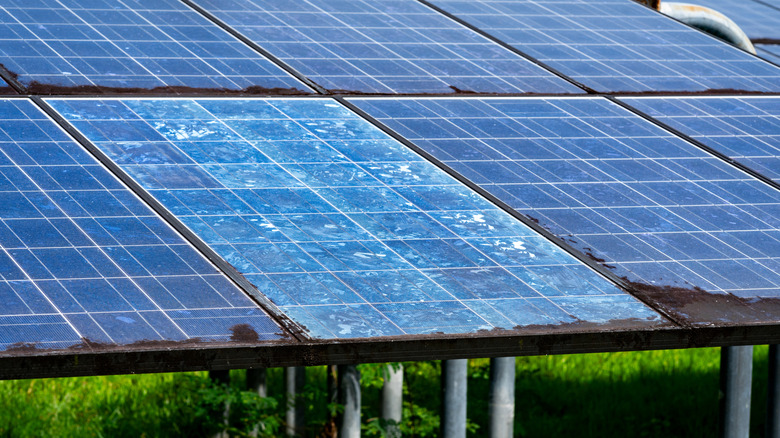
Solar PV panels are built to last. In fact, they have a lifespan of up to 30 years. Once they get to that ripe old age, their power output drops by roughly a fifth. That decline means farms need to replace them — but those old panels need to be disposed of carefully. While they are generally considered safe during their expected working life, panels that are being retired and disposed of can leach toxic metals like lead and cadmium. The Environmental Protection Agency (EPA) says this varies from panel to panel. But a 2024 review published in a peer-reviewed scientific journal found that most published studies of old panels it examined concluded that crystalline silicon solar panels past their lifespan could qualify as hazardous waste.
That means the scale of what is yet to come could be significant. By 2030, it's thought there will be up to 8 million tons of discarded PV panels worldwide. By 2050, that number is expected to reach 60 to 78 million. Recycling them is an option. But because solar panels are not yet classified as federal universal waste in the U.S., disposal is currently a problem. Rules differ from state to state, and it's clear something needs to be done sooner rather than later. Thankfully, after being petitioned, the EPA is currently working on consistent national rules for how to dispose of solar panels.
They kill and injure wildlife
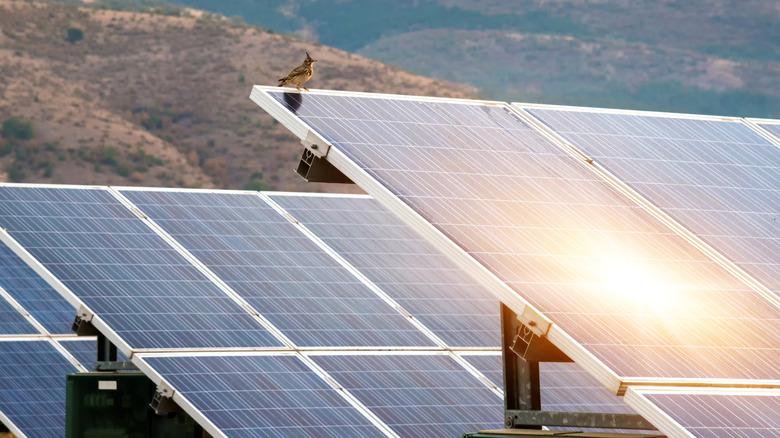
Solar farms can pose a serious threat to animals, especially airborne wildlife like birds and bats. This danger is most present at CSP plants, where thousands of mirrors focus sunlight onto a single point. Temperatures in those beams can reach almost 1,500 degrees Fahrenheit, and anything flying too close runs the risk of incineration. Even birds that escape with only singed wings can face a slow death because they can no longer fly, cannot feed, and become an easy target for predators.
A 2025 review by P.A. Fleming, published in the journal Renewable and Sustainable Energy Reviews, estimates around 17 million bird deaths caused by solar facilities around the world every year. CSP plants account for 5.6 times more bird deaths per megawatt and considerably more bat fatalities than PV farms. Among the CSP facilities where such incidents have commonly occurred is the Ivanpah plant in the Mojave Desert, where hundreds of birds are found dead or injured every year.
However, panel and infrastructure collisions are also common at PV farms, especially when the panels reflect polarized light. To birds passing overhead, this can look like sunlight reflecting off water, so they may dive toward it at speed. That said, the review also states that fatality numbers among birds recorded at solar facilities are still much lower than those counted on highways and roads, regular buildings, and fossil power plants.
They also trap and displace wildlife
The same review, published in Renewable and Sustainable Energy Reviews, shows that the threat posed to wildlife also includes trapping and displacement. The sheer size of these solar farms means they can break up natural habitats and create barriers on routes animals use for daily movement and migration. A farm's perimeter fencing can also trap large birds that find their way inside and don't have enough space to take off again. Waterbirds, such as ducks and cormorants, also need to build up speed to get airborne, so they are particularly vulnerable and often get stranded.
Ground-dwelling birds face their own particular risks. At the Ivanpah CSP facility in the Mojave Desert, the Greater roadrunner shows up on mortality records at rates you wouldn't expect from a bird that rarely flies. Then there are birds in flight that are drawn to light-reflecting panels. Even if they avoid a collision, the extra distance the detour adds to their migratory route can drain their energy reserves.
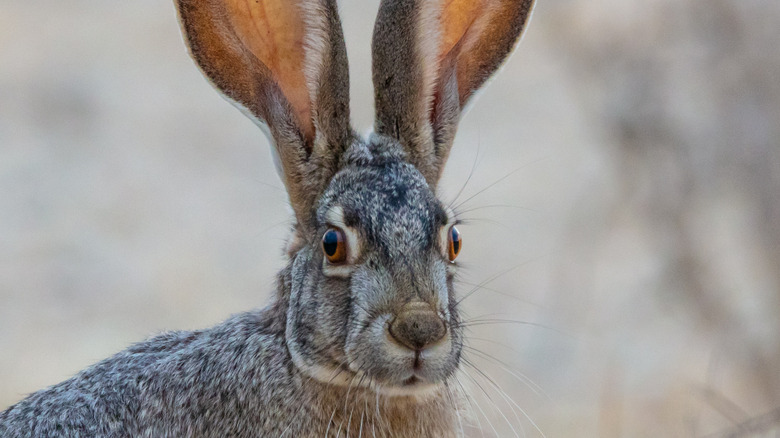
But it's not only overhead wildlife that is affected. During construction of a solar facility in Pahrump, Nevada, tortoises had to be removed from the site and relocated. It has also been noted that rattlesnakes and mammals like the kit fox and the black-tailed jackrabbit use fence openings at the same facility. It's not all bad news for wildlife, though. Fleming's review also notes that some species benefit from solar farms, with their panels and structures offering places to perch, roost, nest, and even forage. Indeed, this floating solar farm is doing a lot more than just generating electricity: It's providing sheltered spaces and dedicated habitats for aquatic wildlife.
They generate harmful dust and particles during construction
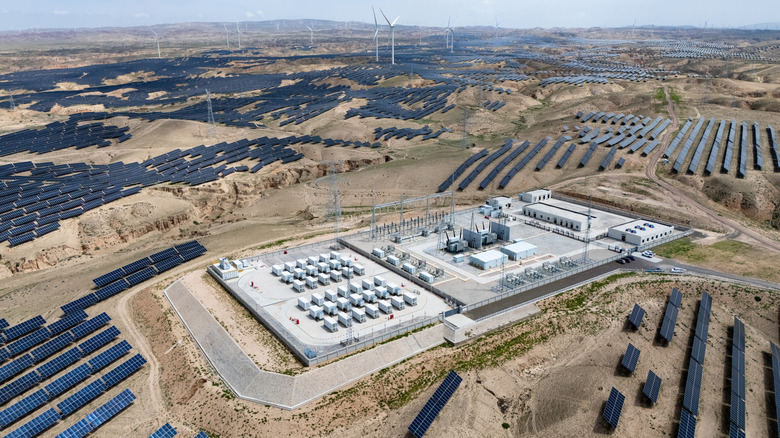
Building a solar farm is a more disruptive process than you might think. One big problem is sediment flux — or dust, to you and me. The dust generated by solar farm construction can affect air quality and can be harmful to health — and not just to us, but to wildlife and farmland, too. It can even affect the solar farms themselves by settling on panels and reducing how much energy they produce, while it can also gradually degrade equipment.
As it turns out, the amount of dust kicked up can be controlled by how you build the farm. A study published in May 2026 tracked how much dust was thrown up at two PV solar farm construction sites in the Mojave Desert. One farm was built the conventional way, stripping out plants and leveling the ground, otherwise known as "blade and grade," while the other used a method called "overland travel," where machinery moves across the site with minimal disturbance to soil and vegetation.
Tracking lasted for almost two years, and results were recorded from the moment construction began to the point where the farms started generating power. What the researchers found was rather alarming. The conventional site was shown to generate about 100 times more dust than a patch of undisturbed land nearby. And while the overland-travel farm still produced more dust than the untouched land, it was significantly less than the conventional farm's, at between just five and 10 times more.
They can reduce the value of nearby homes
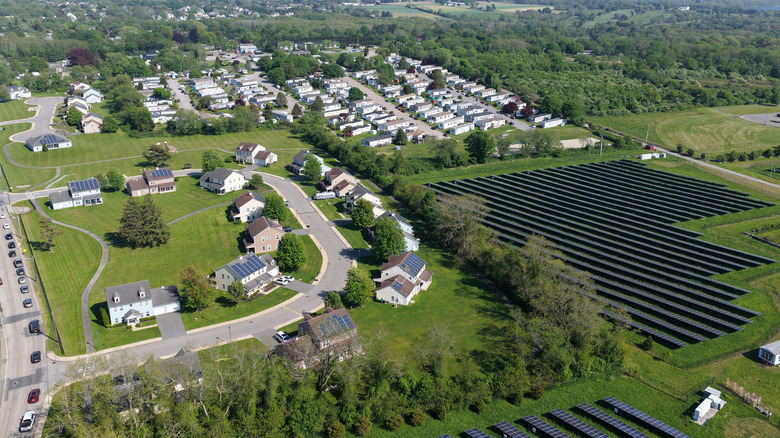
A study published in the Proceedings of the National Academy of Sciences in 2025 analyzed the sales of almost 9 million properties in the United States alongside data from several thousand large-scale solar facilities. The purpose was to find out what impact a nearby solar farm had on property values. The answer for anyone with a home built near one was not good. In fact, it showed that homes within three miles of a solar farm sold for 4.8% less on average than homes farther away. The closer to the site the property was, the less it went for. The hit dropped to no measurable effect beyond three miles.
Interestingly, it made no difference if you could see the farm from the property. The study put this down to what is known as the "stigma effect." This is when a price drop comes not from a physical problem but from how people perceive something. On the flip side, both agricultural and vacant land within two miles of a solar farm went up in value by 19.4%, which the study suggests is driven by demand from potential solar leases. The study also showed that when solar farms were built on land that was previously either contaminated or industrial, the effect on nearby home values was actually positive.
They can interfere with aviation systems and emit EMFs
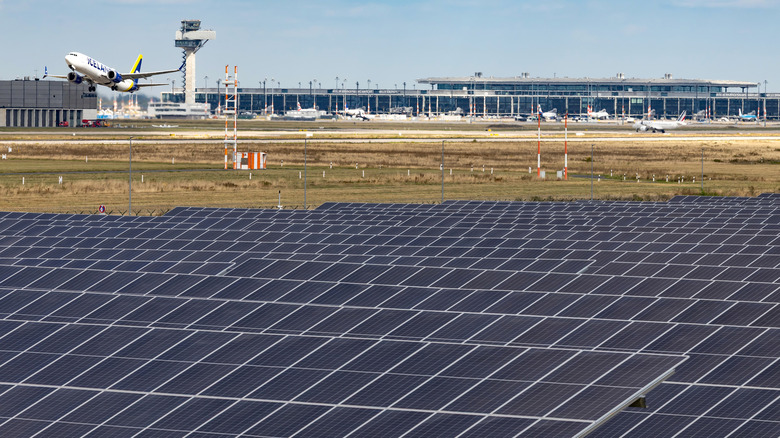
Solar panels and their electronics generate electromagnetic fields, or EMFs. They can produce radio interference, which can be strong enough to cause aviation communication problems. In a 2024 review, researchers from the KTH Royal Institute of Technology in Sweden found that putting panels next to an air traffic control system can reduce its communication range. In fact, in one simulation, the Swedish Defence Research Agency found the system could only reach half its usual range.
Solar panels near airports can also bounce back radar signals, which could result in confusion for air traffic controllers and pilots who need precise locations of aircraft. Because of these risks, the U.S. Federal Aviation Administration (FAA) recommends that airports thoroughly check for interference with radar and navigation equipment before installing any panels.
Large installations have caused problems in the past, including a 17-megawatt solar plant in the U.S. that triggered interference with a nearby telephone system. Solar installations have also been found to interfere with amateur radio operators and digital radio, with interference detected across a frequency range from around 10 kHz to several MHz. However, the majority of incidents on record involve small rooftop systems, rather than large-scale solar farms.
They can destroy buried archaeology
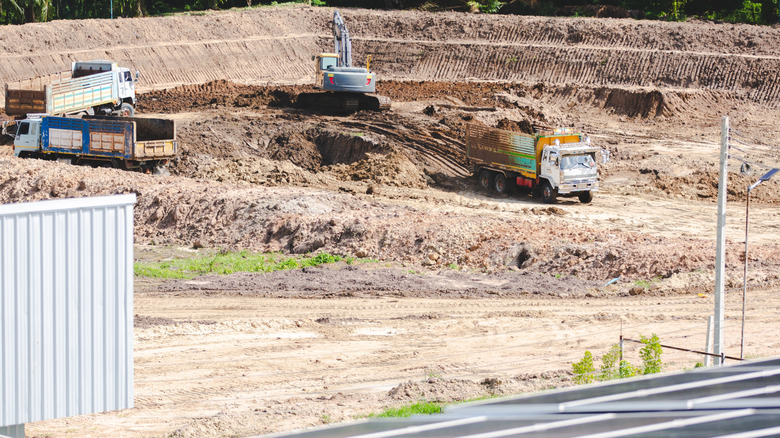
When construction starts on a solar farm, foundations are dug, cables are buried, and access roads are built. This can destroy what is under the ground, and sometimes, that can be an undiscovered archaeological site. This problem is exacerbated by rules in places like Denmark. There, solar park sites are not checked for buried remains in the same way other building projects are. Around one-fifth of a typical construction site in Denmark is checked before work begins, but when it comes to solar farms, the share is much smaller.
Pernille Kruse of Museum Sønderjylland points out in a 2025 paper that archaeologists in Denmark are only allowed onto narrow strips of ground where the topsoil will actually be removed. She also notes that trucks have driven across ground that hasn't been surveyed, which has breached the surface and destroyed buried remains. And she explains that certain buried remains, such as cremation burials, cannot be reconstructed once solar panel posts have been driven through them.
Kruse notes that archaeologists across the border in Germany are experiencing similar problems, and UNESCO has raised similar concerns. The international heritage organization calls for proper checks to ensure anything of historical or archaeological importance is not buried under potential sites first, and, if anything is discovered, for construction to be moved elsewhere or for proper steps to be taken to protect it. Kruse adds that without these checks, solar farms could end up destroying important cultural remains.
Methodology
This article draws on peer-reviewed research and other authoritative sources, including studies published in leading scientific journals, reports from government bodies, and guidance from international organizations. The process began with two major peer-reviewed studies: a global satellite analysis of 116 solar farms and a comprehensive review of solar facility impacts on wildlife. These were used to identify the key issues, which were then researched further using credible and up-to-date sources. So, now you know some downsides to solar farms; perhaps you'll be interested to find out how U.S. solar farms are doing a lot more than just generating energy.