

Why Do Solar Panels Lose Their Efficiency Over Time?
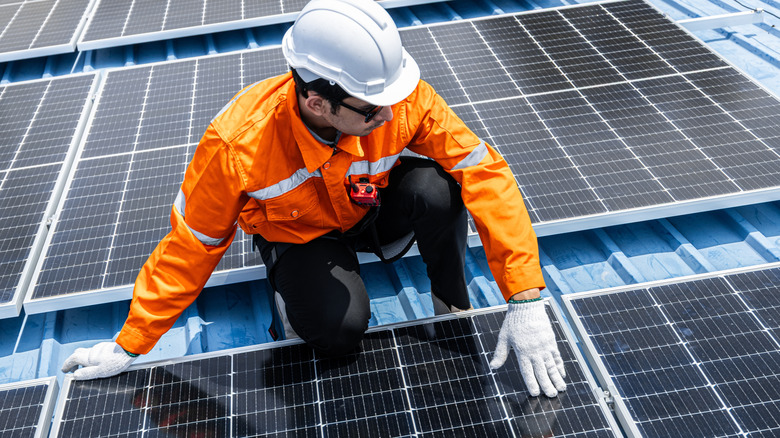
In the past two years alone, there have been a million new solar power installations brought online in the United States. Indeed, according to the Solar Energy Industries Association, the cumulative output of U.S. solar installations is enough to power about a third of U.S. homes. That's a lot of solar panels — and each and every one of them is inevitably losing efficiency. While studies suggest that solar panels could last longer than we imagined, there is a gradual and steady performance drop that, for the moment at least, comes with the territory.
The drop in efficiency can be broken down into three main categories: light-induced degradation (LID), potential-induced degradation (PID), and aging-related degradation (AID). How much degradation occurs depends on several factors, including the quality and type of panel. However, the total annual loss of solar panel efficiency falls in the range of 0.3% to 1%, with an average loss of about 0.5% across the industry.
Efficiency loss through LID mainly affects older P-Type panels. It's often referred to as an adjustment stage. Somewhat ironically, this loss occurs when sunlight hits the cells for the first time; this causes a condition known as boron-oxygen defect and can reduce out-of-the-box efficiency by about 1 to 3%. This is a one-off loss that is unavoidable; the good news is that modern N-type panels have virtually eliminated this factor.
Different types of solar panel efficiency loss
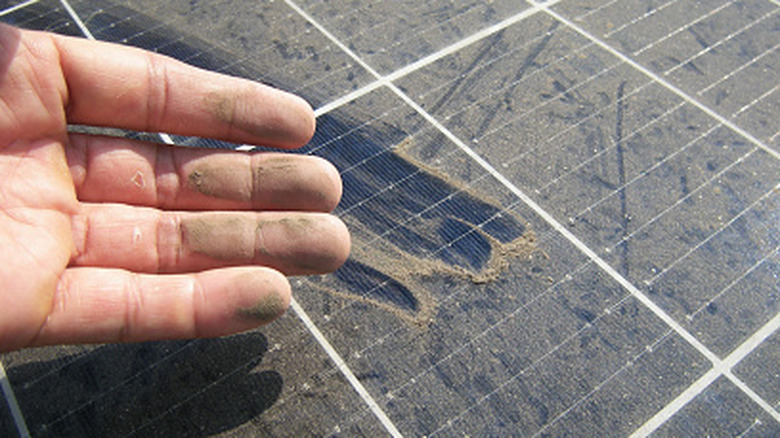
The losses that follow LID — while lacking the instant drop of LID — are slower, cumulative, and persistent. The first of these, and the most serious, is potential-induced degradation. This is a stress-driven effect that happens when factors like high voltage, heat, and humidity interact within a cell. This is due to an electrochemical reaction that attracts positively charged sodium ions to the negatively charged solar cell. When this happens, the sodium ions gather on the cell and restrict its current-generating capabilities. While any type of solar panel can be affected, older crystalline silicon panels are more likely to experience this. In some cases, this condition can reduce efficiency by up to about 40% in just a few months, and can be as much as 90% within a few years.
The other type of efficiency loss is aging-induced degradation. Sadly, this is one that we likely all sympathize with, as it's just what happens to things as they age. In the case of solar panels, decades of exposure to the elements and UV radiation gradually eat away at their efficiency. This is the type of efficiency reduction that is most closely associated with the 0.5 to 1% range of degradation quoted earlier. Among the age-related factors that affect efficiency are solder joints and interconnects, which can get stressed and weakened through hundreds of thermal cycles. In short, time and tide wait for no man — or solar panels, for that matter.
Minimizing solar panel efficiency loss
To avoid LID, don't buy panels that are susceptible to the condition. Other than that, it's a case of introducing your panel to the sunlight and hoping for the best. However, with the other two types of efficiency degradation, there are some steps you can take to lessen the effect. One of the easiest ways is simply to make sure that the solar panel you buy is of decent quality. Poorly manufactured solar panels that use lower-quality materials and components will degrade faster than higher-quality panels.
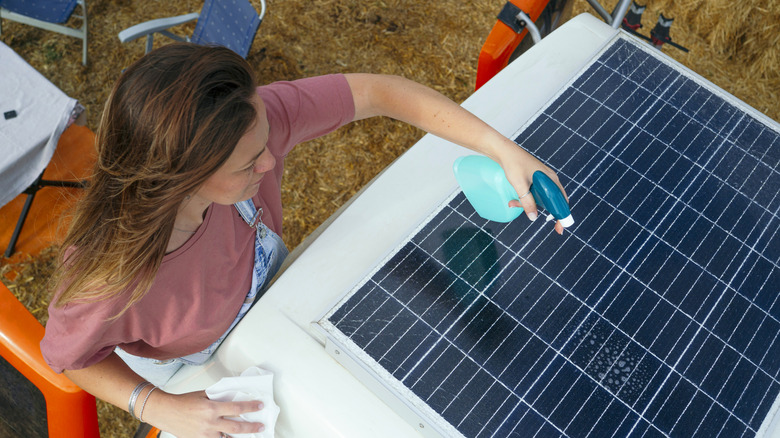
Proper maintenance of your solar panels can also help reduce efficiency degradation. Whilst the ravages of time will inevitably have their way, you can at least temper the effect by taking care of your solar panels. Understanding how often you should clean your solar panels is a good starting point. How often you need to do this will depend on things like the local environment and climate. For instance, if you live in dusty or pollen-prone areas, you may have to clean your panels more often, but a general recommendation is once or twice a year. While this has the obvious benefit of letting more sunlight through, it can also help prevent hot spots from developing. These occur when a shaded cell produces less electricity; this causes the surrounding cells to work harder, and much of this power is fed into the shaded cell. This causes a localized hot spot, leading to potential damage and even fire.