

US Solar Farms Are Doing A Lot More Than Just Generating Energy
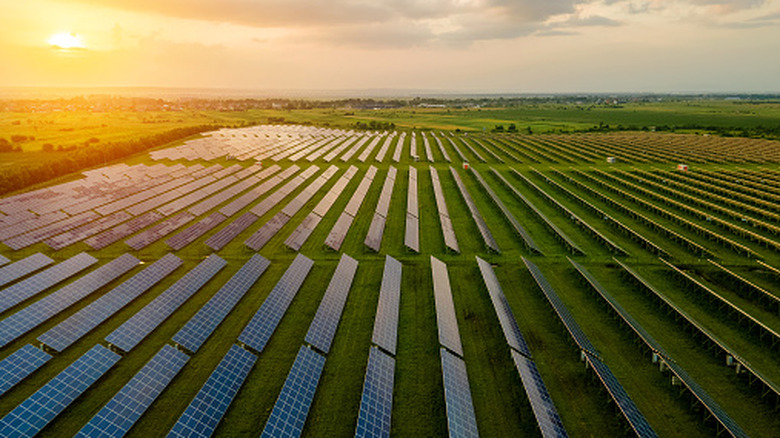
When solar farms make headlines, it tends to be for two main reasons: their size and energy production. While the United States is home to a seriously large solar farm that generates lots of electricity, there's more to the nation's solar farms than meets the eye. Numerous solar farms in the U.S. do more than harvest sunlight and use that to generate electricity. In California, for example, solar panels shade the above-ground irrigation systems that transport meltwater from the Sierra Nevada mountains to the farms in the San Joaquin Valley as part of a program called Project Nexus.
This strategy has been implemented elsewhere, like in Arizona, and it's a game-changer that does more than conserve water. By placing solar panels in these high-sunlight areas, states don't have to make room for them elsewhere. That means more room for agricultural land development, which could otherwise be disregarded in favor of solar farms. Speaking of farming, some areas have also implemented agrivoltaics, which involves planting crops beneath raised solar panels. This helps crops stay moist and relatively cool in high-temperature environments with direct sunlight.
Agrivoltaics has proven a major upside to the establishment of solar farms. As it turns out, there are more positives to this emerging practice than giving plants a more hospitable environment.
Agrivoltaics brings a host of benefits
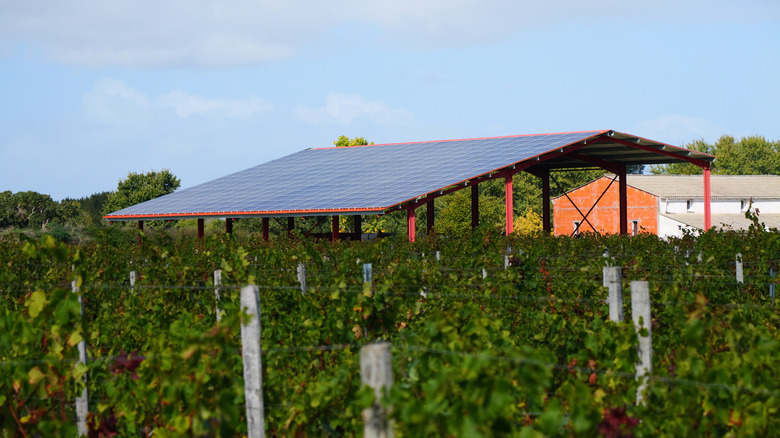
Agrivoltaics aims to help crops grow stronger and healthier by protecting them from extreme sunlight. However, U.S. solar farms have observed other benefits to this practice. The Nature Conservancy in Colorado, with guidance from Byron Kominek, owner and manager of the nearby 3,276-panel Jack's Solar Garden, set up a small agrivoltaic planting site at an already-existing solar farm. Eighty-three percent of the plants survived after the first year, with a complementary uptick in insect biodiversity, including predators and pollinators alike. Thus, there's hope that agrivoltaic solar farms could help rehabilitate plant and insect populations, while also generating clean energy and providing efficient sites for crops.
Minnesota's Big Lake agrivoltaics project shows just how beneficial agrovoltaics can be for a community. That particular project has gotten the local population more involved with agriculture through endeavors like electric co-ops, all while ensuring the availability of locally-grown produce. On top of this, agrivoltaics has actually made farming itself more accessible for those who want to start their own operation. The Food Group, a Minnesota nonprofit, explained to the Great Plains Institute that it is a great way for new farmers to gain access to land they couldn't afford otherwise. Solar companies own the land, but farmers can partner with them to do what they do best on it, with both reaping the benefits.
Large solar farms, like the 2,000-acre Texas solar plant scheduled to come online in 2028, are all the rage these days, and the benefits of these large arrays go beyond powering homes and businesses in the area. They can fundamentally change ecosystems and communities alike for the better.