

This Floating Solar Farm Is Doing A Lot More Than Just Generating Electricity
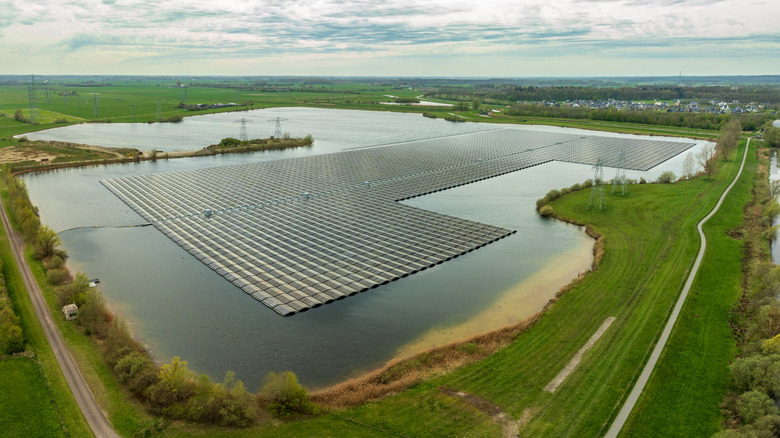
In theory, floating solar farms have several environmental benefits over large, land-based facilities like California's massive 4,700-acre Topaz Solar Farm. Floating solar farms leave land free for more productive purposes, like agriculture. Floating panels on existing bodies of water can also minimize the risk of migratory birds mistaking land-based farms for lakes and losing their way.
The Netherlands' Bomhofsplas solar park, located on a lake in Zwolle, has also installed cages below the panels to act as homes for aquatic wildlife, resulting in a net gain of livable habitat in the area. There are upsides, then, but there are still plenty of unanswered questions about the long-term effects of floating solar farms in general. A 2024 article in Environmental Science & Technology, for example, raised concerns about microplastics and metals leaching into the water from floating solar farms, although it concedes more real-world research is needed to establish how much of a risk contamination really is.
More specifically, a 2021 study published in Sustainability explored the notion that bird droppings at Bomhofsplas could alter the water's nutrient levels when washed off the panels. This, in turn, would have a potentially detrimental effect on water quality. Findings, however, showed that this was not a major concern.
Water quality didn't noticeably decline at the Bomhofsplas solar park
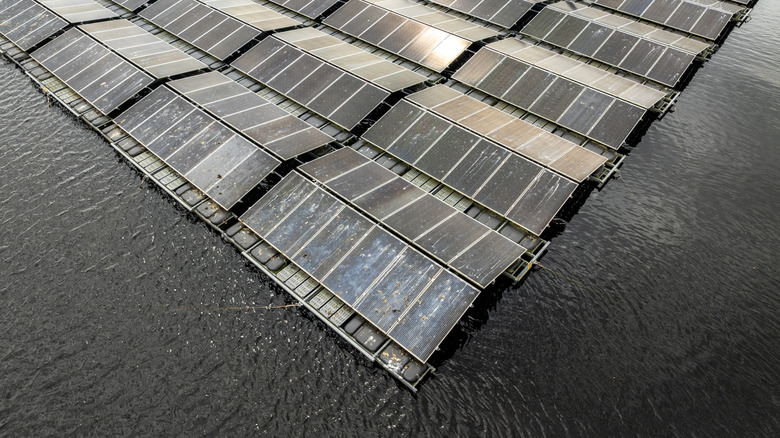
To identify potential changes in water quality, researchers compared the water quality directly below Bomhofsplas solar park with water from an open patch of the lake over 330 feet from the edge of the panels. The data showed no significant change in temperature or dissolved oxygen beneath the solar panels. It also found that limited amounts of both light and wind could still reach the water's surface despite the panels' presence.
Over the course of the study, wildlife also began to make a home for itself at the solar park. Bivalves quickly colonized the underside of the floating structures, while birds used the sheltered spaces below the panels to rest. These same birds were also responsible for the increased droppings found on the panels.
Other studies around the Dutch solar park have shown similarly promising results. An Ecocean report found that the habitat cages installed below the park seem to have worked as intended, helping increase species diversity in the lake within the first three years of installation. Equally positively, researchers noted that the solar park reduced wind intensity across the lake, which helped slow erosion of the lake's banks.
Some risks need more research
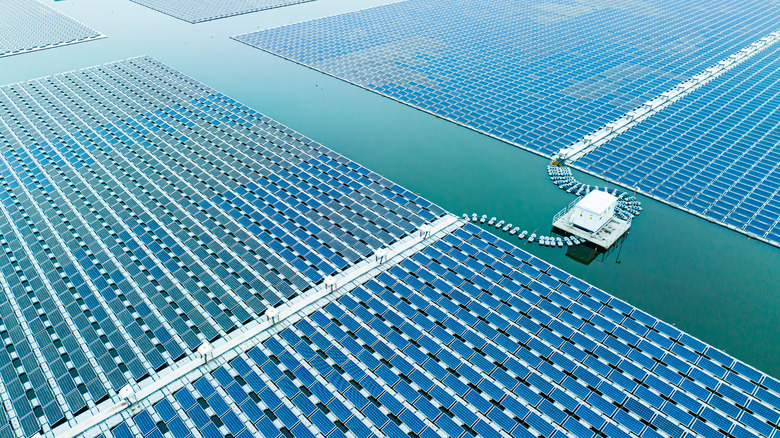
Floating solar parks can be less environmentally damaging than other forms of renewable energy and can also provide a lot of power when scaled up. The Bomhofsplas solar park has a theoretical peak output of 27MW, which is enough to power up to 8,000 homes.
The trouble is, just because one floating solar farm in the Netherlands has broadly worked well doesn't mean that other floating solar farms are automatically just as eco-friendly. China is building a massive open-sea solar plant which includes a fish farm, but for now, little is known about how exactly such a major development might affect the surrounding area. It's far larger than the Netherlands plant, with enough solar panels to replace a nuclear reactor and supply 2.6 million homes when it's complete.
Although the study in the Netherlands didn't find any significant changes in water quality, those findings may not apply to other floating solar farms. In theory, a solar park covering a larger percentage of a lake's surface, or situated on a deeper lake, could still harm water quality and cause harmful algal blooms. Floating solar parks aren't without potential problems, then, and more research is needed to understand these risks and mitigate them. Even so, the potential benefits are impossible to ignore.