

5 Disadvantages Of Classic Inline Twin Motorycycle Engines
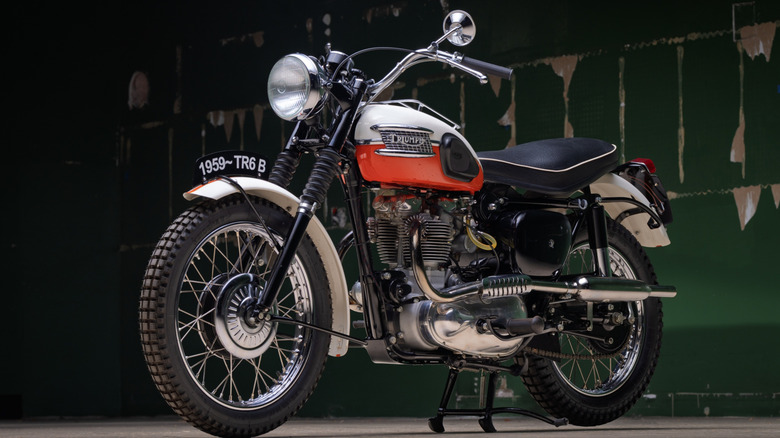
Born into obscurity in Europe during the pre-war years as a step up from the ubiquitous single cylinder motor, classic inline twin motorcycle engines first rose to prominence in the post-war years on the gritty streets of the U.K. The working class areas of England were still recovering from aftermath of WWII when the droning noise of a new type of motorcycle engine was first heard on the sooty streets.
Inline twin-equipped bikes, notorious for their bad behavior, would transcend the place and time of their birth, and in doing so become icons of the misbehaved. Piloted primarily by young men with a taste for speed and a budget that barely stretched beyond boots, the story of the inline twin is one of overcoming problems and building something great from the parts life has dropped on you by utilizing sweat, blood, ingenuity, and no doubt some colorful language.
Early inline twins had some famous problems and design flaws. These engines powered bikes that could be charitably considered difficult motorcycles. Some of these bikes, despite their troublesome nature, would rise to prominence not only in motorcycling circles, but in pop culture. These temperamental engines powered motorcycles considered to be both terrible and wonderful in the same breath. Inline twins were the beating heart of a motorcycle movement, embraced by rebels everywhere. The classic inline twins managed to overcome some significant issues to eventually carve out a place for themselves in motorcycle culture.
Heavy mechanical vibration
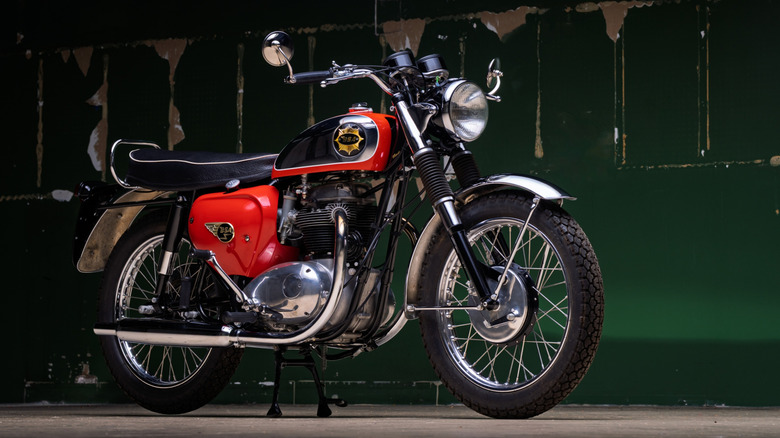
While many motorcycle manufacturers have, over the years, evolved inline and later parallel twins into very good motors, thanks to better engineering, heat management, tighter tolerances, transverse layouts, and better materials engineering, they got off to a rough start, pun intended, in their first iterations. These early motors suffered from some serious, and famous, flaws, chief among them brutal vibration.
To say that there is an inherent disadvantage to side-by-side cylinders that can't be overcome is not really correct. I have personally owned a BMW F 850 GS Adventure and a Honda Africa Twin, both among the best adventure bikes ever made. These smooth-running modern motos, which feature modern transverse-mounted parallel twins, are a far cry from their mechanical ancestors, particularly in the matter of smoothness.
Layouts where both pistons are rising and falling in sync are notoriously rough runners, and are famously found in old-school British bikes like Nortons and Triumphs from the cafe racer era.
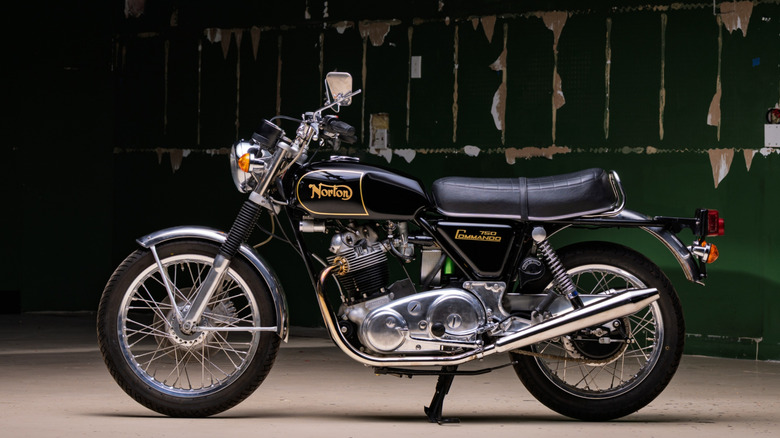
The synchronized up and down of the pistons led to extreme shaking in bikes like the Commandos and Bonnevilles in the '60s and '70s. This led to engine flexing, frames cracking, and main bearing failure, all of which put a heavy warranty burden on these companies. To address the issue, British engineers came up with fixes such as the "Isolastic" frame, with rubber engine mounts hiding the shake. However, this only led to flexing under load and main bearings tearing themselves apart, which almost bankrupted the British motorcycle industry.
Fatiguing torsional stress
The rolling series of disasters that beset the British motorcycle industry in its efforts to champion the twin over the single cylinder gave Japanese manufacturers an opportunity to rush into the space and take on the British for market share in the small road bike segment. The solution for the Japanese engineers to the issues that had so plagued their British counterparts was the introduction of 180-degree crankshafts.
At first blush, this seems like a sensible solution to the problem faced by the earliest inline twins. These engines feature the trade-off of 180-degree crankshafts, in which one piston is in the up position, while its counterpart is down. This does address the worst of the bad vibes, but it introduced another problem: end-to-end twisting.
The forces introduced in this setup, with one end of the shaft experiencing upward force and the other being pushed downward, is like twisting a paperclip back and forth, and would come to be called by engineers a "rocking couple." That twisting force within the engine causes severe high-RPM buzz, as well as torsional stress that weakens, bends, and can ultimately break the crank. Old Hondas like the CB450 had this problem, and were famously mushy or lumpy in power delivery thanks to the irregular 180/540-degree firing order, and alienated buyers who had already grown accustomed to the smoother power delivery of a four-cylinder motor found in bikes like the CB750.
Heat management, or lack thereof
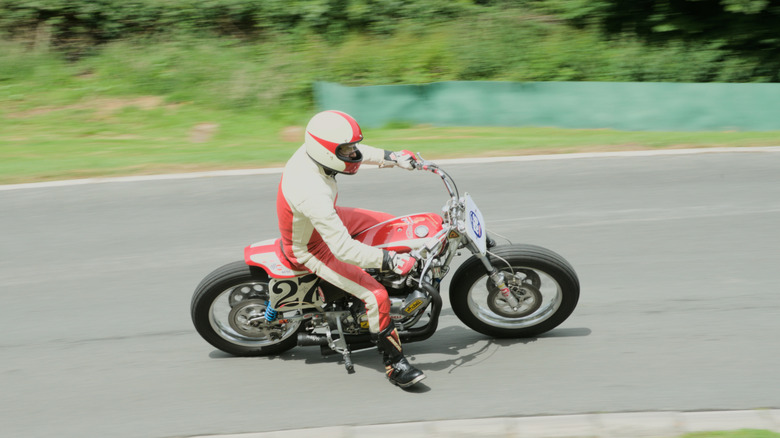
Given the very nature of two cylinders of an engine packed tightly side by side within the limited space of a motorcycle frame, especially when oriented front to back, means that heat is trapped between the cylinders. This would be challenging to deal with even on a liquid-cooled unit, but on early air-cooled inline twins it was a nearly insurmountable challenge and a prime culprit in the bad reps these engines earned at the time.
This layout would lead to extremely uneven heating. Metal in the front cylinder is cooled by the passing airstream, while in between it and its rear sibling, heat would have nowhere to escape. This space would become too hot, causing uneven expansion. This disequilibrium in rates of expansion of the cylinder heads would lead to gaps and failed seals. This, in turn, would lead to oil loss, and the result was, at best, a very leaky engine and, at worst, occasional catastrophe.
Classic Triumphs like the Speed Twin and Bonneville T120 were prone to this problem, less so in Old Blighty's fog and cold, but in the American import market bikes sold in the South and West, and other hot climates around the world, often failed. Modern cooling systems, with sophisticated channeling of coolant passages and precision oil-jetting, have largely eliminated these issues in modern transverse-mounted engines that gave classic twins a bad reputation back in the day.
Weak power delivery and even weaker sounds
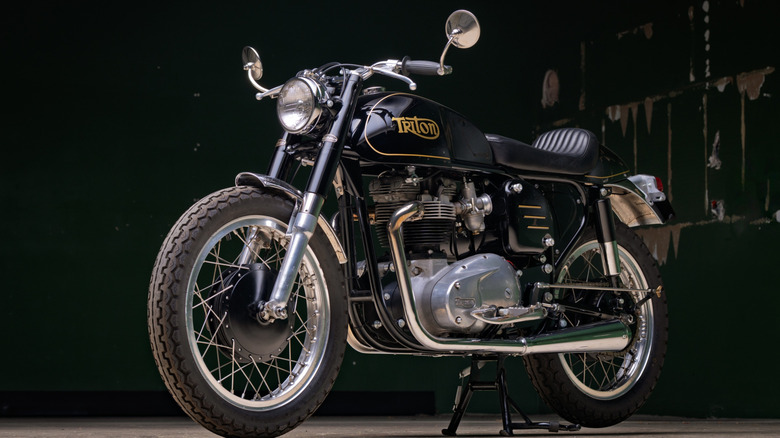
Anyone who has ever heard a big V-twin Harley roar by, or a well-tuned four-cylinder scream, can be forgiven for thinking classic inline twins are not the most inspiring-sounding power plants on two wheels. Featuring 180- or 360-degree shafts means one cylinder offsets the other on the combustion stroke, and the result is a monotone, or perhaps more appropriately, monotonous drone rather than a scream or a roar that moves the soul along with the body.
Along with their flat droning exhaust note, these engines produced a remarkably flat torque curve, unlike the low, easy torque of a V-twin or the high-revving rush of a four-cylinder. Older-generation parallel-twin Kawasaki Ninjas were still being dinged by the motorcycle press and riders alike for this trait as late as the early '90s. The later development of offsetting 270-degree firing order intervals in modern bikes like the Aprilia RS 660 or the Yamaha R7 and MT-07 provides a better rumble while delivering a more satisfying power curve than old-school inline twins.
These bikes have salvaged the reputation of the twin as a sporting engine, due to the steady march of progress in the art and science of crankshafts and firing sequences. The 270-degree crankshaft revolution overcame the problems of early twins, with uneven firing intervals allowing modern twins to largely imitate the firing order, rumble, power, and thereby traction of a 90-degree V-twin. They certainly sound better doing it than classic inline twins ever did.
Top heavy by design
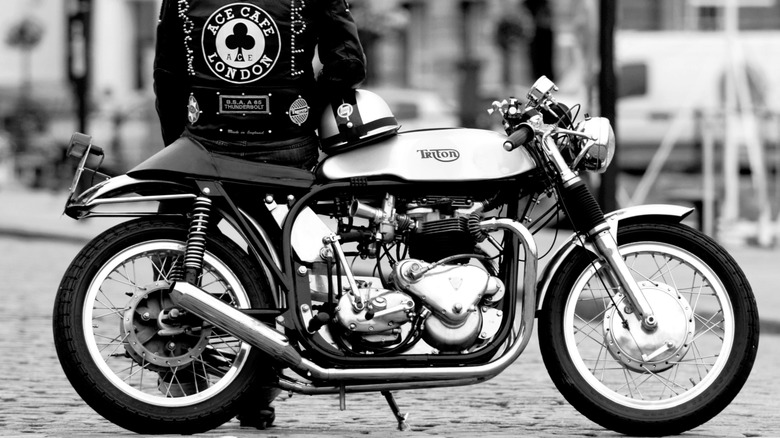
Center of gravity is a key concern for designing bikes. In general, the lower the COG, the better, and the easier and more predictable the handling will be in a bike with a higher percentage of its weight carried closer to the ground. Classic inline twins, with their longitudinal configuration and tall cylinders, seriously compromised the center of gravity of bikes from this era.
Tall parallel cylinders kick off a chain reaction of compromises. The tall heads themselves cause more weight to be carried higher in the bike's overall mass. This in turn means a fuel tank, which sits above the engine, has to sit higher itself, further raising the center of gravity with the weight of the tank and fuel. The bang-on effect was that their own design flaws seriously compromised the handling of bikes equipped with classic inline twin engines.
Making the transition into corners on these bikes felt less natural and required more effort. Bikes with this layout were easy to drop at slower speeds during maneuvers. Keeping them upright could be fatigue-inducing. Worse, entering into corners at high speed could be absolutely fear-inducing, as the tipping point is reached suddenly, sending the bike and rider skidding away. That didn't keep riders away. Classic twins, despite, or possibly because of their flaws, are a favorite not only of the ton-up boys, but of Old Hollywood stars like Marlon Brando and Steve McQueen, as well as thousands of enthusiasts to this day.