

12 Classic Sears Electronics That Are Pure Nostalgia Today
We may receive a commission on purchases made from links.
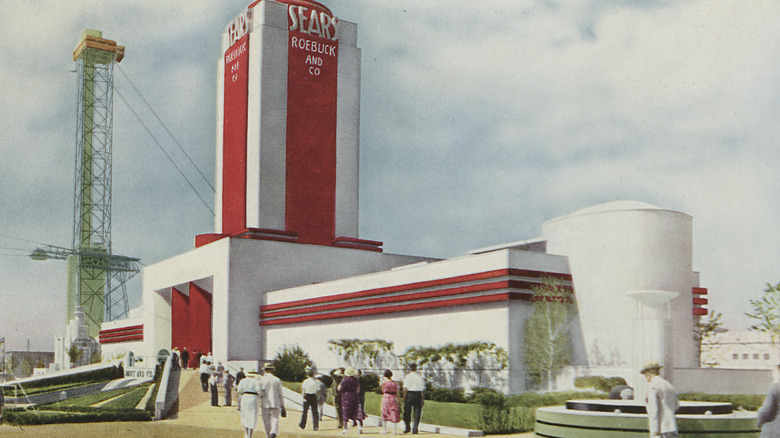
For anyone who grew up during the 20th century, Sears was a store with some history. Founded all the way back in 1893, Sears remained a common anchor store in malls for decades, and it was a place that people could go to find everything from clothes and tools to home exercise equipment and electronics. At one time, Sears had over 3,500 locations, but as of early 2026, only five remain in operation, showing that even a veteran company isn't immune from closing.
Still, the company remained strong for a long time, selling all kinds of electronics to consumers across the United States and abroad. Because the store was around for so long, several brands became synonymous with Sears. This is especially true of its radio and television sales, which go back to when those technologies were first invented and sold to the public. As the decades passed, Sears embraced new types of electronics, including computers.
It used to be common to go down to your local Sears to purchase a home computer. What began as a mail-order catalog company evolved into a juggernaut of Christmas shopping where the latest and greatest were bought and wrapped for millions of consumers. These 12 Sears electronics hearken back to the days when the retail giant dominated the landscape.
Silvertone Radio
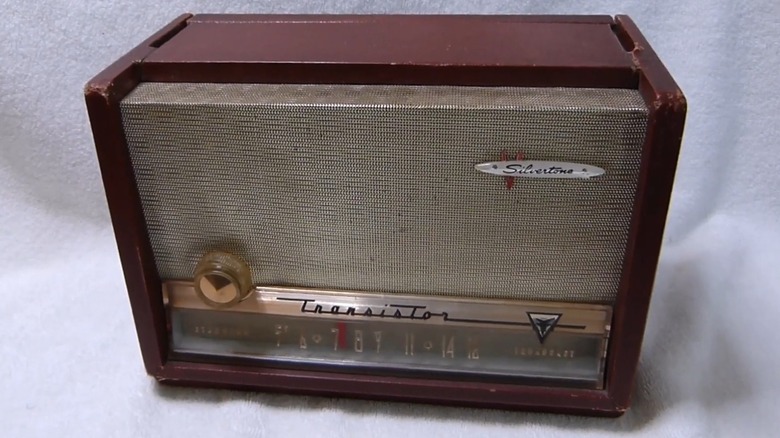
One of the oldest brands associated with Sears is Silvertone, which the company created to sell its musical instruments and electronics. From 1915 to 1972, you could find all kinds of products under the brand name, but the most common electronics bearing the Silvertone name were radios. These emerged in the 1920s, so the brand began when radios were among the most important electronics in people's homes.
They often came in large cabinets because vacuum tubes took up a lot of space, while modern electronics use transistors. They were statement pieces in a home, so radios looked fancy and were often encased in gorgeous wooden cabinets where families gathered around to listen to radio plays, the news, and music. As time passed and technology evolved away from vacuum tubes, Sears started selling smaller radios, including the one pictured above.
That is a Silvertone Transistor radio model 7228, sold in Sears stores beginning in 1956. It is the first Silvertone transistor radio that set shoppers back $57.95, which is around $715 in 2026. It was portable, had a handle, and required a unique Silvertone 9-volt battery, which Sears sold alongside the radio. Because Silvertone was around at the beginning of consumer radios, Sears' catalogs demonstrate the evolution of radio technology spanning 57 years of the company's history.
8-Track Stereo Tape Player
While cassette tapes ultimately won the media competition against 8-track tapes, the older technology remained popular from the late 1960s until it was overtaken in the mid-1980s. They were especially popular in cars, as an 8-track player changed what drivers could listen to. These days, you can listen to whatever you want digitally, but throughout the 1970s, if you didn't have an 8-track player in your car, you were limited to the radio.
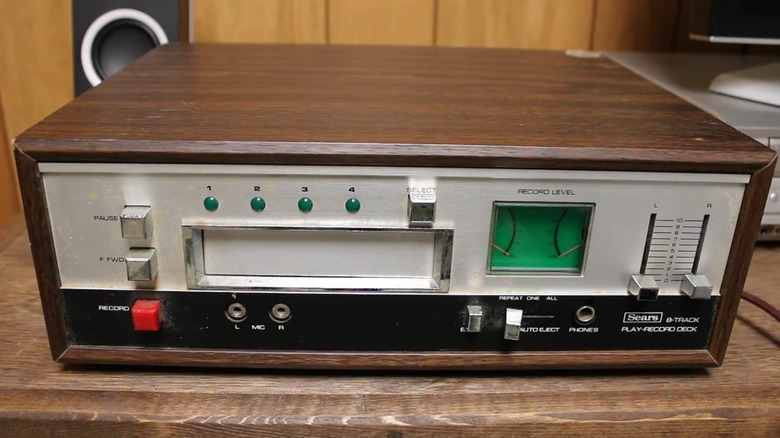
The technology wasn't exclusive to cars, as there were plenty of home 8-track players as well. Sears sold a variety of these devices, which looked pretty much like other components in a home audio system. You could stack it alongside your record player or radio, and for several years, 8-track players were the consumer tech to have. Sears began selling home units like the one pictured above in its 1973 Sears Christmas Book.
An 8-track player typically cost consumers in the '70s around $45 ($340 in 2026), depending on the model and features. This was after the Silvertone brand came to an end, so a lot of these devices were made by RCA Victor Records, which also produced many 8-track tapes. Although the 8-track player and its media ultimately lost the media format war to cassettes, they took up plenty of space on Sears' store shelves for more than a decade.
Black & White Portable Television
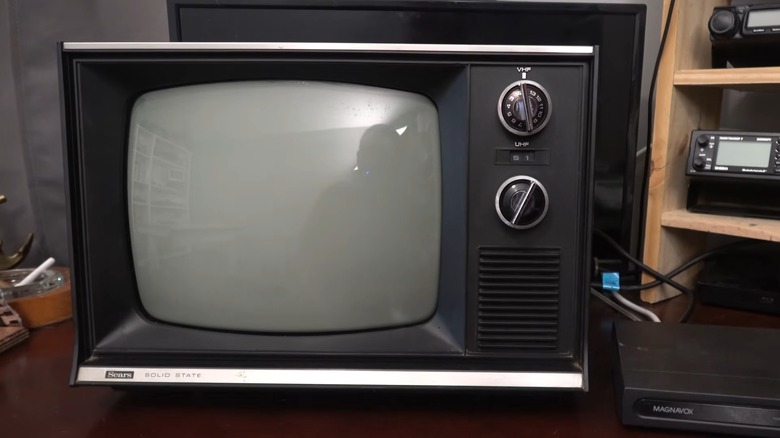
Sears moved a variety of consumer electronics, and the company sold a lot of televisions. Like many department stores, you could find these along a wall, showing the same or different images to demonstrate a TV's capabilities. One of the more interesting types of televisions Sears sold included the portable variety, though by modern standards, Sears stretched the word "portable" to its absolute breaking point because these were rather large systems.
The pictured black-and-white portable television is a perfect example of this. Looking at it, the TV doesn't scream portability, but it nonetheless has a handle that made it easier to carry from place to place. That said, it didn't take batteries and had to be plugged in. It has manual tuning dials, with one that changed the channel from VHF to UHF, and another that tuned the frequency. On the side, you'd find dials for power, volume, contrast, and brightness, and it even had a headphone jack.
While black-and-white portable TVs were popular for years, Sears also sold color TVs. Initially, Sears made its televisions with Silvertone, but these were much larger console TVs typically encased in large, cumbersome, decorative wooden cabinets, so portability wasn't an option. Granted, Sears sold all kinds of televisions throughout its history, even launching Kenmore-branded TVs in 2016.
Pong
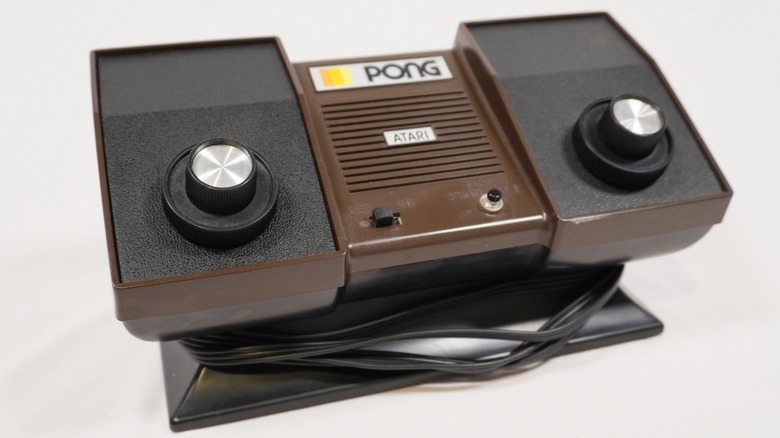
While it may seem unlikely today, one of the main reasons that the video game industry grew throughout the late 1970s, establishing it as a viable consumer medium, was Sears. The company entered into an agreement with Atari, Inc., in 1975 to sell its "Pong" home console systems in its stores. These were unique to Sears, and people flocked to the department store to scoop them up for the '75 Christmas season. "Pong" isn't a complex game, and the home system played the same game featured in arcades.
This was a big deal, as it brought arcade gaming into people's homes for the first time. The Magnavox Odyssey arrived a couple of years earlier, but it couldn't compete with Atari's "Pong," especially in the home consumer electronics industry. By selling "Pong" through its stores, Sears demonstrated the commercial viability of the product, and a plethora of clones quickly followed.
Sears initially sold its admittedly weird-looking "Pong" systems under its Tele-Games label. The success of Sears' "Pong" systems helped solidify Atari's place in the market. The subsequent release of the Atari Video Computer System (VCS, later renamed the Atari 2600) helped to solidify the industry in North America. Because of this, it's not hyperbolic to say Sears helped establish the home video game industry.
Tele-Games Video Arcade
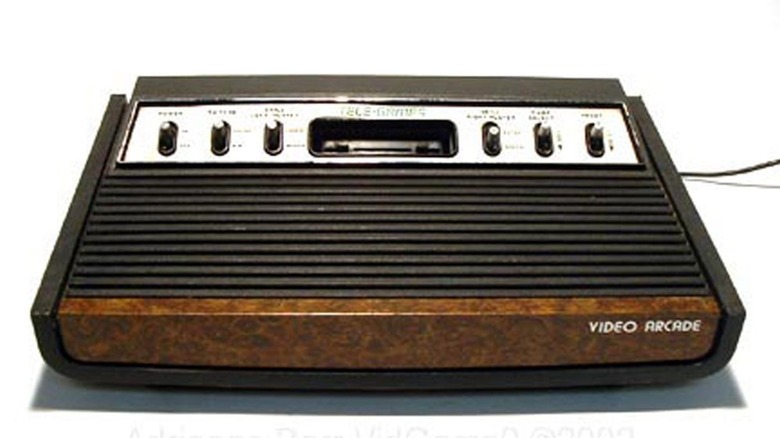
In 1977, Atari introduced the Atari VCS, which featured one of the best game console launches of all time. The system wasn't the first to feature interchangeable games; that was the 1976 Fairchild Channel F. Still, though it arrived the following year, the Atari VCS blew the Fairchild Channel F out of the water and took over the home video game industry almost entirely. Atari's system became the must-have electronic of the late 1970s, and Sears played its part.
Instead of selling Atari's console as it was, Sears opted to rebrand it as the Tele-Games Video Arcade in line with its previous rebranding of Atari's "Pong" home consoles. There were some minor cosmetic differences between the Atari VCS and the Tele-Games Video Arcade, but otherwise, the systems were identical. They played all of the same games, featured identical switches and controllers, and were otherwise the same system, as they were both manufactured by Atari.
Because Sears sold a slightly different model than what was sold elsewhere, this caused some confusion among shoppers who didn't immediately understand that they were the same machine. This is because the rebranding also involved the system's games, which all sported the "Tele-Games" logo on the top. It's unclear how many of the rebranded Atari VCSs were sold through Sears, but overall, Atari sold 30 million consoles throughout the system's life.
Electronic Football
In 1977, Mattel Electronics launched "Football," a handheld game that used red LEDs to simulate gameplay. It was an incredibly popular system that's been revived in modern times, and in its heyday, it spawned a ton of popular clones. Sears sold "Football" and another game called "Auto Race" through its stores, beginning with fewer than 100,000 units, as the company predicted poor sales. It was wrong, and after restarting production, Sears sold up to 500,000 each week by February 1978, making it a clear success.
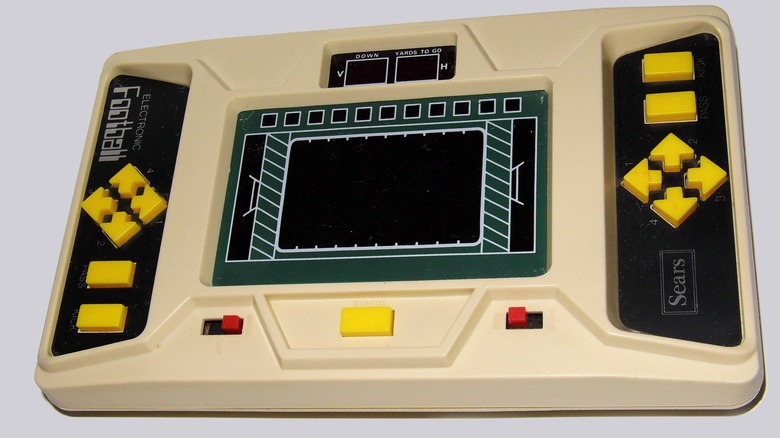
Like other electronics of the era, success bred clones, and you could find electronic football games from various manufacturers all over the place. Sears continued to sell them, including the pictured two-player version that features the Sears brand name opposite "Electronic Football." Sears sold this device beginning in 1980, and like its predecessors, it sold well and became a popular item reminiscent of the company's products throughout the early '80s.
Sears' initial electronic football game was a rebranded version of Coleco's "Electronic Quarterback," which it sold as "Electronic Touchdown." Whatever the name the device carried, all of its versions functioned pretty much the same, using LEDs and a handful of buttons for gameplay. Long before kids got their hands on classic Tiger Electronics LCD handhelds, "Electronic Football" from Sears was easily one of the most popular portable games available.
Tele-Game Super Video Arcade Cartridge System
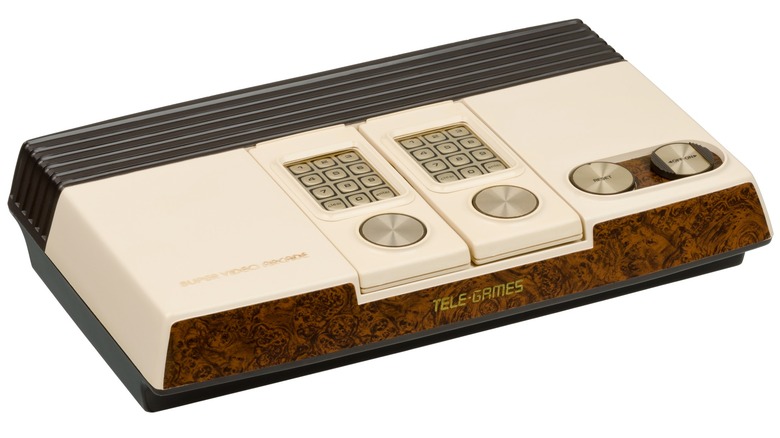
Sears' penchant for rebranding other companies' electronics systems wasn't limited to Atari's console; it did the same with Mattel Electronics' Intellivision. Mattel released the Intellivision in 1979, and it didn't take long for the company to carve a niche out of Atari's sales. The system sold well, and Sears played its part by rebranding the Intellivision as the Tele-Games Super Video Arcade Cartridge System. While that was certainly a mouthful, like the Tele-Games Video Arcade, it wasn't a complete copy of the Intellivision.
There were some cosmetic differences between the two units, but some design alterations as well. Sears' console featured non-coiled wired controllers that were fixed in a forward-facing position, which made them easier to handle. While there's no denying the Intellivision sported some of the worst video game controllers ever made, the Tele-Games Super Video Arcade Cartridge System made minor improvements.
Atari and Mattel fought for dominance during the early years of the video game console wars, and that conflict didn't officially end until 2024. That's when Atari purchased Intellivision and some of its games. Regardless, the two companies battled it out for consumers' cash, and while Atari sold more than Intellivision's 3 million units, Sears played its part by moving as many of the Tele-Games Super Video Arcade Cartridge Systems as possible.
LXI Series 2960 Mini Bookshelf System
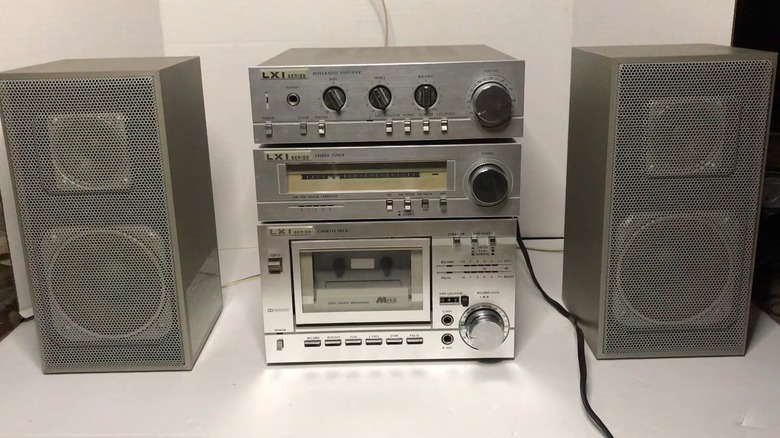
One of Sears' most prominent house brands of the 1980s and '90s was LXI, which effectively succeeded Silvertone's branding on all kinds of consumer electronics. This included boomboxes, televisions, and home stereo equipment. LXI shone in this area, with a ton of different consoles and components taking up plenty of Sears' shelf space before the turn of the century. LXI stereo systems included all kinds of stackable components, which often came with massive speakers.
These were common sights in Sears, beginning in 1979 with the Sears Christmas Book, and by 1996, LXI branding disappeared from Sears' catalogs. The brand was best known for its stereo equipment, and by the late 1990s, those systems had gotten smaller, were less popular as home entertainment centerpieces, and there were plenty more options available. Regardless, LXI was common, and because it was a Sears house brand, those components are reminiscent of the company.
A solid LXI system came with an amp, a cassette deck of some kind, and a tuner that connected to large speakers. Typically, these systems used only two speakers for stereo sound, but you could build your own by selecting the components you wanted and arranging them in your house however you liked. While not inexpensive, LXI systems offered excellent stereo sound and were highly desirable throughout the 1980s.
Commodore 64
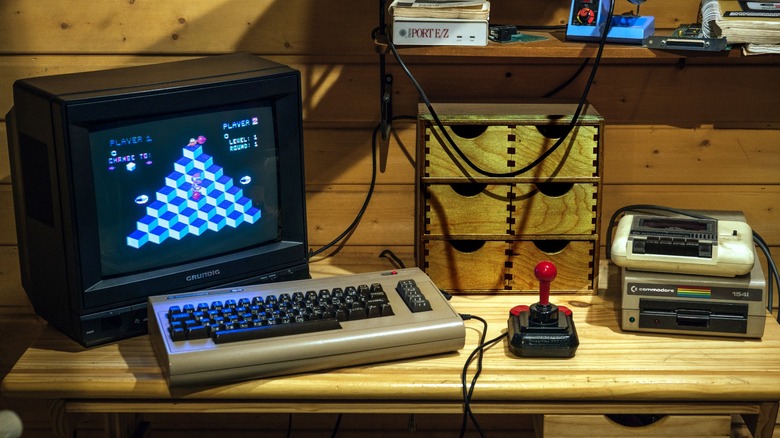
The Commodore 64 was released to the public in 1982, and it quickly became one of the fastest-selling home computers on the market. It even took home a Guinness World Record for best-selling desktop computer, having sold more than 12.5 million between August 1982 and April 1994. The Commodore 64 was a special computer that appeared in homes throughout the early 1980s, thanks to its large library of games, ease of operation, and capabilities that made it ideal for home use.
Home computers were still in their infancy in 1982, but one reason people began thinking of using them in their houses came from seeing the Commodore 64 on display at their local Sears. While the computer wasn't exclusive to Sears, as it was sold elsewhere, the department store helped popularize it. It's unclear how many units Sears sold while it carried the Commodore 64, but it likely moved a lot, as sales of the Commodore 64 reached around 20 million by the early 1990s.
Interestingly, while the Commodore 64 debuted in 1982 at $595 ($2,065 in 2026), the following year, it dropped to $250 ($840 in 2026), making it much more affordable for the average consumer. By 1985, Sears sold the Commodore 64 for only $149.99 ($470 in 2026). That helped drive sales even further, though it's unclear how many units Sears moved.
Macintosh 128K
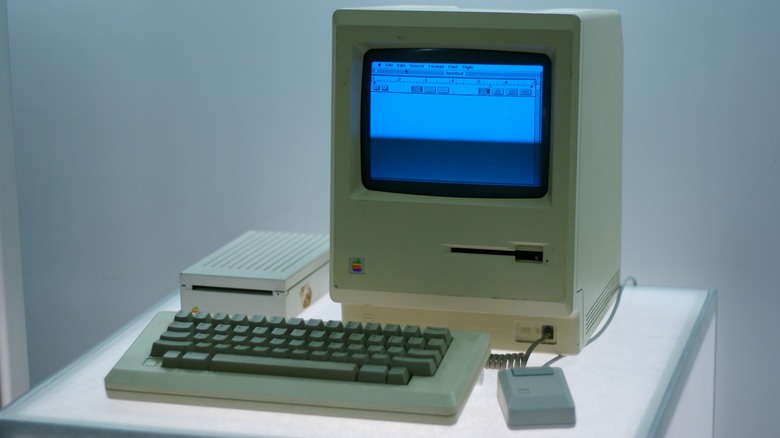
While it's probably best known for the iPhone and iPad today, Apple began as one of the first businesses offering home computers. The company started with the Apple-1 in 1976, which was followed by various models, including the pictured Macintosh 128K. This is the computer that most associate with Apple's early days despite not being the first computer to come out of the company. It was the first successful mass-market computer with a built-in screen, which is one of the reasons it's so recognizable.
Sears sold Apple's computers, including the Macintosh 128K alongside other competing brands in its Business Systems Centers. The company also sold other computers, including a handful of the weirdest Macintosh computers Apple has produced. Sears started selling the Macintosh 128K in 1984, and it quickly became one of the best-selling computers of its era, finding its way into schools, homes, and businesses worldwide.
By today's standards, the Microsoft 128K is archaic, but it proved its worth as the first Apple product to include a graphical user interface. This helped sell the system to the public, as it made it more user-friendly for those without the knowledge to program the system. It debuted for $2,500 ($8,060 in 2026), so the system wasn't cheap. That said, it was powerful for the time, and almost everyone wanted one after Apple's groundbreaking advertisement during Super Bowl XVIII.
VTech Laser 128
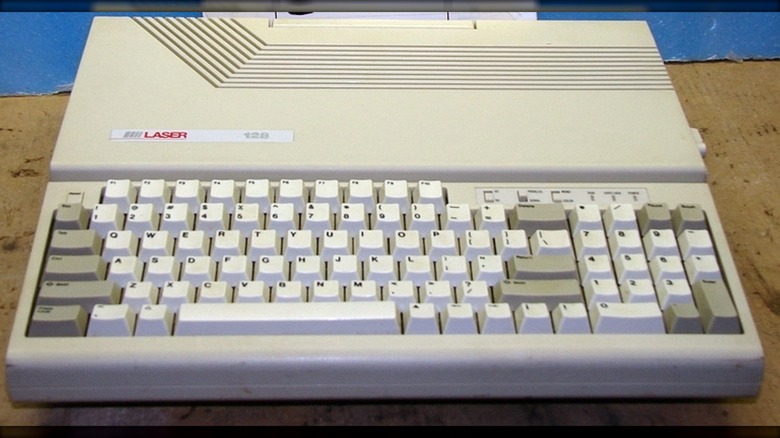
While Sears sold Apple's computers, it also dabbled in clones, but unlike earlier licensed copies of systems like the Atari VCS and Intellivision, Sears' VTech Laser 128 wasn't made via an agreement with Apple. The system cloned the Apple IIc, which Apple sold well before moving on to more advanced systems like the Apple IIe. In the meantime, Sears sold the VTech Laser 128, which it advertised as being "a fraction of the cost of an Apple," while also being fully compatible with Apple's computer.
The system was designed to look somewhat like the Apple IIc, as it included 128 KB of RAM, which was what Apple's computer had. It also featured a handle, a disk drive on the right side, and a built-in CPU and keyboard. The VTech Laser 128 could run anything the Apple IIc could, so it was a pretty obvious clone.
That said, Video Technologies Ltd. didn't violate any of Apple's copyrights in its execution, so the system remained on the market as direct competition. According to Old-Computers.com, the VTech Laser 128 was 99.8% compatible with the Apple IIc, and it was the most successful of the system's clones. Sears sold the computer in its stores with great success, as it was priced to move at only $479 ($1,545 in 2026), while the Apple IIc cost consumers $1,300 ($4,190 in 2026).
Pokémon Pikachu
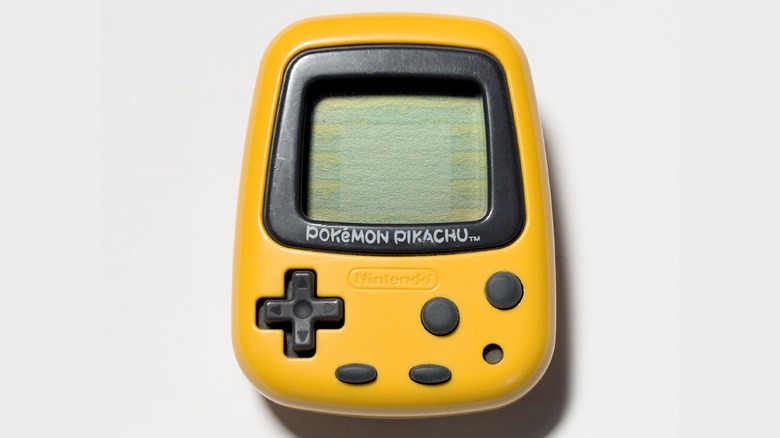
By the late 1990s, it was common to see all kinds of electronics sold in Sears, including plenty that weren't exclusive to the company or its house brands. One of the more entertaining devices that people could find at their local Sears was the "Pokémon Pikachu," which was a small device that functioned like a Tamagotchi-style digital pet and a pedometer. These popped up in the 1999 Sears Christmas Book for $29.99 ($60 in 2026).
The device was marketed as a fun accessory and virtual pet you can take for a walk. The built-in pedometer counts the total distance you travel, and the more you walk, the friendlier your pet Pikachu becomes. The virtual pet offered a means to get people out and about, playing with their favorite Pokémon, which is pretty much exactly what "Pokémon Go" had people doing for years after it was first introduced in 2016.
Unlike other virtual pets of the day, you didn't have to feed Pikachu, give him water, or clean him up. Instead, all you needed to do was take a walk. As you walk, you earn watts, which you use to buy presents for Pikachu. There are more activities that unlock the longer you play with Pikachu, and if you neglect him, he'll stop recognizing you, making for a fun, interactive toy.