

7 Diesel Engines That Outperform The 7.3 Power Stroke's Torque Ratings
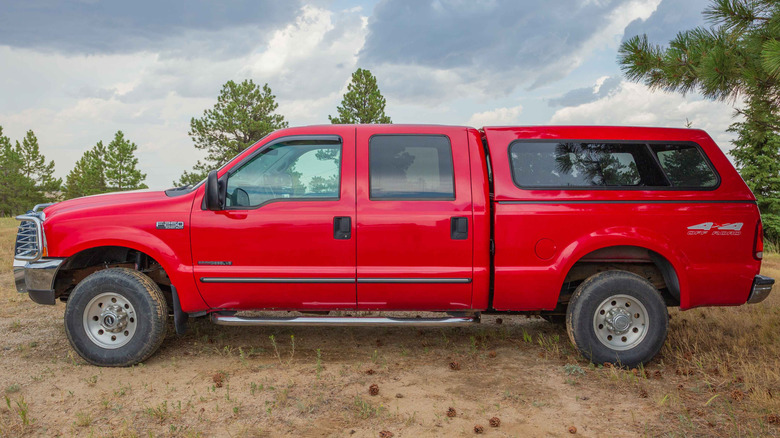
As the world eagerly awaits the debut of the next generation of diesels in the works at crosstown rivals Ford and GM, with what will no doubt be eye-popping horsepower and torque numbers, it is worth remembering that one of the most well-regarded engines of the last 30 years, Ford's legendary 7.3-L Power Stroke, is actually outgunned by many newer diesel units, even those with smaller displacement. Trucks equipped with this mill made do with what may seem, by today's standards, to be rather anemic, producing 500 to 525 lb-ft of torque. That pales in comparison to newer units on the market today.
Ford faithful will claim that it was not its power delivery alone that made it desirable for so long. Rather, it was its straightforward nature and relatively low maintenance demands. EPA requirements have, in the interest of protecting the environment and reducing pollution and particulates, tightened dramatically since the 7.3L Power Stroke first took the stage. Meeting these requirements has necessitated additional complex systems, such as exhaust regen, which have added to complexity and increased repair costs for owners of newer powerplants.
It stands to reason, then, that many units developed subsequently have not always delivered reliability to rival the 7.3L, although they certainly delivered rubber-burning power. These motors, found under the hoods of other Fords, GMs, Rams, and even Nissans, have torque figures that eclipse the power output of the venerable 7.3L Power Stroke.
Ford 6.7L Power Stroke V8 High Output
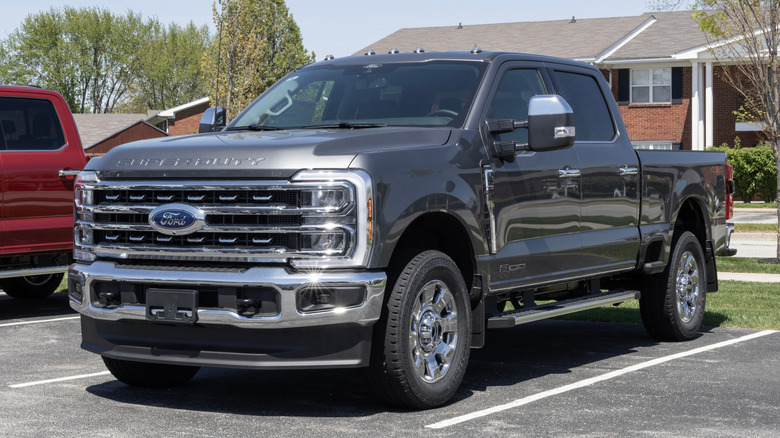
Coming on the heels of Ford's breakup with International/Navistar, which had handled diesel engine production for Ford for three decades, hopes were high within the blue oval's C-suite. Building the 6.7 in-house to replace the Navistar-sourced engines that had proven so troublesome for Ford was a gamble executives felt compelled to take. After all, the preceding unit had levied a punishing volume of warranty claims, cutting into profits and causing significant reputational damage that threatened future sales.
Code-named the "Scorpion," Ford's new diesel definitely had more sting than the 7.3L, putting down up to an impressive 1,200 lb-ft of torque in its high-output configuration. It featured several significant developments, including a high-pressure common-rail injection system to ensure steady delivery of heavy fuel and reverse-flow aluminum heads. The turbo featured variable geometry, allowing the vanes to reposition to the optimum angle, balancing thermal efficiency and airflow requirements.
Since its development, the 6.7L has found a home under the hoods of Ford's entire F-250, F-350, and F-450 heavy-duty lineup, where its strong torque output has allowed it to take on jobs that the 7.3L would not be up to. After some teething problems in its debut years, the 6.7L has earned a solid reputation that has kept the Ford faithful coming back.
Cummins 6.7L Turbo Diesel Inline-6
It is said in gearhead circles that there is no replacement for displacement, but don't tell that to the Cummins 6.7L diesel engine. Like the Ford 6.7L it competes with, the Cummins is also a 6.7-liter motor that handily outpowers the venerable Ford 7.3.
The Cummins 6.7 Turbo Diesel Inline-6 made its debut on the automotive stage in 2007, taking up the fight for Ram in place of the beloved 5.9L, which is itself the stuff of legend. Like Ford's move away from the 7.3, the move to the Cummins 6.7 was instigated in large part by compliance demands to meet EPA standards. As such, it features systems to handle regen needs and emissions management.
By 2019, the 6.7L was delivering 1,000 lb-ft of torque, allowing its owners to shift loads that the Ford 7.3L could not handle. Thanks to its inline layout, which offers more room under the hood than in the cramped bays of competing V8s, the Cummins unit has earned a reputation not only for reliability but also for being comparatively easy to work on when repairs are required. Buyers who opted for the high-output variant of the 3500 model truck would also get the vaunted Aisin transmission, a sought-after feature to this day.
GM 6.6L Duramax V8 Platform
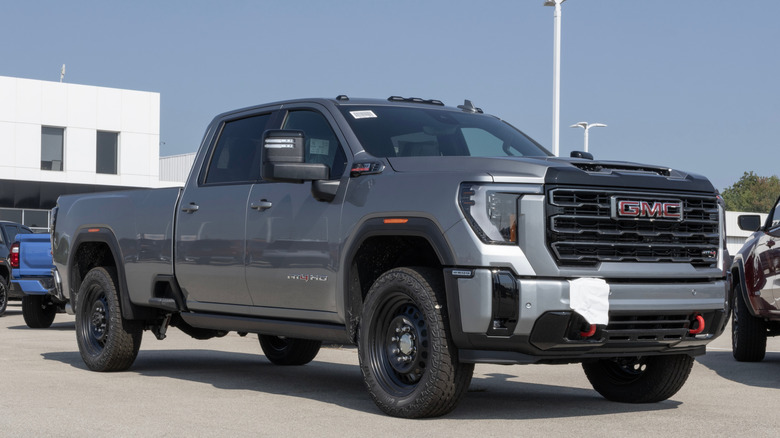
Not to be outdone by Ford or Cummins, General Motors developed the Duramax platform in partnership with Isuzu to leverage Isuzu's heavy-duty and commercial truck engine expertise. The Duramax revolutionized the segment with features such as aluminum heads, its own high-pressure common-rail direct injection, and a beefy cast-iron block.
This Duramax offering battled Ford's 7.3L in the early days of its rollout, and some would say that Ford's subsequent engines that followed on the 7.3L's tail were responses to Chevy's smooth 6.6L. Introduced to the market in 2001 with up to 560 lb-ft of torque, the engine has undergone refinement through subsequent generations, allowing modern variants to crank out almost 1,000 lb-ft in stock configurations.
Technological developments have given this motor enviable power output, with torque figures far exceeding those of the 7.3L on day one; the latest examples crank out nearly 1,000 lb-ft of torque in their stock configuration. The fact that its replacement is only now in development, almost thirty years after the first-generation units rolled out, speaks to the capability of this diesel motor platform.
Cummins 5.0L ISV V8 Turbo Diesel
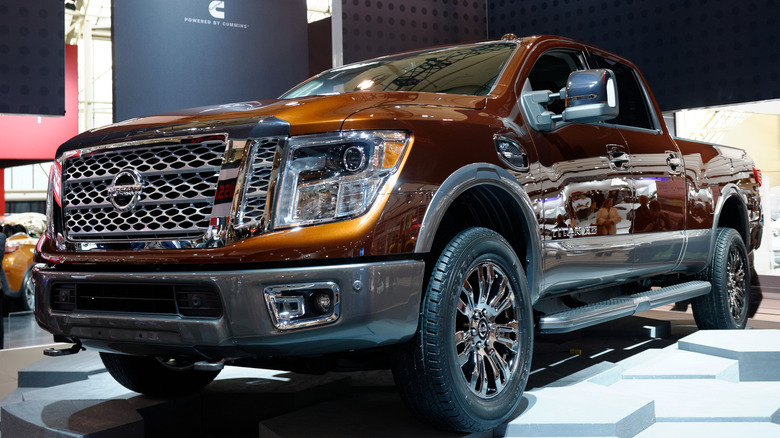
One may be forgiven for thinking that with only five liters of displacement to work with, the compact Cummins 5.0L ISV turbo diesel might be outgunned by the old Ford legend, but that would be a mistake. Features such as a compact graphite block and dual overhead cams allowed the tight Cummins power plant to punch above its weight, delivering a serious 555 lb-ft of torque at 1,600 RPM, comfortably outgunning the Ford 7.3L Power Stroke.
The Cummins 5.0L was not to be found in Ram trucks like so many of its more famous Cummins stablemates. Instead, the Cummins 5.0L was most commonly found under the hood of Nissan's Titan HD pickup, where it earned praise for its smooth operation. Nissan execs envisioned the Titan holding its own in the gap between the larger domestic offering and half-ton trucks equipped with gasoline engines.
Alas, that combination was not for Nissan all that they may have hoped it could be, as prices for the Titan HD trucks could, with many of its available options picked, quickly approach the price point of the big American trucks that it hoped to avoid competing with directly. That left a relatively small pool of potential buyers who needed a diesel truck but chose not to opt for the extra capability available in a Duramax-, larger Cummins-, or Power Stroke-equipped truck.
Ford 6.4L Power Stroke V8
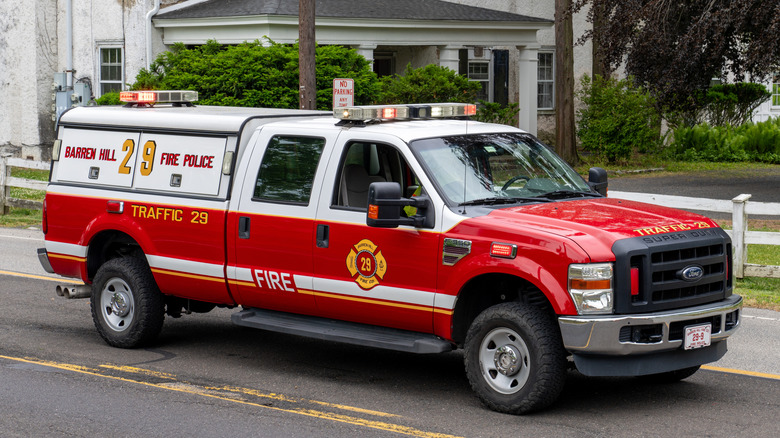
Built by International Navistar to meet stricter EPA particulate regulations, the 6.4L definitely delivered power when it was working. However, a troubled history of clogging filters and failing pistons meant that, despite its higher power numbers than the 7.3, the 6.4 was never as beloved by Ford's fan base.
The 6.4L arrived on the heavy-duty truck scene to much fanfare in 2008, taking up the mantle from the 6.0L Powerstroke that had itself been the subject of considerable controversy and mechanical gremlins. Hopes were high for the 6.4L unit, which produced prodigious torque numbers compared to the 6.0 and 7.3 units that preceded it.
Offered from 2008 to 2010 in Ford's F-250, F-350, and F-450 lineup, the 6.4 was capable of producing 350 hp and 650 lb-ft of torque in stock form. In the aftermarket, this motor earned a reputation for being one from which tuners could extract significant power gains. This trait was ultimately overshadowed by significant reliability issues throughout its production run, and it would be the last unit made for Ford by an outside producer.
Ford 6.0L Power Stroke V8
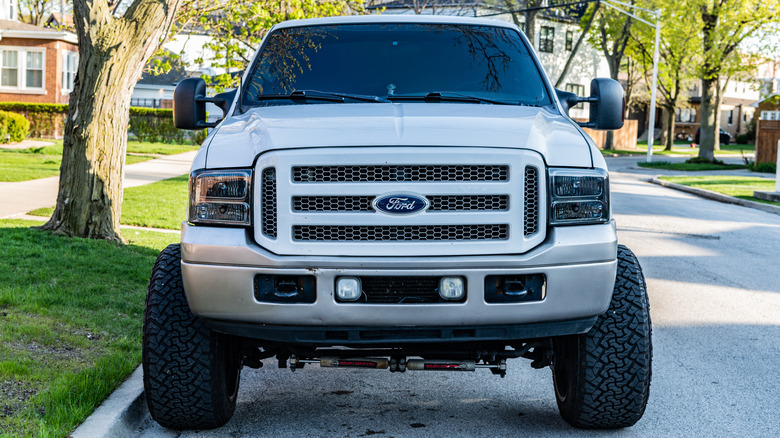
The Ford 6.0L Power Stroke V8 engine found itself, upon its debut in mid-2003, with the unenviable job of taking the stage for Ford immediately after the solid 7.3 motor took its final bow. Sadly for the Ford fan base, it never earned the acclaim of its predecessor. A litany of head bolt and EGR valve issues would plague the 6.0 throughout its production run.
In the truck world, the phrase "six point blow" summed up enthusiasts' thoughts on its suitability as a replacement for the stalwart 7.3. It never earned the love of fans like its predecessor did because, despite its higher total torque output — a stout 570 lb-ft at 2,000 RPM — its tendency to blow head gaskets and suffer other issues was off-putting, to say the least.
Its troubles were not entirely of its own devising. This was the first generation of diesel motors to face the more stringent emissions requirements mandated by the federal government, and the systems put in place to comply were new, complex, and, as it turned out, would require a fairly steep learning curve before attaining the reliability of engines unencumbered with complex emission control systems. Later in life, aftermarket "bulletproofing" somewhat burnished the 6.0L's tarnished reputation.
Cummins 5.9L High Output 24 Valve Common Rail Inline-6
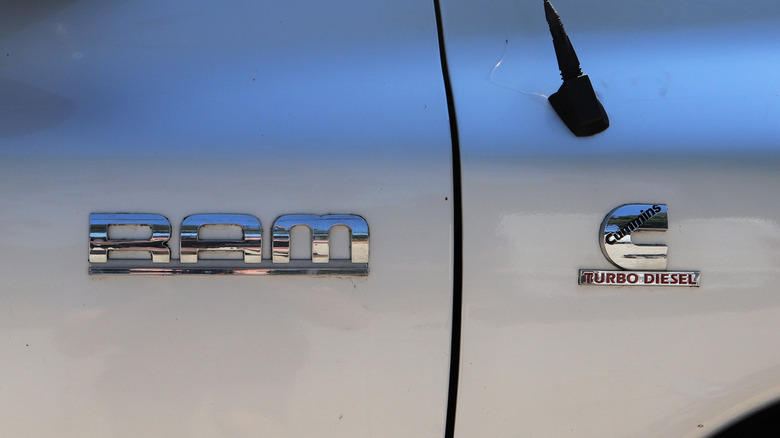
A number of the motors that competed directly with Ford's 7.3 or followed in the years after it had its run may have beaten it on paper in terms of torque, but few could match its strong reputation and devoted fan base. Not so with the highly regarded 5.9L Cummins, which, like the Ford 7.3L, is still much sought after to this day and has earned its own killer reputation.
Producing 555 lb-ft of torque at release, it immediately won the power output battle with Ford, and subsequent improvements eventually bumped its torque to over 600 lb-ft, comfortably outgunning the Power Stroke. It was not just a solid competitor based on numbers alone. As the final iteration of the iconic B-series platform, it had earned a solid reputation for being reliable, smooth, and responsive.
Upon its release in 2003, it was already ahead on torque over the 7.3L. The following year saw the launch of an even more powerful version, cranking out a full 600 lb-ft of torque. It could do this at a more sedate 1,600 RPM, which significantly improved its low-end grunt. From 2003 to 2007, the 5.9 found a home in Dodge Ram 2500 and 3500 Heavy Duty pickups before production ended in mid-2007. These trucks still command a premium on the used market due to their simplicity, durability, and significant tuning potential.
Methodology

To curate this list of diesel engines that outperform the Ford 7.3L Power Stroke engine, the author drew upon over thirty years of experience as a car dealer, including a stint at one of the Southeast's premier truck up-fitters and off-road modification shops, with extensive experience buying, repairing, maintaining, and modifying diesel trucks and their motors. In addition to personal experience, authoritative sources were consulted, including online outlets such as MotorTrend, Bulletproof Diesel, Road & Track, Edmunds, KBB, and manufacturers' websites. Outperform was used in this context to mean producing torque figures in stock configuration that exceed those of the Ford 7.3L Power Stroke engines.