

11 Of The Most Reliable Diesel Engines Ever Made
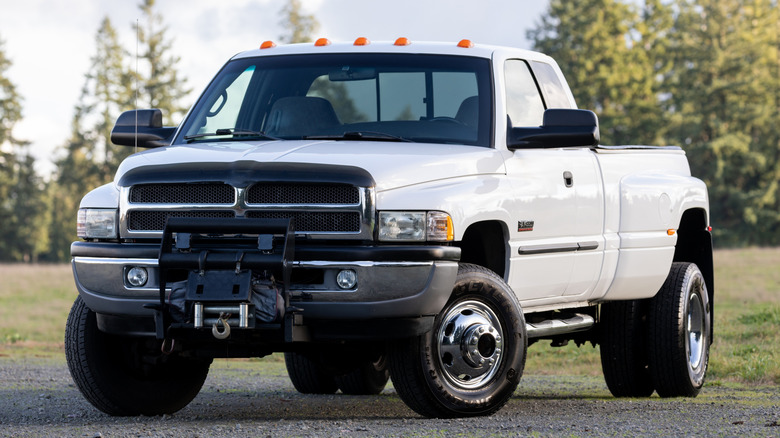
From modern suburbia to the world's most forbidding terrain, on city streets and highways, these diesel engines have shown they have the chops to be considered some of the most reliable automotive powerplants ever made. The vehicles they power have formed the basis for communities, clubs, forums... even lifestyles.
Some of these diesel burners came out swinging on day one, while others had to go through growing pains, technical service bulletins, and even recall campaigns before earning the reputation they have today. Some of the following units are famous for frugality, some are famed for making big power, while others, with proper maintenance, have become legends by wracking up big mileage numbers while getting tough jobs done daily.
Some have seen their glory days come and go, while others represent the latest and greatest in the field. All of them have earned a soft spot in the heart of diesel enthusiasts.
Volkswagen 1.9L TDI
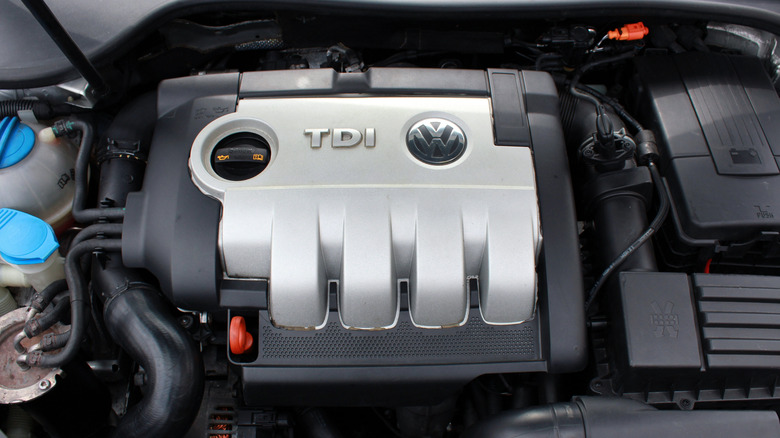
In the heady days before "dieselgate " brought down an automotive empire in a pile of crumbling trust, this diesel engine was a leader in heavy fuel powered lightweight cars. The venerable Volkswagen 1.9L TDI motor made appearances through multiple generations under the hoods of Golfs, Jettas, Passats, Rabbits, Beetles and more over the years.
Legions of adoring fans have filled the internet's VW forums with tales of achieving exceptionally high mileages. Its enviable ability to turn in fuel economy numbers well in excess of 40 mpg, depending on which car it was powering, have earned it a reputation as a simple, reliable diesel engine. Its simplicity was among its most beloved characteristics, helping it to avoid common diesel issues. Numerous fan clubs and enthusiast groups are still singing its praises to this day. Owners cherish both well restored examples of the breed, as well as original survivors that haven't had a day off since the Wall came down.
The 1.9 pulled this off by pairing a thick iron block with old school mechanical fuel injection ( no electrical fuel delivery wizardry here). This is a motor that is under-stressed and simple to maintain, often with nothing more than basic hand tools (though the addition of a handy neighbor named Otto wouldn't hurt).
Mercedes-Benz OM 606

In the closing years of the last millennium, the legendary Mercedes-Benz E300 Diesel sedan could be found haunting well-heeled suburban enclaves in the States. It handled carpooling and commuting duties with smooth ease and German style, with just a touch of diesel clatter courtesy of its OM606 motor. This torquey powerplant handled merging with aplomb, and when its maintenance routine was followed, it earned a reputation for reliability. Vehicles equipped with the OM 606, including E Class, S Class, and G-Class platforms, were many Americans' first diesel vehicles, as diesel cars have never been as popular in the U.S. as in Europe.
Elsewhere in the world, this motor had to work harder under more austere conditions than found on U.S. streets. It was in these harsh environments where it truly earned its spurs. It could be found under the hood of hard-used G-Wagons in far flung outposts, and pushing Mercedes-Benz sedans along dirt roads in Africa and Asia under conditions they were never intended to handle. To this day, patched and worn vehicles with this motor can be found working every day in markets and backroads of developing countries, their venerable OM 606 Diesels clattering happily along, making their original designers proud.
A heavy cast iron block, heavy duty forged steel connecting rods, and an enviable reputation for being able to guzzle down even low quality diesel without fuel delivery issues made it a standout both Stateside and in Europe. These same qualities made it even more desirable in the more remote outposts of the automotive world.
Toyota 1 HZ
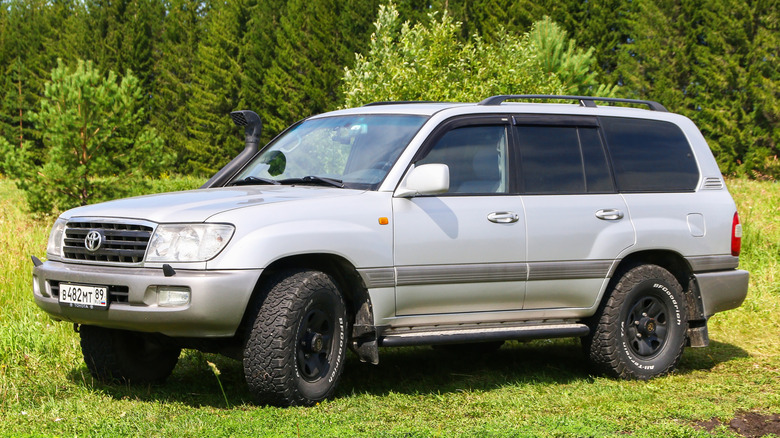
Found under the hood of some of the hardest working vehicles on the planet, the Toyota 1HZ has powered Land Cruisers and Toyota trucks in some of the most austere conditions the world has to offer. From U.N. fleets and military forces to insurgency groups ,vehicles with this 4.2 liter engine have taken part on all sides of almost every conflict of the last 30 years, where people's lives depended on a reliable engine.
This diesel engine is most famously be found under the hood of the 70, 80, and 100 series Land Cruisers. It has the admirable characteristic of being free of electronic control modules and features a limited amount of wiring, basically for just the starter and fuel solenoid. This allows adventurous, desperate, or determined drivers to push their vehicles through water crossings that would drown mere mortal engines. Vehicles equipped with the 1 HZ are often seen sporting snorkels.
This paucity of electronic connections and cast iron reliability has led to it being used extensively in environments where corrosion destroys electrical connections, such as underground mining, jungle supply delivery, and terrain where water crossings are a routine occurrence. Being able to survive in austere environments is a large part of the reason why this engine has been a mainstay of U.N. and NGO operations worldwide.
Nissan TD 42

Not to be outdone by its rival Toyota on the international stage, Nissan had its own 4.2 liter contender in the diesel arms race. About the only thing these units shared in common was their displacement, and their reputation for being unkillable in even the toughest conditions. Although they were separately designed and manufactured, they certainly follow a similar formula.
The Nissan mill has the build of a tractor engine. Its gear-driven timing assembly and very heavy cast-iron block work together to help its performance in tough environments. In particular the Nissan's timing assembly, which forgoes belts that could stretch under load in high heat, have earned vehicles equipped with this motor, such as the beloved Nissan Patrol, a reputation for being excellent desert runners.
In addition to the solid timing gear, the heat dissipating capacity of its iron block has further cemented the Nissan's reputation for keeping cool when things get hot. However, to keep it pushing all day through the sand, its maintenance schedule must be adhered to, with particular attention paid to the coolant system. Accordingly, these motors are extremely popular in the Middle East, Central Asia, and Australia, where heat and the techniques required to drive through sand, which can be quite taxing on a motor, conspire to kill weaker engines.
Chevrolet 3.0 Duramax

A more recent entrant into the diesel reliability wars is the 3.0 Duramax from GM, which has found a home since 2020 in units such as the Silverado/ Sierra and even Tahoe/Yukon and Suburban, as well as, (somewhat incongruously), the Cadillac Escalade. Although it rocks an aluminum block, which may raise eyebrows amongst old school diesel heads, it boasts cast iron cylinder liners for added toughness.
Its variable geometry turbocharger adds further reliability, by allowing this unit to produce prodigious foot pounds of torque low on the powerband. In fact, full torque for this powerplant develops at just 1,500 RPM. This keeps rotational speeds and associated wear low.
This under-stressed aspect of the engine is a big part of how rigs like the Suburban have earned high marks for longevity. These motors perform even when enthusiastic but amateur operators make common towing mistakes such as happily hooking up to massive powerboats and over-sized RVs while thinking "hey, why not, I've got a diesel!"
Ram 3.0 Ecodiesel
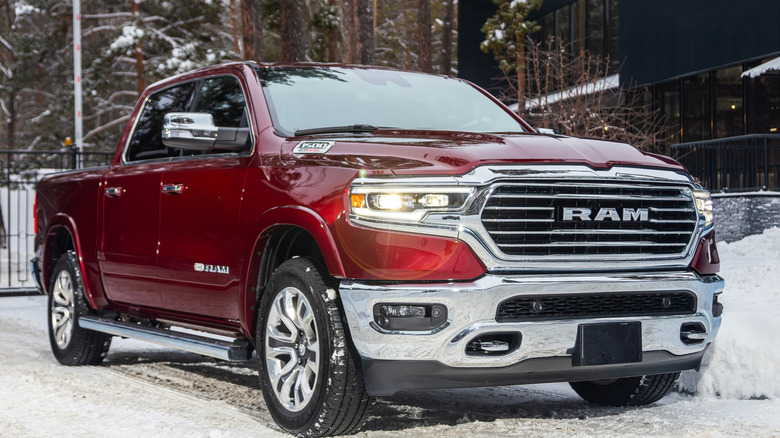
Not to be overlooked in the light-duty full-size diesel category, Chrysler produced its own 3.0 liter setup for use in Ram offerings, with some variants even making it under the hood of Jeep and commercial vehicles as well. Some diesel enthusiasts may raise an eyebrow to see this unit included on a list of most reliable engines, but by its third generation, and after a few notable recalls and re-designs, this motor had come into its own. By the time its production run came to a close it was widely considered very reliable.
Light trucks equipped with it were known to be able to turn in range numbers of more than 400 miles, all while towing the family boat or RV. This combination of easy power and category-leading range under load made this motor a success. Its compacted graphite iron block helps this engine turn in good fuel economy numbers and reliability by reducing weight considerably, while affording additional strength.
The Ecodiesel certainly had some teething problems in its first years that somewhat tarnished its reputation. However, later revisions and refinements largely addressed those early issues.
Cummins 5.9L
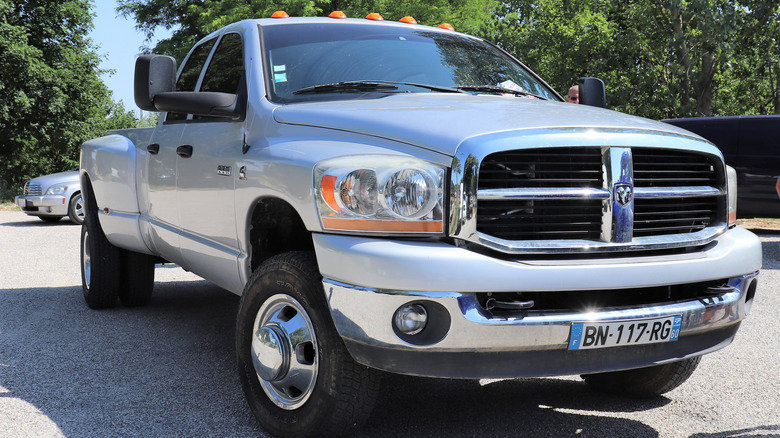
This powerplant has earned an enviable reputation as the Chuck Norris of inline diesels. The Cummins 5.9 is widely considered to be as close to indestructible as a motor can be. Hard working rigs with this engine can still be found showing up to work and getting the job done today, just as they did on their initial rollout in 1989. Farms, ranches, hotshot haulers, and construction operations will often forgo newer units if they can source a clean truck with the 5.9.
It features a truly massive cast iron block. When paired up with the very well regarded Bosch P7100 mechanical injection pump, which was oiled directly from the vehicle's oil supply, it delivered world moving torque alongside mechanical simplicity.
Add in forged connecting rods and gear driven timing, and the Cummins 5.9 was strong enough to handle far more power than the factory let it out the door with. It has subsequently become a favorite of diesel tuners who love to modify these engines to build far more power than they rolled out of the dealership with.
Ford 7.3 Powerstroke
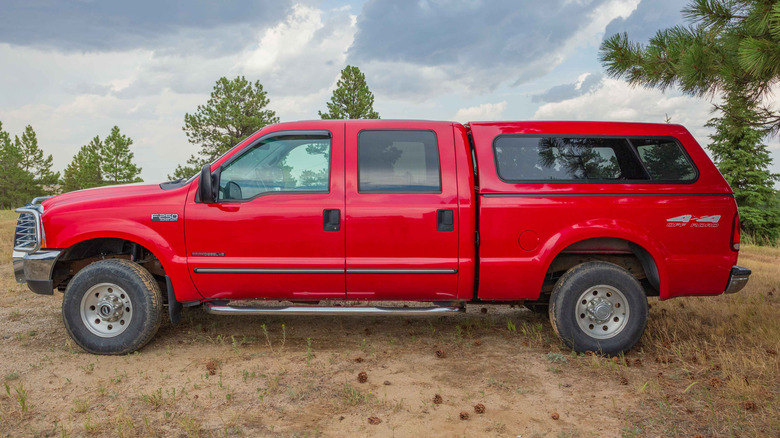
A relic of the heady days in the age of diesel before complex emissions equipment was shoehorned into the scene by Federal mandate Ford's tough-as-a-coffin-nail 7.3 liter diesel engine (not to be confused with the modern engine of the same displacement found in the Tremor edition of the Super Duty) still gets work done today. Well-kept semi-vintage heavy duty trucks with this motor can still put some modern rigs to shame.
This big mill completely lacks exhaust gas recirculation and diesel particulate filters. This dramatically reduces maintenance requirements and cost, along with reducing complexity. Owners of Ford trucks equipped with the 7.3 will never have to cough up cash for diesel emissions fluid. This engine never enters a regeneration cycle to burn off soot. Furthermore, it features a straightforward purely mechanical exhaust system that consists of a basic muffler in early models, although some later models did begin featuring a catalytic converter.
Trucks equipped with this motor have enjoyed an enviable depreciation curve over the years. This allows for a "follow the money" approach to gauging its perceived reliability among buyers. Well-kept units continue commanding premium prices on the used market, as buyers have proven willing to pay for the simplicity and reliability of this pre-emissions rules engine riding behind the blue oval.
GMC Duramax 6.6L
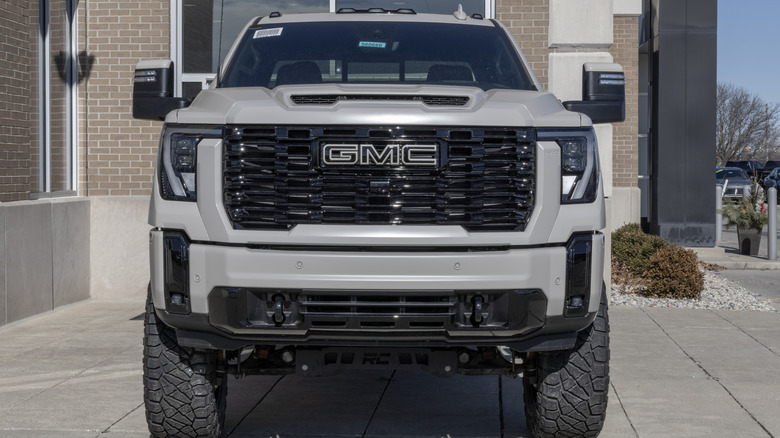
Another diesel engine that managed to make it to the party before the feds put their foot down is the GMC 6.6L Duramax LBZ generation motor. Produced in the 2006 to 2007 model years, and found under the hood of heavy duty GM trucks, this engine is widely regarded by diesel enthusiasts as being one of the best that ever rolled out of a GM plant.
Like the venerable Ford 7.3, this engine managed to avoid the restrictive and complex emission control equipment which has come to be regarded as a major headache for today's diesel owners. Not to be found here are diesel particulate filters or a diesel exhaust fluid system. Rather, a simple exhaust gas recirculation system handles rerouting duties. This system sends a portion of the exhaust gas back to the intake, lowering combustion temperatures.
This mill's deeply ribbed cast iron block was well able to shed heat, while its aluminum cylinder heads shave weight where it matters. Paired up with relatively low compression pistons, this was another low stressed motor. However, it is still capable of producing over 950 lb-ft of torque. Like Ford trucks with the 7.3, the GM faithful have conspired to keep demand, and resale values, quite high.
Ford 6.7L Powerstroke
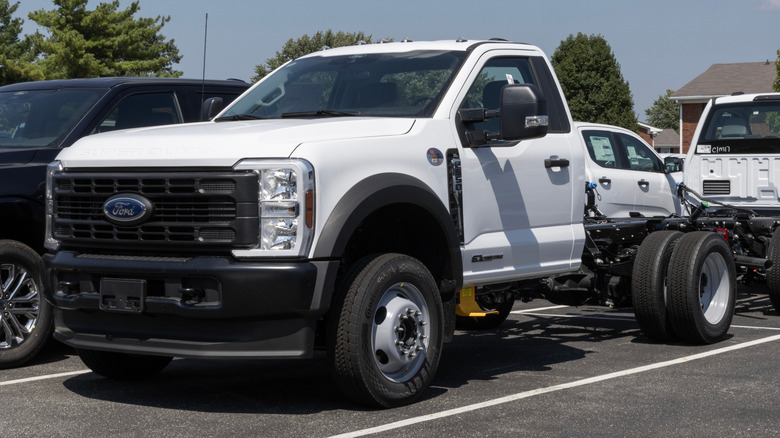
Coming on the heels of the troublesome 6.0 and 6.4 liter units that bedeviled many owners of Ford heavy duty trucks after the 7.3 was put out to pasture, the 6.7 earned back the love of the Ford fanbase.
Codenamed the "Scorpion" during development, this was the first diesel engine developed in-house by Ford after the company severed relations with International/Navistar, who had produced diesel engines for its trucks for the previous 30 years. Ford took matters into its own corporate hands and produced the 6.7 liter Powerstroke engine.
Since its debut, Ford has cranked out more than 1.5 million examples of this motor, which features a unique reverse-flow cylinder head architecture. This setup allows the exhaust manifolds and turbocharger to sit in the center engine valley. The practical upshot to this arrangement is shortened exhaust plumbing and reduced turbo lag, providing strong throttle response. Its compacted graphite iron block and high strength turbo bearings have also played a large part in its enviable reputation as Ford's best diesel since the 7.3.
Cummins 6.7L
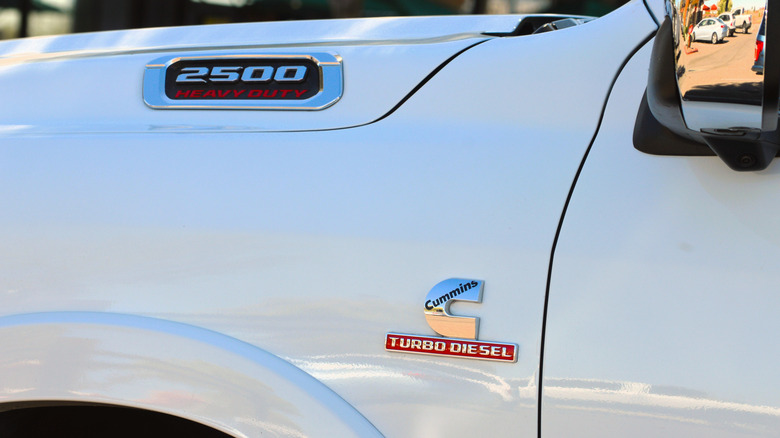
Another tough diesel engine that has cracked the 1.5 million units delivered mark is the well loved Cummins 6.7 Liter engine. Forgoing the compacted graphite iron block of its competitors, the Cummins unit keeps it simple with a cast iron block with an integrated heavy duty oil pan bedplate, which adds substantially to block rigidity.
This motor can be found providing power for Ram heavy duty trucks, but also in chassis cab trucks, and even yellow school buses (which are then occasionally turned into dream homes). Technicians love its inline-6 cylinder layout, which provides plenty of elbow room in the engine bay during maintenance and repair. Owners and drivers appreciate its smooth and balanced power delivery.
Aficionados have often put forward that the fourth generation Ram 2500 and 3500 trucks, equipped with this motor and paired up with the G56 6-speed manual, are very desirable. These were the last models to be factory equipped with a manual transmission. However, others will point out that to be able to have the maximum available torque output from the Cummins required the automatic. The G56, with its aluminum casing, caused Ram to slightly nerf the torque output to improve longevity. Regardless, with either the slushbox or the manual, these were stout trucks thanks to the strong 6.7 Cummins under the hood.
Methodology

While compiling this list, various sources were consulted such as NHTSA , ADAC , Motortrend, Car and Driver, AutopartsWD, Motoreviewer, Toyota-gib Scribd, Dieselarmy, TheDieseldudes, and more. Other sources were consulted to attain a sense of consumer sentiment, such as iSeeCars, Bring a Trailer, Reddit ( r/diesel, r/askcarguys and r/MechanicAdvice) and enthusiast ,sites such as TDIClub forums, Cummins diesel forum, and PowerStroke. To make the list, units were considered based on real world examples achieving mileages in excess of 200,000 miles, consulting car listing aggregators such as CarGurus and Autotrader. Units with extensive recalls were still considered if the recall campaign was considered effective, and the engines operated properly going forward after fixes were implemented.