

7 Common Problems With Riding Lawn Mowers (And Potential Fixes)
We may receive a commission on purchases made from links.
As an owner of a riding mower, I can attest that they're pretty awesome. They make mowing your launch much easier, especially if it's hot outside or if your yard is massive. Plus, riding what is basically a mini tractor rarely ever loses its charm. However, with all of that said, like all mechanical things, it has the capacity to develop problems over time and break down. Breakdowns can be pretty stressful, especially if you don't know much about mowers.
Don't worry: Most of the most common problems with riding mowers are pretty simple. In fact, a lot of them stem from most riding mowers getting no use in the winter when the grass isn't growing — few people plow snow with their riding mowers, after all. Most of those common problems are also pretty easy to get to and fix. It may not always be cheap, but things like the battery, tires, belts, and blades are pretty easy to get to with a little patience and willingness to learn.
If you're considering getting a riding mower and want to learn what you can expect, or if your mower is exhibiting some untoward behavior, these are some of the common issues with riding lawnmowers, and some tips on how to fix them.
A dead battery
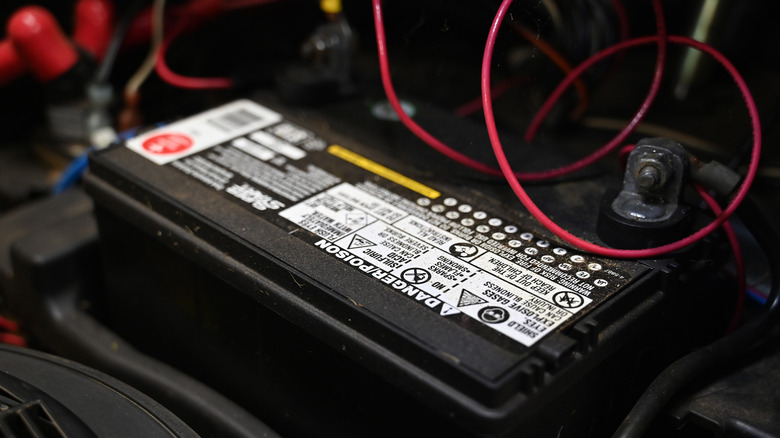
The issue I most commonly run into with my mower is a dead battery. Batteries can go bad for a variety of reasons. They lose charge over time, even when you're not using it, so it's pretty normal to need to jump start your mower in the spring after not using it all winter. Additionally, lawnmower batteries really only last about three to five years on average.
If you're staring down the barrel of a dead battery, the first thing you should do is try and charge it. You can chargers at automotive hardware stores like Auto Zone and Amazon, as well as most hardware stores, including Harbor Freight. For example, this Viking 4-Amp Battery Charger and Maintainer will charge and maintain the battery. It's not a bad idea to get something like this and maintain the battery over the winter to avoid this problem in the spring. In any case, charge the battery first and see if that works.
If that doesn't work, check to make sure to clean any corrosion of the battery's terminals, as that can cause a bad connection. If the battery isn't taking a charge and there's no corrosion, you'll probably have to replace it. You can buy batteries at most automotive or hardware stores for between $50 and $100. If your battery is still going dead even after buying a new one, you may want to check the alternator.
Dull lawnmower blades
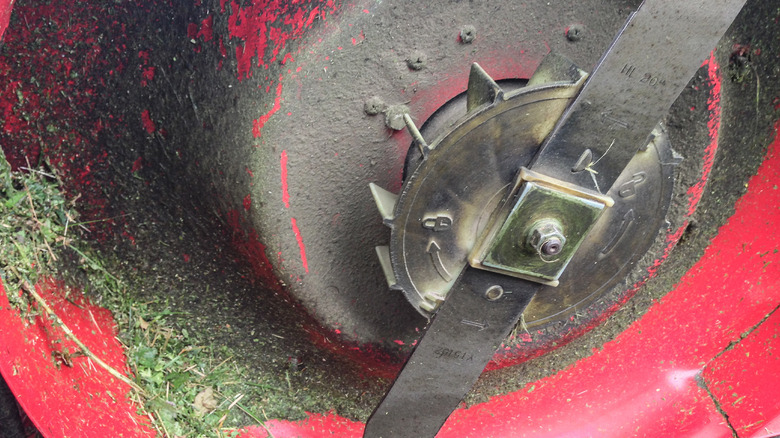
Lawnmower blades get dull over time like any other kind of blade. There's no way to really prevent that and tending to it is part of the regular maintenance of owning any lawnmower, including a riding mower. Dull blades are pretty easy to identify. You don't even have to get close to the ground to tell, as the grass will have white tips instead of a clean, green cut. If you've mowed your lawn recently and most of your grass looks like it was ripped instead of cut, then it's nearly a 100% chance that you need to sharpen or replace your mower blades. On average, I have to remove and sharpen my blades about once every two to three years.
The good news is that sharpening your riding mower blades is no different than sharpening regular lawnmower blades. All you have to do is straighten and resharpen the edge and you're back in business. This can be done with a metal file, a rotary tool, an angle grinder, or even a grind wheel. You should, of course, be careful if using those last two because angle grinders can be dangerous and grind wheels can remove a lot of material very quickly if you're not careful.
You can also buy new mower blades, which is more expensive, but also faster and easier. Just make sure you get the correct type of lawnmower blade for your use case.
Your grass is unevenly cut
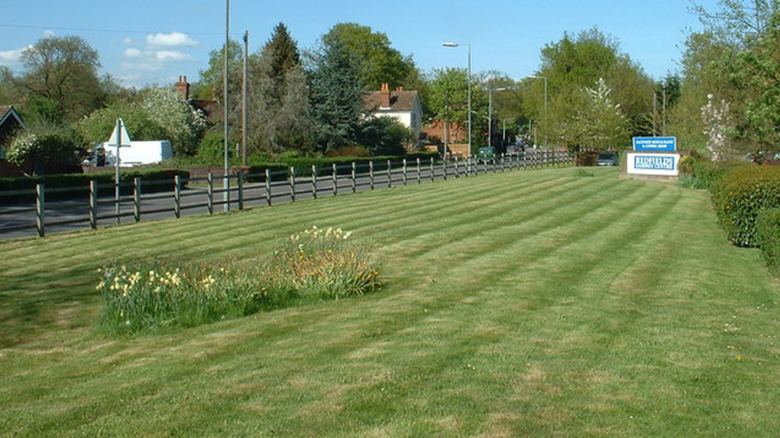
Imagine you've just finished cutting your lawn. You step off your mower, look back at your work, and realize that some grass is still longer, and some is actually shorter than you wanted. There are two potential causes for this.
First, your riding mower's tire pressure could be low, causing your mower to slightly dip to one side. This means one side is cutting closer and one side is further off the ground. Like all tires, mower tires lose air naturally at a rate of about one PSI per year, meaning you'll eventually need to put air in yours to bring them back up to factory spec. Not doing so may cause your mower to lean, causing an uneven cut. The solution here is pretty simple. Use an air compressor or an air pump of some sort and even your tires back out again.
The second potential cause is that your mower deck, the housing that holds your blades, has become crooked and needs adjusting. This one's a bit more complicated than adding air to your tires. It requires you to inspect, clean, and potentially fix your deck, which usually involves tightening all the nuts and bolts that hold it to your mower to keep it from wiggling around. It's not necessarily difficult, it's just tedious and time consuming.
While you're under there, check your mower blades as well. Hitting a chunk of rock or another obstacle may have taken them out of alignment, and that can also result in an uneven cut.
Flat or low tires
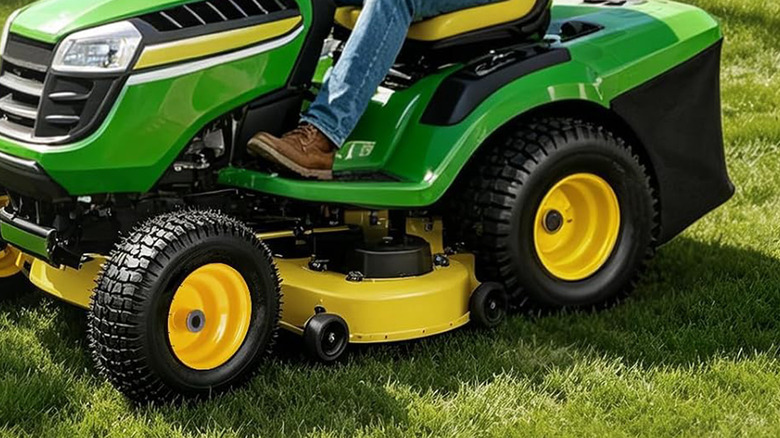
One of the first issues I had to deal with on my riding mower was a flat tire. These things happen. Rubber doesn't last forever and as mentioned previously, tires lose air on their own if you leave them to sit long enough. Dealing with it is an inevitability. In my case, I would leave the riding mower in the garage all winter and by spring, my front-right tire would be completely flat, requiring me to pump it up before I could actually use it.
The key here is how fast the tire deflates. If you're opening the garage in spring and it only needs a couple of PSI of air, all you need to do is add a couple of PSI of air and then you're on your way. If you experience the same problem I did, where the tire is completely flat after a few weeks or months, you probably have an air leak. Thankfully riding mower tires are plentiful on Amazon. Just make sure to buy a set with the right rim dimensions to actually fit your riding mower.
There are a few things you can do to prevent the loss of air in your tires, including using a tire sealant, maintaining the pressure all year, and routine inspections. This will help for smaller stuff but once the tire is blown, it's only going to get worse until you fully repair or replace it.
A broken belt
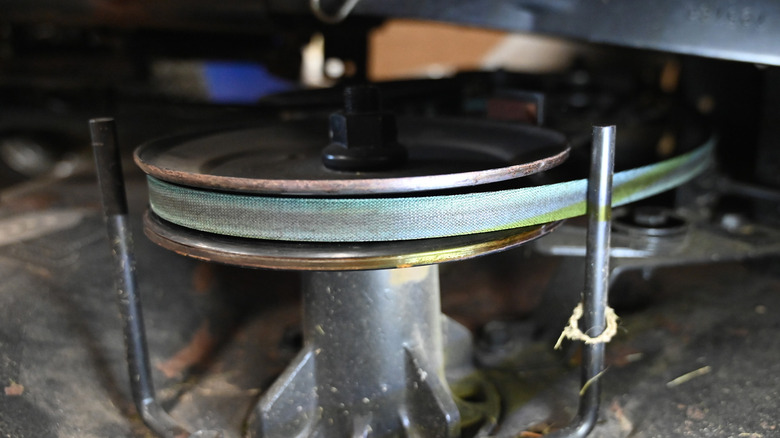
All riding mowers come equipped with belts, and those belts are extremely important to the operation of your mower. Most mowers have them on the deck to help engage the blades and on the drivetrain to engage the wheels. If one of these snaps, you'll definitely notice. The blade belt snapping means you'll turn the blades on, and nothing will happen. And the lawnmower will still turn on if the other belt breaks, but it won't being able to move anywhere. Some mowers also have additional belts for things like steering, and you can probably guess what happens when that one breaks.
The symptoms of a broken belt depend on which belt breaks. A failing deck belt can lead to uneven grass cutting, the blades not turning on at all, or squeal loudly when in operation. The drive belt being out of sorts can cause jerky operation, the mower not going anywhere at all, and you may even smell it burning as the wheels try to spin it. You can visually inspect these belts as they're pretty easy to find to see if they're cracked, frayed, or otherwise broken.
However, this is a pretty easy thing to fix. You simply replace the belts when they're starting to go. This will warrant another trip to Amazon, wherein you'll need to surf for belts that match your riding mower's make and model. Also check YouTube as there are tons of videos on how to remove the deck and replace the belts if you need help.
Unusual vibrations
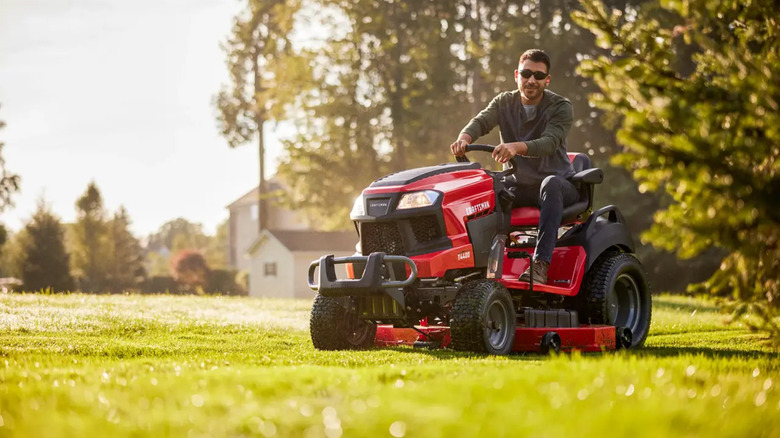
Riding mowers are machines, and like all machines, they vibrate while in use. However, sometimes the mower will vibrate a lot more than usual, or in weird, jerky ways. This type of unusual vibration is cause for concern and you'll have to troubleshoot several potential causes.
The first thing you should check are your blades. If they are unbalanced, they can cause excessive vibration. This is pretty easy to fix since you just need to replace your mower blades. If that doesn't work, a broken deck, broken belts, and loose components can also cause excessive vibration. The best thing to try is to go under the mower, check your belts, tighten any loose nuts or bolts you find, and make sure it's in proper working order. Adding lubrication to parts where it's dried up can also help reduce vibrations.
As usual, check your tires to make sure they're at the proper PSI, and that the wheels are properly attached. You can also check any add-ons you may have, like a bagger, which is heavy enough to cause some shaking if it's not affixed properly. The good news is that all of that stuff will usually stop unusual vibrations, and you may even get some naturally if you're cutting high, wet gras. However, if none of those fix it, there's only one other culprit.
Engine troubles
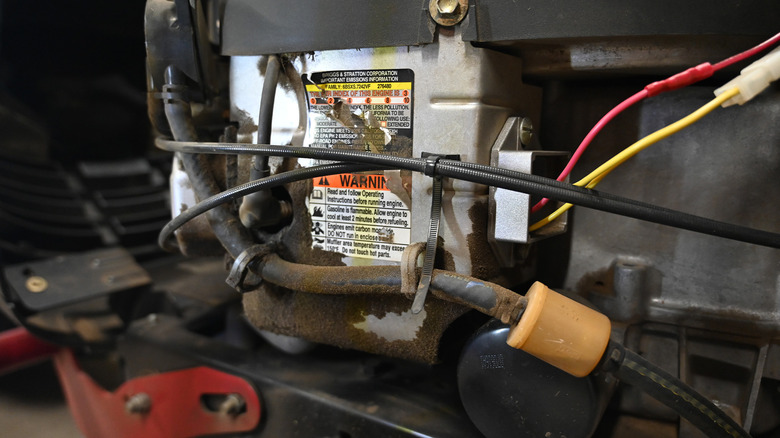
No one engine problem is common, but engine problems in general can be fairly common. I recently replaced the alternator on my riding mower because it would run fine but never charge the battery, leaving me to do it manually between cuts. Engine troubles manifest in several different ways, including a sluggish engine, decreased power, a frustrating unwillingness to start, excessive shaking during operation, and sometimes, you can even smell gasoline if your engine is running rich due to a misfire or bad timing.
The first two things you should do is check the gas and then the oil. Gas does not stay good forever, and bad gas can cause basically all of the above problems and more. Emptying the fuel and refilling with fresh gas can alleviate several potential problems. If that doesn't work, give the engine an oil change, as that can help too. If those don't work, check the spark plugs to make sure they're functioning properly and replace them if they don't.
There are a few things you can do as a DIYer for the engine itself. For example, if the flywheel key breaks, which has happened to me, it'll cause your engine timing to be off, leading to backfiring and a gasoline smell. The alternator going out can cause the battery to not charge, requiring you to charge it manually before each use. Finally, inspect all your fuel lines, fan, starter solenoid, and other components to make sure they're working correctly.