

GoPro Mission 1 Pro ILS Review: Unique, Challenging, Brimming With Potential
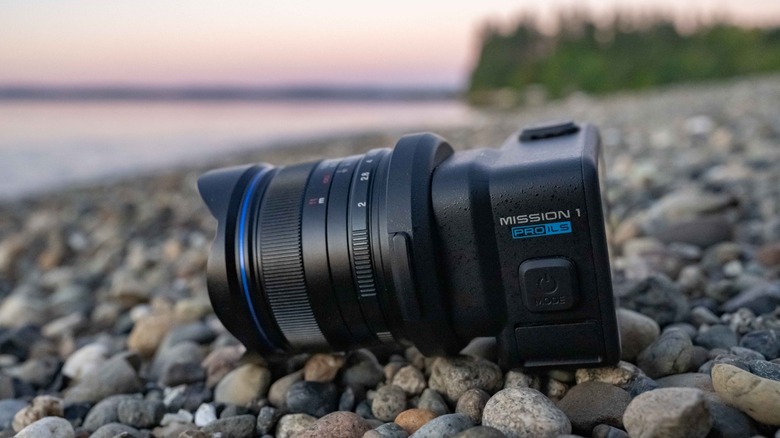
The GoPro Mission 1 Pro ILS is fundamentally a Mission 1 Pro with a Micro Four-Thirds (M4/3) mount instead of an integrated lens. However, this seemingly simple alteration has enormous implications that radically alter how this new camera functions to the point where it becomes something quite unique. The more you think about the potential of mounting the ILS to various different lenses, the more you begin to realize that there are a lot of interesting implementations which could be done with this camera that GoPros have never really been capable of before.
Essentially, this is a miniaturized, relatively low-cost cinema camera, or at least that seems to be how the ILS is intended to be used. Given that GoPros are already common in major film productions, it makes sense to have one that's more flexible from a cinematography standpoint. On paper, it's an intriguing concept that really fires the imagination, and I spent a considerable amount of extra time testing the camera to get a firm grasp on how well this camera performs in practice, and whether or not it's right for your camera bag.
GoPro provided the Mission 1 Pro ILS and the Laowa 7.5mm C-Dreamer lens for the purposes of this review. Smallrig provided various accessories, and Viltrox provided their 23mm T1.5 lens to help fully explore the capabilities of the Mission 1 Pro ILS.
Image Quality and software
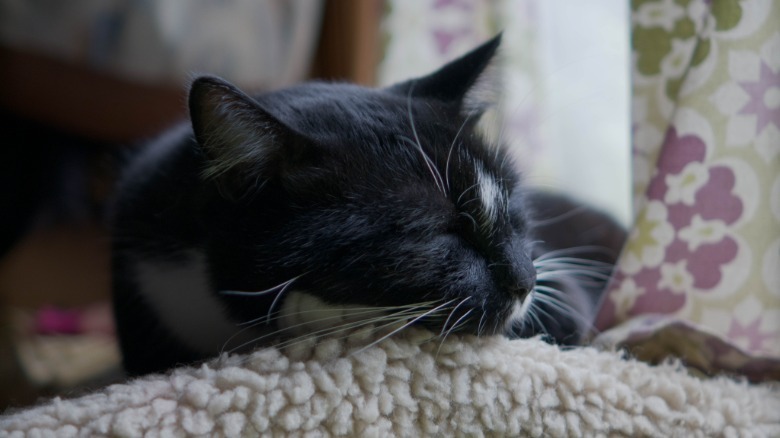
I made it quite clear in my review of the GoPro Mission 1 Pro that this system produces really high quality video, and even captures great still photos. Given that the ILS version of that camera uses all the same hardware except the integrated lens, you can expect great results from the Mission 1 Pro ILS.
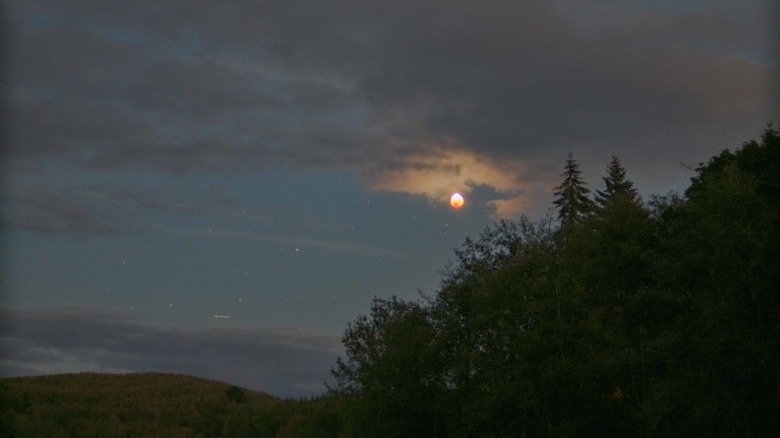
However, thanks to being able to use high quality lenses adapted from various systems, you can get video and photos with this camera that look as if they were captured with a much more expensive DSLR or mirrorless camera. You can finally get that GoPro color science without the telltale look of an action camera lens.
 Andy Zahn/SlashGear
 Andy Zahn/SlashGear
 Andy Zahn/SlashGear
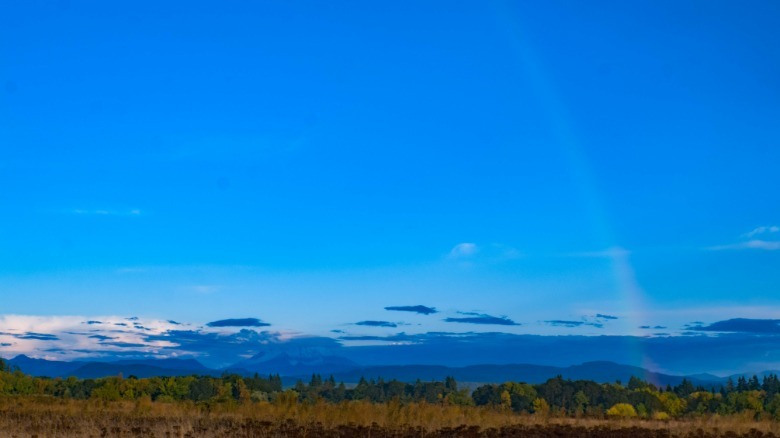
More impressive still is the fact that GoPro has managed to tune their fantastic HyperSmooth digital stabilization software to work with different lenses. Essentially, you program in the focal length of the lens, and the camera adjusts to it.
This means that the Mission 1 Pro ILS features action-camera level stabilization in a camera with interchangeable lenses, and as a consequence claims the title of having the best in-camera stabilization of any mirrorless interchangeable lens camera. This is something I've wanted for a very long time, and it absolutely lives up to my expectations.
 Andy Zahn/SlashGear
 Andy Zahn/SlashGear
 Andy Zahn/SlashGear
It is important to note here that though the stabilization works phenomenally well, it is still digital stabilization, and thus it doesn't eliminate motion blur from camera shake. This means what while the footage may be stable, it may show that blur, particularly using slower shutter speeds, and/or shooting with a longer lens. I got good results with lenses up to 40mm (120mm equivalent after the combined 3X sensor and HyperSmooth crop). Past 50mm I would recommend using additional stabilization.
Hardware Design
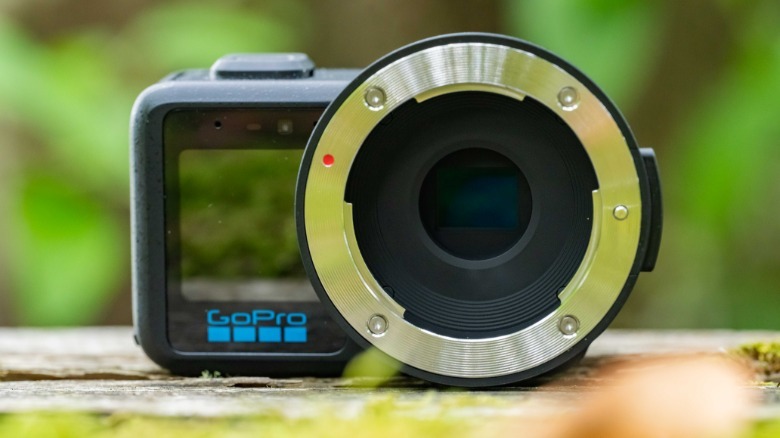
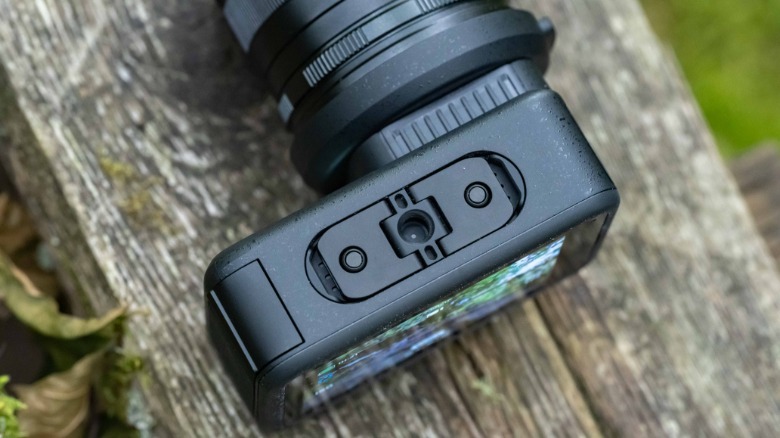
As previously mentioned, the ILS is identical to the standard Mission 1 Pro in how it's built, aside from the fact that rather than an integrated lens, it has a Micro 4/3 mount. This means you get the same front/back displays, buttons, and ports as the standard Mission 1 Pro. Importantly, it also means you can take advantage of GoPro's excellent mounting system, which includes action camera fingers, a 1/4-20 screw mount, and a proprietary magnetic mount, all integrated into the camera.
 Andy Zahn/SlashGear
That mounting system is a key reason I often reach for a GoPro over other cameras, just because it's more convenient, and in some cases, more reliable. In high intensity situations, I find it hard to trust a purely magnetic mount, and even a screw mount may not be adequate.
The integrated fingers are the only system I'd trust to mount beneath the wing of an airplane, for example, while the screw mount means I can easily toss the camera on a mini-tripod. The magnetic mount is also super nice to have for a lot of scenarios where I want to mount/dismount the camera quickly. All-in-all, the mounting system of the Mission 1 Pro ILS remains supreme above all other cameras.
 Andy Zahn/SlashGear
Important to note is that the ILS is not waterproof, so if you want to use it underwater or in particularly wet or dusty conditions, you'll need to use a housing. It might also be possible to make it more weather resistant by using a weather sealed lens and putting weather sealing tape around the lens mount.
Manual focus and no electronic connection to the lens
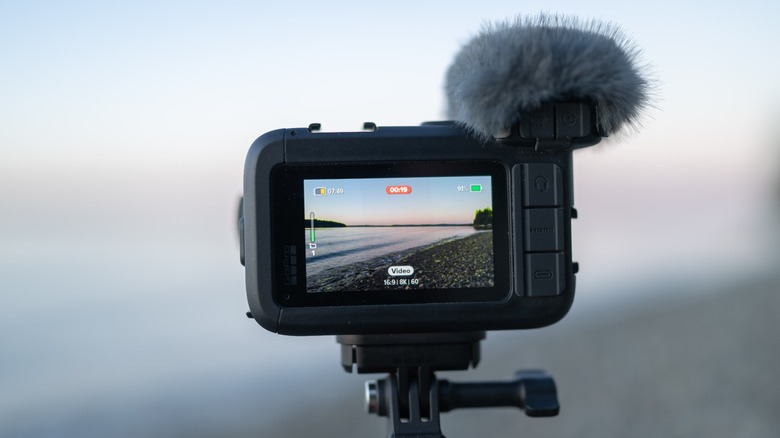
The fly in the ointment here is that the ILS is exclusively a manual focus camera that has no electronic connection to the lens. Focusing with the camera is about as good as you can get with such a tiny screen, but I did find myself struggling to grab accurate focus at times using the focus peaking system. That system really struggles in low light too, and while you can tether it or link to it wirelessly using an iPad, which does make things easier, I wish this passthrough delivered a higher quality image.
For better image quality, you'll need a micro HDMI monitor, to which the ILS can output 4K 60fps video. Also, using an external monitor means adding a lot of bulk to your setup, when the main advantage of the GoPro ILS is that it's compact, so for my purposes I found that learning to focus on the small screen was preferable.
I did gradually get better at achieving reliable focus with practice, so I recommend taking some time to get to grips with manual focusing on the Mission 1 Pro ILS. It's a large part of why I decided to take extra time testing and reviewing this camera; I wanted to see if the initially frustrating elements of this camera might be smoothed out with time and experience. Happily, after several weeks with the camera, I found myself quickly locking in focus, and even being able to follow moving subjects.
GoPro accessories
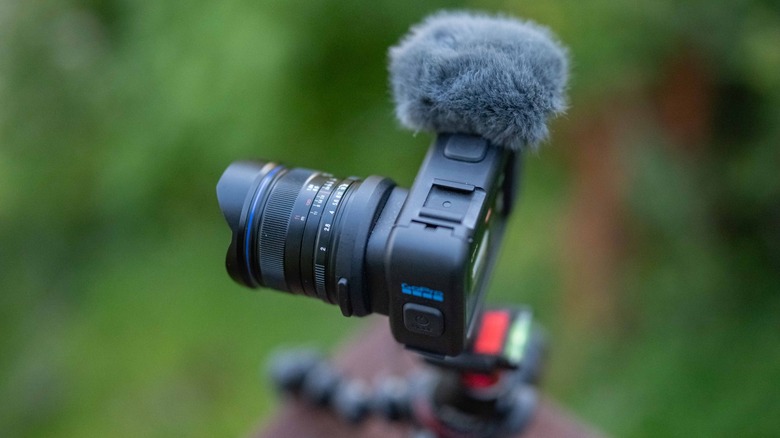
GoPro provided a number of key accessories alongside the Mission 1 Pro ILS, such as the grip kit and multi-battery charger which I tested with the standard version of the Mission 1 Pro, but they also provided the new media mod 2.0 for the camera, and I was immediately enamored of it. It adds an external microphone, and while I am very much a fan of the internal microphone system in this camera (I've used the Mission 1 Pro for professional live-recording gigs), the new media mod mic takes things to the next level.
A key test was in recording an opera performance at Portland State University, where when using a bendable tripod to secure it to an empty seat in the front row, I was able to capture better audio than my Nikon Zr hooked up to a Sennheiser 660 microphone, which is my standard setup at this venue. The subtle nature of the ILS allowed me to setup unobtrusively and have the camera near to the performers, giving the microphone on the media mod the best circumstances possible to capture clean, high quality audio.
The media mod case also adds numerous additional inputs to the Mission 1 Pro ILS, while helping to protect the camera itself and provide a more substantial grip for handheld filming. If you're buying the ILS, then I strongly recommend picking this accessory up with it. The one hiccup I ran into was that the media mod malfunctioned at one point, and the camera stopped picking up the microphone, but after I removed the camera and replaced the battery, it functioned normally. Keep in mind that if you tether the camera through USB while using the media mod, the microphone gets disconnected for some reason, so watch out for that.
Laowa 7.5mm F2.0 C-Dreamer Lens
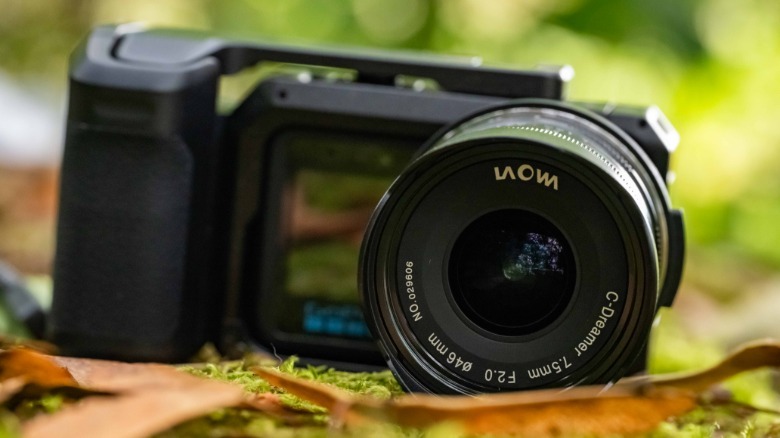
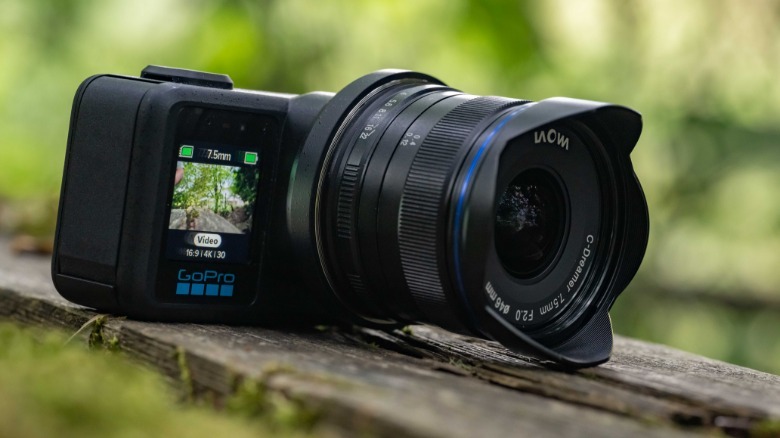
I would definitely recommend picking up a compact ultra-wide angle lens to use with the Mission 1 Pro ILS, and the 7.5mm F2.0 C-dreamer lens is just about ideal. It comes pretty close to mirroring the typical field of view of a GoPro, so if you need that wide-angle FOV in this camera, it's a good route to go. I ran a test where I set it to a darker aperture, set the focus, and matched up the settings with the ILS and the standard Mission 1 Pro in order to see if I could get similar results, and this is indeed the case. Stabilization is very comparable to the standard Mission 1 Pro, and shows a clearly superior picture quality.
 Andy Zahn/SlashGear
The focus system in the Laowa 7.5mm f2.0 is smooth and helps with achieving accurate focus. The aperture ring is clicky, which I prefer, but cinematographers might want the cine version of this lens with its declicked aperture, as well as toothed rings for follow-focus compatibility. It's beautifully made, as are all Laowa lenses, and at $389 from Laowa's online store, it's very reasonably priced.
Viltrox MF 23mm T1.5 Cine Lens
While it's great to be able to emulate the FOV of a regular action camera, what you really want the Mission 1 Pro ILS for is to be able to play around with focal ranges beyond what you get on a standard GoPro. The Viltrox MF 23mm T1.5 Cine Lens provides a very useful 69mm equivalent portrait-length lens on the ILS with HyperSmooth enabled. That HyperSmooth stabilization works very well with a 23mm lens like this, and the T1.5 aperture delivers really nice bokeh in the out-of-focus areas. Image quality is great overall, and I found the lens focused more easily on the ILS than some other optics.
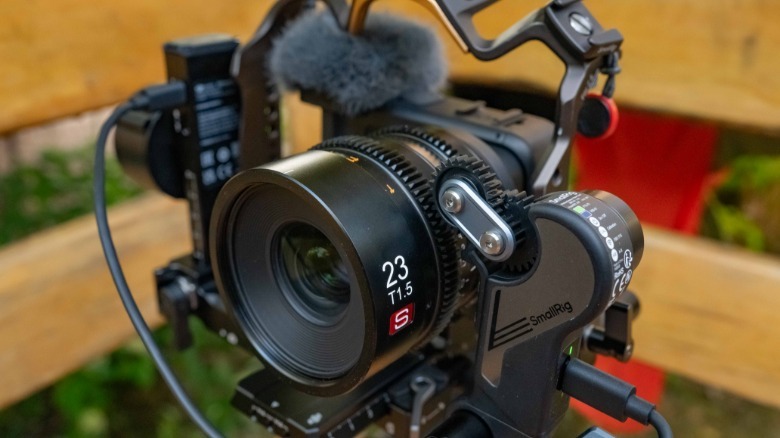
The Viltrox 23mm T1.5 features a really robust metal design that looks and feels like the premium lens it is. With its toothed focus and aperture rings, it works with follow focus systems out of the box, and the Mission 1 Pro ILS certainly looks the part of a cinema camera with this lens attached. In terms of weight and balance, it's definitely a somewhat heavy lens, and it certainly outweighs the camera, but I didn't mind this when shooting with it.
At $415 the Viltrox 23mm T1.5 isn't too tough on the pocket book, and it's a really useful lens to own alongside the Mission 1 Pro ILS. The footage captured with this lens on this camera certainly looks like it was taken with a much larger and more expensive rig, and combined with the Media Mod 2.0 you get a nearly pocket-size setup (albeit, a very large pocket).
Smallrig accessories
I used a couple of Smallrig accessories alongside the GoPro Mission 1 Pro ILS, most notably the Smallrig Shock Absorber Arm, which is essentially a Z-axis stabilizer. This works to help reduce or eliminate the bobbing motion associated with walking, and it works really well with the Mission 1 Pro ILS to provide some extra mechanical stabilization to supplement the HyperSmooth stabilization in the camera.
It goes a long way to preventing that unwanted motion blur mentioned previously. Importantly, the Smallrig Shock Absorber Arm isn't powered, so it doesn't need to be charged, and has a very high level of build quality. At $119 it's bit pricey, but it's an accessory which I find extremely useful for the ILS, or for filming with any other small camera. The only caveat is that the Mission 1 Pro ILS with the Media Mod 2.0 and Laowa 7.5mm f2.0 lens are just about the limit of what weight it can carry, so be aware of that.
 Andy Zahn/SlashGear
Another Smallrig accessory I tested with the ILS was the Wireless Follow Focus Kit (Lite), which helps immensely in aiding the tricky process of achieving correct focus with the camera. You'll need to build a rig for the camera in order to mount everything you'll need to run the system, and provide a power source, but this is definitely something to consider when looking to more advanced cinematography with the ILS.
I put together a somewhat jerry-rigged setup using the Smallrig Nighteagle cage from my Nikon Z8, and mounting the whole thing on the DJI RS 5, which allowed me to stabilize it while delivering power to the follow-focus motor. It showed that there's a lot of potential for putting together compact and versatile rigs using the ILS.
Adapted lenses
Given the flexibility of the M4/3 mount, and the way the Mission 1 Pro ILS is designed to be used with manual lenses, I had to test out the ILS with some vintage glass. Since some of my best older lenses are those for the Nikon F mount, I utilized the Viltrox NF-M43X speedbooster. A speedbooster is a focal reducer, meaning that tit takes a lens with a larger image circle and projects it onto a smaller surface area.
The upshot is that it dramatically reduces the amount by which the Mission 1 Pro ILS crops in from the larger image circle of a full frame 35mm lens. The Viltrox NF-M43X applies a 0.71X focal reduction to lenses mounted to it, so when attaching it to the ILS you need to calculate this number first and round to the nearest half of a whole number. For example, a 24mm becomes a 17mm lens with the focal reducer, and when that is multiplied by 3X for the crop factor of the ILS sensor and HyperSmooth stabilization, it works out to be the equivalent of a 51mm lens.
The Viltrox speedbooster is of excellent build quality, and it's both solid and smooth in its operation. I also really like the speedbooster's integrated tripod foot with its 1/4-20 mount. This creates a much better mounting point for longer and/or heavier lenses on the camera.
I tested the Viltrox NF-M43X with the Nikkor 24mm f2.8, the micro-Nikkor 55mm f3.5, and the Nikkor 300mm f4 PF, and all three lenses worked well using it on the Mission 1 Pro ILS. As someone with a decent collection of Nikon F-mount glass, this speedbooster is an extremely useful tool to use with the ILS, and at $82.99 from the Viltrox store it's reasonably priced.
Price
At $699, the GoPro Mission 1 Pro ILS isn't inexpensive, and as of this writing, it's $100 more than the standard Mission 1 Pro. However, the ILS is almost more comparable to cameras like the Nikon ZR, or the Blackmagic Cinema Camera 6K, which go for several times the cost of the ILS, and are considerably larger in size.
The GoPro also has its HyperSmooth image stabilization system, which is unparalleled in many ways (despite its aforementioned limitations). With this in mind, the value of the Mission 1 Pro ILS is very much going to depend on what you're looking for in a camera.
 Andy Zahn/SlashGear
From a cost standpoint, you do need to consider the total cost to actually make the Mission 1 Pro ILS operational. If you already own Micro-4/3 glass, you might not need to spend any more money on the lenses, but I would definitely recommend using the camera with fully manual lenses that give you control over aperture without an electronic connection.
If you do need or want to buy an extra lens with the ILS, you can probably expect to spend around $400 on that, though the 7Artisans 7.5mm f2.8 lens offers a potential budget route, as it's available for just $139.99 from the 7Artisans Store (I have not tested it myself). You will also need a microSD card, and I would strongly recommend picking up the Media Mod 2.0, which is $149.99 direct from GoPro. With all this in mind, you should probably expect to spend $1000 or more on the Mission 1 Pro ILS.
Conclusion
The GoPro Mission 1 Pro ILS is an awesome camera, but you need to take the time to learn its quirks and gain the skills necessary to get the most out of it. It's not the best choice for everyone, given its lack of waterproofing, the necessary learning curve, and the additional expenses necessary to get the most out of it. However, for the right person, this camera will do amazing things.
The standard Mission 1 Pro remains the best action camera on the market, and the ILS brings all the powerful capabilities of that camera into a platform which cinematographers can use to achieve amazing things. I'm sure that very soon we will see this cameras being used in the production of major motion pictures. In fact I could see it becoming the go-to option for situations where a very compact camera is needed for a particular shot.
 Andy Zahn/SlashGear
 Andy Zahn/SlashGear
For the average hobbyist videographer, the Mission 1 Pro can offer a lot of interesting creative possibilities. I might not use it as a primary camera, but as a b-camera for capturing detail shots, secondary angles, or creative clips for b-roll. I used it extensively for recording live music, and discovered it to be a fantastic option for this purpose.
Also, serious uses aside, the Mission 1 Pro is a lot of fun to play around with — trying out different lenses, or filming bees and other critters in slow motion; there's a lot of joy to be had in figuring out what can be done with this unique camera and its impressive capabilities.
The GoPro Mission 1 Pro is available on GoPro's online store for $699.99.