

15 Highly Valuable (And Rare) Retro Gaming Accessories Every Collector Should Know About
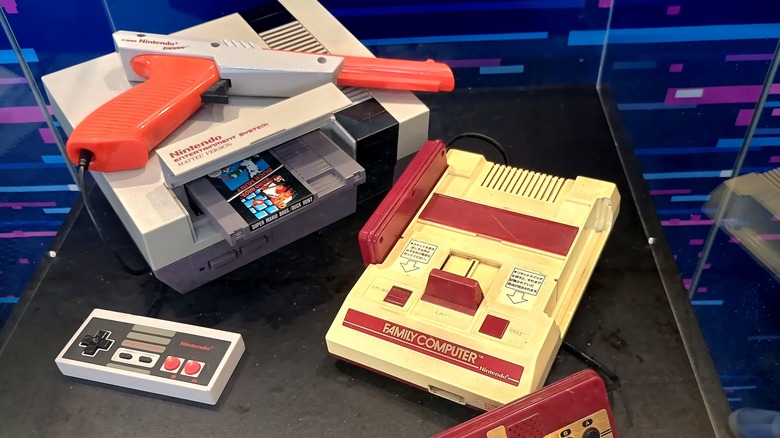
When video games first appeared as home commercial products in the 1970s, they were all-in-one units, featuring built-in games and controllers. As technology advanced, home consoles evolved into machines capable of playing more games, many of which required an accessory to use. Games like "Duck Hunt" on the Nintendo Entertainment System (NES) were fun because of the Zapper.
For most gaming accessories, they're not collectible today. That's because Nintendo released millions of Zappers, and the same is true of other systems like the Sega Master System's 3D glasses. Gaming in the 1980s and '90s continued to see more and more accessories flood the market, and decades later, a handful of those devices are rare and expensive, especially if you find them still in the box or in excellent condition.
Rare retro accessories appear on auction sites occasionally, and thanks to low production numbers, the ones that are hard to come by are often priced in the thousands of dollars. These 15 retro gaming accessories are all highly valuable and rare, and they're presented in order of lowest cost to highest as of this writing.
Singer Izek 1500 - Game Boy Color
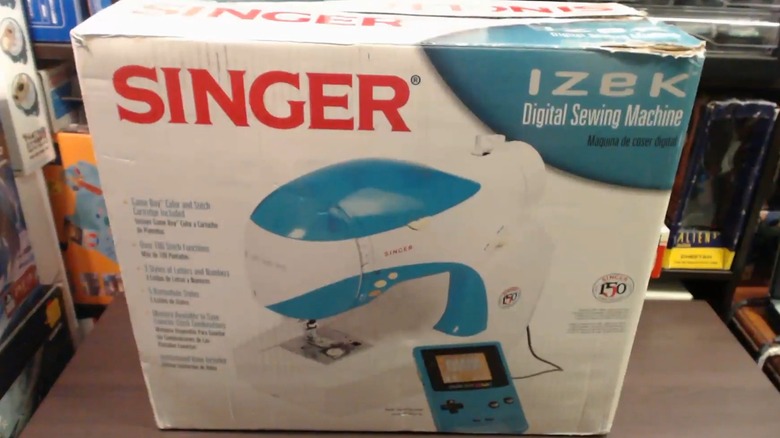
Nintendo released no shortage of accessories for the Game Boy and Game Boy Color, including a real, full-size sewing machine. In what has to be one of the strangest accessories ever tied to a video game console, Nintendo teamed up with the Singer Corporation to release the IZEK 1500; despite the strange association, it's actually pretty cool.
The IZEK 1500 could link with a Game Boy Color, handing control of the sewing machine to the system. It worked by letting you use sewing patterns or even make your own that you could then use with the machine. Nintendo released five "games" to go with the IZEK 1500, featuring Mario-themed patterns.
Initially, it was released in Japan with a Jaguar sewing machine, but Singer brought it to the States. These days, the Singer IZEK 1500 is highly collectible. You can often find them on eBay for around $550 to $735, depending on condition. If you happen to have one lying around that you never got a chance to open, you could probably sell it for around $1,100 or so.
Steel Battalion Mega-Jockey-9000 - Microsoft Xbox
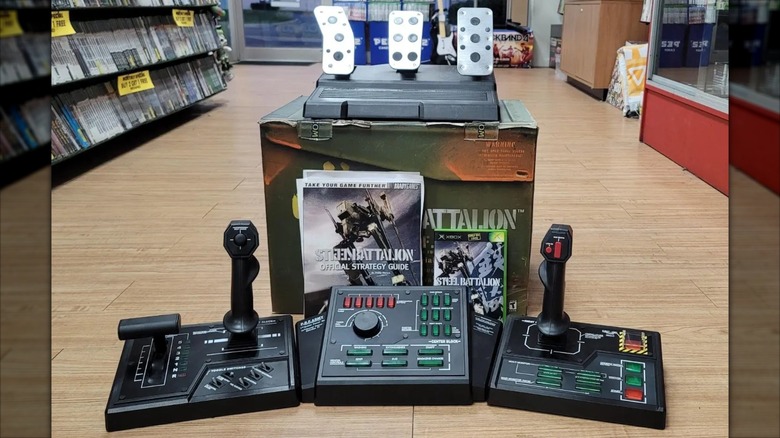
One of the most elaborate controllers ever released for a sixth-generation console is the Mega-Jockey-9000, which worked with "Steel Battalion." On its own, "Steel Battalion" is one of the rarest original Xbox games, which makes sense, as it cost $200 on release ($375 in 2026). The reason why is clear — it's a full-sized hands-on throttle-and-stick (HOTAS).
Players could buy the game on its own, but without the HOTAS, they were at a significant disadvantage. While the game itself isn't too pricey these days, finding a complete bundle with the HOTAS and game is incredibly rare. Even loose with everything and no box, the bundle can reach prices of around $425 on sites like eBay.
Finding one in the box is almost impossible, but it does happen. Those auctions are often closer to the $1,500 mark, and even a full, graded bundle only goes for about $100 more. You'd think that an accessory that worked with a single game wouldn't be so collectible, but given the number of times they pop up and sell on eBay, it's clear that there's a market for it.
Sharp Game Television Controller - NES
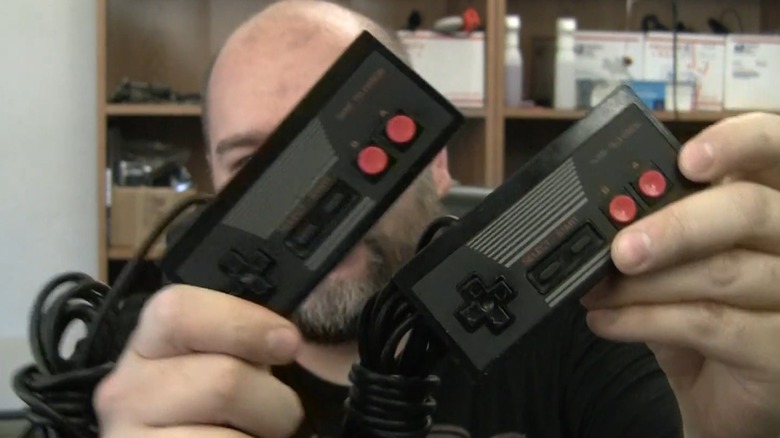
Nintendo released a lot of different versions of the NES throughout the system's life, with everything from the typical grey version to the Japanese Family Computer (Famicom) and even a top-loader. One of the rarest versions of the NES came in the form of the Sharp Game Television, which was a 19-inch CRT TV that had a built-in NES in the system's base.
It was sold exclusively at Kmart when it was released in 1989, but it ceased production the following year due to poor sales. As a result, the Sharp Game Television is a rare NES console, and the same is true of its controllers. As you can see in the picture, they feature a different color scheme compared to standard NES controllers.
Due to the system's rarity, the controllers are among the rarest NES accessories, and they're highly collectible. A single loose controller costs around $135, and since most people would want two, you can double that. The same is true of a new controller in the box, which costs $1,200 for one Sharp Game Television controller.
Saitek Booster Boy - Nintendo Game Boy
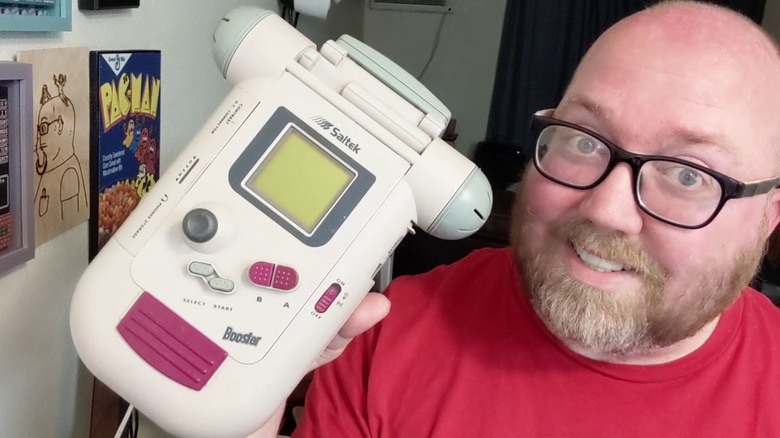
While the original Game Boy was an astounding success due to its low cost, extended battery life, and large library of games, it was a fairly bare-bones system. It didn't have a backlit screen, and its screen was somewhat small, so third-party manufacturers produced a plethora of popular add-ons, including magnifying lenses, lights, and more ergonomic controllers.
While there were many accessories to choose from, the best typically included more than one feature. This resulted in one of the oddest-looking and undeniably useful products, the Saitek Booster Boy. Once you slid your Game Boy into this beast, it provided stereo speakers, an arcade stick, lighting, a screen magnifier, and storage space for your games.
It was all anyone needed to bring their Game Boy up to the max, though it did require four C batteries that could also power the Game Boy. Loose, you can find a Saitek Booster Boy for around $155, but getting one new in the box is considerably harder and more expensive. Those typically go for around $1,400, as they're incredibly hard to find.
Game Genie Top Loader Adaptor - NES
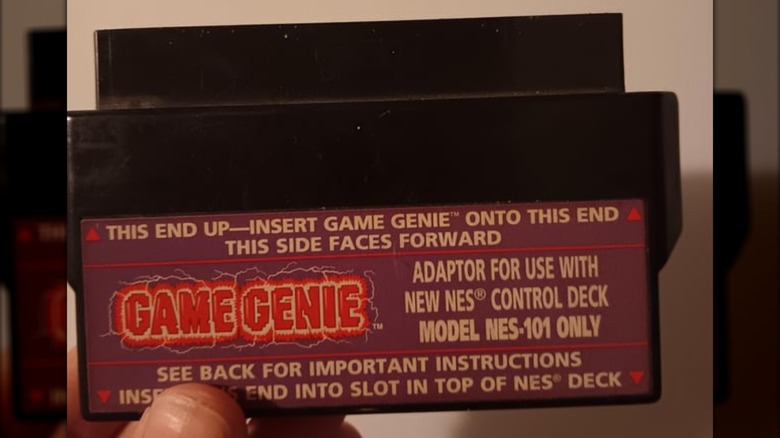
If there's one thing retro gamers can agree on, it's that many NES games were much harder than they needed to be. One of the best ways to overcome a game's overall difficulty was to cheat with a Game Genie. This worked well with the original NES, and the Game Genie sold gangbusters.
Typically, a Game Genie for the NES isn't too expensive or collectible due to the millions that were originally produced and sold. The one NES model that does cost a lot and is difficult to find is the Game Genie Top Loader adapter because it was made in comparatively low numbers for a rare version of the NES, the top-loader.
A different Game Genie was required to work with the system, which is where the adapter came into play. Because the top-loader NES sold poorly, so too did the Game Genie designed for the system. These days, it's hard to find and expensive, costing around $360 for the adapter alone. A new, boxed version is much harder to locate, and that costs $1,600.
TurboBooster-Plus - TurboGrafx-16
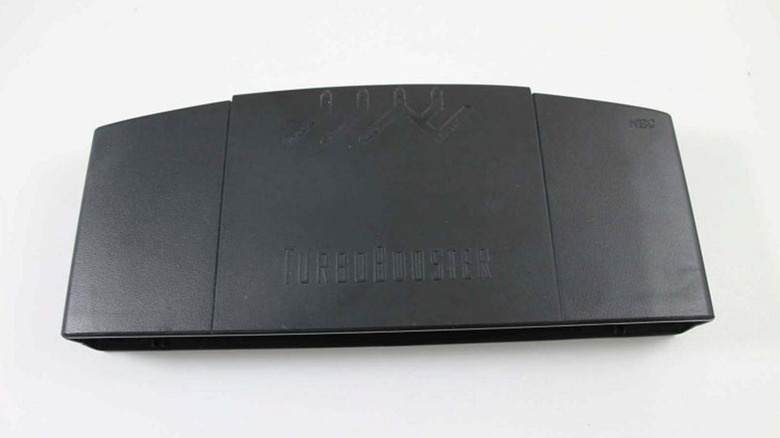
The TurboGrafx-16 (TG16) was released in 1989 during the 4th console generation, but it didn't sell well in the United States because its competition, the Sega Genesis and Super Nintendo Entertainment System (SNES), dominated the market. It fared better in Japan, but the console was largely overlooked in the West, so it's not well known; therefore, many of its accessories are hard to come by.
That said, the TG16 didn't have a ton of accessories due to its low sales, but there were several, including the TurboBooster-Plus. This was a device that fit onto the back of the system, replacing the plastic cover that hid the necessary port. Once plugged in, the TG16 could be hooked up using composite cables instead of the standard RF connection.
This provided a better picture and stereo sound, so it was a must-have for most players who wanted to take advantage of newer televisions' capabilities. They're fairly easy to find loose, costing around $250, but getting your hands on one that's new requires shelling out around $1,950. Even if you have an empty box or manual, those too go for around $250.
Carrying Case - Atari 5200
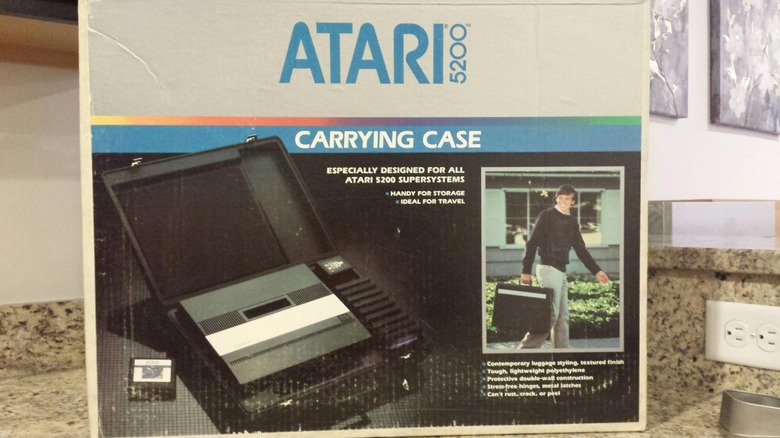
When Atari released the Atari 2600 in 1977, it launched a new era of home gaming, and the system sold incredibly well for years. A year before the Video Game Crash of 1983, Atari released its follow-up system, the Atari 5200, but it didn't perform nearly as well. The system's controller was problematic, and its pack-in game was "Super Breakout," which wasn't new to consumers.
While the exact numbers are unclear, it's believed that Atari only sold around 1 million units, which paled in comparison to the 2600's 30 million. The system sold poorly, as did its accessories; fast-forward a few decades and those same accessories are incredibly rare. The one that's the most challenging to locate is the Carrying Case.
While the Atari 5200 was a home console, it wasn't too difficult to carry it around, but you had to have the right accessory to do so. It's effectively a briefcase with the slots needed to house the 5200, some games, and its components. Loose, you're looking at around $500, but that price explodes for one that's still in the box, as they typically sell for around $2,250.
Nintendo 64 DD Keyboard
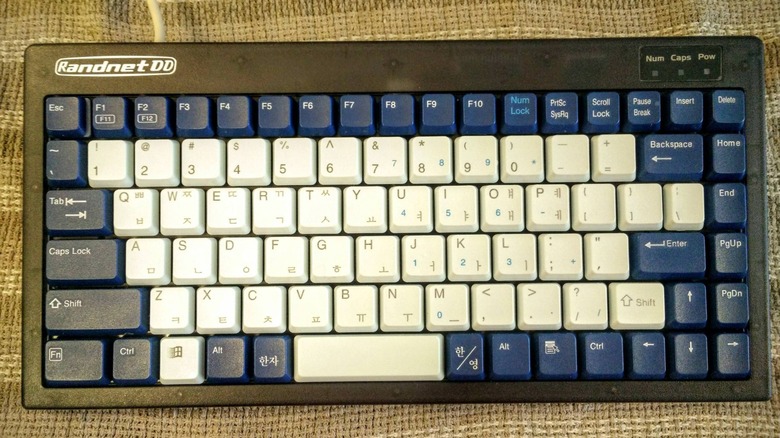
The Nintendo 64 (N64) is an interesting console, as it was released at a time when the competition had already switched to CD-ROMs. Nintendo held to its cartridge lifestyle, and there's no denying that the N64 is one of the company's best systems. It features some exceptional games, and many continue to entertain through sequels and remakes.
To keep the N64 competitive, Nintendo released the 64DD in 1999, a peripheral that plugged into the bottom of the N64 via its expansion port. The added disk drive used floppy disks with 64 MB of storage, significantly increasing what a cartridge could provide. Nintendo rolled out the 64DD in Japan that year, but it failed to gain enough traction, so the company canceled its release in the West.
Because of this decision, the 64DD and any of its accessories are incredibly rare and highly collectible. The keyboard alone is one of the hardest Nintendo accessories to find, and it's little more than a standard keyboard that came with stickers. If you have one, you might think about selling it because they're worth $3,000 new in the box.
Stack-Up Accessories - NES
When the NES was released in the United States, it came in several formats, including the Deluxe Set, which included the console, ROB (Robotic Operating Buddy), the Zapper light gun, and two games: "Gyromite" and "Duck Hunt." Of all its components, ROB was a big draw, but if you ever played with it, you already know that it didn't work well.
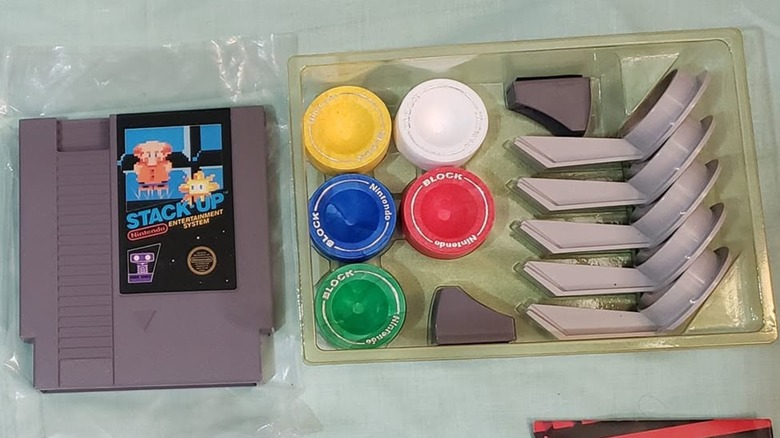
ROB was also limited to a small number of games, and in addition to "Gyromite," the list ends with "Stack-Up." The game lets the player use ROB to run a program based on what's active on the screen and how it's used to stack items. These "Stack-Up" accessories (pictured) are among the rarest NES items due to limited production and sales.
While the game wasn't a great seller nor was it a lot of fun, the accessories are nonetheless highly sought after by collectors. Loose, they can cost around $350, but the holy grail of NES accessories is finding them new in the box. That's much harder to locate, and should you happen upon them, they can go for as much as $4,970.
Color Bar Generator - Atari 2600
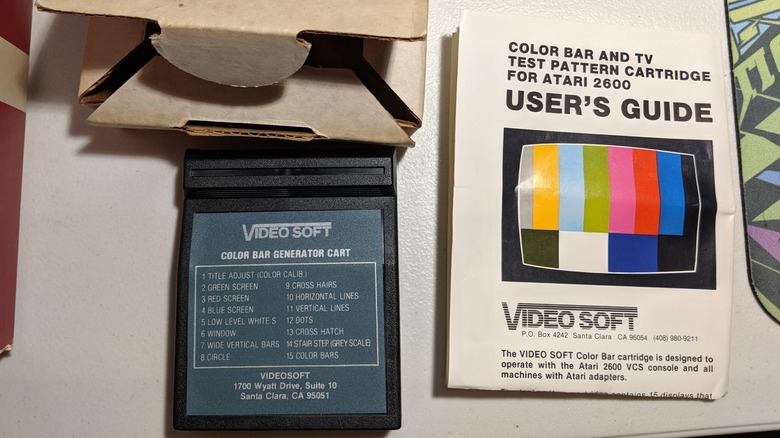
If you're old enough to know what a CRT TV is, you've likely seen one showing color bars at least once in your life. Those color bars were needed for fixing a television, and repair shops used pattern generators that cost between $1,000 and $2,000. Gerald "Jerryʺ Lawson noticed this and created the Atari 2600 "Color Bar Generator" cartridge.
While it looks like a standard game cartridge, it's not a game and more of an accessory that had huge market potential. For only $29.99 (and an Atari 2600), repair shops could skip shelling out upwards of $2,000 to generate color bars and simply use the "Color Bar Generator." The cartridge wasn't sold to the public, and instead went to professionals at repair shops, so it's rare.
Unsurprisingly, it's also highly collectible, with loose copies of the cartridge going for over $575. It doesn't happen often, but new-in-box sales of the "Color Bar Generator" do pop up from time to time, and when they do, the unusual accessory sells for around $4,995, which is a lot for something that originally sold for $29.99.
Outback Joey HeartBeat Personal Trainer - Sega Genesis
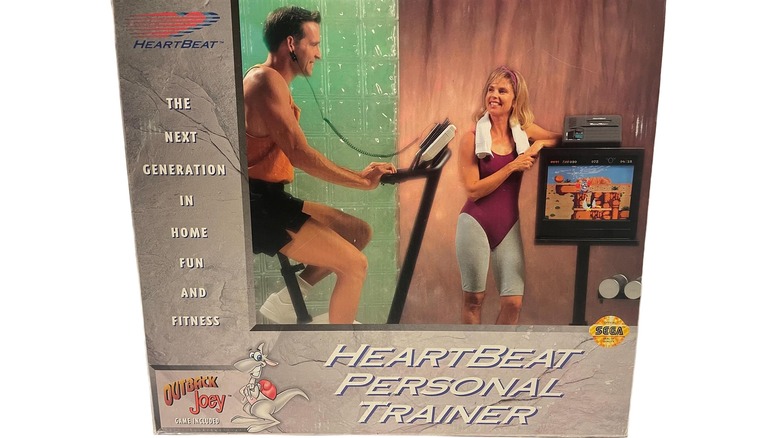
The Sega Genesis competed with the SNES, and the system featured some excellent games, including multiple entries in the "Sonic the Hedgehog" franchise. It also had some unusual games, which is where "Outback Joey" comes into play. The game utilized two different accessories, the HeartBeat Catalyst and the HeartBeat Personal Trainer, which was a variant of the console.
The HeartBeat Corporation only produced 1,000 units of the hardware, which was sold in a bundle that included the game. That's an incredibly low production run, so the "Outback Joey" HeartBeat Personal Trainer was already rare when it was released. The hardware is used to monitor a player's heart rate, salinity levels on the skin, and movement, and it worked well with the game.
As you can imagine, the bundle is highly collectible due to its scarcity, and a loose one with all of the components and game costs around $3,505. A complete, new boxed version, which occasionally appears on auction sites like eBay, sells for $5,000, making it the most expensive Sega Genesis accessory on the market.
Nintendo 64DD
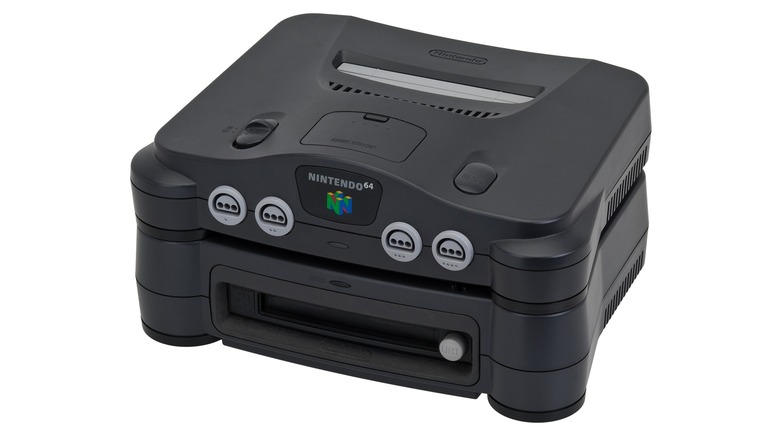
If you've gotten this far, you already know that a Nintendo 64DD keyboard isn't an inexpensive item, so it shouldn't come as a surprise to learn that the 64DD accessory is even pricier. It's one of the most coveted accessories among retro enthusiasts, and it's often incredibly difficult to find. That's because Nintendo only ever sold around 15,000 exclusively in Japan.
The system also only ever featured 10 games, though these too are collectible due to how rare they are. One of the reasons that there aren't many 64DDs in the States is because the games are all in Japanese, so they're really only collected by people who have a love of the hardware — when they can find it.
Nintendo 64DDs aren't common, and they tend to sell quickly. If you ever locate one, be prepared to break the bank because a loose one without the box or manual costs an average of $1,700. New 64DDs are much harder to find, but there are a few out there. When these go up for sale, they can go for as much as $7,600.
Gold Game Boy Camera
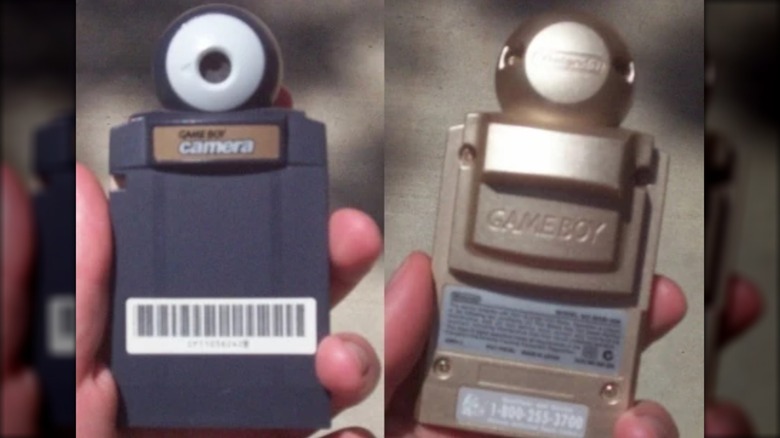
The Nintendo Game Boy featured tons of 3rd-party accessories, but Nintendo produced a fair share of its own. The Game Boy Camera came out in 1998, and it took black-and-white pictures that could be integrated into some video games. If you also had the Game Boy Printer, you could print out your photos, making the OG Game Boy into a rudimentary digital camera and photo processor.
Game Boy Cameras aren't rare or highly collectible, but there's a version that is on the top of many collectors' lists. The gold Game Boy Camera was released to promote "The Legend of Zelda: Ocarina of Time," which is one of the franchise's most beloved titles. The golden accessory was only released in the United States through a "Nintendo Power" mail-order offer.
While it's unclear how many were made, the number was likely around 2,000, making it a scarce item. With millions of Zelda fans who collect these things, it's no wonder that a loose Game Boy Camera in gold goes for $990. The price grows exponentially for an unopened one, which runs close to $9,085 on average.
Millennium 2000 Controller - Nintendo 64
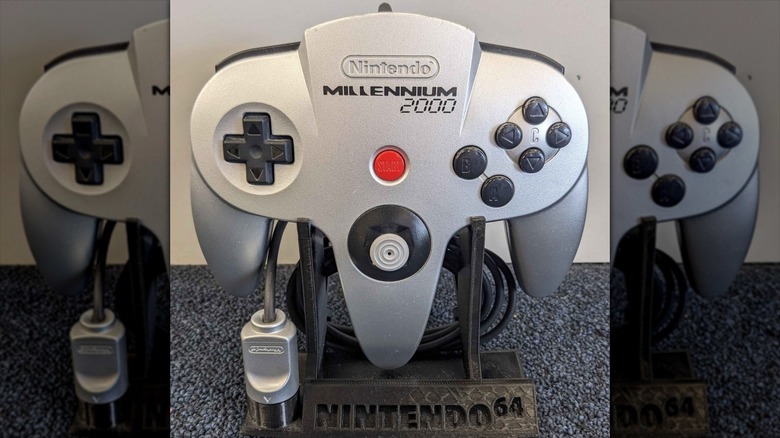
The N64 had a ton of variant controllers, which wasn't unusual for the time and is still a common practice to this day. While some N64 controllers are difficult to find, the most valuable and rarest is the Millennium 2000 Controller. These were released through a "Nintendo Power" program that saw two other controllers released, but the Millennium 2000 Controller is the scarcest and most expensive.
That's because only 1,000 were produced to commemorate the year 2000, so they're tough to locate. The controller features a silver design and black buttons with the words "Millennium 2000" printed below the console logo. Because of the controller's scarcity, it's ridiculously expensive, costing as much as $1,500 for a loose one.
Getting a Millennium 2000 Controller still in the box it shipped in is infinitely more difficult, but they do pop up occasionally for sale online. When that happens, the controller can go for as much as $15,810, making it the most expensive Nintendo controller from any of the company's consoles. That said, a loose one failed to sell in 2024 at Heritage Auctions, showing how small the market is.
Elemental Gearbolt Assassin Case - PlayStation
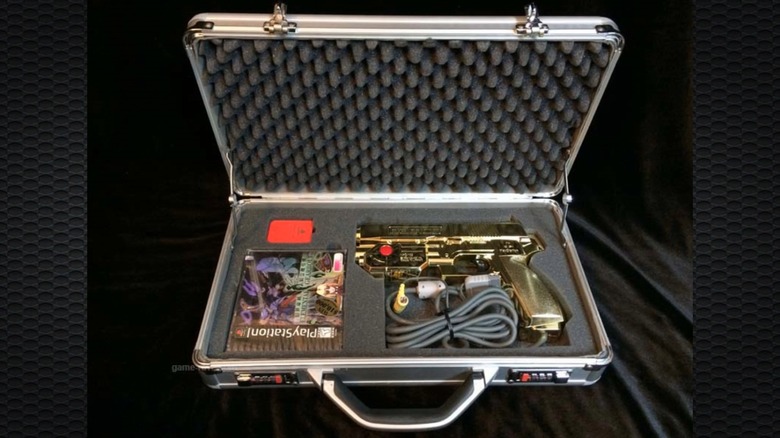
The most expensive retro gaming accessory arrived in 1998 as a prize limited to fewer than 50 winners of the Working Design's "Elemental Gearbolt" competition at E3. The "Elemental Gearbolt" Assassin Case came with a copy of the game, a gold-plated GunCon light gun, and either a red or a gold-plated memory card. The brushed aluminum case looks like what an assassin might carry around, and it all came together nicely.
Since only 50 lucky winners managed to get their hands on one of these cases, they're not only highly sought after, but they're incredibly difficult to find. The case does pop up occasionally online for sale at sites like Heritage Auction, where one sold in 2022 for $19,200.
That may sound like a lot, but it's not the upper limit for an "Elemental Gearbolt" Assassin Case. You can find them loose without the case, with the other components, for around $9,300, but a complete set with the case and everything it came with can sell for as much as $26,250. This makes the "Elemental Gearbolt" Assassin Case the most expensive accessory for the original PlayStation.