

5 Things You Should Not Use WD-40 Contact Cleaner On
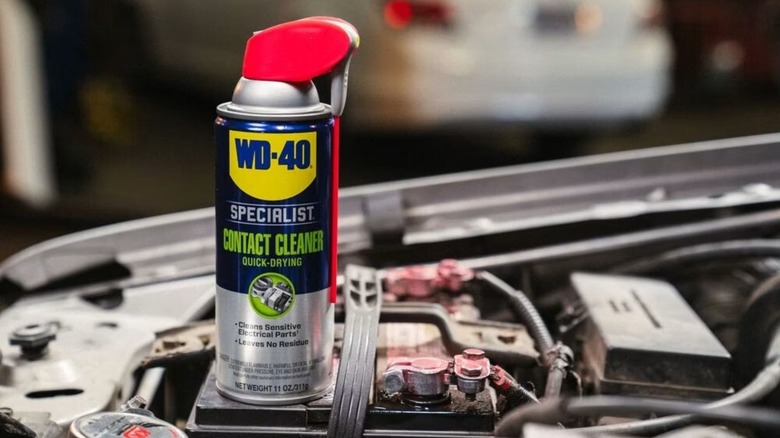
WD-40 Contact Cleaner is our go-to product when our windows get stuck, or we want to remove rust from any surface. We also use it to blast grime off circuit boards, battery terminals, and switches without leaving sticky residue. That effectiveness itself makes it tempting to reach for it anytime anything is a little dirty. However, that is exactly the instinct that ends up damaging things that were never part of the job in the first place.
The catch is that WD-40 Contact Cleaner is a solvent-based aerosol, and solvents are chemically aggressive by design. The same properties of WD-40 help it strip oil and flux residue in seconds but can also eat into certain plastics, dry out rubber, or ruin a screen's coating the moment the nozzle points the wrong way. Even people who have used the spray for years still end up making mistakes with WD-40 because they assume "electronics cleaner" automatically means safe for any electronic in the house.
It doesn't help that WD-40 sells a whole lineup of similar-looking cans, and confusing Contact Cleaner with the Electric Parts Cleaner or the original Multi-Use Product can produce very different results on the exact same surface. What's fine for a circuit board is not always fine for the plastic casing sitting right next to it. For this reason, we have compiled a list of five things you should never use WD-40 Contact Cleaner on.
Polycarbonate and acrylic plastics
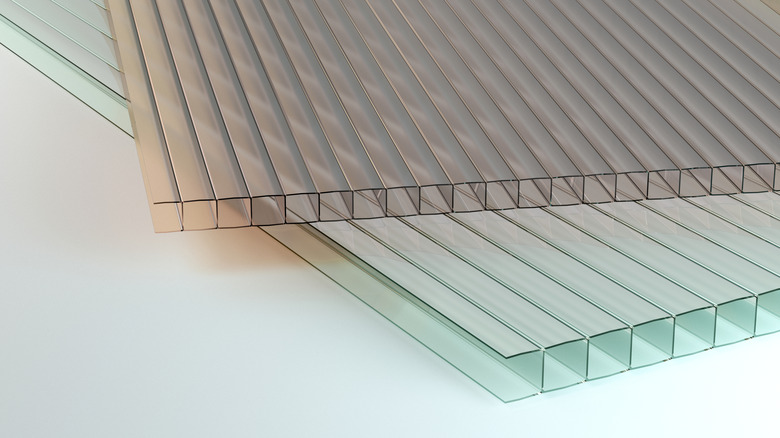
People spray Contact Cleaner on device housings, eyeglass lenses, light covers, and clear plastic panels because these spots get dirty fast. It might seem harmless. When you spray the WD-40 Contact Cleaner onto it, the can dries up quickly and leaves nothing behind. But this is exactly where the product does the quickest, longest-lasting damage. Polycarbonate and acrylic are amorphous plastics, which means they are especially vulnerable to something called environmental stress cracking.
Notably, when certain solvents touch a stressed plastic, the plastic weakens fast. Moreover, cracks start forming in seconds, since Contact Cleaners blends falls right into the group of chemicals known to cause cracks. You may not see the damage immediately, but it will become visible once the plastic has gone brittle or, in the worst case, when you need the product most. This is the very reason you should never use WD-40 on plastic products. Hydrocarbons break down the bonds in polycarbonate and similar plastics over time.
Contact Cleaner solvent blends fall right into the group of chemicals known to cause this kind of damage. For lenses, light covers, or clear housings, skip the WD-40 Contact Cleaner entirely. Instead, use warm water, a drop of gentle dish soap, and a lint-free cloth to clean the surface without touching its chemical structure.
Silicone seals and gaskets
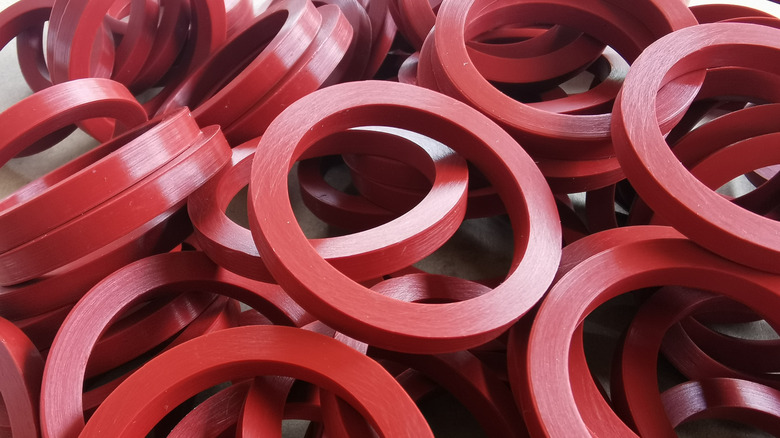
Silicone nowadays is used almost everywhere. It shows up in weatherstripping, gaskets, cable grommets, and the soft bumpers on plenty of gadgets around the house. Even the case you have your mobile in is made of silicone. Silicone is a bit spongy, but it's strong enough to protect devices and absorb impact. But that sometimes can work against it, especially when you are thinking of spraying WD-40 Contact Cleaner on it. Its tough nature might look like it can shrug off a quick spray without any trouble.
However, the problem is not silicone's overall toughness; it is the specific type of chemical in this particular product. According to a chemical compatibility chart, silicones resist large, non-polar oil molecules well. But they are not compatible with small hydrocarbon-based solvents, which is exactly what WD-40 Contact Cleaner is made of. When silicones are repeatedly exposed to that kind of solvent, it can make them swell, soften, or stop sealing properly over time.
WD-40 is not safe to use on rubber, and the same principle applies to silicone as well. The wrong solvent slowly strips away flexibility and grip, leaving seals stiff, cracked, or prone to leaking well before they should be, and water or dust can get into places it was never meant to reach, causing problems well beyond the seal itself. If you want to clean a seal or gasket, you should use plain water and a soft cloth.
Device screens and touchscreens
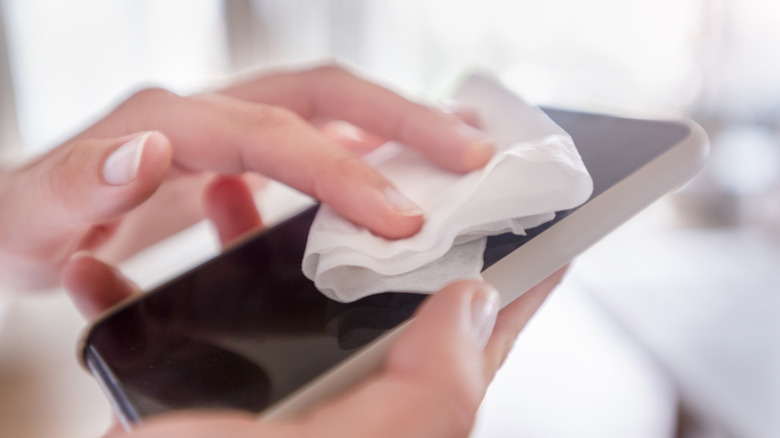
Every screen – laptop, mobile, tablet, or even your smart TV – has a coating that resists fingerprints and oil from daily use. That coating is exactly what the WD-40 Contact Cleaner can strip away without your realizing it. Screens get greasy fast, especially those of mobile phones and laptops. Sprays might look like the absolute best option to get them clean, streak-free, and sparkling every time. But that promise does not cover what is actually sitting on top of the glass itself.
According to Apple's cleaning guide, you should not use aerosol sprays, ammonia, or solvents anywhere on displays. These chemicals can strip the screen's protective coating. If moisture gets past the edges, it can cause internal damage that is not covered under warranty at all, and that repair bill usually costs far more than a new microfiber cloth. WD-40 Contact Cleaner checks both boxes at once — it is an aerosol, and it is solvent-based by design.
While the WD-40 Electric Parts Cleaner may look like the right choice for computer screens, it isn't safe to use. Even WD-40's own product page warns people away from screens entirely. It's fine on internal parts a few inches away, just not the display itself, since the coating and the circuitry react very differently to the same spray. For cleaning the screen, you can use a dry microfiber cloth for daily dust, and a cloth dampened with 70 percent isopropyl alcohol for tougher smudges and grime.
Computer keyboards
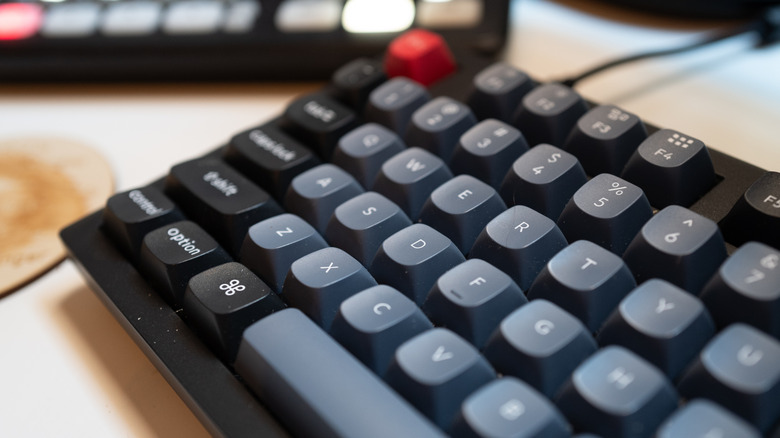
When you type a lot, your laptop, especially your keyboard, is bound to get dirty. Any spray that would get your keyboard clean in no time seems to be the best option. Contact Cleaners might appear to be the best option since they dry up fast, leave no residue, and they seem to clear the debris and hard-to-reach spaces without leaving anything wet. You should make sure that the spray that you are using isn't WD-40 Contact Cleaner, because while they are ok for circuit boards, keyboards hide other materials underneath.
The instructions right on WD-40's own product page for Contact Cleaner say to avoid device screens and keyboards, along with adhesives. Keyboards use plastic key switches, printed membranes, and small amounts of adhesive to hold them in place. All of that can break down when they are repeatedly exposed to solvent, even though the same can is completely fine on a bare circuit board a few inches away. While a single spray might not ruin anything, repeated use adds up over months of regular cleaning.
If you want to clean a laptop keyboard, you can use a safer option: compressed air for loose debris, a soft brush for stuck-on grime, and a cloth barely dampened with isopropyl alcohol for the keys themselves. It may take a bit longer than a quick spray, but it will not wear down the switches or membranes hiding underneath.
Near open flames, sparks, or hot components
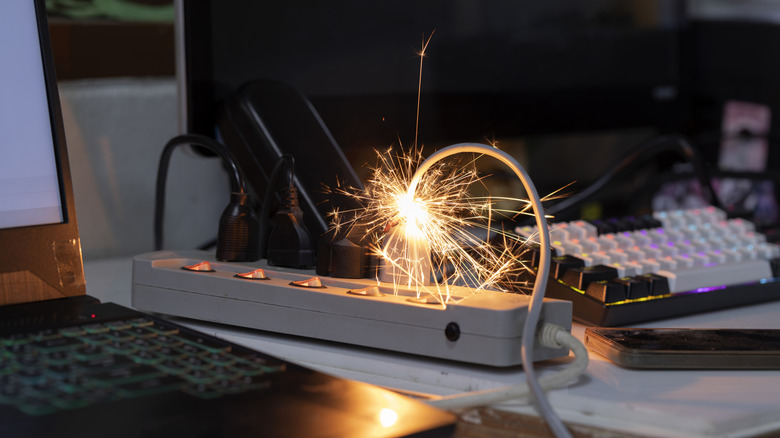
Contact Cleaner is often used on recently powered equipment such as relays, control panels, motor housings, and battery terminals. That is exactly what it is built for. However, trouble starts when you start spraying it near something hot or something capable of throwing a spark. You should not treat contact cleaner in the same casual way you would treat a can of compressed air, no matter what is actually inside it.
According to OSHA's flammable liquid standards, open flames, hot surfaces, and electrical sparks all act as ignition sources. You should ensure that contact cleaners are kept away from heat, whether you are in a shop, a data center, or a home garage. The aerosol spray creates exactly that kind of vapor cloud the moment it leaves the nozzle, sufficient to spark a flame. Spray it near heat or a spark, and it can ignite almost instantly. The vapor cloud can then travel along a surface and find something to ignite, causing considerable damage.
WD-40 is quite flammable, and its aerosol form is classified as extremely flammable; it can even burst if it gets too hot or is accidentally punctured. That's why you shouldn't keep it in a car in its original container. The risk doesn't go away once the can is empty, either, since residual vapor can linger inside it. Before you clean anything electrical, power it down and let it cool completely.