

10 Family Vehicles That Were Super Popular In The 80s
The '80s were an interesting time for the automobile industry. In the wake of the gas crisis of the 1970s, one would think the Ronald Reagan free-market '80s would go full tilt into sleek, gas-guzzling designs. To an extent, that kind of happened. You only need to watch any given episode from Miami Vice's third season to see Don Johnson zipping around in a gorgeous Ferrari Testarossa, or any number of sweet rides every '80s kid remembers.
However, the decade was also known for big cars with boxy designs, particularly for family cars, the kind of vehicle that generally wasn't featured on Miami Vice. After all, while the dangerous glitz and glamour of southern Florida might have lent itself to fast sports cars, typical Americans were more concerned with having enough space to get the kids to middle school soccer games and loading up the trunk with groceries. To that end, family vehicles, frumpy though they may have been, dominated the decade.
Let's take a look at 10 family vehicles that were super popular in the 1980s. While Sammy Hagar may not have had these vehicles in mind when he wrote "I Can't Drive 55" in 1984, that's fine, since you're probably not going to get these vehicles up to that speed very often. At least, not with the kids in the backseat.
Ford LTD Crown Victoria Country Squire
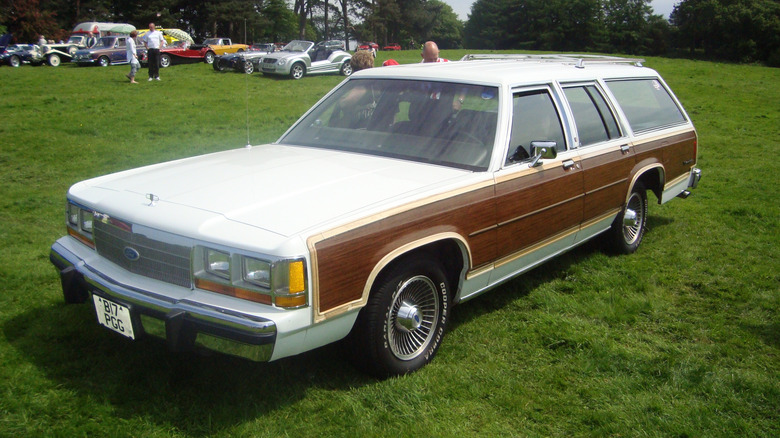
Let us be clear: The vehicles on this list are not inherently bad or good. They were simply popular. If you're a child of the '80s, either your parents or those of one of your friends surely had a Ford LTD Crown Victoria Country Squire. It was so ubiquitous as the go-to family station wagon that it became the basis for the infamous Wagon Queen Family Truckster in "National Lampoon's Vacation."
While the "Vacation" Family Truckster was a disaster of a vehicle you'd never want to drive in real life, the Ford Country Squire was iconic. When you think of a typical station wagon, this is the vehicle that comes to mind, wood paneling and all.
Running on a V8 with a four-speed transmission, it is not a particularly smooth or fuel-efficient ride, but it'll get you where you want to go. With its spacious interior, it was a good choice for cross-country family vacations, as long as the driver and navigator planned out a route that hit plenty of gas stations along the way. It was the '80s, so you had to plan your trip beforehand; you couldn't just hit the road and figure it out along the way. Thank heavens for MapQuest, right? While the Country Squire was in production in one form or another since 1950, the fact that the line was discontinued in 1991 cements its status as an '80s icon.
Chrysler LeBaron Town & Country Station Wagon
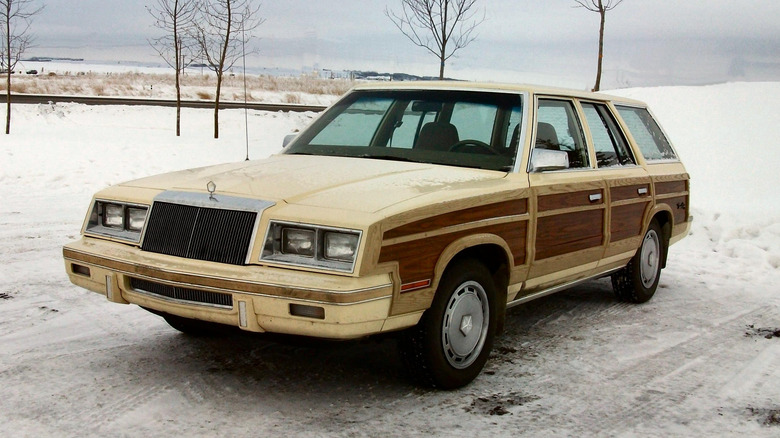
The Chrysler K-car platform introduced in 1980 defined the automaker's vehicles for the decade. Essentially, it meant that different cars were made using a common platform. This meant they used a lot of the same parts, at least deep down underneath, before they were split up and individualized for specific makes and models. The use of a common platform was an attempt by Chrysler to keep costs down and compete with cheaper Japanese competitors.
The Chrysler LeBaron Town & Country station wagon was never intended to be a top-of-the-line model, but what station wagon is? A station wagon is the kind of car you get when you have absolutely no intention of driving in the left lane, if you know what I mean. Even with steps taken to keep prices down, the 1983 LeBaron still cost over $10,000 to start. Not a bad price for an American station wagon. Of course, you could always shell out for more luxury trims, but that wasn't always an option, especially for working-class families.
Ultimately, the LeBaron Town & Country station wagon proved popular enough to sit alongside the Crown Vic Country Squire as one of the 'default' station wagons of the time, and it's fondly remembered by children of the era, if not by the parents who had to actually drive it. The Town & Country was discontinued by the end of the decade, replaced by a new minivan with the same name. If the era of the station wagon ended in the '80s, then the '90s belonged to minivans.
Third Generation Toyota Tercel
The big fear among American industrialists in the 1980s was that Japan would rise up to conquer the manufacturing world. After decades without a traditional standing army, the country was free to develop its infrastructure and industries. While that didn't exactly come to pass thanks to the inevitable burst that happens to every bubble economy, there was no denying that the Japanese economy in the 1980s was tremendously powerful, and that came across in the rising popularity of Japanese cars, a popularity that continues to this day.
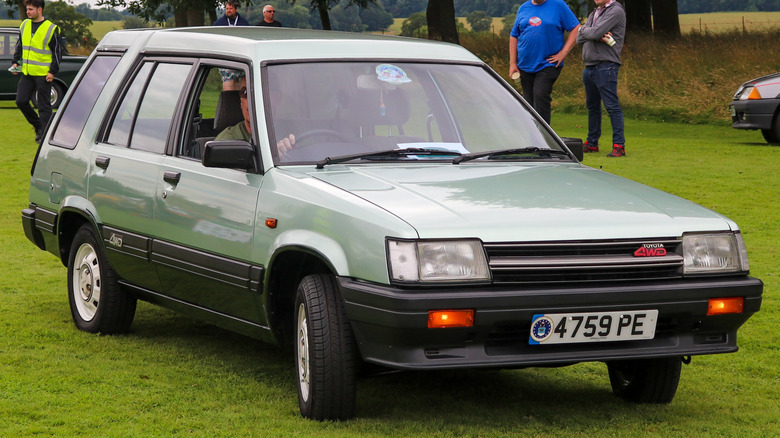
In 1986, the third-generation Toyota Tercel debuted in both compact and hatchback variations. While the compact could be a starter family vehicle, multiple kids hitting their teenage years means you'll probably want to upgrade to the larger hatchback, which is effectively a station wagon.
Tercels of the era were quite inexpensive, with prices starting from just a little over $6,000. That's less than half the starting price of something like the LTD Crown Victoria, the 1987 model of which started at over $14,000. Given the popularity and price of this Japanese family car, one can understand the fears of those who feared the collapse of the American motor industry. Ultimately, the American automobile industry did fail, but Japan didn't have anything to do with it. The "Big Three" pretty much did it to themselves... but that's a story for a different day.
Chevy Caprice
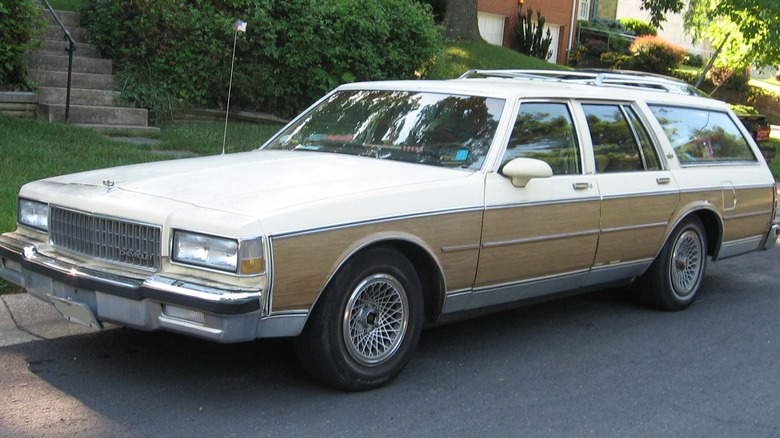
In the 1960s, the Chevy Caprice was a high-end luxury trim available for the Impala. In the 1980s, when the Impala disappeared for a few years, the Caprice took center stage, serving as a de facto replacement. But where the classic Impala was usually a 'sleek on the outside, big on the inside' mega sedan, the 1986 Caprice was available in both station wagon and sedan forms, with the latter referred to as the "Caprice Classic."
While the sedan was quite spacious, we're going to look at the station wagon version, which boasted support for eight passengers. It's a huge car. Even more than most station wagons, the '86 Caprice looks like a chunky sedan with a massive posterior welded onto the back. Back then, one of these cost between $11,000 and $12,000 or so, a reasonable price for a family vehicle. Of course, any money saved buying this instead of a more expensive vehicle would quickly be spent on gasoline, but such is the nature of American family cars, especially in the '80s.
As of this writing, Caprice station wagons have been gone for 30 years. Even with '80s nostalgia coming back here and there, it's hard to imagine the Caprice, or any other station wagon, making any kind of significant comeback. In any case, while the station wagon is long gone, the Caprice sedan was a popular car for New York City taxicabs and police cars around the United States.
Oldsmobile Cutlass
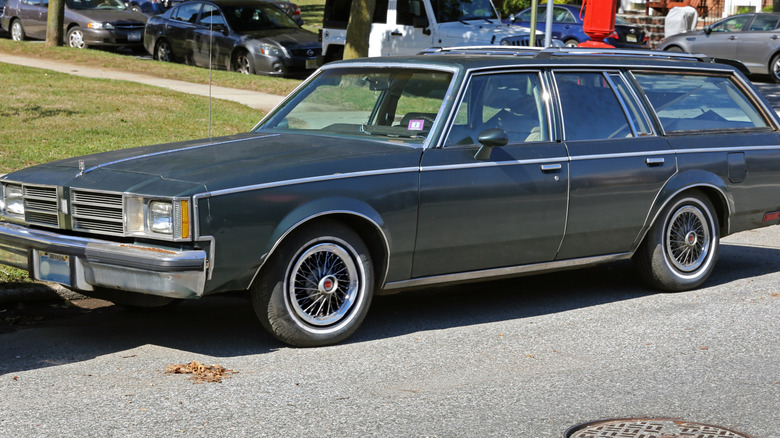
From 1976 to 1983, the Oldsmobile Cutlass was one of the top-selling cars in the United States. The vehicle came in many variations, from two-door coupes to four-door sedans and, of course, massive station wagons for the whole family. Thus, it might be a little unfair to refer to all of these as a single car, but there's still no denying that the Oldsmobile Cutlass was a household name in the '70s and '80s.
The four-door Cutlass sedan models were big enough to carry a whole family on their own with minimal discomfort, but the station wagon was obviously even bigger, and it operated alongside another Oldsmobile station wagon, the Custom Cruiser, another classic 1980s family car.
The GM A-body version of the Oldsmobile Cutlass Cruiser debuted in 1982, and the final A-body station wagon was the 1996 Buick Century Wagon, which was remarkably similar despite over a decade of auto-evolution. It's impressive that Oldsmobile was still making station wagons so far into the 1990s, since I can't imagine many were interested in buying them over a minivan. Perhaps the similarities between the Cutlass Cruiser and Century Wagon reflect the station wagon's limited but specific sensibilities. You can't improve on perfection, which is why many classic station wagons looked very similar until they were all replaced by minivans.
Ford Fiesta
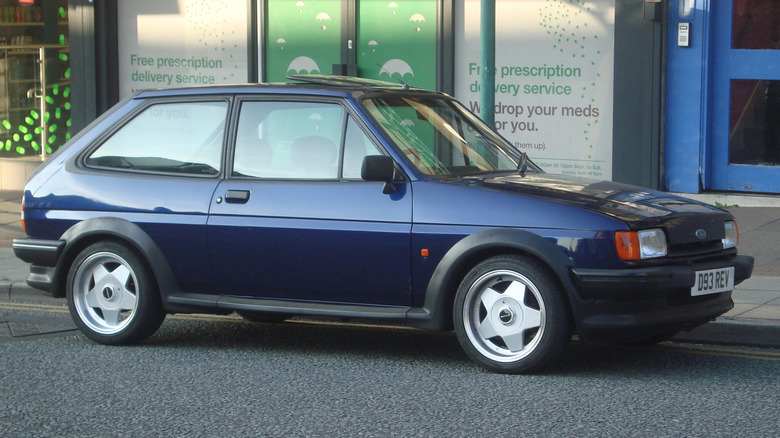
Family cars come in all shapes and sizes. While the United States family car scene was mostly dominated by station wagons, other parts of the world had their own popular vehicles, such as the Ford XR2, better known as the Ford Fiesta.
To a generation of punk rock fans who don't know anything about cars, the XR2 was immortalized in "David's XR2," a song from The Toy Dolls' 1995 album, "Orcastrated". The song has the eponymous automobile enthusiast David go on a joyride in his brand-new car, which he promptly flips. If you don't know what a Ford Fiesta is, you might be expecting it to be a sleek British hot rod or a beefy hunk of American muscle. But it's not.
The XR2, introduced in 1983, was an adorably unassuming supermini hatchback. Not a hot rod by any stretch of the imagination. Still, even the original MK1 XR2 was a surprisingly powerful little car, thanks to its light weight and a Kent engine that output 84bhp at 5,500 RPM. Like Han Solo's Millennium Falcon, "She may not look like much, but she's got it where it counts." By 1995, when The Toy Dolls wrote their song about the car, the XR2 had been replaced by the XR3 for more than half a decade, and the XR4 was due to arrive by the end of the year, which just adds to the humor of David being so enthralled by the long-outdated Ford Fiesta XR2.
Ford Escort
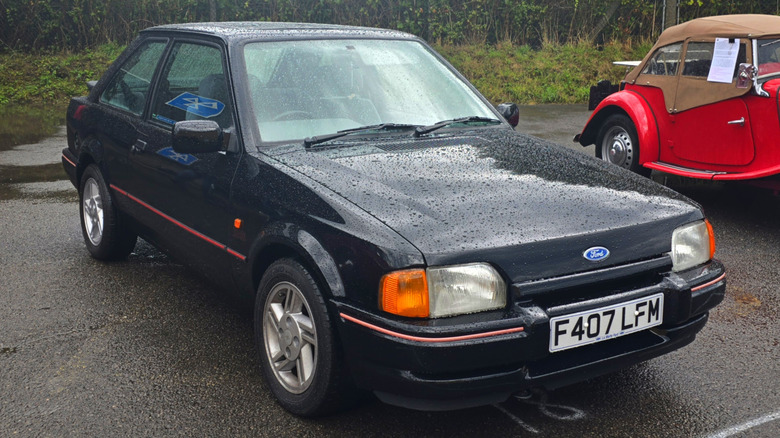
By 1980, the Ford Pinto had developed an unfortunate reputation as a volatile and nigh-spontaneously combustible death trap. As a result, Ford needed a new economy car for the 1980s, which led to the 1981 North American debut of the Ford Escort, touted as Ford's "World Car" for its international sensibilities and shared design philosophies with Ford's overseas efforts — which included an Escort nameplate as far back as 1968.
The Ford Escort had multiple variations, including two-door and four-door hatchbacks and even a full-fledged station wagon. The cheapest version had a launch price of just over $5,600, which was a great price for a mid-1980s car. Of course, tons of trim options could bump the price up by several thousand dollars.
Throughout the 1980s, the Escort was revised significantly both aesthetically and under the hood, though the basic shape remained the same until the next-generation version of the car debuted in 1991 (with a 1992 model year). Future generations of the vehicle would move into new stylistic territory away from the core 1980s aesthetic until the car was retired in favor of the new Ford Focus in the early 21st century.
BMW 3-Series
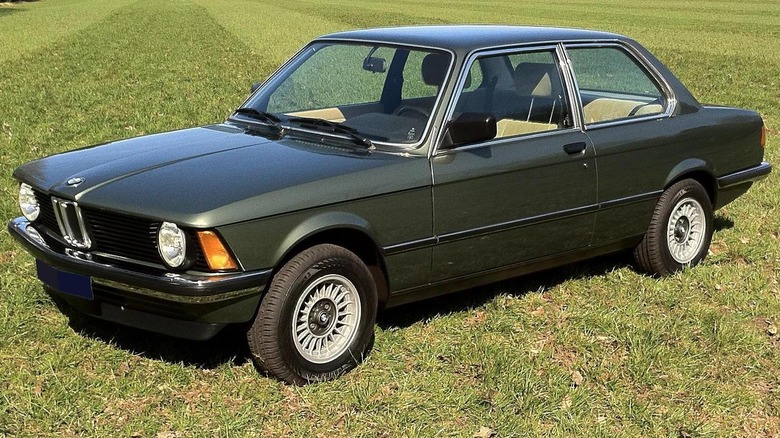
The second generation of the BMW 3-Series, known as the E30, debuted in 1982. The vehicle was tremendously popular, with around 2.4 million units produced during its lifetime, which ended in 1994. Even today, the car is sought by collectors and automobile enthusiasts for its reliability, utility, and timeless style.
Even the oldest E30s had reasonably powerful, carburetor-fed 316 engines capable of outputting 73 bhp. Different models would boost that bhp to well above 100, with the 325i version outputting a righteous 171bhp thanks to Bosch Motronic automotive voodoo. If you're looking to buy an E30 nowadays, the 325i is the most desirable version thanks to its lofty specs, though it's much more expensive now than it was back in the day.
BMW retired the E30 series in 1990 when the 3-Series shifted to the E36, which was discontinued in 1998. While the BMW 3-Series looks less undeniably '80s than some of the other cars on this list, its replacement in 1990 affirms its status as a relic of the Reagan years.
Volvo 240
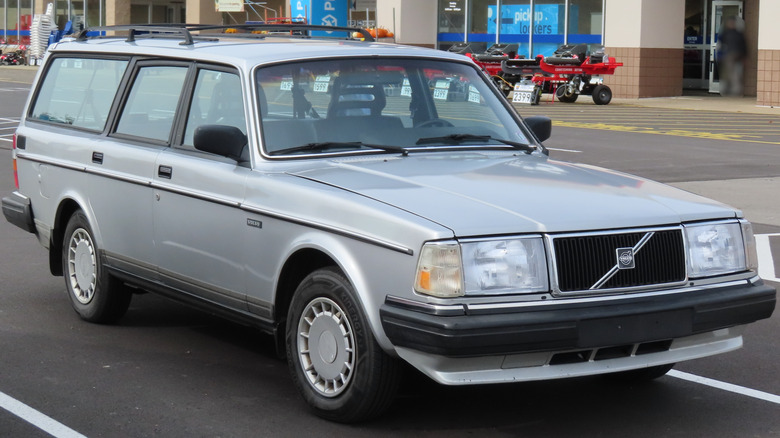
While boxy sedans might not be as aerodynamic or sleek as today's cars, they are charming and actually quite spacious on the inside. In the realm of boxy cars, few truly own the look like the Volvo 240. It's so rigidly angular and aggressively '80s in its look and shape, it circles back around to feeling timeless, almost like a 1950s family car.
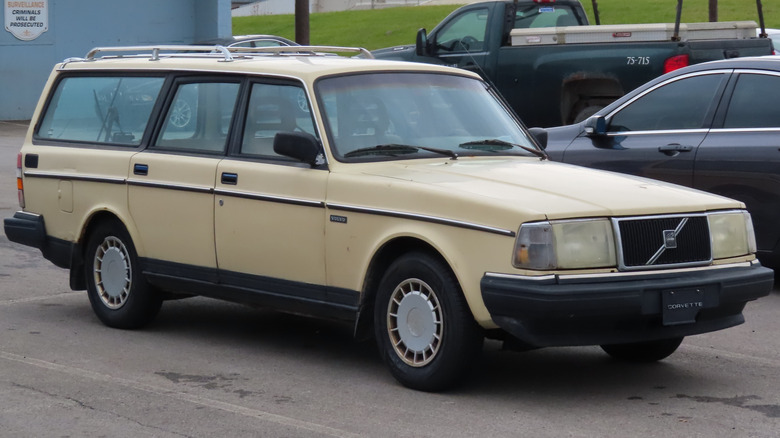
Of course, there was also a station wagon, with each version offering more interior space than you might expect from a car of its type. I'm not saying you should live in the 1989 Volvo 240 station wagon like it's an RV, but you probably could if you absolutely needed to.
The best part of the 240 was its perceived invincibility. Today, there are Volvo 240 station wagons with a million miles or more still out there on the road, chugging along on little more than solid maintenance. While obviously not every 240 will last that long, this is the kind of car that could potentially last a lifetime, as long as it doesn't get totaled in an accident.
Toyota Camry V10
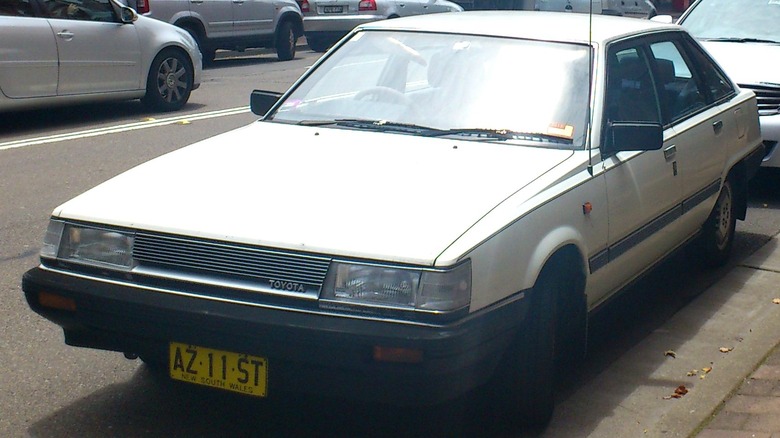
While the aforementioned Japanese takeover of the world never really happened, despite Japan's history of truly spectacular vehicles, there's no denying the popularity of Japanese cars, especially Toyota. Today, vehicles like the Camry, the Corolla, and the Prius are exceedingly common sights on the road. Ironically, the Camry, the vehicle with which we're closing this list, was a tremendously popular export that never achieved the same fame in its home country. In fact, the 2025 Camry VX80 marked the first time a Toyota Camry was made available for export only, despite still being assembled in Japan.
Not including the Toyota Carina variant, the first proper Camry was the V10, which debuted in 1982 for the 1983 model year. Perhaps as a side effect of its front-drive layout, the Camry had a spacious interior. Considering the average American physique, maybe that's why the Camry was so popular in the United States. I'm not judging; I'm just saying we're a husky people!
Anyway, the Camry was light, fuel-efficient, and spacious, which made it the perfect vehicle for those who were environmentally conscious in the aftermath of the energy crisis of the 1970s. Of course, a 1980s Camry doesn't have the same fuel efficiency as today's hybrid cars, but the early Camry's 40+ mpg on the highway is nothing to scoff at, even in 2026.