

Behold, My Mini Arcade Machine Collection And Obsession
We may receive a commission on purchases made from links.
Without dating myself too accurately, I grew up in the 1980s, and video game arcades were a refuge I visited time and time again. While arcades are still around, and there are plenty of cool places to visit, there's nothing like old-school arcades outfitted with loud machines, kids and adults having a blast as they feed quarters into coin slots, and an attendant who carries around hundreds of quarters they're quick to exchange for cash.
Sadly, arcades like that aren't as common as they once were — but for people like me, there are other ways to re-summon the magic.
I'm talking about mini arcade machines: tiny straight-to-consumer electronic gaming devices that recreate every detail of an old-school arcade cabinet. These are products made by folks just like me who enjoy the nostalgia of '80s and '90s arcades and are willing and able to make them into much smaller devices. Of course, you could build your own Raspberry Pi arcade cabinet, but for those of us who don't go the DIY route, one's path to a fully-operational miniature yellow "Pac-Man" cabinet is both swift and enticing.
 Jonathan H. Kantor/SlashGear
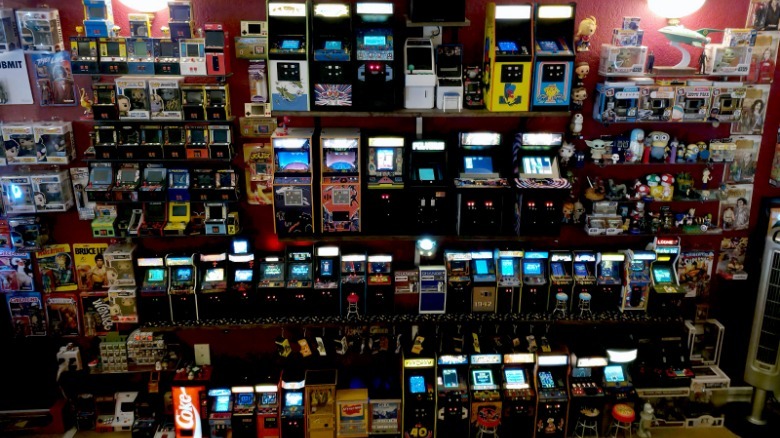
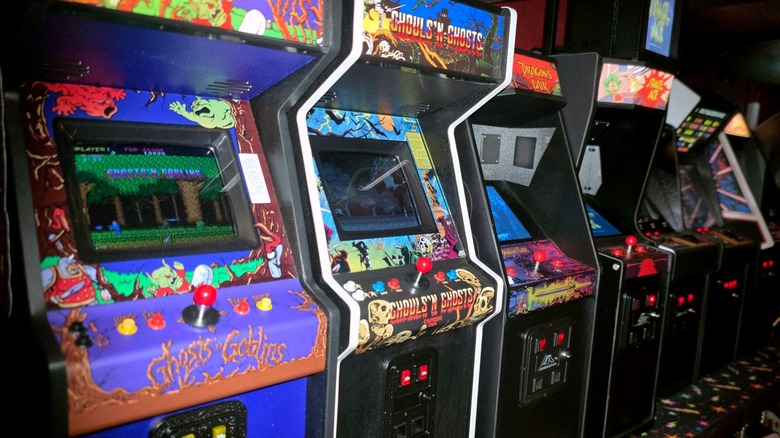
There are several impressive companies that re-create some of the coolest vintage arcade machines into smaller versions, and I've bought almost all of them. As you'll see in the photos in this article, I am addicted to these things. Whenever a new one is released, the FOMO is strong, as many are limited to a small production number and aren't made again. Here's what keeps me buying them, and why I love these miniaturized links to my childhood.
Here's what we're looking at, and why I have so many of them
Plenty of people collect all kinds of things, from "Magic: The Gathering" cards to tiny tools to large and expensive cars, but for me, I love mini arcade machines. What makes these special in my eyes is that they're often perfectly faithful recreations of the real thing, and they all feature working games just like the ones from the original arcade cabinets.
To create one of these things, a company typically has to get permission from whichever company or person holds the license, so they're made in conjunction with folks who have a financial stake in their outcome. On top of that, in some cases, the original designer of the game and cabinet will join the crew and advise those designing the newly-shrunken edition. This adds additional authenticity to the build, making for a somewhat unique collectible.
There are two primary companies that follow this method of design with their arcade lines: New Wave Toys' "RepliCades" and Numbskull's "Quarter Arcades." Each company devotes a great deal of time and effort to getting everything just right, and they don't produce identical products.
 Jonathan H. Kantor/SlashGear
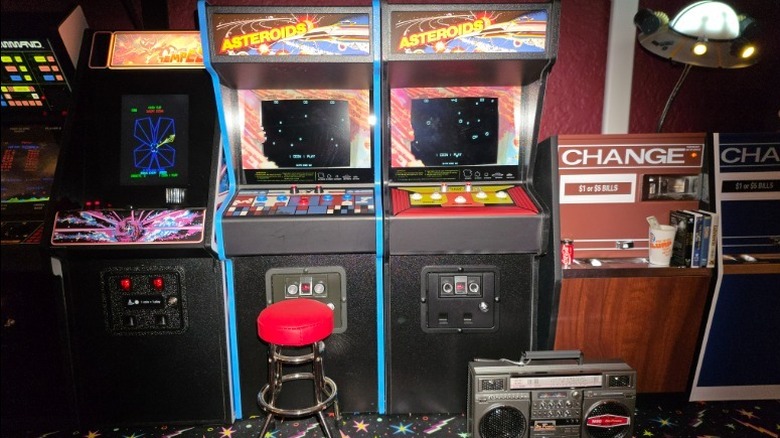
New Wave Toys makes everything in 1:6 scale, while Quarter Arcades releases its machines in 1:4 scale, and as of writing, there has been no overlap in products/titles.
I found my way to this hobby through New Wave Toys' line of cabinets and quickly expanded my collection to include everything Quarter Arcades produces. There are also other companies making excellent products that are similar, which I'll get into in greater detail below.
Origins: A Gen-X nostalgia-driven hyper-obsessive detail-oriented band of gamers
While the first video game was created in the 1950s, it wasn't until the '70s that the industry took off, with Atari's "Pong" proving the commercial viability of the medium. As a result, most of the classic titles from the Golden Age of Arcade Video Games came about in the late 1970s and continued through to the mid-1980s. This is when games like "Pac-Man," "Galaga," "Dig Dug," "Pole Position," "Frogger," and many others dominated local arcades.
For those who belong to Generation X, as well as the so-called Xennial sub-generation, there are a lot of fond memories of those games. Now that the kids and young adults who enjoyed those games in the 20th century are all grown up in the 21st with some disposable income, their love and nostalgia for old-school arcades fuel this small collectible industry.
Sized To Perfection
There are also companies that make slightly larger arcade cabinets that recreate the full-sized originals. Arcade1Up, produces close approximations of real arcade machines, but in 3/4-scale. Those are great for your game room, but they take up a lot of space, limiting your options.
For my part, the 1:6 scale arcade machine replica is the perfect place to start one's collection — and 1:4 scale is as large as a replica needs to be to deliver accurate detail in a size that doesn't demand you limit yourself to the few that fit in your garage.
Of course, once you start collecting, there's only so many machines a single room can hold. Despite the ever-reducing amount of room I have to display my mini arcade cabinets, I'll keep buying them, as FOMO and my love for these things don't appear to be going away anytime soon — much to my wife's chagrin.
Quality craftsmanship in 1:4 and 1:6 scale
Creating a mini arcade machine that's faithful to the original full-size cabinet is no easy task, and it often takes months, if not years, for a product to go from an idea to something you can hold in your hand. There's a lot more to an arcade cabinet than the game that it plays; there's artwork all over, as side art, the marquee, the control panel, and often the bezel around the display glass all feature different, unique images.
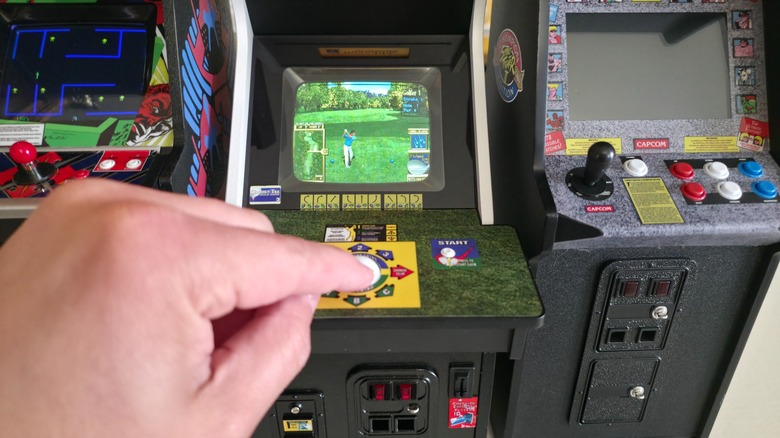
Each machine requires a set of miniaturized controls, which you can't just go out and purchase since they have to be custom-made in most cases. This includes the buttons, joysticks, trackballs, and spinners, all of which must not only work, but be playable by a full-size person.
In the above image, you can see my hand manipulating my 1:6-scale "Golden Tee's" spherical control ball. While you might think it's a tiny ball, you're only half right: in actuality, it's akin to an old-school trackball mouse flipped upside-down with complex controls located beneath the control panel. Whichever way I move it translates to the golfer on the screen, and while I'm terrible at this game, it's nonetheless fun to play.
 Jonathan H. Kantor
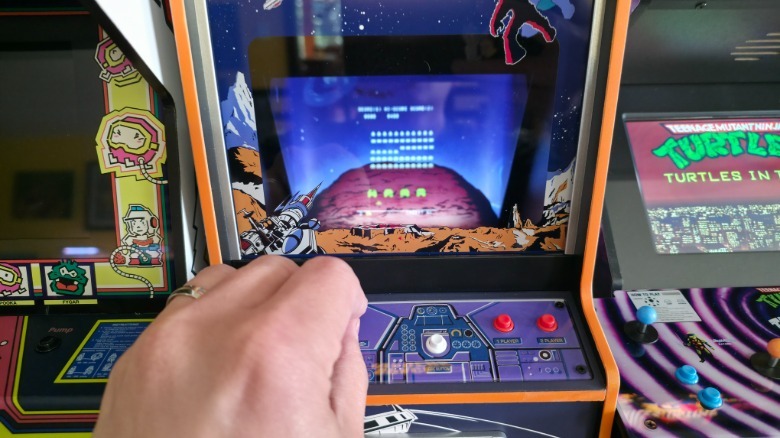
In the above image, I'm holding onto the joystick of my Quarter Arcades 1:4-scale "Space Invaders." Controlling this machine feels familiar, natural, replicating the original: my movements translate perfectly on screen.
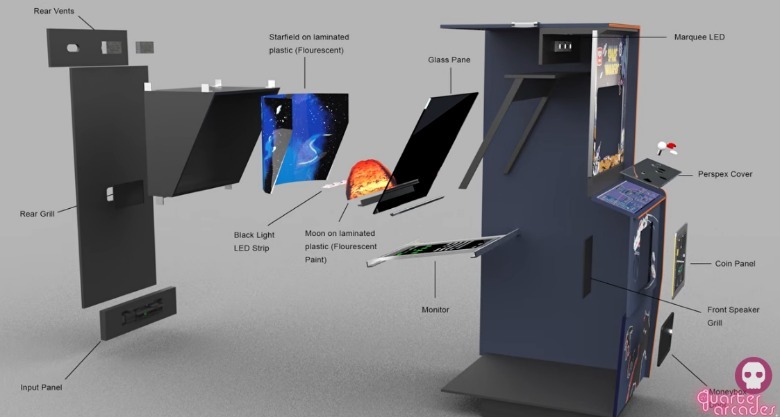 Numskull
This cabinet in particular shows the quality and effort put into their design. "Space Invaders" uses a display housed below the controls reflected in reverse on a piece of glass above, requiring the display to be inverted and out of sight. This old-school arcade machine display-to-mirror system makes this piece of hardware shockingly similar to the original in both software and hardware execution.
New Wave Toys make a wildly diverse set of tiny arcade goodies
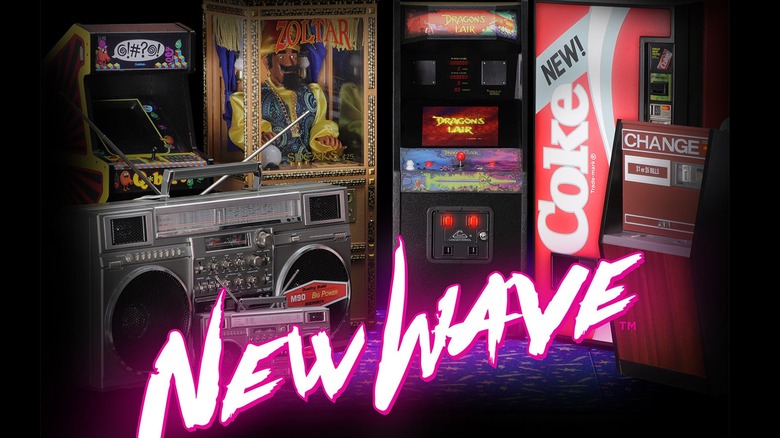
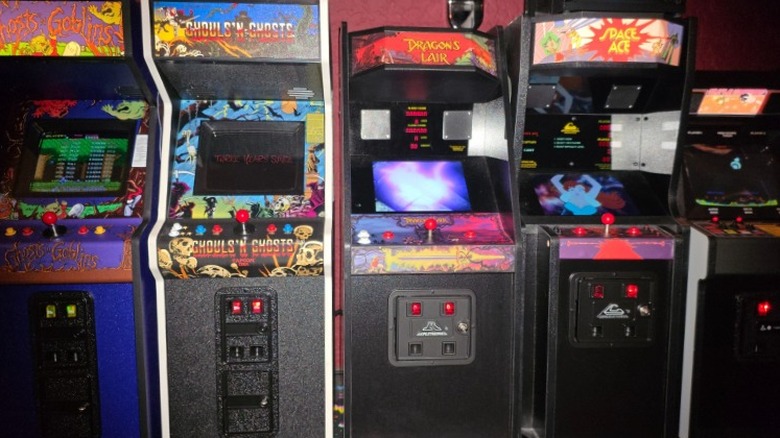
I first discovered New Wave Toys and this entire collecting industry in October 2020, which is when I bought my first cabinet: "Street Fighter II: Champion Edition." The company began with "Centipede" in 2018, which was followed by "Tempest," "Street Fighter II," "Dragon's Lair," "Asteroids," "1942 & 1943," "Q-Bert," "Missile Command," "Food Fight," "Space Ace," "Ghosts 'n Goblins & Ghouls 'n Ghosts," "Berserk & Frenzy," "Golden Tee," and a working "Zoltar" machine that spits out actual fortune tickets.
New Wave Toys also makes USB hubs in the form of cigarette machines, (which also come in the form of an Art-o-Matic if you're averse to the former.) There's also a Coke machine, which can keep a tiny can cool, two versions of coin machines, small boom boxes, and more. It also has a ton of products in development, including "Crystal Castles," a "Skee-Ball" machine, and a "Black Hole" pinball machine, which isn't playable, but features an "attract mode" that simulates gameplay.
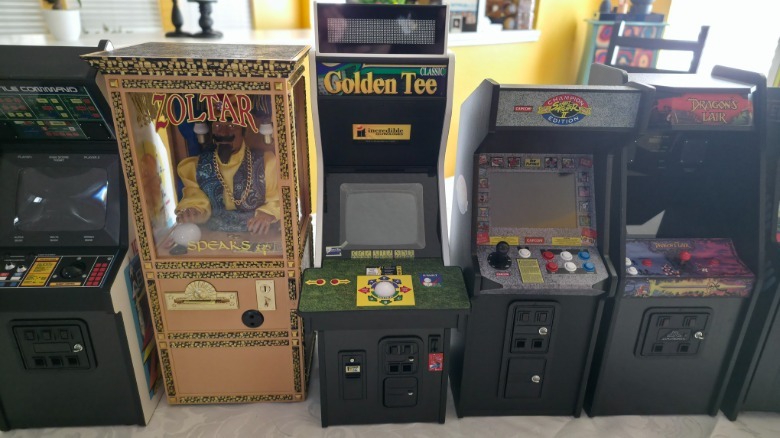 Jonathan H. Kantor
One of the things I like best about New Wave Toys' products is the attention to detail put into everything they make. You can often buy different versions of the same cabinet, including one with cigarette burns, gum stickers, and stains from use, adding a bit of authenticity to your home mini arcade.
The most recent release, as of writing, is "Golden Tee," (pictured above, center) which comes with an optional mini DMD (dot matrix display) topper, just like it'd have in an real arcade setting. There are additional arcade sticks and controllers you can buy if you want to play your games on a TV, so there are tons of great options.
Numbskull's Quarter Arcades make larger cabinets filled with detail
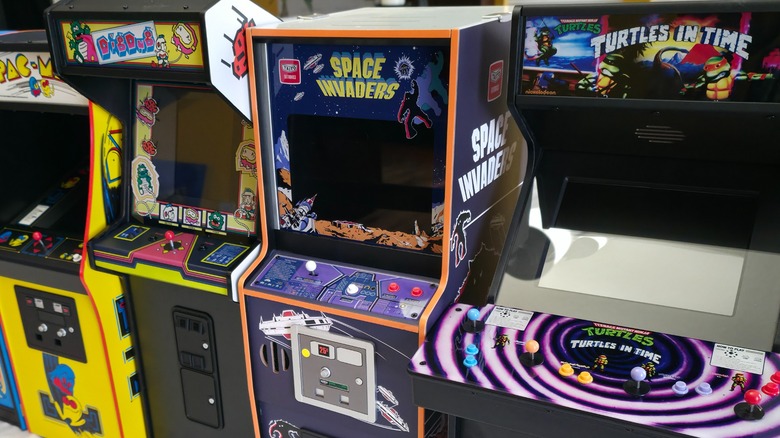
Initially, when Quarter Arcades began designing its cabinets, the company would purchase a full-size cabinet and manually measure every aspect of it. In the years since, manual measurements have given way to a high-end 3D scanner, which fully maps out and measures everything to the smallest detail. Once this process is done, the machine is constructed digitally, cleaned up to remove scratches and dents, and scaled down to 1:4 scale for each of its parts and components, including the coin door, buttons, and the T-molding.
One of the best aspects of a Quarter Arcade's design is the materials. If the original cabinet is made of wood, Quarter Arcades makes theirs out of wood. While they use modern components for the internal processor and LCD screen, every element of the original cabinet's design is fully recreated in the proper material, making for a complete recreation on a smaller scale. Initially, Quarter Arcades only worked with Namco, so the company produced "Pac-Man," "Ms. Pac-Man," "Galaxian," and "Galaga." These are difficult to find, as they sold out long ago.
 Jonathan H. Kantor/SlashGear
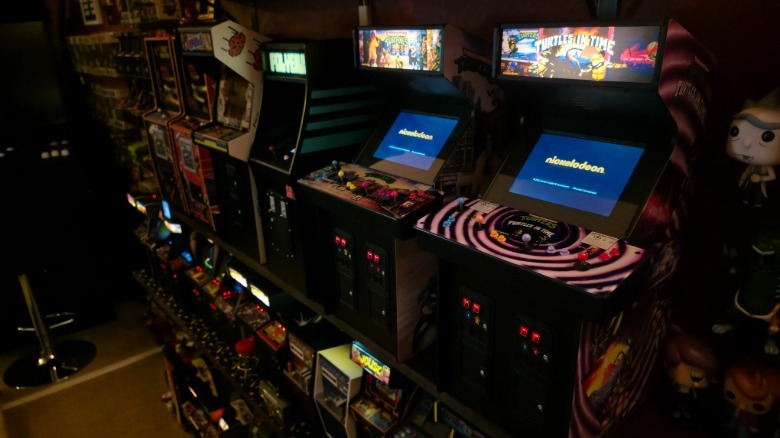
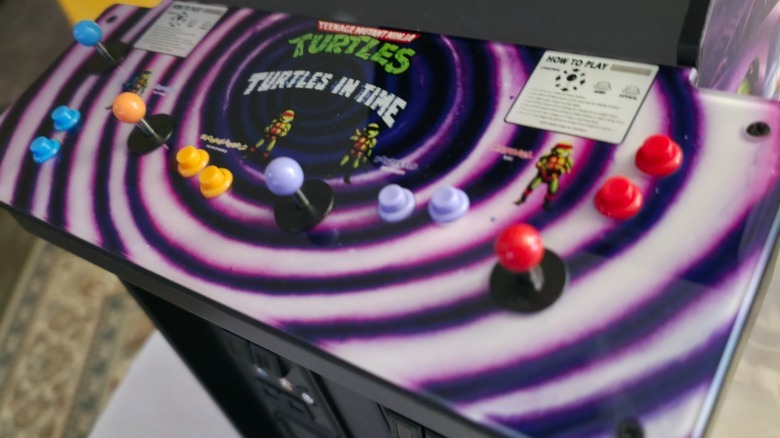
In the years since, Quarter Arcades has faithfully recreated "Dig Dug," "Bubble Bobble," "Space Invaders," "Space Invaders: Part II," "Teenage Mutant Ninja Turtles," "Teenage Mutant Ninja Turtles: Turtles in Time," "Elevator Action," "Zoo Keeper," "Qix," "Burger Time" "Lunar Lander," "Bad Dudes vs. DragonNinja," and "Battlezone" and I own or have ordered them all.
Additionally, Quarter Arcades remade a Pepsi and 7UP machine, a "Polybius" USB hub, and other 1:4-scale arcade offerings to complete a collection.
Cheaper options made for the masses/Etsy Makers to fill the gaps
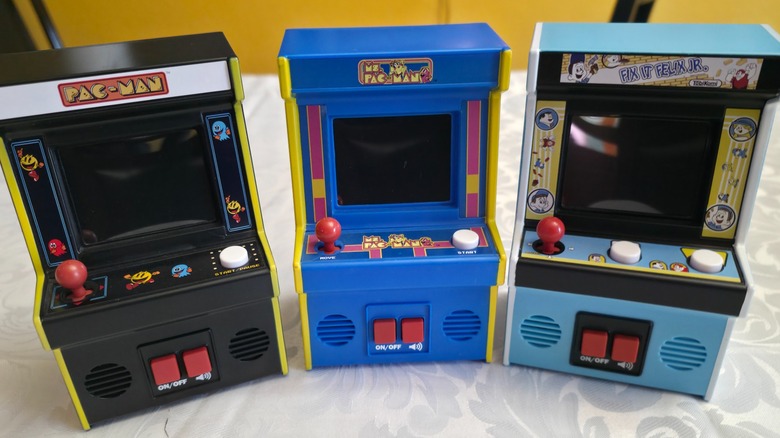
There are many options available for enthusiasts to play old games on smaller, handheld machines. One of the biggest companies is BasicFun!, which produces extremely basic versions of cabinets (as you'll see in the photo above) in their "Arcade Classics" line. They represent only an approximation of an arcade cabinet with working buttons and a controller. This company recreates real-life games like Pac-Man and Tetris and — uniquely — the only tiny version of the in-movie-arcade "Fix It Felix Jr." game from "Wreck-It Ralph."
These devices are powered by a couple of AA batteries and are perfect for throwing into a bag for a flight or ride to school. BasicFun! has also produced even-smaller versions of these cabinets that function as key chains with playable games, (though it appears that these are no longer in production as of this writing).
 Jonathan H. Kantor/SlashGear
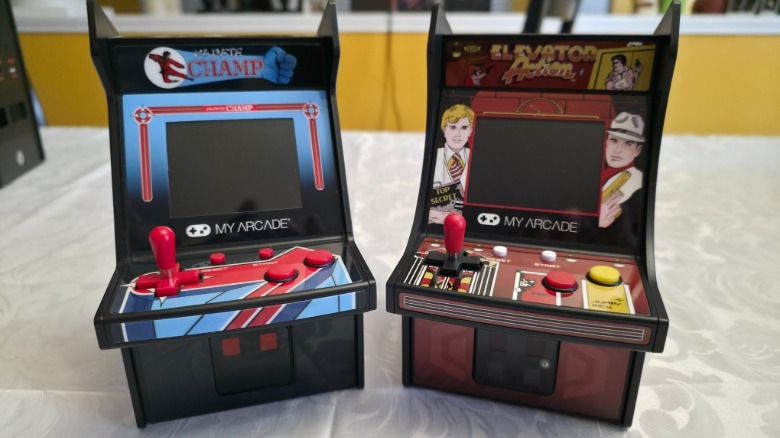
If you want a more robust machine, you can always check out My Arcade's line of handheld gaming devices. These too approximate real arcade machines with a similar form factor. They differ in their controls, overall quality, and recreation of original artwork. The company has a line of Nano Players and various retro gaming devices, some of which look like real cabinets while others don't.
 Amatheria/Pablo Leal/Jonathan Kantor/SlashGear
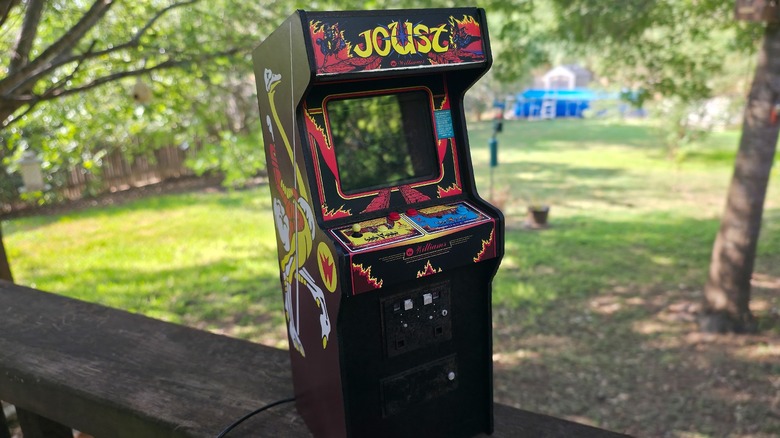
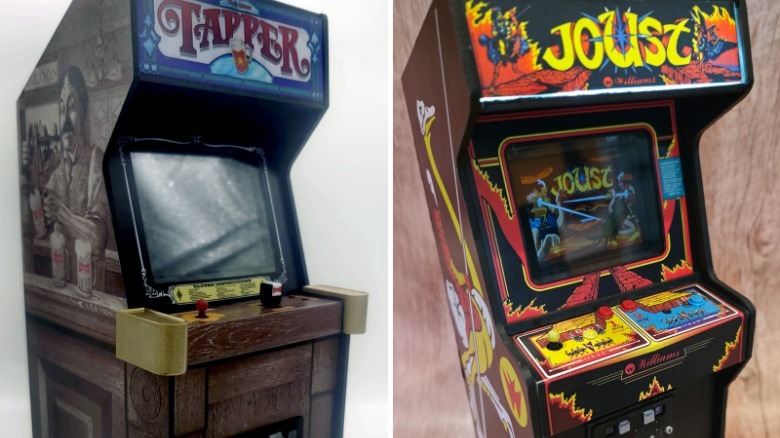
Another option I've used is Etsy, as there are many creators who produce 1:4 and 1:6-scale cabinets not made by the bigger brands. Among my favorite custom-made arcade cabinets are "Joust" and "Tapper," both of which were made for me by a brilliant Spanish Etsy designer, Pablo Leal, AKA Amatheria of Arcatheria Studio, who specializes in this niche industry.
Things to keep in mind if you're diving in
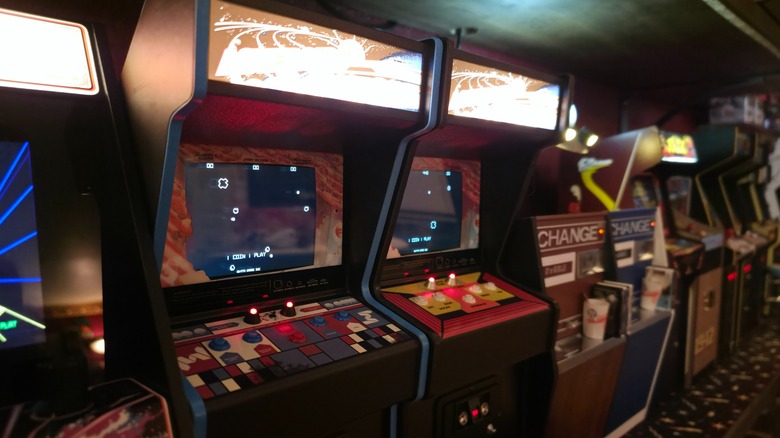
Since I first discovered mini arcade machines, the companies that produce them have expanded significantly. I got into New Wave Toys a couple of years after "Centipede's" release, and in the years since, many more machines have followed. What's clear about this niche collecting market is that there are more than enough people just like me who enjoy collecting and playing games on these small machines.
 Numskull/Quarter Arcade
They're not the cheapest things in the world to collect, but compared to other collectibles, they're not too bad, with some costing around $100 to $200.
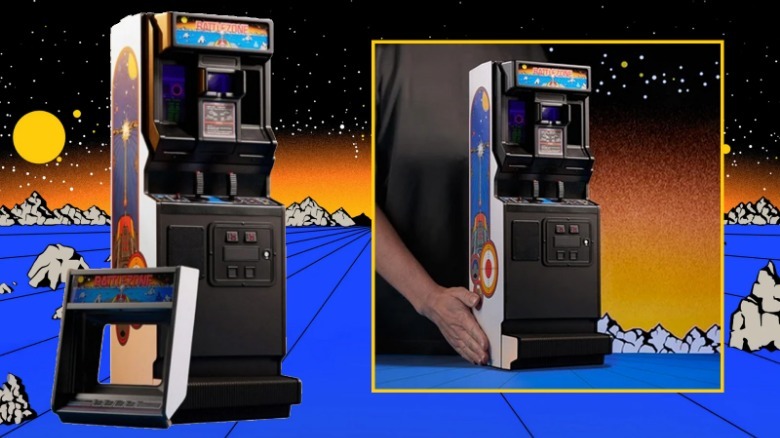
Of course, like any collectible industry where the demand exists, the high end exists: Quarter Arcade's latest, "Battlezone," is a $400 cabinet limited to 1,000 units. And they'll sell out — there's little reason to think they wont.
The same is often true of New Wave Toys' products, which sell out not long after they're released. Enthusiasts like me often wait a long time to get these devices from initial announcement to final hardware. I waited 2 years, 2 months, and 30 days for my "Golden Tee," and it was worth it.
That's not uncommon with these kinds of collectibles, so that's something you should know before joining the community. I pre-ordered several products years ago that I'm still waiting for — but quality takes time.
Meanwhile, I don't see mini arcade machines going away anytime soon. As long as there are people like me who miss the old days of spending time in arcades with all of the noise and lights, there will be people who are willing to make and purchase them.