

9 Once-Popular Tech Gadgets That Deserve To Be Brought Back
We may receive a commission on purchases made from links.
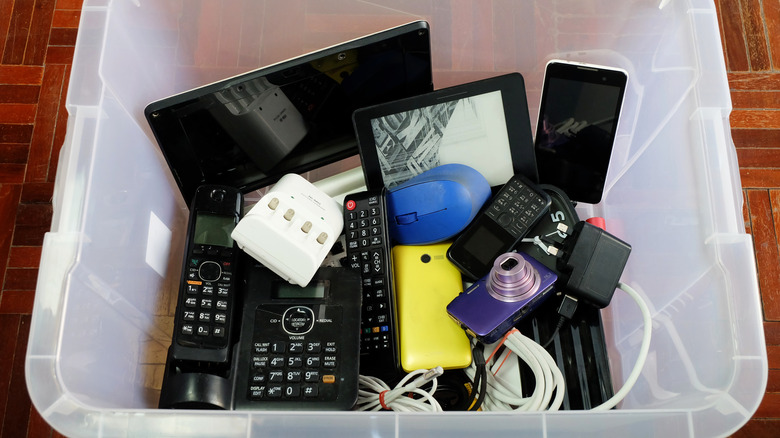
We love smartphones at SlashGear. You get a camera from which you can shoot like a pro, map apps that actually tell you which direction to go, music players that select tracks for you, and a growing list of other things it was arguably never asked to do — it's a genuine miracle of modern technology. We would challenge anyone to go more than a day without theirs to see just how essential they have become. But that's the problem.
Somewhere along the way, it stopped being a simple device and started being our everything. That might be an exaggeration for some, but for many, it's not too far from reality. It pings, it buzzes, it notifies, it tracks, and it never seems to switch off. Increasingly, many of us are wondering if handing a single device so much responsibility was such a good idea. Smartphone fatigue is upon us. It's real, and it's driving a quiet revolution. Some people are pining for older gadgets again. You know, those devices that had a single purpose. A master of one rather than a jack-of-all-trades.
But what we have here is not a eulogy for all the gadgets the smartphone has replaced. What we have is a case for why some of them deserve a second chance. Because for every function the smartphone absorbed, we lost something. Photos that felt more like memories than a magazine shoot, or the simple pleasure of owning your music rather than renting access to it. Some of these gadgets have already started their own quiet comebacks; others wait for someone to make their case. We're pro-options, not anti-smartphone. Here are nine once-popular gadgets we think deserve a comeback.
iPod Classic
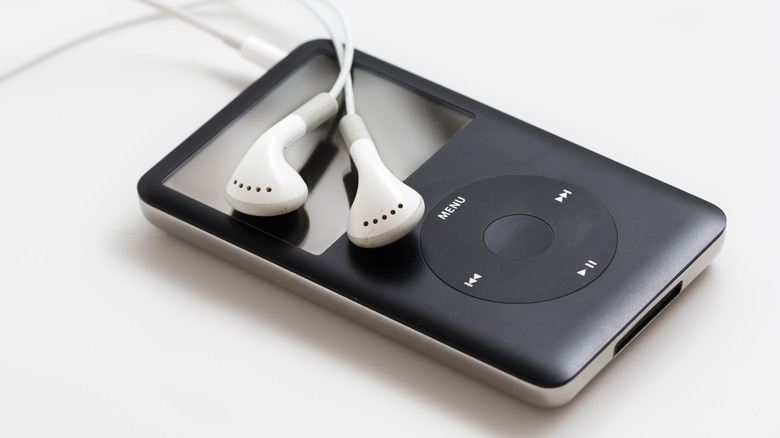
There was a time when owning an iPod meant you belonged to something. It wasn't just a music player; it was a status symbol, a fashion statement, and a cultural icon all rolled into one. Then, one day, it was gone. The very last iPod was released in 2019, and by 2022, Apple wanted nothing more to do with it. The iPhone had completely taken over the job. Abandoned and forgotten by its creator, the iPod was tragically left in the attic to gather dust. But something has shifted. A new generation is craving music without all the pings and pop-ups. They want to own their songs and escape the burnout of being plugged in all the time. Deep down, it's a movement about steering the ship once more in music.
Searches for iPod Classics and Nanos have climbed noticeably since the start of 2026. But every single iPod on the market today is either refurbished or secondhand — if you still have yours, you might be surprised by what it's worth today. They're selling on sites like eBay, Back Market, and Amazon, and you would be forgiven for thinking only older generations are buying them up. However, stats show around a third of today's buyers belong to Gen Z. But whichever generation you belong to, an old iPod is far from just another nostalgic throwback; it's solid proof that some ideas were good enough the first time to deserve a second chance.
Compact digital cameras
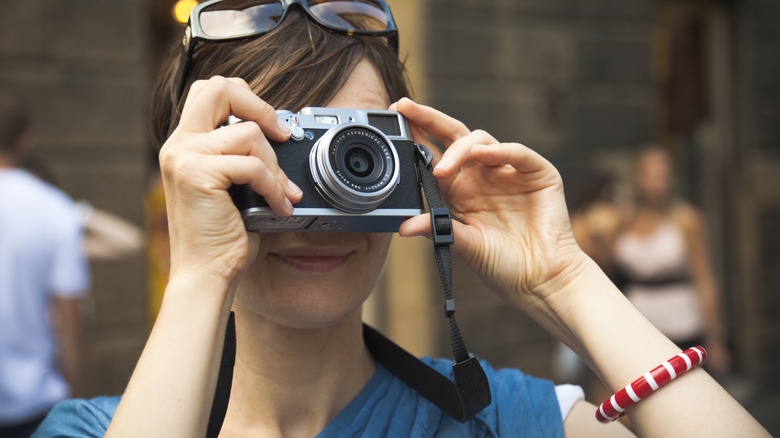
Compact digital cameras had a golden age. In 2010, global shipments hit around 120 million units. These point-and-shoot devices were the default way a generation captured everyday life before smartphone photography took off. But as phone cameras continued to improve, sales dropped to almost bargain-bin territory, and manufacturers began pulling the plug on their compact digicam lineups. But there is a case for bringing them back.
Unlike your phone, which second-guesses every frame until it produces something resembling the invisible standard of a "good" photo, "What people want is photos that feel like theirs." That's according to photographer Alex Cooke, who says on camera specialist website Fstoppers that people want "images marked by the specific character of a specific tool they chose to use, for reasons they can articulate, in a process they controlled." There's also something in the fact that a camera's buttons and dials have zero interest in your inbox.
In fact, there is something of a well-deserved comeback underway already. Shipments of fixed-lens cameras rose notably in 2025, while #digitalcamera on TikTok has racked up billions of views. Quality compact digital cameras don't have to be pricey, either. The Kodak PIXPRO FZ55 is a solid budget pick for casual shooting. Look to the mid-range for better quality, and you'll find cameras like the Canon PowerShot SX740 HS offering sharper detail and more reach. If it is premium you're after, the Ricoh GR IV is a compact camera that keeps winning awards and has a strong following among street photographers.
Personal digital assistants
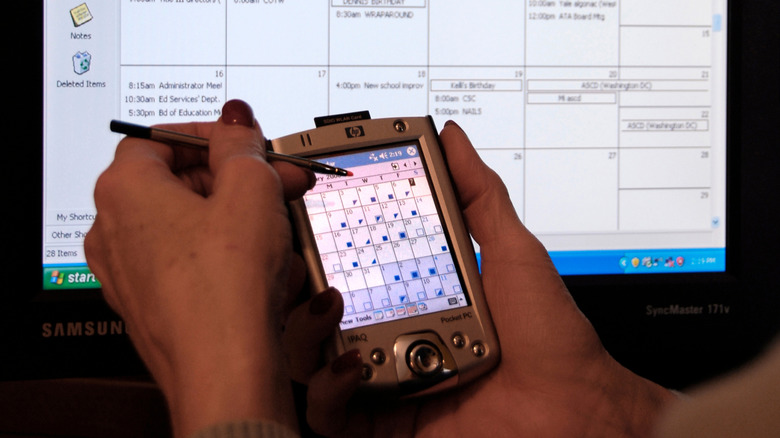
The personal digital assistant (PDA) was once the standard for a pocket-sized computer. It ran on batteries and had a touchscreen and stylus for organizing everything in your personal life, including calendars, contacts, and notes. Their peak period ran roughly from 1992 to 2007, and the touchscreen era began with the Tandy Z-PDA, but it was the PalmPilot that brought the gadget to peak popularity. Of course, the all-in-one smartphone ended the party. It packed every PDA function into a single device and brought an end to its impressive 15-year run.
But some people still miss them. And they miss them for the same reasons they miss other once-popular gadgets, including the joy of not having those distracting smartphone pings. Using your phone for the same reasons you would use a PDA also adds to your monthly data. A PDA doesn't require an internet connection at all. It has a single-purpose simplicity that people still actively look for, long after the tech was considered to be a dinosaur.
However, if you have an old PDA, official support dried up long ago. Getting help with one today requires going through hobbyist forums and enthusiast communities. On top of that, as computers continue to adopt newer operating systems, syncing an old PDA with a modern PC is becoming increasingly difficult. One recent answer is the PocketMage, a 2026 crowdfunded PDA with a physical QWERTY keyboard and an e-paper display. It's definitely a niche gadget and not for everyone, but it proves the appetite for a dedicated, distraction-free pocket organizer never really went away.
Dumb phones
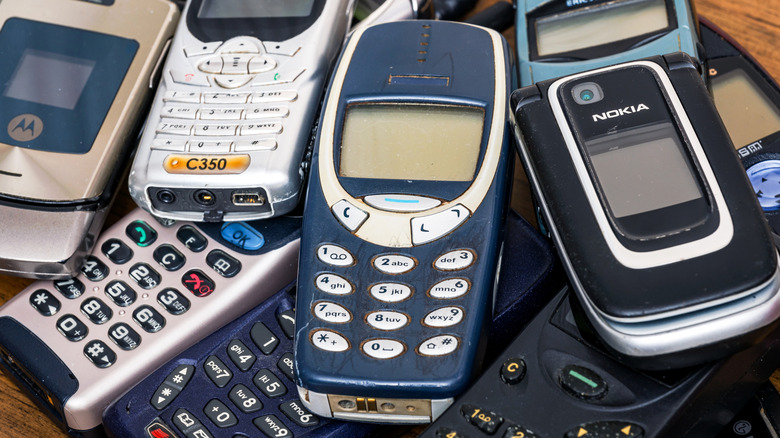
At their peak, dumb phones were owned by just about everyone. They were built for calls, messages, and very little else save for the occasional game of Snake. People didn't call them dumb phones, either. This was the latest and greatest technology of the time. Smartphones obviously changed everything. Why carry a device that only calls and texts when you could have one that does everything but make you coffee in the morning? Those dumb phones didn't stand a chance.
But is Gen Z bringing them back? Well, Nokia's parent company, HMD, confirmed a remake of the 3210 in 2024, and you could still buy many other dumb phones back then. Current alternatives like the Light Phone strip things back even further, and TechRadar's Mark Wilson calls switching back to a dumb phone "a reminder of a time when endless doomscrolling wasn't such a dangerous wormhole." Consumer Reports writer Courtney Lindwall put things to the test. She spent a week with a basic Nokia Flip and said she "wrestled back about three hours" of her day by reducing screen time. She also noted a "calm and clarity that came from fully disengaging" from her iPhone.
That said, reviews of current dumb phones have been mixed. The honest truth is, going dumb might be harder than it sounds. Streaming, navigation, ride-hailing, contactless payments, video calling, food delivery — it's all gone. However, a thriving r/dumbphones community has grown on Reddit, with thousands of members debating what works, what doesn't, suggesting alternatives, and generally helping each other make the switch. The benefits are clear to anyone, but if you're considering this switch, do so with realistic expectations.
Fax machines
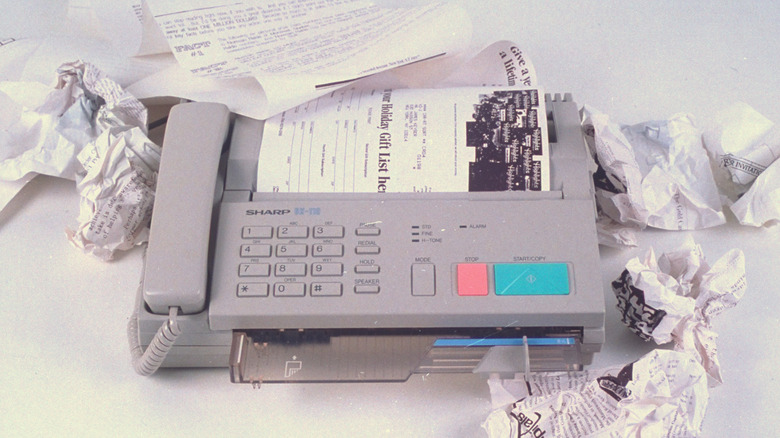
Before email, there was the fax machine. This was how we moved time-sensitive documents. From legal paperwork to medical records, it was all sent over a telephone line. But once email made the job cheaper and faster, it quietly disappeared from everyday life — although it didn't go completely the way of the dodo. Healthcare, legal, and property sectors still depend on the fax machine today. These are industries where getting a document wrong or having information fall into the wrong hands carries real consequences. Unlike email, faxes don't pass through multiple servers, which makes them harder to intercept.
But the case for a comeback among the average consumer is also plausible, and privacy isn't the only thing worth considering. A fax doesn't sit unread in an inbox, and its messages arrive warm from the machine. It's a physical thing that you can hold and cherish. You can read it slowly, savoring every line, breathing in the scent of fresh ink... okay, maybe we're getting carried away. If it's a legal contract or medical results, you might not be so elated about receiving a fax. But for simple handwritten notes, drawings, or letters between people who actually care, it's an experience no smartphone app can replicate. For home and small office use, all-in-one printers are the way to go if you want to be involved in the comeback of a technology everyone thought was dead by now.
Pebble smartwatch
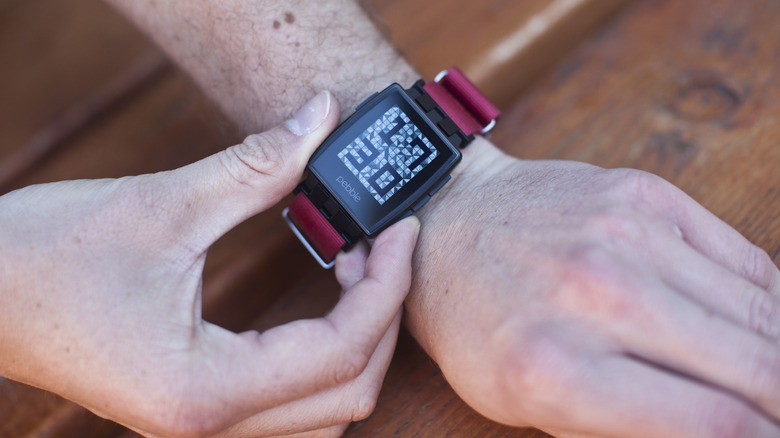
When the Pebble smartwatch landed on Kickstarter back in 2012, it broke records. More than 2 million watches were eventually sold, promising a simple interface with phone notifications, music control, and a week-long battery life, plus a watch face library with over 16,000 options. Those watch faces were built by an open developer community that offered far more customizable options than any Apple Watch or other wearable has offered since. So, you might be wondering why they were discontinued. Well, Pebble was sold to Fitbit, Fitbit was sold to Google, and somewhere in that chain of sales, everything that made Pebble what it was disappeared.
Since those course-changing acquisitions, nothing has filled the gap Pebble left. The smartwatch industry went in quite a different direction: more features, more sensors, more reasons to keep your eyes on your wrist. Nobody ever stepped back and said less might actually be preferable. Except for Pebble founder Eric Migicovsky, that is. He was always hopeful. "I had really, really, really hoped that someone else would come along and build a Pebble replacement. But no one has," he wrote on his personal blog.
Then, unexpectedly, a door opened in early 2025. Google open-sourced PebbleOS, and Migicovsky wasted no time. The brand is back. It might be a low-key comeback, but it's one you can support if you think it deserves it. Two new watches are already available, and this time Migicovsky promises, "We're keeping things simple. Lessons were learned last time!" That's what we like to hear.
Dedicated GPS satnavs
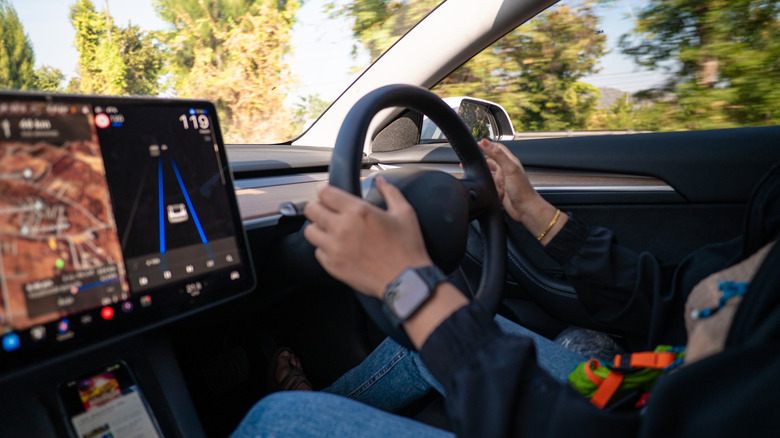
GPS satnavs were once the standard way to navigate a vehicle. They featured preloaded maps and turn-by-turn directions — and no data connection was needed. Brands like Garmin, TomTom, and Magellan dominated the market. However, Google Maps suddenly made a dedicated device seem redundant, and the market for it fell apart. But today, there's a strong case for a comeback — and it might be more straightforward than you think.
A dedicated satnav carries its maps on board. They work anywhere, including remote areas where a cell signal is nonexistent. And let's not forget that handling your phone while driving is illegal in most U.S. states. Satnavs are built specifically for driving. They have the display size for arm's-length viewing, and there's no need to touch it while navigating busy streets.
In fact, the distracted driving case is difficult to ignore. In 2023, the National Highway Traffic Safety Administration recorded 3,275 deaths and an estimated 324,819 injuries in crashes involving distracted drivers. Using a dedicated satnav means your phone remains in your pocket or glove box, where it belongs. Garmin is the one major name that still sells dedicated GPS hardware in the U.S. If you want to give a GPS satnav a try without spending too much, the Garmin Drive 53 & Traffic is a solid, affordable entry point and includes live traffic reports.
Landline phones

At its peak, just about every home in the U.S. had a landline. It was the default way to make and receive calls, and it came with plenty of practical advantages. Landlines continued to work during a power outage, for example. No battery or internet connection was required, and they provided a direct line to your exact address when you called 911. Many people don't remember that they actually delivered clearer calls than any cell phone, too. However, those advantages were soon forgotten in the push toward cell phone ownership. By 2010, there were already more cell phones in the U.S. than landline phones. So, does it actually deserve a comeback? Well, it doesn't matter because AT&T intends to shut down its landline network almost entirely across the country by 2029.
That said, some companies are bringing back the home phone, minus the landline, including Tin Can. This corded, screen-free phone was designed specifically for kids. It looks and feels like a landline, but it runs over Wi-Fi. The Tin Can launched in April 2025, and it has had waiting lists for every release since. Wirecutter's Alison Rochford tested it with her daughters and found it taught them to genuinely communicate — introducing themselves, asking who was calling, and holding a real conversation. Another result was "They have completely stopped asking for a smartphone." The landline may be almost dead as an infrastructure, but as an idea, it clearly still has a pulse, and maybe that comeback deserves to happen.
Physical keyboards on phones
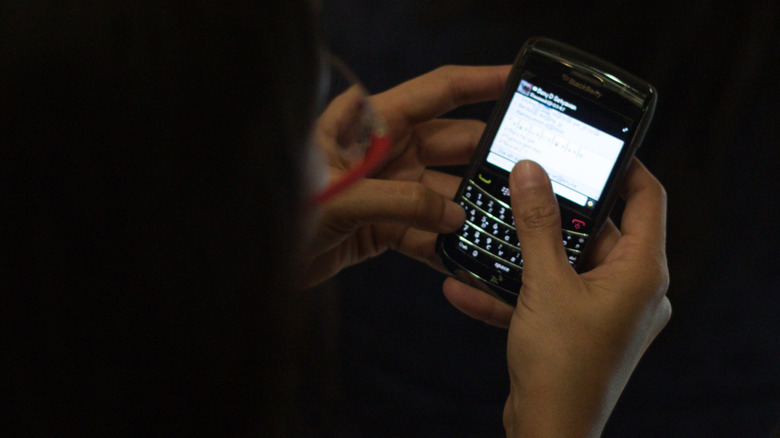
There was a time when typing on a phone meant you actually felt something. BlackBerry and other iconic keyboard phones of the era, like the T-Mobile Sidekick, were phones where keys clicked under thumbs, and words were typed without a second thought. The iPhone's arrival in 2007 changed all that. It had to go and give us a sleeker, more intuitive touchscreen — and, of course, everyone had to copy it. Copy it they did, and while those copies achieved varying degrees of success (and, let's be honest, many of them still do), the day of the keyboard phone was over. BlackBerry held out the longest, but by 2022, it had shut down software operations for good.
Josh Render, writing for Tom's Guide in 2023, said, "The use of touchscreens has become so commonplace that the idea of a physical keyboard is a strange one — but it's one that deserves a comeback." We miss the genuine tactile feedback, and we're tired of those relentless autocorrect errors and smudged fingerprints all over our screens. CNBC also reports that physical keyboards help those with visual impairments or limited motor control, while doomscrolling tends to be more difficult when your phone no longer responds to mindless swipes.
A wave of startups is responding to people's needs. Clicks, Unihertz, and the Minimal Phone are attempting to bring physical keyboards back. Unfortunately, reviews have been mixed so far, and for sure none of them have matched BlackBerry's cult-like status. But the Unihertz Titan 2 Kickstarter did raise $4.8 million, and 45% of Clicks buyers have never actually used a keyboard phone before. So this isn't just nostalgia. The comeback is on.