

6 Pickup Truck Redesigns That Totally Missed The Mark
On average, a vehicle gets a complete redesign every four to six years. These changes will typically include updated styling, powertrain enhancements, improved safety, and a multitude of new features and accessories. When properly executed, new industry trends are established that leave competitors scrambling to replicate. A perfect example is the once humble tailgate that saw its first major change back in 2019 with the GMC Sierra and its MultiPro tailgate. Now, buyers can choose from a variety of versatile designs throughout the industry.
However, these changes aren't always met with enthusiasm. Sometimes, automakers read the room wrong, fix what wasn't broken, and end up tarnishing the reputation of a once popular model name. This is undeniably evident in the hyper-competitive truck market, where automakers have had the tendency to swing for the fences, offering radically different options, styling, and features in an effort to pull customers into showrooms and steal the spotlight back from the competition. These missteps featured below prove that aggressive evolution and drastic changes aren't always the solution.
2022 Toyota Tundra
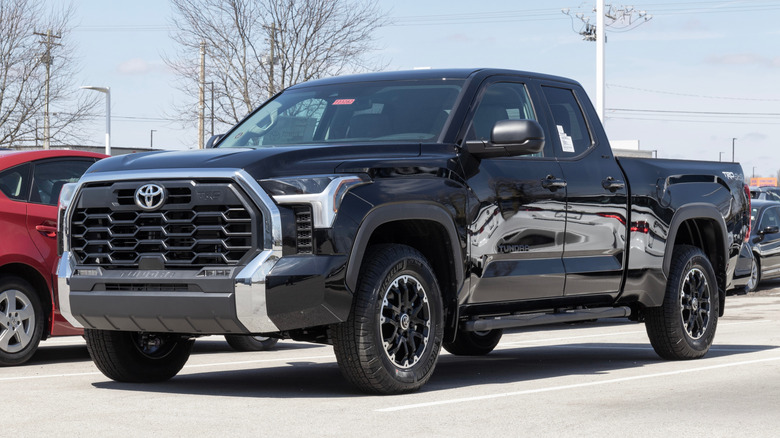
The Tundra nameplate was first introduced for the 1999 model year at the Indiana State Fair; a fitting nod to the Princeton, Indiana plant that would get the honor of building the first full-size pickup in North America from a Japanese-owned automaker. Though very popular amongst owners, the Tundra was never able to completely steal sales away from the Ford F-150, Chevrolet Silverado 1500, or Ram 1500 – in fact at the end of the second generation in 2021, the Tundra only accounted for a 6.5% share of the full-size half ton pickup segment.
Toyota decided to dramatically shake things up for the all-new third generation. The trusted but outdated 5.7L V8 engine was replaced by a twin-turbocharged V6, offering 389 hp and 479 lb-ft of torque (up from 381 and 401, respectively). It also offered improved fuel economy, performance, and payload. Unfortunately for Toyota, engine issues led to a sharp decline in reliability.
In June of 2024, over 100,000 of these V35A-equipped Toyota and Lexus vehicles were recalled due to loose debris from the machining process that was causing main bearing failure, leading to misfires, knocking, and complete engine shutdown, even while travelling at speed. A second recall of over 120,000 vehicles was introduced for the same problem later in November 2025. And in May of this year, a third recall of an additional 43,000 Tundras was issued for identical foreign debris problems. Toyota has resorted to complete engine replacement for impacted owners. These recalls and complaints have led to unhappy customers and a hit to Toyota's once legendary reputation.
2024 Toyota Tacoma
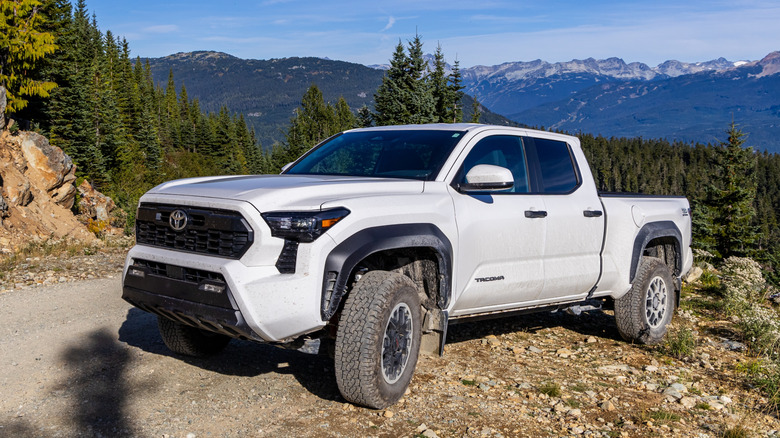
The Toyota Tacoma quickly became known as one of the more reliable vehicles on the road, with regular recognition from owners and reviewers. Since 2008, it's also been a sales leader among compact and mid-size pickups. This success let Toyota extend generations for longer than the industry norm. In 2024, the Tacoma entered just its fourth generation since originally launching in 1995.
Like the Tundra, the all-new Tacoma also featured a fully revised powertrain. The 3.5L naturally aspirated V6 and six-speed automatic transmission were replaced by a turbocharged 2.4L I4 and eight-speed automatic that offered better acceleration and fuel efficiency. And unlike the Tundra, this new engine has been reliable. The same cannot be said about the transmission however.
Customers were quick to notice slow shifts while accelerating along with numerous shutters and general vibrations. Toyota announced a technical service bulletin in September of 2024 that offered a remedy to impacted trucks. Unlike a recall, this fix would only be applied to vehicles that had already broken. Impacted vehicles also had to have at least one of six specific fault codes stored in its computer. The fix involves replacing the entire transmission and torque converter assembly.
2022 Ford F-150 Lightning
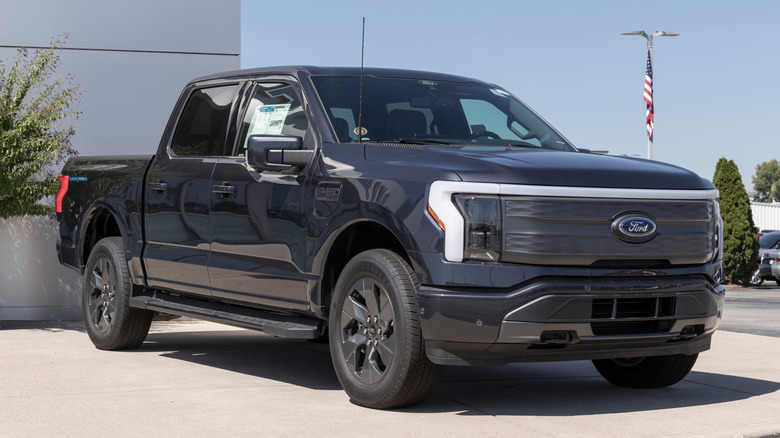
Ford's SVT, or Special Vehicles Team, was responsible for some of the most iconic performance vehicles to wear the blue oval. The F-150 SVT Lightning was no exception. Both the first generation, introduced in 1993, and the second generation in 1999, followed a similar formula consisting of a single cab, a short bed, and a large motor sending all of its power to the rear wheels. This was abandoned for the third generation Lightning.
Unveiled for the 2022 model year, the new F-150 Lightning was not given the SVT treatment. Only available in SuperCrew Cab configuration with a 5.5-foot bed, it's over two feet longer than its predecessor. More significant (and controversial) however, is the powertrain. The V8 is gone, but don't expect to find a smaller V6 or even a turbocharged four because this Lightning is 100% pure EV.
Recycling the Lightning name was met with mixed reactions by Ford purists. The truck's launch was also messy — supply chain issues limited availability of the most affordable Pro trim. Initial hype caused dealer markups to run rampant as well. The EV market also cratered. In May 2024, Lightning sales were down nearly 42% compared to the previous year. This public perception combined with Ford's very high development costs led to the brand losing money on every Lightning sold. In December 2025, Ford announced that this pure EV pickup would be getting shelved. Ford is now pivoting towards hybrids and more affordable entry-level EVs.
2019 Ford Ranger
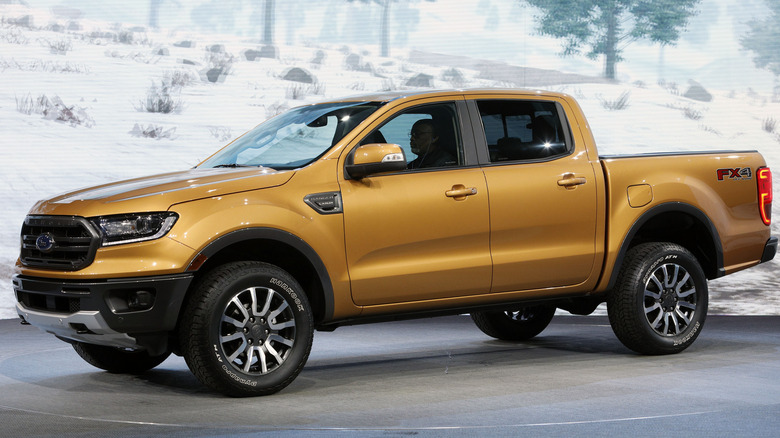
It's hard to quantify just how much of a cultural icon the Ford Ranger was. It was named America's best selling compact pickup truck from 1987 through 2005. It became a meme, and even starred in a racing series called the "Danger Ranger 9000." Ford decided to discontinue the third generation Ranger in 2011 after an impressive 14 year run due to slowing sales; instead hoping to push buyers to a newly expanded lineup of F-150s.
Ford did actually offer a fully redesigned 2012 Ranger, just not in North America. Known as the T6, it debuted at the Australian International Motor Show. Engineered by Ford Australia, the T6 Ranger was designed for global success, offering a variety of configurations and powertains to appeal to nearly 180 countries.
In 2018, Ford announced that the Ranger was returning to the U.S. market. Riding on a slightly re-tooled T6 platform, it unfortunately launched feeling inherently old-school, with an interior lacking the latest features and premium materials found in newer rivals. The T6 underpinnings also bumped the Ranger from compact to mid-size, now directly competing with the Toyota Tacoma and Chevrolet Colorado. The base price also came within $5,000 of the larger, more practical F-150 (and that was before any of the significant rebates that could be had on the F-150). This led to the return of the Ranger being underwhelming for both Ford and its potential market.
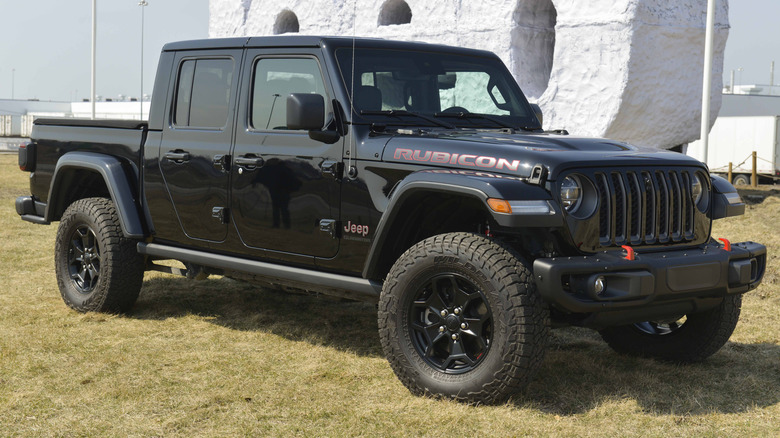
2020 Jeep Gladiator
The JL Wrangler, which was first revealed in 2017, was almost an overnight sales success. March 2018 was the best month of sales for the Wrangler nameplate in Jeep's history. Available in both two-door and four-door Unlimited variants, with the latest tech and a variety of powertrains, buyers were hooked.
Looking to continue attracting buyers while also tapping into the ever-growing midsize truck segment (which experienced nearly doubled sales over the previous four years), Jeep announced that the Gladiator would be revived in 2019 for the 2020 model year. This would be the brand's first pickup truck since the Comanche was discontinued in 1992 and the first use of the Gladiator name since 1971.
While the original Gladiator was a highly capable regular pickup with a variety of bed lengths, wheelbases, and engines, the all new Gladiator was only offered as a crew cab with a five foot bed. This limited its practicality, especially compared to class rivals. It also wasn't as capable offroad as the Wrangler due to its significantly longer wheelbase and poorer breakover angles. It was also expensive at launch – which Jeep ended up admitting in 2025 when it slashed starting MSRPs to try and improve sales.
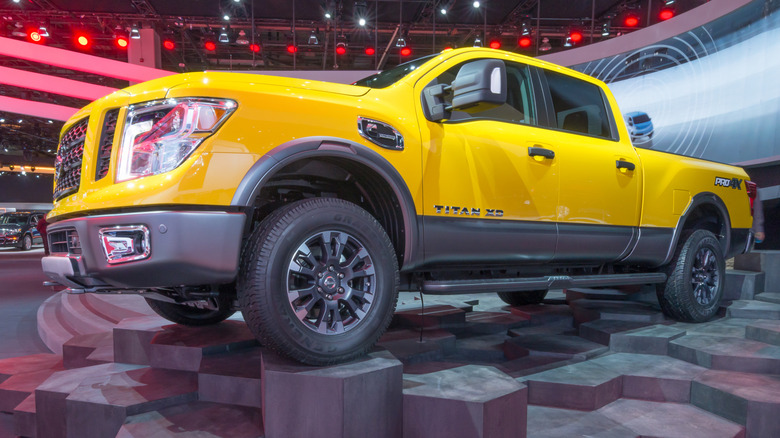
2016 Nissan Titan XD
The Nissan Titan, which premiered as a 2004 model, struggled to ever find solid footing in the full size truck market. Sales peaked in 2005, with Nissan moving nearly 87,000 units. For comparison Toyota sold about 127,000 Tundras while Ford moved just over 900,000 F-150s (and no, that's not a typo). Still, Nissan continued selling the first generation Titan mostly unchanged through 2015.
In an effort to improve market saturation and perception, the second generation, available for the 2016 model year, actually spawned two variants: the Titan and the Titan XD. The XD, which stood for eXtra Duty, was a rather confusing offering for Nissan. Considered a heavy half ton, it tried to offer more capacity than full size trucks like the Silverado/Sierra 1500, F-150, and Ram 1500 with a better ride and handling compared to Heavy Duty trucks such as the 2500HD, F-250, and Ram 2500 HD.
The XD was over a foot longer than a standard Titan. It featured a thicker frame, larger axles and brakes, and could even be equipped with a Cummins Diesel V8 motor. While it could tow up to 12,640 pounds (a regular Titan maxed out at 9,390 pounds), a properly equipped F-150 could pull 12,200 pounds. Payload, especially with the diesel motor, was also severely compromised, with the Titan XD offering a maximum of 2,003 pounds – the F-150 can handle 3,240 pounds and a Silverado 1500 can do 2,250 pounds. Production of both Titans ended in 2024, with Nissan deciding to completely abandon the full size truck segment. That year Nissan failed to move even 14,000 units combined.