

The 6 Biggest Downsides Of 5G Home Internet
We may receive a commission on purchases made from links.
As technology progresses, companies are finding new ways to send data to (and receive data from) consumers everywhere. That's part of why 5G began gaining traction not just for mobile devices, but for basic internet, too. It's not the most common service out there, leading many to ask if 5G can really be used for your home internet, but it's been gaining more traction in recent years thanks to how it improves on previous wireless network technology. Even so, it still carries some notable downsides, ranging from its basic speed capabilities to a lack of widespread availability.
You probably have plenty of experience with 5G from your phone, and its use in home internet isn't too different. It relies on wireless, invisible waves transmitted from towers to reach your house's tech ecosystem. While you can still plug an ethernet cable into a router with 5G internet, the signal isn't coming from dedicated wires connected to far-off servers. That's really where the biggest problems come in; without your connection being physical, it runs into more problems much more quickly.
Generally worse speeds
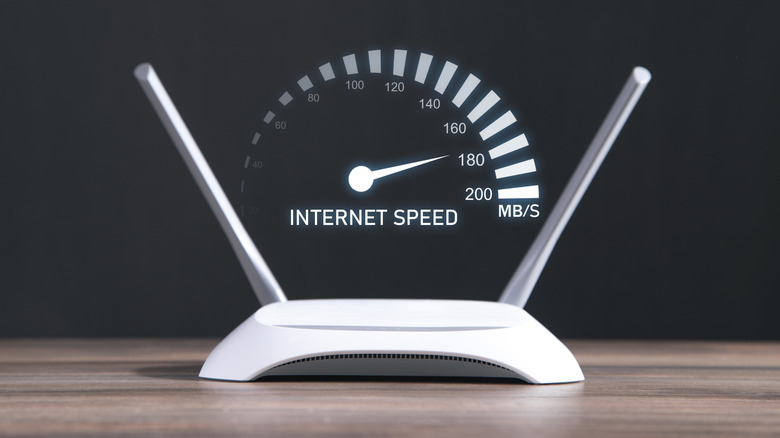
5G is going to be faster than other internet technologies like satellite and DSL, but it's still not able to match the speeds you'll find from fiber alternatives. In our own comparison of T-Mobile fiber and 5G internet services, the former was found to boast noticeably higher base speeds. On the company's website, the middle-of-the-road fiber plan from the company starts at $60 per month for 1 Gbps (1,000 Mbps). The cheapest 5G alternative only reaches an estimated maximum of 354 Mbps for the same price.
The speeds will vary depending on which provider you go with, but there isn't going to be much difference. Verizon has a cheaper $35 5G plan that seemingly only goes as high as 100 Mbps, with its next step up costing $45 and only reaching up to 150 Mbps. The cheapest fiber option from the company gives you double the speed of the latter for just $5 more per month. 5G is supposed to reach speeds as high as 20 Gbps, but with its use in home internet, you'll be lucky to get even a fraction of that.
Do note that this only concerns download speeds. The gap only widens if you look at upload speeds, though, as they usually match with the Mbps rating for fiber customers. 5G, on the other hand, will struggle to even rise above double-digit upload speeds. Regardless of whether you're sending or receiving data, your connection simply won't be as good as it could be if you ditch wired connections entirely.
Lack of reliability
As previously mentioned, T-Mobile's 5G service only reaches a rated maximum of 354 Mbps. The actual range of it is estimated to dip as low as 170 Mbps. In other words, you aren't able to rely on 5G home internet to always perform up to its expectations. There are numerous reasons for this, but one in particular has to do with how the service itself works. As 5G gets more popular, its networks need to deal with more traffic, impacting performance in a way that's entirely out of your control.
It's not like you won't face issues with your provider even with a wired connection; throttling is so common, for example, that it's one of the biggest reasons why you should be using a VPN. But 5G internet can fluctuate much more heavily from day-to-day use, with seemingly-satisfied customers suddenly receiving massive dips in performance without any way to prevent them. And yet, if you ignore the problem entirely, your 5G service will just end up getting even worse.
Affected by your environment
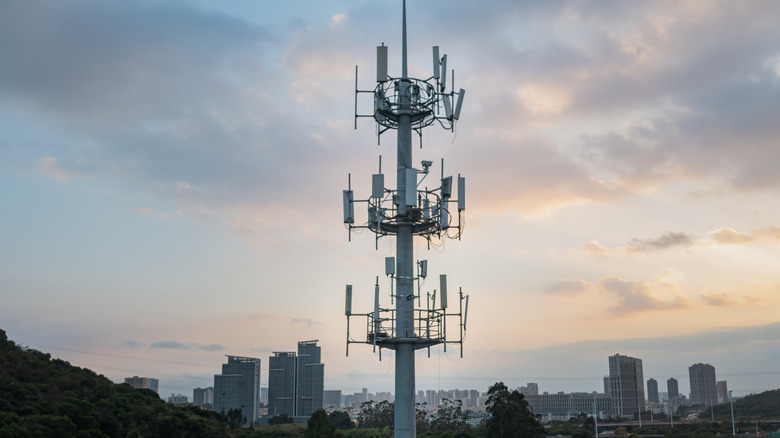
5G relies on towers sending wireless signals to your home. The more objects between those towers and you, the tougher it is for those signals to reach you. And that means the placement of your gateway is going to matter much more than it would for a wired signal. Verizon even has a dedicated "compass" to help you decide where you should put the gateway that comes with your 5G internet service. Placement matters for your fiber router, as well, but direct ethernet connections can avoid any wireless signal problems you might have — and 5G internet doesn't have this luxury.
Again, though, this issue can happen entirely out of your control. Because the 5G towers are out in the open, bad weather can affect your connection, too. Not everyone has experienced problems with this, and it could be argued that 5G is actually better for more severe types of weather. After all, it doesn't rely on physical cables that could be damaged or affected during flash floods or hurricanes. But pretty much every time it rains, snows, or thunders, you're still better off expecting your 5G signal to get worse than usual.
Lack of widespread coverage
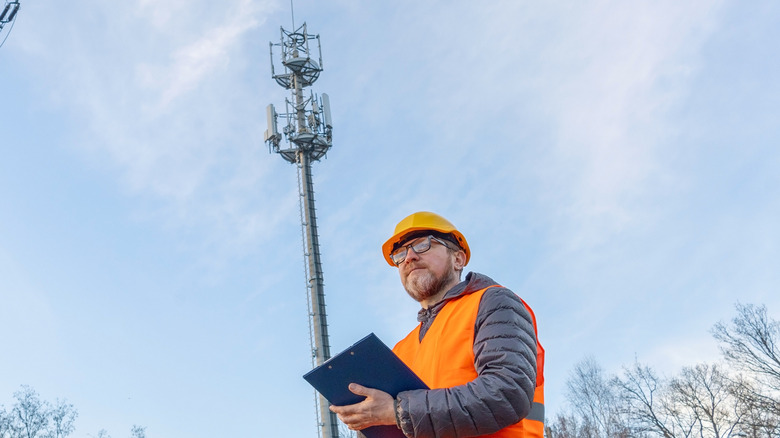
To many, perhaps the biggest downside of 5G home internet is the fact that it can't even be used. This service is still expanding to this day, which means you might not even have access to it in your area. You'll have to check coverage maps based around the service provider you end up going with. In a worst-case scenario, your rural home might simply have no way to make use of a 5G internet connection.
Of course, this isn't a major issue if you live in a large, high-population city. But it's still something to be wary of, particularly if you live in western states like Utah or Nevada. There are even dedicated groups fighting the inclusion of 5G towers in certain areas, with reasons ranging from health and safety to tainting the natural beauty of the environment. And, of course, there are still arguments over whether 5G signals are bad for humans. Whether you agree with these concerns or not, they stand as yet another hurdle in making 5G home internet available to everyone.
Not offered by every brand
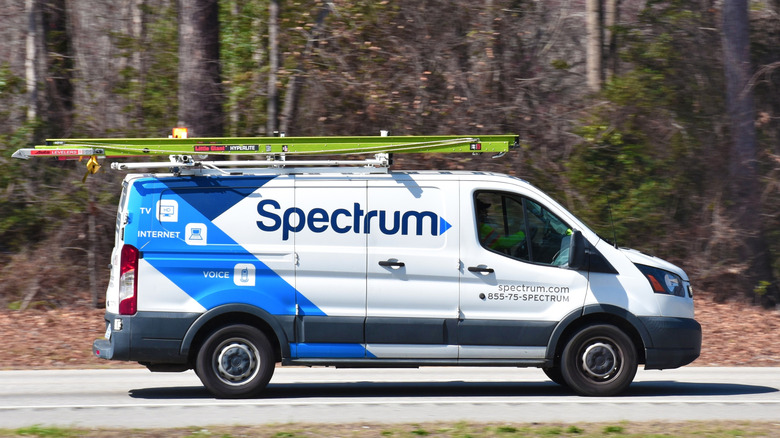
Although companies like Verizon and T-Mobile have embraced 5G home internet, not every major internet service provider has pushed to offer it to customers. Spectrum is a fine example of this, with the brand even having a dedicated article focused on comparing its own service with 5G alternatives. It makes numerous claims to downplay the effectiveness of this wireless service, and as you might expect, that means it's not offered by Spectrum in any way outside of mobile plans. Cox is the same, providing no 5G option and claiming that all of what it offers is faster overall.
Even if your favorite provider offers 5G internet, it might not last forever. AT&T withdrew its own 5G service in New York in January 2025 due to the state's broadband rate-regulation law. Considering that New York is home to the largest city in the entire U.S., that's a pretty heavy impact affecting a wide number of people. The service is still available in other areas, but it's something you'll have to be wary of. Local laws could mean your preferred provider just isn't able to give you the service you want.
Savings aren't good enough

All in all, the benefits of 5G internet simply don't outweigh the cost. You've seen the prices for yourself previously; even at the same prices, 5G speeds will almost always dip below fiber alternatives. Combined with the issues regarding reliability and availability, you're paying a lot of money for a lot less confidence in your internet. You're only really getting savings if you go with the highest-cost options — and even then, it's pretty questionable.
Once again, we'll use Verizon to compare plans. Its 5G Home Ultimate plan is $60 per month for speeds of up to 1,000 Mbps, while a fiber gigabit plan is $90 per month. However, the fiber option matches upload speeds with its download speeds, while even the "Ultimate" 5G plan only gives you up to 75 Mbps. This might not matter quite as much if you aren't streaming or sharing major files online, but it's a pretty major gap that isn't helped by how intermittently 5G receives data.
Of course, your own experience may vary. Prices and availability might change depending on your region, and it could be that 5G is the only internet you can feasibly use. After all, not every location supports wired connections, either.