

5 Downsides Of Using All-Terrain Tires
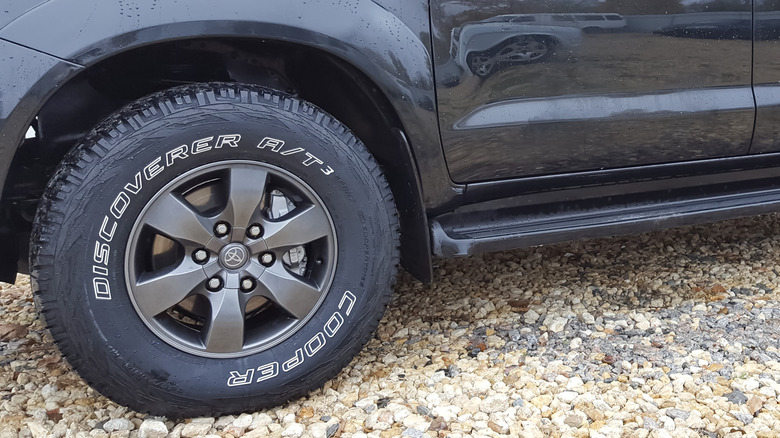
There is a belief that all-terrain tires can do anything, offering grip on a gravel road one day, and letting you cruise on the highway the other day. That reputation is well earned, and compared to a dedicated mud-terrain tire, an all-terrain tire is the more sensible pick for most truck and SUV owners. But the "does everything" tag associated with all-terrain tires rarely means "does everything best" — it comes with a handful of trade-offs that aren't often advertized.
Some of the downsides are obvious the moment you start driving, like extra road noise or a slightly stiffer ride. Others only become visible after you have put in a year or two, and the tread starts wearing faster than your old all-season tires. If you are also in the market for a tire set, it is worth knowing what Consumer Reports rates as the top all-terrain tire pick for trucks before you take out your wallet.
For those who are looking to go up a size, there are also a few things worth knowing before fitting bigger tires to your car, since size changes several of these trade-offs. If you have decided on picking an all-terrain tire, here are some things you should know, because they can impact your overall driving experience.
Increased road noise on pavement

All-terrain tires trade a smooth, quiet tread for a pattern that can better grip loose dirt, gravel, and light snow. That fundamental trade-off is the reason why an all-terrain tire will almost always hum louder on the highway than a standard all-season tire riding on the exact same wheel. An all-terrain tire cannot match the hush of a street-focused tire, especially once the tread gets aggressive enough for rugged trails.
However, the takeaway is not that every all-terrain tire is loud. The science behind the sound boils down to the tread depth and block spacing, often known as the void ratio. The same feature that lets these tires have a good bite on rough trails also generates more air turbulence and vibration on smooth roads as compressed air escapes from the tread blocks.
While manufacturers are constantly tweaking the tread geometries to quiet down newer designs, the physics cannot be completely removed. You won't need earplugs, but a baseline level of road noise is simply unavoidable.
Reduced fuel efficiency

An all-terrain tire's chunkier tread doesn't just make more noise, it also makes your engine work harder to keep the wheels running. Because the engine has to push harder against the pavement, you end up burning more fuel that you would if you had standard highway tires. It is a direct trade-off for getting better grip on loose dirt.
Testing from major automotive outlets also back this up. Tire Rack ran a physical fuel efficiency test comparing an all-terrain tire directly against a standard highway tire. It found that the all-terrain tread caused a 0.7 mpg drop in fuel economy compared to the highly efficient highway tire. While that might sound small, when calculated it sums up to burning about 21 extra gallons of gas over a typical year of driving. It is a recurring everyday cost that highway tire owners don't have to pay.
It is also worth separating all-terrain tires from their more aggressive siblings. Comparing all-terrain, mud-terrain, and rugged-terrain tires, the mud-terrain tires are hungrier for fuel and louder. So, if fuel economy is what you are aiming for, an all-terrain tire is a compromised pick, but not the most compromised pick.
Shorter tread life
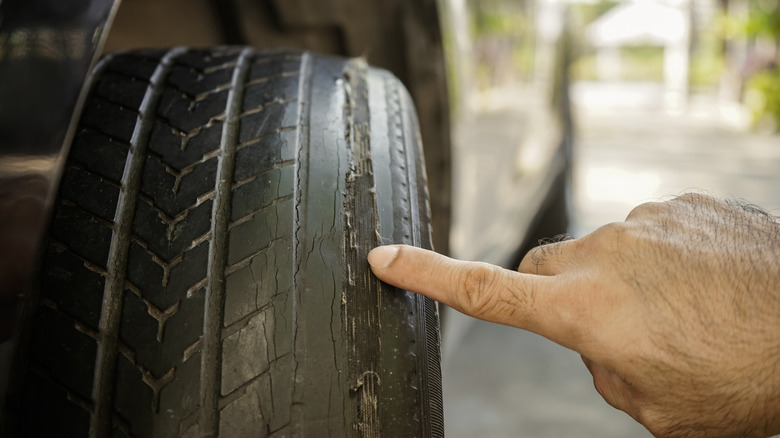
Another downside of all-terrain tires is that they have shorter tread life. This is something that shows up around two or three years in, when the tread wear signs appear sooner than expected. Rather than trying to compare mileage warranties, which vary wildly and do not tell you the whole story, you need to look at how the tires are built — it once again comes back to the same aggressive tread design that helps all-terrain tires get a good off-road grip.
Bigger tread blocks and softer compounds designed to flex over rocks and dirt wear down faster on abrasive pavement compared to a tighter, harder highway tread. It is basically the same effect that impacts the fuel economy on an all-terrain tire — it just shows up as rubber loss instead of repeated gas station visits.
If you want to keep your tires for longer and tread lifespan matters to you (which it should), it is worth checking the warranty mileage for any all-terrain tire before buying, rather than assuming all all-terrain tires wear the same. You should also check out high-mileage tires with strong treadwear ratings, as some newer compounds are closing the gap with all-season tires, even if they are still not quite there.
Compromised on-road ride comfort

When you're considering buying a car, making sure it's comfortable to drive is one of the first things you should do. This isn't just about the car's interior and build — the tires also play a major role here. However, ride comfort is also one of those things that you may not notice until it is gone. According to Family Handyman's breakdown, the three-ply sidewall construction of all-terrain tires also leads to a not-so-smooth ride.
A highway tire is built around one job: soaking up pavement imperfections smoothly. On the other hand, an all-terrain tire is engineered around two jobs at once, and something has to give. Stiffer sidewalls that help resist punctures on rocky trails also transmit the small, everyday jolts of potholes and bumps straight into the cabin.
However, this trade-off varies a lot by brand and category, which makes it extra important to compare tires before buying, rather than assuming every all-terrain tire rides the same. You should check which brands make the best off-road tires to see how differently manufacturers balance that off-road capability against everyday comfort.
Limited extreme off-road capabilties
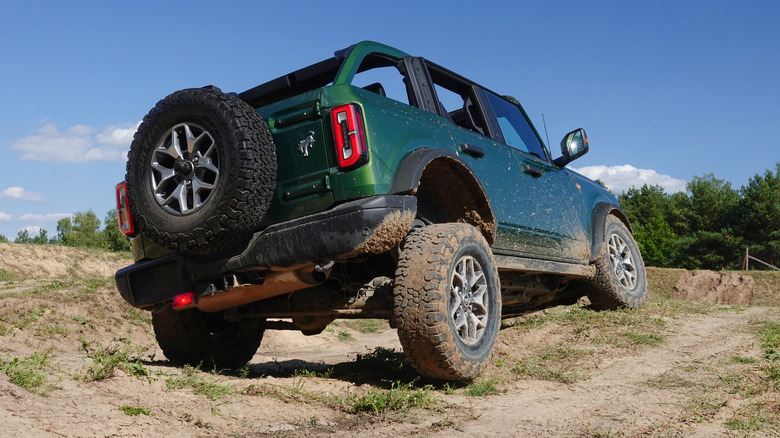
It is easy to assume that all-terrain means any terrain, but that is not the reality. According to off-road experts, while all-terrain tires are good for dirt, gravel, and light trails, they genuinely struggle when put up against deep mud or extreme rock climbing. All-terrain tires are built around a compromise where they need to have improved bite without sacrificing too much on comfort on the highway.
The reason they fail in extreme off-road conditions comes down to the exact same design that makes them comparatively quieter on the highway than mud-terrain tires. All-terrain tires have tread blocks packed relatively close together and those tighter grooves pack dirt when you put them in deep mud, and cannot clear themselves out. As a result, these tires lose all their bite and turn quite slippery. By comparison, a mud-terrain tire is designed to constantly eject mud and keep digging forward.
If your weekends involve serious off-roading rather than occasional forest roads, it is worth changing your tires from all-terrain to mud-terrain. There are a bunch of all-terrain tires that hold-up well off-road but they are not meant to tackle truly extreme trails.