

5 Advantages Of Body-On-Frame SUVs
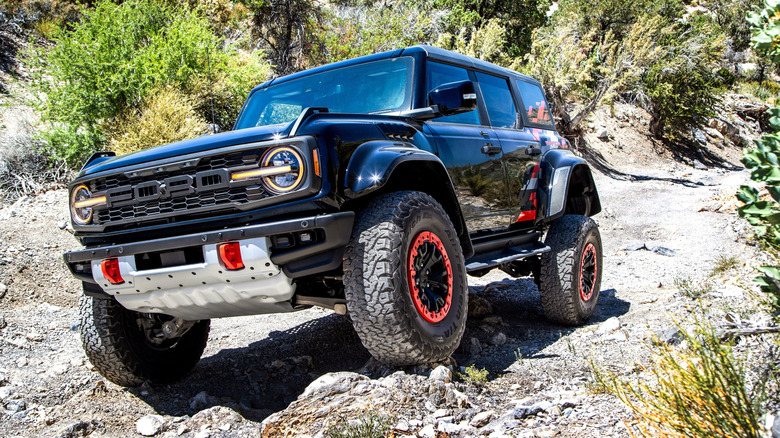
For many years, most of the sport utility vehicles on the road used body-on-frame construction. Indeed, if you look back at pre-1990s SUVs such as the Ford Bronco, Chevrolet Suburban, or Toyota 4Runner, you'll find they were all essentially based on the automaker's pickup trucks, sporting the same ladder-frame construction seen on vehicles like the Toyota Hilux.
It wasn't until the late 1990s that unibody crossover SUVs began to enter the market as new models like the Toyota RAV4, Honda CR-V, and Subaru Forester offered car-like dynamics and fuel efficiency blended with extra ground clearance and the taller profile of an SUV. Eventually, those crossover models would come to dominate the sales charts, and today, many of them have overtaken family sedans in popularity.
While unibody SUVs dominate, the traditional body-on-frame SUV is still alive and well. Depending on your needs, a body-on-frame SUV can offer some significant advantages over unibody crossover models. Now, to be clear, body-on-frame SUVs also have some downsides, but many of those are necessary trade-offs for the advantages we're about to discuss.
Towing capability
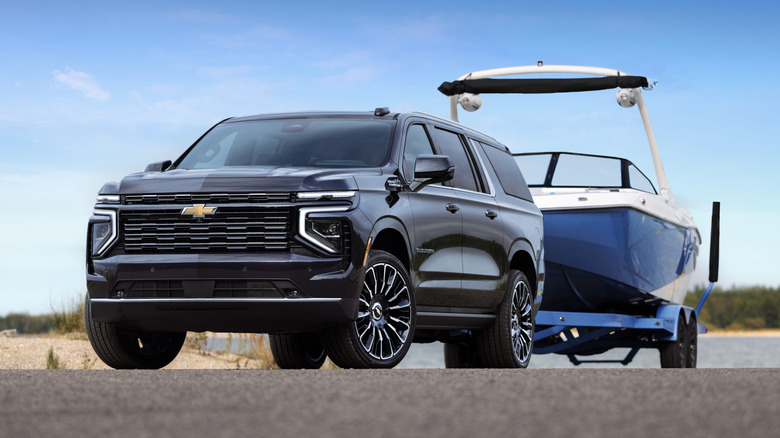
One area where body-on-frame SUV models have an undisputed advantage over their unibody counterparts is in towing capability. To be clear, some modern unibody crossovers have surprisingly strong towing capacities, but most top out at around 5,000 or 6,000 pounds. Not surprisingly, the SUVs with the most towing capacity are primarily body-on-frame models, with full-size, truck-based models like the Jeep Grand Wagoneer able to tow up to 10,000 pounds.
Given that they, like pickup trucks, have ladder frames, it's not hard to see why body-on-frame SUVs will have an advantage for towing. Not having a frame that's integrated with the body allows manufacturers to strengthen the frame and develop a more robust hitch setup. This means a body-on-frame SUV can pull heavier loads without over-stressing the vehicle's structure.
There can also be more to the real-world towing experience than just raw capacity figures. While some crossovers are indeed rated to tow up to 5,000 pounds, those who regularly tow trailers will likely benefit from the peace of mind that comes with driving a body-on-frame SUV that isn't constantly being pushed to the limit of its capabilities.
Off-road capability
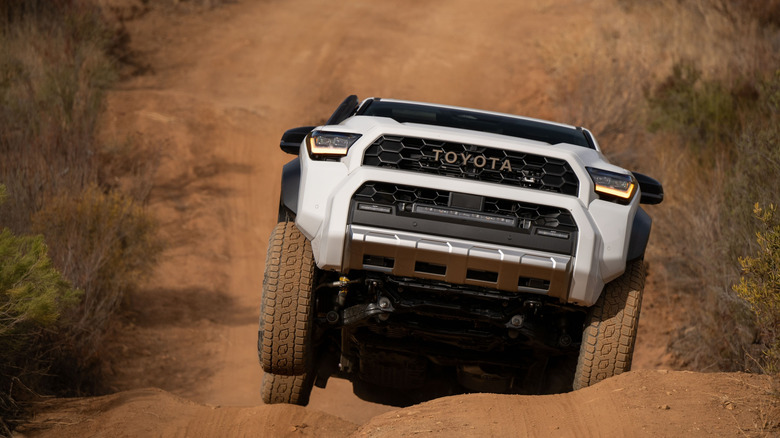
Before crossovers, SUVs were primarily positioned as off-road vehicles — and if you're looking for maximum off-road capability today, a body-on-frame SUV is still likely to be your best choice. Because of their ladder-frame structure and truck-like 4x4 mechanicals, a body-on-frame SUV will in most cases have the edge in hardcore off-roading thanks to better ground clearance, articulation, and the availability of locking differentials.
Going with a body-on-frame 4x4 also gives you access to ultra-capable factory off-road models like the Jeep Wrangler Rubicon, the Ford Bronco Raptor, or the Toyota 4Runner TRD Pro. With that said, if you only plan to do light off-roading, an all-wheel-drive unibody crossover could meet your needs; models like the Ford Bronco Sport Badlands and Subaru's Wilderness crossovers have proven to punch well above their weight in off-road performance.
In most off-road situations, though, a body-on-frame 4x4 will simply perform better and be less stressed while doing so, with less risk of damaging something or overheating the all-wheel-drive system. Some off-roaders might enjoy the challenge of tackling the trails in a unibody crossover, but as with towing performance, a more capable, body-on-frame 4x4 is likely the safer bet.
Interior space and amenities
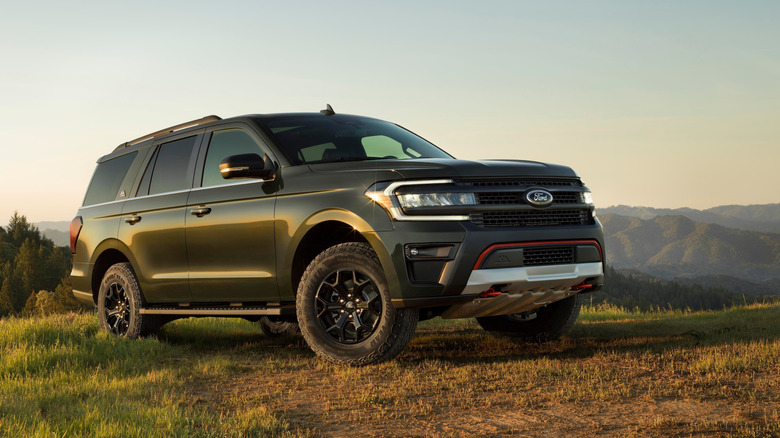
If you're looking to maximize interior space for passengers and cargo, it's hard to beat a minivan or even a large crossover SUV like Toyota's Grand Highlander. Both of those offer three-row seating and ample room for a family's gear. However, if you need big-time interior space with the towing and off-roading capabilities of a pickup truck, a full-size, body-on-frame SUV is likely the best choice.
Full-size models like the Chevy Tahoe, Ford Expedition, and Toyota Sequoia are essentially the three-row SUV equivalents of their brand's popular half-ton pickup trucks and will deliver similar capability. If that's not enough, those looking for even more interior space can opt for longer-wheelbase models like the Chevy Suburban or the Ford Expedition MAX.
Additionally, going with body-on-frame opens up high-end choices that retain all those features, just with an added dash of luxury. This would include flagship SUV models like the Cadillac Escalade ESV, the Jeep Grand Wagoneer, or the opulent Lincoln Navigator L. You'll, of course, have to pay a pretty penny for all of that luxury, space, and capability, but there's really no equivalent available in a unibody crossover SUV.
Aftermarket support and customization
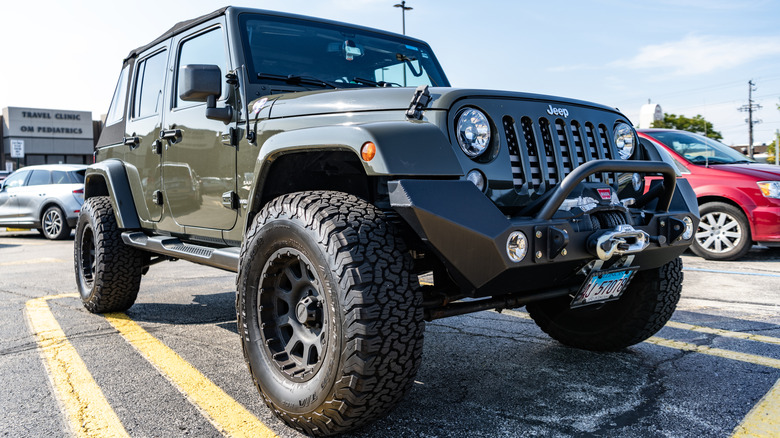
Many SUV buyers are quite content to leave their vehicles in stock form, but if you're one of those people who enjoys accessorizing, upgrading, and customizing, there's a good chance you'll get more satisfaction from a body-on-frame SUV. Aftermarket parts for crossover SUVs do exist, but you'll likely find your options limited, especially when compared to popular 4x4 platforms like the Bronco, 4Runner, or Wrangler.
The Jeep Wrangler upgrade scene alone supports a whole dedicated industry, with a wide variety of Jeep parts sources available. Because they share many of their mechanical components with pickup trucks, full-size SUVs like the Tahoe and Suburban also have extensive aftermarket support, which can even include bolt-on supercharger kits for those seeking big bumps in horsepower. Not everyone wants to modify their SUV, but if you've got big dreams for a tricked-out off-road rig or just want to personalize your daily driver, you'll likely find more possibilities with a body-on-frame SUV.
Fun factor
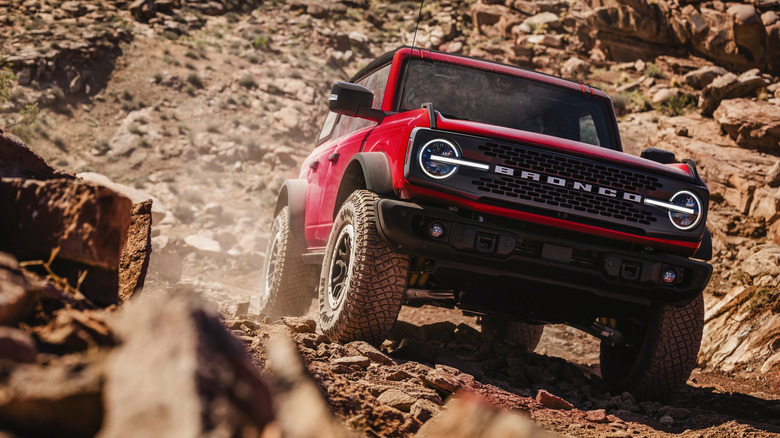
Because modern crossover SUVs are so popular among mainstream car buyers, they sometimes have a reputation for being boring. Now, off-road-capable and performance-oriented crossovers like the Ford Bronco Sport Sasquatch and Toyota RAV4 GR Sport show that it doesn't always have to be the case, but those looking for maximum fun and maximum adventure potential will probably prefer a body-on-frame SUV for some fairly obvious reasons.
For starters, you've got body-on-frame 4x4 models like the Jeep Wrangler and Ford Bronco, with their removable doors and roofs. Even the Toyota 4Runner has its signature roll-down back window, which can add to the sense of occasion. Better yet, both the Bronco and Wrangler are on the dwindling list of modern vehicles that still offer a manual transmission, and are the only two SUVs of any type to do so. Additionally, while these 4x4s definitely excel on the trails, that generally doesn't come at the cost of everyday practicality.
What if you want some big horsepower to go with big off-road capability? Speciality models like the V8-powered Jeep Wrangler 392 and the 418-hp Ford Bronco Raptor are known to offer the kind of all-terrain thrills you just won't get from a unibody crossover SUV.