

5 Downsides Of Body-On-Frame SUVs
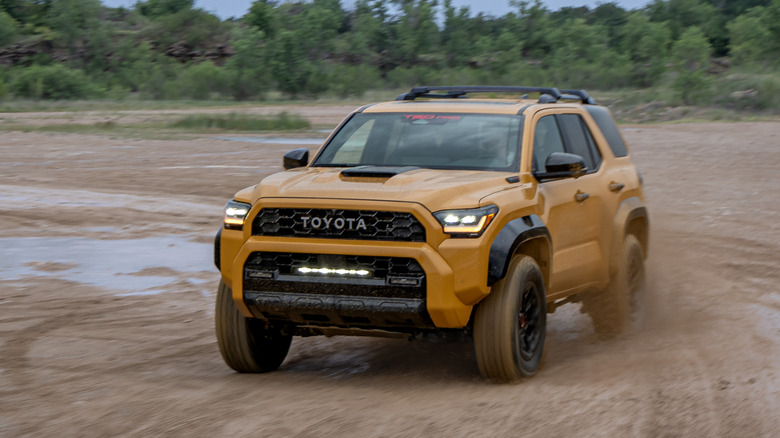
If you are in the market for an SUV, as so many buyers are these days, you've got a lot of decisions to make before settling on a vehicle. More than a simple vehicle segment, today's broader SUV label covers vehicles of every shape and size, with sizes ranging from miniature subcompacts to extended-wheelbase three-rows, and engines ranging from tiny turbocharged three-cylinder engines to massive V8s. One of the most fundamental differences when comparing SUVs is whether it uses unibody or body-on-frame construction.
The unibody vs. body-on-frame debate has been going on for a long time, and there's really no right or wrong answer to the question, as each type of SUV does different things well, and will appeal to different types of buyers. There's a reason, after all, why the massive companies like Ford, GM, and Toyota have extensive SUV lineups that include both unibody and body-on-frame offerings aimed at different markets.
The traditional body-on-frame SUV can be extremely capable and, in some situations, can do things and go places that a unibody SUV simply cannot, but there are some significant downsides to keep in mind too. Below, we've listed five of the big downsides that are likely to come with body-on-frame SUVs. Specifics will vary depending on which exact model you're looking at it, but as a general rule, these factors can apply to most body-on-frame SUVs, whether it's a smaller Toyota 4Runner or Jeep Wrangler or a full-size model like a Chevy Tahoe or Ford Expedition.
Initial cost
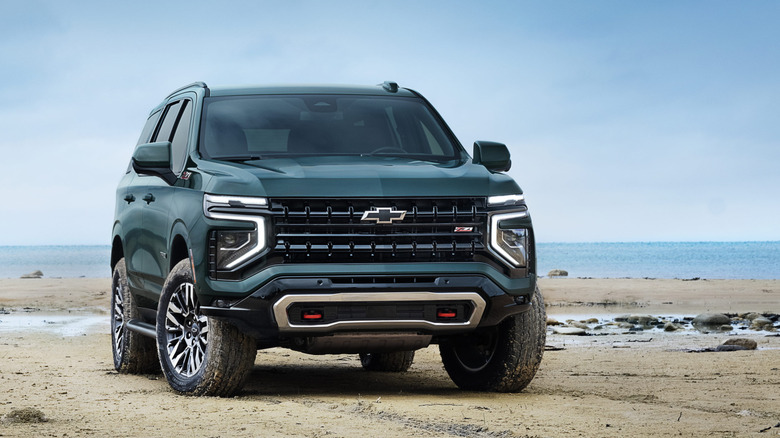
If you're shopping for an SUV, one of the first things you may notice is how much more expensive a body-on-frame SUV is than a comparable unibody crossover model. In today's market, body-on-frame SUV offerings primarily consist of either rugged, off-road models like the Toyota 4Runner and Jeep Wrangler, or full-size, truck-based offerings like the Toyota Sequoia and Chevrolet Tahoe. In either case, the MSRP usually will be quite a bit higher than that of a comparable unibody SUV.
Looking at both unibody to body-on-frame SUVs doesn't always make for an apples-to-apples comparison, but when it comes to price, simply looking at manufacturer lineups will tell you all you need to know. In the Chevrolet lineup, the full-size, body-on-frame Tahoe has a starting price of over $60,000, which is about $20,000 more than Chevy's most-expensive unibody SUV, the Traverse. This isn't to say, however, that Tahoe is overpriced for what you get, or that the Traverse is a bargain, for that matter. The modern Tahoe and Chevy Suburban do a lot of things very well; it's just that you'll need to pay a significant premium to access that capability.
Likewise, looking at the Jeep lineup, even in its most basic, stripped-down Sport trim, a four-door Wrangler has a starting MSRP that's about $4,000 higher than the base model, unibody Jeep Cherokee, which will be better equipped inside than the bare-bones Wrangler. The full-size, body-on-frame Toyota Sequoia, meanwhile, is priced more than $20,000 higher than Toyota's largest and most expensive unibody SUV, the Grand Highlander.
Weight and size
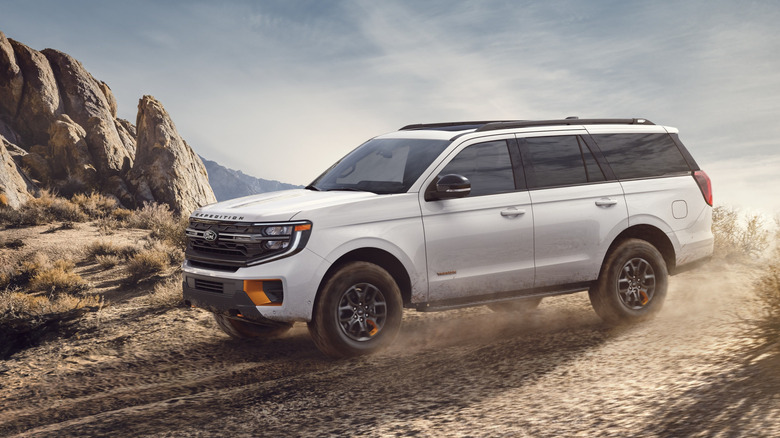
A big reason that SUVs have become so popular is that, thanks to the advent of the unibody crossover, the average modern SUV is a lot more car-like than it used to be — especially when looking at size and weight. Yes, a body-on-frame model can deliver better towing capacity and off-road capability, but the trade-off will often be more weight and a larger size when compared to a car-based crossover.
Comparing the three-row unibody Chevy Traverse to the three-row body-on-frame Chevy Tahoe, the Tahoe weighs nearly 800 lbs more, and is also significantly longer, wider, and taller on the outside. Similarly, the body-on-frame, three-row Toyota Sequoia is a rugged and capable family hauler, but it also weighs over 1,300 lbs more than the Grand Highlander, and is larger in every exterior dimension.
Compared to weight, which can dramatically impact a vehicle's fuel efficiency and driving performance, size can be looked at a little differently. After all, a larger exterior will often bring increased interior space and added practicality. However, when it comes to being able to fit inside your garage or trying to squeeze into a tight parking spot in the city, a full-size body-on-frame SUV could prove be more challenging to drive in day-to-day use compared to a unibody crossover.
Fuel economy
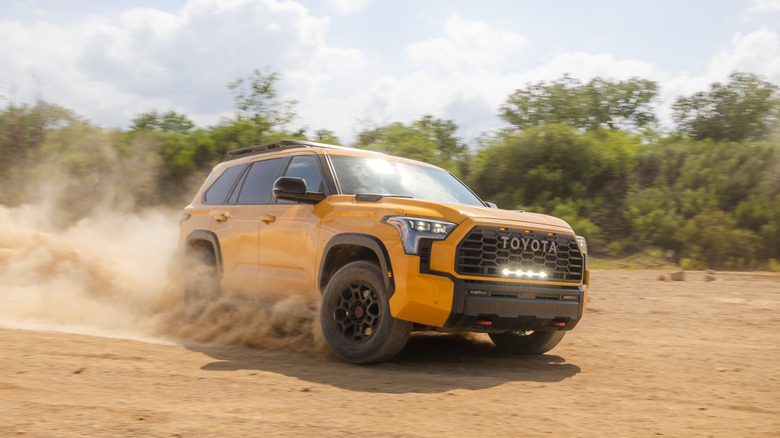
Fuel efficiency is another area where a body-on-frame SUV is likely to be at a big disadvantage compared to a unibody model. Being larger and heavier, a body-on-frame SUV will, in turn, use more fuel than a comparable crossover — and this is one of the biggest reasons why buyers have increasingly opted for unibody models.
On the more compact end of the spectrum, if you compare the fuel economy numbers of the rugged body-on-frame, V6-powered Jeep Wrangler to the unibody Jeep Compass crossover with a turbo four-cylinder, you won't be surprised to see the Compass has a big advantage in fuel efficiency. Per the EPA, the Compass outperforms the Wrangler by 6 MPG in the city and by 8 MPG on the highway.
This advantage carries over to the larger three-row SUVs too, with models like the Chevy Traverse and Toyota Grand Highlander achieving better fuel economy numbers than the equivalent Tahoe or Sequoia. In almost any situation, that body-on-frame capability is almost always going to come at the cost of increased fuel consumption, and buyers will need to decide if that capability is necessary or worth the cost.
Handling and refinement
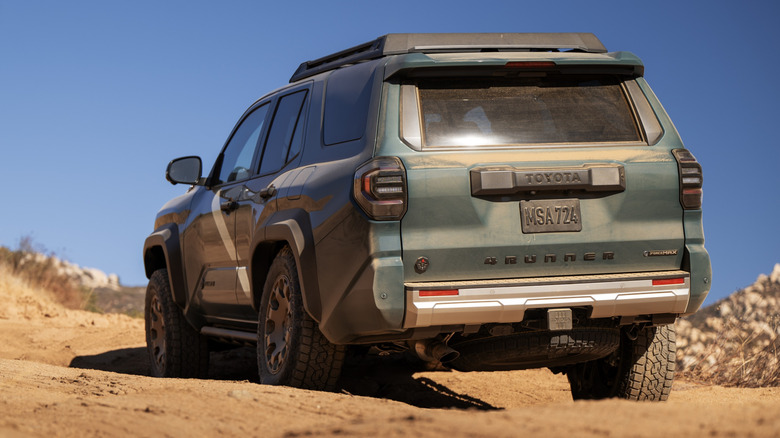
Back before the arrival of the unibody crossover, if someone wanted an SUV, they would basically be committing to a truck-like driving experience, for better and worse. Though automakers have made big leaps in refinement on modern body-on-frame models, there's still no escaping that shared truck DNA, especially on the more off-road-centric models like the Ford Bronco, Jeep Wrangler, and Toyota 4Runner.
While our review had good things to say about the 2026 Toyota 4Runner's driving experience, we still noted the inescapable nature of its heft and body-on-frame construction in normal city use. For many buyers, that truck-like driving feel is a worthy trade-off for the 4Runner's off-road capability, or even a desirable, endearing quality. On the other hand, if you're simply looking for an SUV to drive in the city, you might find it lacking the refinement and agility you get with a unibody model.
With that said, modern full-size body-on-frame SUV models like a GMC Yukon Denali, Cadillac Escalade, or Lincoln Navigator are also known to be very refined and comfortable, and that's expected given their luxury branding. It's just that comfort and refinement in a body-on-frame SUV is likely to come at a much higher price tag than a unibody model.
Interior space
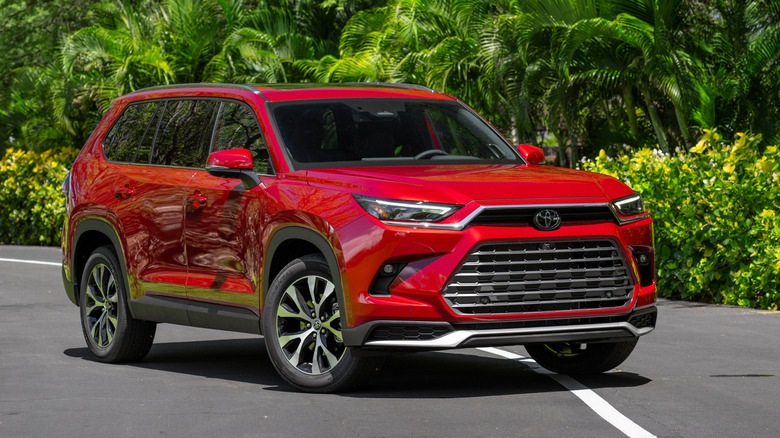
Passenger and cargo space is a big reason people are drawn to SUVs, and despite being larger on the outside, body-on-frame models don't always carry that over to their interior volume. While the specific dimensions will vary between models, generally, you can expect a body-on-frame SUV to have less interior space than a unibody SUV of a similar exterior size.
Looking at the Toyota Grand Highlander compared to the Sequoia, the unibody Grand Highlander is either comparable to the Sequoia in most interior measurements, all while being significantly smaller on the outside. During our review of the 2025 Grand Highlander, we pointed out how just great it does in its overall interior space, which is comparable to much larger, full-size SUV models.
As another example, the smaller, unibody Ford Bronco Sport also beats out the body-on-frame Bronco by most interior space measurements, despite the Bronco Sport being significantly smaller vehicle on the outside. In most cases, those who want or need the capability of a body-on-frame SUV are likely to be ok with these trade-offs, but if you are simply looking for the best ratio of interior space to exterior size, the unibody model is likely to do better.